
Museo Sartorio
Illustration — Villa Sartorio The Civico Museo Sartorio is a museum in Trieste, northern Italy. Set in an urban villa, it exhibits ceramics, majolica, porcelain and pictures, typical equipment of Trieste's villas at the end of the 19th century. Besides the villa itself being a very interesting building architecturally, it contains drawings of Giambattista Tiepolo, painting of Giambattista Pittoni and a glyptotheque.
Museo Sartorio
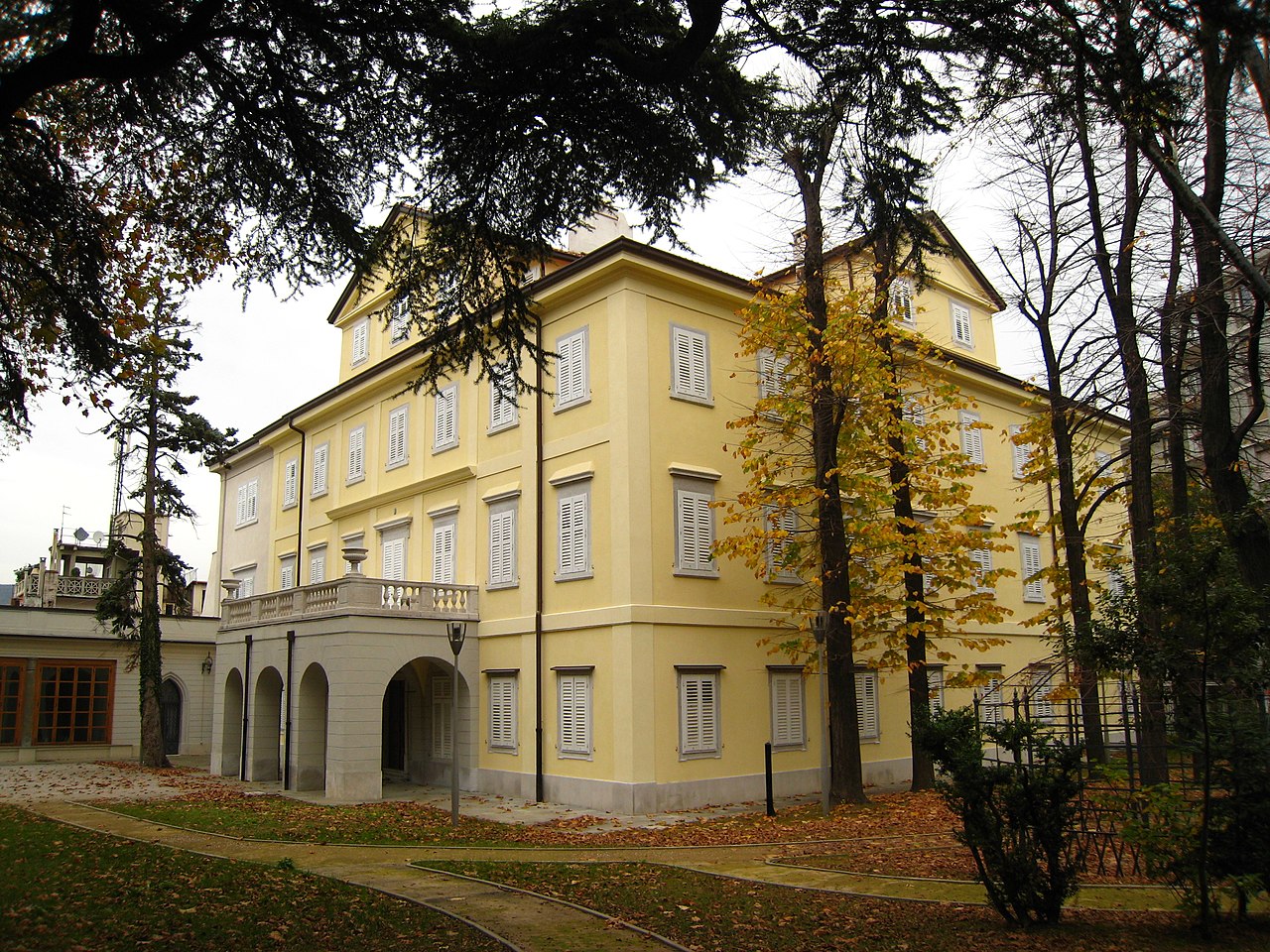
Tiesse at Italian Wikipedia · Public domain
- Founded
- 1949
- Headquarters
- Italy
VALÉORINE Encyclopedia
VALÉORINE documentary reading
Documentary summary
Illustration — Villa Sartorio The Civico Museo Sartorio is a museum in Trieste, northern Italy. Set in an urban villa, it exhibits ceramics, majolica, porcelain and pictures, typical equipment of Trieste's villas at the end of the 19th century. Besides the villa itself being a very interesting building architecturally, it contains drawings of Giambattista Tiepolo, painting of Giambattista Pittoni and a glyptotheque.
Admitted source layer · organised and presented by VALÉORINE
Reference Check
Propose documentary evidence for Museo Sartorio. A contribution is never written directly as fact: identity, source, rights and evidence gates still decide.
Sign in to contribute
Documentary evidence
Documentary basis
Authority files
wikidata · Q1954272 · wikipedia · Museo Sartorio
In this article
History
History
The museum opened to the public partially in 1949 and completely 1954. In 2006, the museum reopened after a period of renovation. Currently the Museum hosts temporary exhibits and cultural events such as theatre and music in the summer.
The villa once belonged, among the others, to the Sartorio dynasty originally from Sanremo. A branch of the family moved in 1775 to Trieste as part of its business expansion. Pietro Sartorio moved from Sanremo to Trieste with his family and bought the house, which had previously belonged to the merchant family Faraon, originary from Alexandria of Egypt. The last heir of the Sartorio family, Baroness Anna Segrè Sartorio, left the villa and all its furniture to Trieste's city council with the explicit wish to make it a public museum. The villa was used by the Allies, as their headquarters after WW2, as can be seen by the marks on the tiles and walls where the telephone and electric leads were brought through.
Places
Named by the record
Places
Only places the record itself states, plotted where the house gazetteer settles their coordinates. Nothing is inferred from a name or a nationality.
- Italy
Named but not plotted · 1
Museo Sartorio is associated with Italy.
Country
Citations
References
Each reference names the institution holding it, so a reader may go to the document itself.
reference work
Secondary witnessreference work
Secondary witness
The Encyclopedia exists whether or not anything is for sale. Corrections are recorded rather than overwritten, and every version of this record is kept. Published 16 August 2026.
Elsewhere in Institutions
3,152 published records in this field, each with its sources named.
- Museo Regional de AtacamaOrganisation
- Museo Regional de IcaOrganisation
- Museo Regional del Sureste de PeténOrganisation
- Museo Rufino TamayoOrganisation
- Museo StibbertOrganisation
- Museo Tamayo Arte ContemporáneoOrganisation
- Museo Teatrale alla ScalaOrganisation
- Museo Torres GarcíaOrganisation
Best supported in this field
For owners
Own an object connected with Museo Sartorio?
A specialist will read what you send and tell you what the house can establish, what it cannot, and whether the object is suited to sale. There is no charge and no obligation. The object stays with you throughout; nothing is shipped to us unless it is arranged in writing beforehand.