
Membranophone
A membranophone is any musical instrument which produces sound primarily by way of a vibrating stretched membrane. It is one of the four main divisions of instruments in the original Hornbostel-Sachs scheme of musical instrument classification. According to Sachs, The sound is produced by a membrane skinor "head"] stretched over an opening.
Also recorded as membranophones · membrane instruments
Membranophone
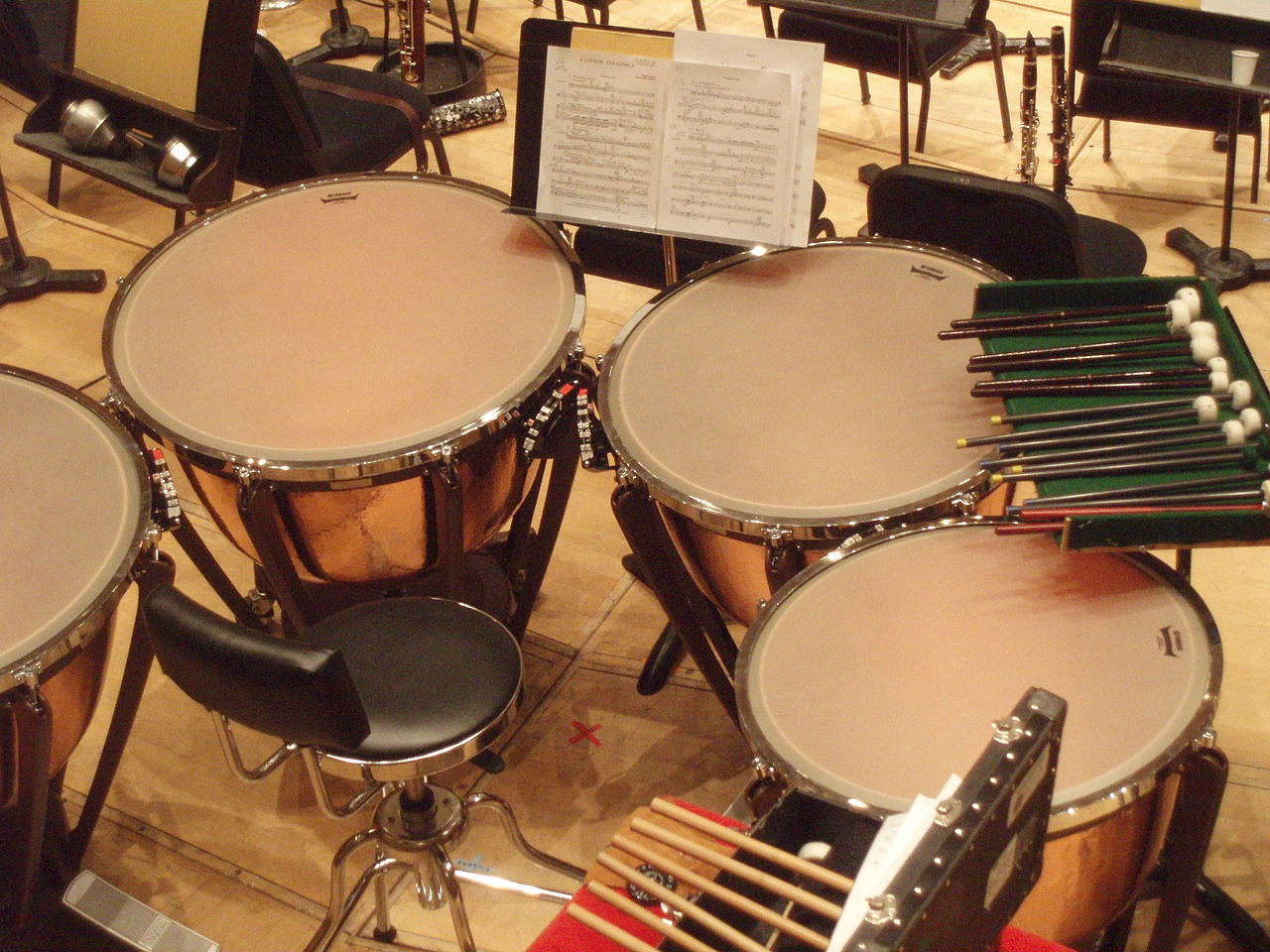
sheila miguez from Chicago, IL · P5210009 · CC BY-SA 2.0
- Field
- musical instrument.
VALÉORINE Encyclopedia
VALÉORINE documentary reading
Documentary summary
A membranophone is any musical instrument which produces sound primarily by way of a vibrating stretched membrane. It is one of the four main divisions of instruments in the original Hornbostel-Sachs scheme of musical instrument classification. According to Sachs, The sound is produced by a membrane skinor "head"] stretched over an opening.
Admitted source layer · organised and presented by VALÉORINE
Note VALÉORINE
No house-authored Note is published until its assertions and sources pass the VALÉORINE evidence contract. The documentary article remains available in full while that enrichment is being consolidated.
Documentary enrichment in progress · no unsupported statement published
Reference Check
Propose documentary evidence for Membranophone. A contribution is never written directly as fact: identity, source, rights and evidence gates still decide.
Sign in to contribute
World of VALÉORINE
Documentary connections
Only confirmed graph relationships appear here. Images are shown only when their identity and reuse rights both pass the documentary gate.

Broader Term · incoming
Alfaia
Term
Own work

Broader Term · incoming
bangu
Term
Bangu (Drum), Tengwangge (Prince of Teng Pavilion)
Broader Term · incoming
barrel drum
Term
Broader Term · incoming
Bedon
Term

Broader Term · incoming
bedug
Term
Own work

Broader Term · incoming
bendir
Term
No machine-readable source provided. Own work assumed (based on copyright claims).

Broader Term · incoming
boobam
Term
Own work
Broader Term · incoming
Candombe drums
Term
Broader Term · incoming
Chande
Term

Broader Term · incoming
clay drum
Term
Own work

Broader Term · incoming
djembe
Term
Transferred from nl.wikipedia to Commons.

Broader Term · incoming
dollu
Term
Own work Transferred from en.wikipedia to Commons by User:Sreejithk2000 using CommonsHelper .

Broader Term · incoming
dunun
Term
Own work

Broader Term · incoming
floor tom
Term
Own work
Broader Term · incoming
flower drum
Term

Broader Term · incoming
friction drum
Term
The Yorck Project (2002) 10.000 Meisterwerke der Malerei (DVD-ROM), distributed by DIRECTMEDIA Publishing GmbH. ISBN : 3936122202 .
Documentary evidence
Evidence Panel
original value insufficient · checked 25 September 2026
- Identity
- resolved
- Independent source families
- 0
- Admitted assertions
- 0
- Open conflicts
- 0
Authority files
wikidata · Q212892 · wikipedia · Membranophone
In this article
Hornbostel–Sachs
Hornbostel–Sachs
Most, but not all, membranophones are generally called drums. They are classified according to material, if it's single or double headed, shape, skin(s), skin fastening, playing positions, and manner of playing.
The Hornbostel–Sachs scheme of musical instrument classification divides membranophones in a numeric taxonomy based on how the sound is produced: 21: by hitting the drumskin with a hand or object (most common form, including the timpani and snare drum) 22: by pulling a knotted string attached to the drumskin (common in Indian drums, and can be considered an example of a chordophone as well) 23: by rubbing the drumskin with a hand or object (common in Irish traditional music, an example is the bodhran) 24: by modifying sounds through a vibrating membrane (unusual form, including the kazoo)
Length and breadth
Length and breadth
Membranophones can also be divided into small divisions based on length and breadth of sound production: Tubular drums include a wide range of drum shapes all conforming to a "tube" shape, or generally, having a depth greater than the radius of the membrane. The Hornbostel-Sachs Classification defines 8 subcategories of tubular drums: Cylindrical, Barrel-Shaped, Double-Conical, Hourglass-Shaped, Conical, Goblet-Shaped, Cylindro-Conical, and Vase-Shaped drums. Mirlitons, Kazoos and Swazzles vibrate in sympathy with sounds travelling across a membrane. These are the only membranophones that are not truly drums. SIL International maintains a classification system based largely on shape: Cylindrical drums are straight-sided, and generally two-headed. A buzzing, percussive string is sometimes used. Examples include the bass drum and the Iranian dohol. Conical drums are sloped on the sides, and are usually one-headed. Examples include the South Asian tabla and the Venezuelan chimbangueles. Barrel drums are normally one-headed, and may be open at the bottom. They bulge in the middle. Examples include the Dhak from eastern parts of India, bendre, made by the Mossi of Burkina Faso out of a large calabash, and the trong chau of Vietnam. Hourglass drums (or waisted drums) are hourglass-shaped and generally two-headed. The drumheads are laced onto the body, and the laces may be squeezed during performance to alter the drum's pitch. Examples include folk drums in India (like the damaru) and much of Africa, as well as some talking drums. Goblet drums (or chalice drums) are one-headed and goblet shaped, and are usually open at the bottom. Examples include the Egyptian darbuka, West-African djembe, and the Arab darabukka. Footed drums are single-headed and are held above the ground by feet. The space between the drum and the ground provides extra resonance. Examples include a range of East African and Polynesian drums. Long drums are a diverse category, characterized by extreme length. Examples include the single-headed hollow tree trunk drums of Africa and the ornately carved and dyed gufalo of the Nuna in Burkina Faso. Kettle drums (or pot drums or vessel drums) are frequently played in pairs, and have a vessel or pot body, are one-headed and usually tuned to a specific note. Examples include the timpani and the tabla. Frame drums are composed of one or more membranes stretched across a frame. Examples include the tambourine and bodhrán. Friction drums produce sound through friction, such as by rubbing a hand or object against the drumskin. Examples include the Brazilian cuica and the Spanish zambomba. Mirlitons, Kazoos and Swazzles produce sound by blowing air across a membrane.
Traditional classifications
Traditional classifications
The traditional classification of Indian instruments include two categories of percussion. Ghan: Percussion without membranes, such as chimes, bells and gongs Avanaddh: Percussion with membranes, such as drums with skin heads
Other categories
Other categories
The predrum category consists of simple drum-like percussion instruments. These include the ground drum, which, in its most common §—Form, consists of an animal skin stretched over a hole in the ground, and the pot drum, made from a simple pot. Water drums are also sometimes treated as a distinct category of membranophone. Common in Native American music and the music of Africa, water drums are characterized by a unique sound caused by filling the drum with some amount of water. The talking drum is an important category of West African membranophone, characterized by the use of varying tones to "talk". Talking drums are used to communicate across distances. Military drums or war drums are drums in various forms that have been used in the military.
Notes from the source article
Cited by Wikipedia
Notes from the source article
These works are cited by the source article, in its own numbering. They are recorded as its citations, not as sources VALÉORINE has verified.
- 1.Sachs, Curt (1940). The History of Musical Instruments, p.459. W. W. Nortan & Company, Inc.
- 2.Glossary#Membranophone. Essentials of Music.
- 3.Catherine Schmidt-Jones. Classifying Musical Instruments: Membranophones. Connexions.
- 4.Revision of the Hornbostel-Sachs Classification of Musical Instruments by the MIMO Consortium. 8-10. July 8, 2011.
- 5.534m Membranophones. SIL.
- 6.David Courtney. Indian Musical Instruments. Chandra and David's Indian Musical Instruments. 2006.
- 7.Virginia Tech Department of Music. Modern Instruments and their Families: Symphonic Classifications in Western Music. Music Dictionary.
- 8.Claire King. Tuning the Water Drum. From Cradleboard to Motherboard.
- 9.Drum Telegraphy. TIME. 21 September 1942.
References
Citations
References
Each reference names the institution holding it, so a reader may go to the document itself.
reference work
Partially resolvedreference work
Partially resolved
Connections
Knowledge graph
Connections
Each connection was recorded deliberately, with the basis for it kept on the internal record.
Broader subject
7- bedugTerminology
Established from a fact already recorded on a verified source.
- GhumotTerminology
Established from a fact already recorded on a verified source.
- kendangTerminology
Established from a fact already recorded on a verified source.
- klong yaoTerminology
Established from a fact already recorded on a verified source.
- Lambeg drumTerminology
Established from a fact already recorded on a verified source.
- MaddaleTerminology
Established from a fact already recorded on a verified source.
The Encyclopedia exists whether or not anything is for sale. Corrections are recorded rather than overwritten, and every version of this record is kept. Published 14 August 2026.
Elsewhere in Collectables
20,755 published records in this field, each with its sources named.
- melodic percussion instrumentTerminology
- melodicaTerminology
- melophonTerminology
- MeltdownWork
- Meme RunWork
- Memento MoriWork
- Memories OffWork
- MemorymoogTerminology
Best supported in this field
For owners
Own an object connected with Membranophone?
A specialist will read what you send and tell you what the house can establish, what it cannot, and whether the object is suited to sale. There is no charge and no obligation. The object stays with you throughout; nothing is shipped to us unless it is arranged in writing beforehand.