
Medardo Rosso
Medardo Rosso (21 June 1858 – 31 March 1928) was an Italian sculptor. He is considered, like his contemporary and admirer Auguste Rodin, to have been an artist working in a post-Impressionist style.
Medardo Rosso
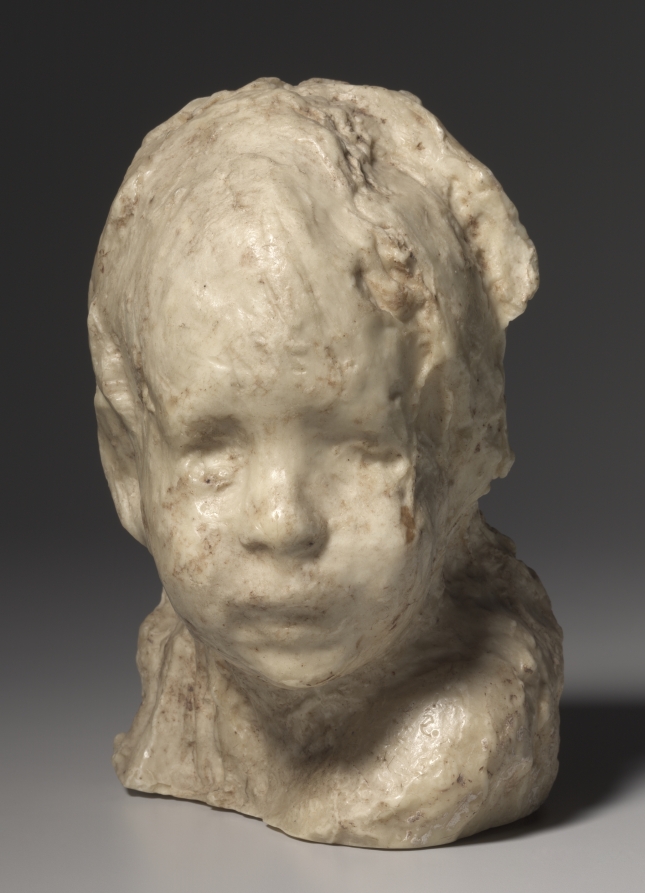
Medardo Rosso · The Cleveland Museum of Art · Andrew R. and Martha Holden Jennings Fund · CC0
- Name
- Medardo Rosso
- Born
- 21 June 1858
- Birthplace
- Turin, Italy
- Died
- 31 March 1928
- Place of death
- Milan, Italy
- Field
- Sculpture, Photography
- Nationality
- France · Kingdom of Italy
- Occupation
- sculptor · photographer · designer · writer · artist
- Known for
- Ecce Puer · Madame Noblet
VALÉORINE Encyclopedia
VALÉORINE documentary reading
Documentary summary
Medardo Rosso (21 June 1858 – 31 March 1928) was an Italian sculptor. He is considered, like his contemporary and admirer Auguste Rodin, to have been an artist working in a post-Impressionist style.
Admitted source layer · organised and presented by VALÉORINE
Note VALÉORINE
No house-authored Note is published until its assertions and sources pass the VALÉORINE evidence contract. The documentary article remains available in full while that enrichment is being consolidated.
Documentary enrichment in progress · no unsupported statement published
Reference Check
Propose documentary evidence for Medardo Rosso. A contribution is never written directly as fact: identity, source, rights and evidence gates still decide.
Sign in to contribute
Documentary evidence
Evidence Panel
not yet certified
- Identity
- resolved
- Independent source families
- 0
- Admitted assertions
- 0
- Open conflicts
- 0
Authority files
wikidata · Q678193 · wikipedia · Medardo Rosso
In this article
Key facts
Key facts
• Name — Medardo Rosso • Born — 21 June 1858 • Birthplace — Turin, Italy • Died — 31 March 1928 • Place of death — Milan, Italy • Field — Sculpture, Photography • Patrons — Henri Rouart, Etha Fles
Biography and works
Biography and works
Rosso was born in Turin, where his father worked as a railway station inspector, and the family moved to Milan when Rosso was twelve. At the age of 24, after a spell in the army, Rosso enrolled at the Brera Academy, from which he would soon be expelled after punching a student who refused to sign a petition that Rosso had circulated demanding that live models and body parts be used for the drawing classes, which was standard practice in Italian academies at the time. In his 1889 almanac of living artists, Angelo de Gubernatis offered a romanticized portrait of Rosso's early years as an artist: (He) rebelled at each school, with each method, with each Academy, abhorring anything that smacked of trade, of artifice, soon found himself alone, without support, without a master, without counsellors, and with a bunch of captive and envious colleagues who tripped him, when he tried his way and to demonstrate his abilities, his ingenuity. But the Biblical saying "Go alone!" did not frighten him, even in those long daily vigils struggling with a whole system which for many years had triumphed, despite the strong supporters of this and that opponent, he felt his strength increase, developed his talent, he conceived a vast new artistic horizon never before seen, and began to work and hold it to the test. Starting in 1881 in Milan, Rosso began producing bronze busts and figures that reflected largely Realist influences, with works such as The Hooligan (1882) and Kiss Under the Lamppost (1882). Rosso's style began to change after 1882, possibly due to the discovery of Impressionism, and some of his first works during this period, including Portinaia (Concierge) (1883–84) and Carne altrui (Flesh of Others) (1883–84) begin to "suggest a loss of detail in favour of sketchy modelling, flattened planes, and gently modulated surfaces to soften the play of light and shadow." Rosso never made preparatory drawings for his sculptures, opting instead to work directly with the clay from which he would then make a working model in plaster, which was then used to create the negative mould into which he would cast in bronze using the cire perdue method, and he also cast works in plaster, and, much later, wax with a plaster interior. Some art historians have suggested that Rosso travelled to Paris in 1884 and worked in the studio of sculptor Jules Dalou, but no historical record has corroborated this. In Milan, Rosso continued to cast small-scale works throughout the mid-1880s, in addition to a series of entries for public monuments, such as a funeral monument to the critic Filippo Filippi. Rosso relocated to Paris in 1889, where he would live and work until after World War I. While in Paris, he met and impressed a number of influential personalities, including writer Emile Zola, whom Rosso convinced to say that he owned a cast of Birichino, thereby elevating the artist's stature, as well as the engineer and patron of the Impressionists Henri Rouart, of whom Rosso cast a portrait in bronze by 1890. During his Parisian period, Rosso also began to experiment with photography in his studio, and he photographed the works under a variety of lighting conditions, foci, and compositions in order to capture different impressions of these three-dimensional works, often further manipulating the printing process and cropping, folding, scratching, or painting the photographic prints to create focused glimpses of the sculptural subjects. As a sculptor, one of Rosso's principal concerns was to subject the physical mass of sculpture to the transient and ephemeral effects of light. So by means of rough, spontaneous modelling, he would then cast in bronze, plaster, or wax. Rosso maintained a studio in Paris in which he created his own foundry, at a time when most sculptors sent their moulds away to professional foundries to be cast. This freedom afforded Rosso the opportunity to manipulate the surfaces of his works in highly unorthodox ways, often retaining what others would have regarded as "casting errors" and elected not to clean away the plaster investment that would be left upon a bronze work after casting. To Rosso, these interventions were designed to create visual or optical effects by which the materiality of sculpture, as central as it was to his practice, was subordinate to the impression of the viewer: Light being of the very essence of our existence, a work of art that is not concerned with light has no right to exist. Without light it must lack unity and spaciousness — it is bound to be small, paltry, wrongly conceived, based necessarily upon matter.... A work of sculpture is not made to be touched, but to be seen at such or such a distance, according to the effect intended by the artist. Our hand does not permit us to bring to our consciousness the values, the bones, the colours—in a word, the life of the thing. For seizing the inner significance of a work of art, we should rely entirely on the visual impression and on the sympathetic echoes it awakens in our memory and consciousness, and not on the touch of our fingers. Rosso maintained his studio in Paris, where he exhibited his sculptures and sold works to major collectors and museums. He established a friendship with Auguste Rodin, and the two artists exchanged works, although their relationship dissolved when, following a debate about artistic influence in the press, an embittered Rosso felt Rodin had failed to acknowledge his debt to him. In 1906, Rosso realized his last original subject with the work Ecce puer (Behold the Child); following series of unsuccessful attempts to create a portrait of a five-year-old Alfred William Mond, Rosso happened to glimpse him standing later behind a drawn curtain, inspiring the impression conveyed by the finished work. In the last twenty years of his life he created no new original subjects but focused on recasting previous works in different ways. Toward the end of his life, he suffered from diabetes and died in Milan, aged 70, after the amputation of the affected leg in 1928.
List of key works
List of key works
• Portinaia (Concierge), 1883 • Carne altrui (Flesh of Others), 1883–84 • Impressione d'omnibus (Impression of an Omnibus), 1884–87 (Destroyed) • Aetas aurea (Golden Age), late 1885–86 • Enfant au sein (Child at the Breast), late 1889-90 • Bambino ebreo (Jewish Boy), 1892 • Bookmaker, 1893–95 • Enfant malade (Sick Child), 1893–95 • Yvette Guilbert, 1895 • Madame X, 1896 • Ecce puer, 1906
Life and career
Dated record
Life and career
Explore 1858–1928
The full dated record · 7 entries
1858
Born at Turin.
1882
Recorded as work location: Milan.
1884
Recorded as work location: Paris.
1886
Recorded as work location: Milan.
1889
Recorded as work location: Paris.
1901
Recorded as work location: Milan.
1928
Dies at Milan.
Select sculptures
• Illustration — Carne altrui (Flesh of Others), 1883–84 • Illustration — Aetas aurea (Golden Age), late 1885-86 • Illustration — Malato all'ospedale, 1889 • Illustration — Petite femme riant, 1890 • Illustration — Bambino ebreo (Jewish Boy), 1892–94 • Illustration — Enfant malade (Sick Child), 1893–94 • Illustration — Bookmaker, 1893–95 • Illustration — Ecce Puer, 1906
Primary material
Documents and archives
institutional register
- Bibliothèque nationale de France authority file 123857164
Unverified · Bibliothèque nationale de France
- FAST authority file 131738
Unverified · FAST
- GND (German National Library) authority file 118603043
Unverified · GND (German National Library)
- IdRef (French universities) authority file 032922000
Unverified · IdRef (French universities)
- ISNI authority file 0000000066328931
Unverified · ISNI
- Library of Congress authority file n84036577
Unverified · Library of Congress
reference work
- “Medardo Rosso”, English Wikipedia, consulted as further reading
Reputable secondary · Wikipedia
Scholarship and Posthumous Exhibitions
From 2 October to 23 November 1963, The Museum of Modern Art in New York presented Medardo Rosso, 1858-1928, the first major museum exhibition of the artist's work in the United States. In the exhibition catalogue, curator Margaret Scolari Barr wrote that "Rosso's art is complex, ambiguous, his vision poetic as much as objective." Margaret Scholar Barr's was the first English-language monograph on the Italian modernist sculptor. From 17 October 2014 to 27 June 2015, the Center for Italian Modern Art presented an installation of sculpture, drawing, and experimental photography by the modernist artist, which revealed the range of an artist known primarily for his three-dimensional work. From 11 November 2016 to 13 May 2017, the Pulitzer Arts Foundation in St. Louis is presenting Medardo Rosso: Experiments in Light and Form, the largest exhibition of the artist's work in a US museum since the 1963 MoMA show. This show was curated by Sharon Hecker and Tamara S. Schenkenberg.
Citations
References
Each reference names the institution holding it, so a reader may go to the document itself.
institutional register
Bibliothèque nationale de France authority file 123857164Bibliothèque nationale de France
Partially resolvedinstitutional register
Partially resolvedinstitutional register
GND (German National Library) authority file 118603043GND (German National Library)
Partially resolvedinstitutional register
IdRef (French universities) authority file 032922000IdRef (French universities)
Partially resolvedinstitutional register
Partially resolvedinstitutional register
Library of Congress authority file n84036577Library of Congress
Partially resolvedinstitutional register
RKDartists authority file 281166RKDartists
Partially resolvedinstitutional register
Union List of Artist Names authority file 500020447Union List of Artist Names
Partially resolved
Every cited source · 11
- 01
Bibliothèque nationale de France authority file 123857164
institutional register · Unverified · Bibliothèque nationale de France
Consult the source - 02
- 03
GND (German National Library) authority file 118603043
institutional register · Unverified · GND (German National Library)
Consult the source - 04
IdRef (French universities) authority file 032922000
institutional register · Unverified · IdRef (French universities)
Consult the source - 05
- 06
Library of Congress authority file n84036577
institutional register · Unverified · Library of Congress
Consult the source - 07
- 08
Union List of Artist Names authority file 500020447
institutional register · Unverified · Union List of Artist Names
Consult the source - 09
- 10
“Medardo Rosso”, English Wikipedia, consulted as further reading
reference work · Reputable secondary · Wikipedia
Consult the source - 11
Wikidata, structured authority record Q678193: Medardo Rosso
institutional register · Unverified · Wikimedia Foundation
Consult the source
A further 1 witness is held back from this article because the person or object named in it is not yet resolved to this record. They are kept, not discarded, and return once the identity is established.
The Encyclopedia exists whether or not anything is for sale. Corrections are recorded rather than overwritten, and every version of this record is kept. Published 14 August 2026.
Elsewhere in Modern design
3,254 published records in this field, each with its sources named.
- May MorrisDesigner
- Maya Bird-MurphyDesigner
- McKinley Thompson Jr.Designer
- MechatokDesigner
- Meguey BakerDesigner
- Mehdi SaeediDesigner
- Mehmed Fehmi AğaDesigner
- Mehrafza Mirzazad BarijughDesigner
Best supported in this field
For owners
Own a work by Medardo Rosso?
A specialist will read what you send and tell you what the house can establish, what it cannot, and whether the object is suited to sale. There is no charge and no obligation. The object stays with you throughout; nothing is shipped to us unless it is arranged in writing beforehand.