
Maurice Quentin de La Tour
Maurice Quentin de La Tour (5 September 1704 – 17 February 1788) was a French painter who specialised in portrait painting using pastels in the Rococo style. Among his most famous subjects were Voltaire, Jean-Jacques Rousseau, Louis XV, and Madame de Pompadour.
Also recorded as Maurice Quentin de Latour · Quentin de La Tour · Maurice-Quentin de La Tour · Quentin de Latour
Maurice Quentin de La Tour
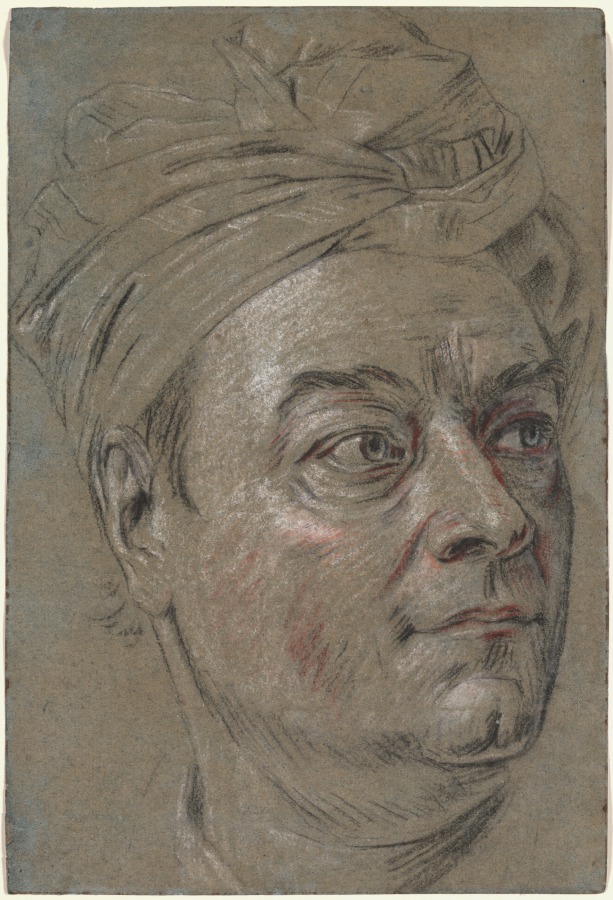
Maurice Quentin de La Tour · The Cleveland Museum of Art · John L. Severance Fund · CC0
- Name
- Maurice Quentin de La Tour
- Birth Name
- Maurice-Quentin Delatour
- Born
- 5 September 1704
- Birthplace
- Saint-Quentin, Picardy, Kingdom of France
- Died
- 17 February 1788
- Field
- Pastel
- Nationality
- France
- Occupation
- pastellist · painter · draftsperson · visual artist
- Fields
- portrait · pastel artwork
- Movements
- Rococo
- Known for
- Portrait of Voltaire · Portrait of Pierre-Louis Laideguive
VALÉORINE Encyclopedia
VALÉORINE documentary reading
Documentary summary
Maurice Quentin de La Tour (5 September 1704 – 17 February 1788) was a French painter who specialised in portrait painting using pastels in the Rococo style. Among his most famous subjects were Voltaire, Jean-Jacques Rousseau, Louis XV, and Madame de Pompadour.
Admitted source layer · organised and presented by VALÉORINE
Note VALÉORINE
No house-authored Note is published until its assertions and sources pass the VALÉORINE evidence contract. The documentary article remains available in full while that enrichment is being consolidated.
Documentary enrichment in progress · no unsupported statement published
Reference Check
Propose documentary evidence for Maurice Quentin de La Tour. A contribution is never written directly as fact: identity, source, rights and evidence gates still decide.
Sign in to contribute
Documentary evidence
Evidence Panel
not yet certified
- Identity
- resolved
- Independent source families
- 0
- Admitted assertions
- 0
- Open conflicts
- 0
Authority files
wikidata · Q314655 · wikipedia · Maurice Quentin de La Tour
In this article
Key facts
Key facts
• Name — Maurice Quentin de La Tour • Birth Name — Maurice-Quentin Delatour • Born — 5 September 1704 • Birthplace — Saint-Quentin, Picardy, Kingdom of France • Died — 17 February 1788 • Place of death — Saint-Quentin, Picardy, Kingdom of France • Field — Pastel
Life
Life
Maurice Quentin de La Tour was born on 5 September 1704 in Saint-Quentin. He was the third son of a musician, François de La Tour. François was from Laon and he was the son of a master mason, Jean de La Tour, of Laon and Saint-Quentin, who died in 1674. François de La Tour apparently was successively a trumpet-player for the rifle regiment of the Duc du Maine, and musician to the master of the collegiate church of Saint-Quentin. He is popularly said to have disapproved of his son taking up the arts, but there is nothing to support this. According to François Marandet in 2002, an apprenticeship was arranged for the young Maurice, with a painter named Dupouch, from 12 October 1719, but it is not known when this contract was terminated. Little is known of de La Tour's background until, when barely nineteen, he went to Paris indefinitely, fleeing an indiscretion concerning his cousin, Anne Bougier; by this age he was claiming painting as his profession. After travelling briefly to England in 1725, he returned to Paris in 1727, where he was encouraged to begin working as a portraitist in pastels. His earliest known portrait, which is attested only by an engraving made in 1731 by Langlois, was a portrait of Voltaire. In 1737, at the Paris Salon, de La Tour exhibited the portraits of Madame Boucher, the wife of the painter François Boucher, and l'Auteur qui rit or Self-Portrait, Laughing (musée du Louvre), the first of a series of 150 portraits that served as one of the glories of the Paris Salon for the next 36 years. Nevertheless, the painter Joseph Ducreux claimed to be his only student (although this is unlikely). On 25 May 1737, de La Tour was officially recognised (agréé) by the Royal Academy of Painting and Sculpture, and soon attracted the attention of the French court. According to Jeffares, he had an apartment in the Palais du Louvre in 1745. By the late 1760s, his portraiture of the royal family had ceased. De La Tour was popularly perceived as endowing his portrait subjects with a distinctive charm and intelligence, while his delicate but sure touch with the pastel medium rendered a pleasing softness to their features. Contemporary accounts describe de La Tour's nature as lively, good-humoured, but eccentric. In many of his self-portraits he depicts himself smiling out from the frame towards the viewer; Laura Cumming states of de La Tour that "where other artists make heavy weather of portraying themselves, he takes the task lightly and seems to have produced more glad-faced self-portraits than any other artist". However, being of an excessively nervous disposition (which eventually descended into dementia), and an exacting practitioner, he has also been described as over-engineering his work, to the point of spoiling it. As de La Tour's wealth increased from his commissions, so did his philanthropy: he founded a school for drawing in his native Saint-Quentin and donated towards impoverished women in confinement and disabled and ageing artisans and artists. He was also advisor and benefactor to the Royal Academy of Painting and Sculpture in Paris, and the Academy of Sciences and Belles Lettres of Amiens. Eventually confined to his home and to the care of his brother, Jean-François, because of encroaching mental illness, he retired at the age of 80 to Saint-Quentin, where he died intestate at the age of 83 (he had revoked earlier wills). Jean-François (d. 1807), chevalier de l'ordre royal militaire de Saint-Louis, was the natural heir to his estate.
Gallery
Gallery
• Illustration — Voltaire • Illustration — Madame de Pompadour • Illustration — Jean-Jacques Rousseau • Illustration — Jean d'Alembert • Illustration — Émilie du Chatelet • Illustration — Queen Marie Leszczyńska • Illustration — Isabelle de Charrière (1766) • Illustration — Prince Henry Benedict Stuart • Illustration — Charles Louis Auguste Fouquet • Illustration — King Louis XV • Illustration — Mlle Ferrand Meditating on Newton • Illustration — Pierre-Louis Laideguive • Illustration — Jacques du Mont Le Romain • Illustration — Maurice de Saxe • Illustration — Portrait of Gabriel Bernard de Rieux • Illustration — Louis de France, dauphin (1745) • Illustration — Jean-Joseph Cassanéa de Mondonville • Illustration — Isabelle de Charrière (1771) • Illustration — Marie Fel
Commemoration
Commemoration
• Illustration — Maurice Quentin de La Tour on a banknote of 50 francs issued by the Bank of France in 1978 French banknotes denominated at 50 francs, issued from 1976 to 1992, featured de La Tour's portrait.
Attribution
Attribution
•. *
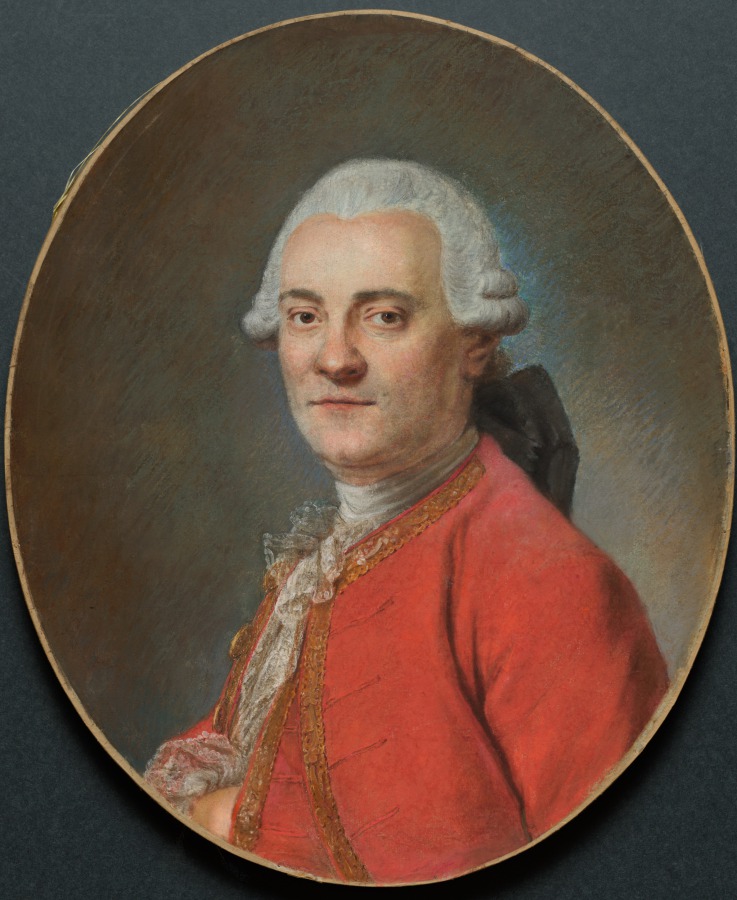
Portrait of a Man, 1700s, by Maurice Quentin de La Tour
Maurice Quentin de La Tour · The Cleveland Museum of Art · Gift of Edward B. Greene
Life and career
Dated record
Life and career
The full dated record · 2 entries
1704
Maurice Quentin de La Tour born at Saint-Quentin.
1788
Maurice Quentin de La Tour died at Saint-Quentin.
References
Citations
References
Each reference names the institution holding it, so a reader may go to the document itself.
reference work
Partially resolvedreference work
Partially resolved
Further particulars
Held on the record
Further particulars
Open the remaining particulars
He trained under Jean Restout and Claude Dupouch. Each of those relationships is stated by the authority record rather than inferred from style.
Maurice Quentin de La Tour worked in pastel and painter. His work is associated with Rococo. Recorded position is court painter. He worked at Paris. Work and production. Works recorded as notable number 2: Portrait of Voltaire and Portrait of Pierre-Louis Laideguive. His recorded genres are portrait and pastel artwork.
Career and activity
Recognition and collections
Work by Maurice Quentin de La Tour is
Art Institute of Chicago, J. Paul Getty Museum, National Gallery of Victoria and Nationalmuseum
The Encyclopedia exists whether or not anything is for sale. Corrections are recorded rather than overwritten, and every version of this record is kept. Published 14 August 2026.
Elsewhere in Paintings
18,717 published records in this field, each with its sources named.
- Maurice MarinotArtist
- Maurice PellerierArtist
- Maurice PialatArtist
- Maurice PrendergastArtist
- Maurice TastemainArtist
- Maurice Tranchant de LunelArtist
- Mauritz de HaasArtist
- Maurizio DianaArtist
Best supported in this field
For owners
Own a work by Maurice Quentin de La Tour?
A specialist will read what you send and tell you what the house can establish, what it cannot, and whether the object is suited to sale. There is no charge and no obligation. The object stays with you throughout; nothing is shipped to us unless it is arranged in writing beforehand.