
Maurice Béjart
Maurice Béjart (French: [beʒaʁ]; 1 January 1927 – 22 November 2007) was a French dancer, choreographer and opera director who ran the Béjart Ballet Lausanne in Switzerland. He developed a popular expressionistic form of modern ballet, tackling vast themes. He was awarded Swiss citizenship posthumously.
Also recorded as Maurice Bejart · Maurice-Jean Berger
Maurice Béjart
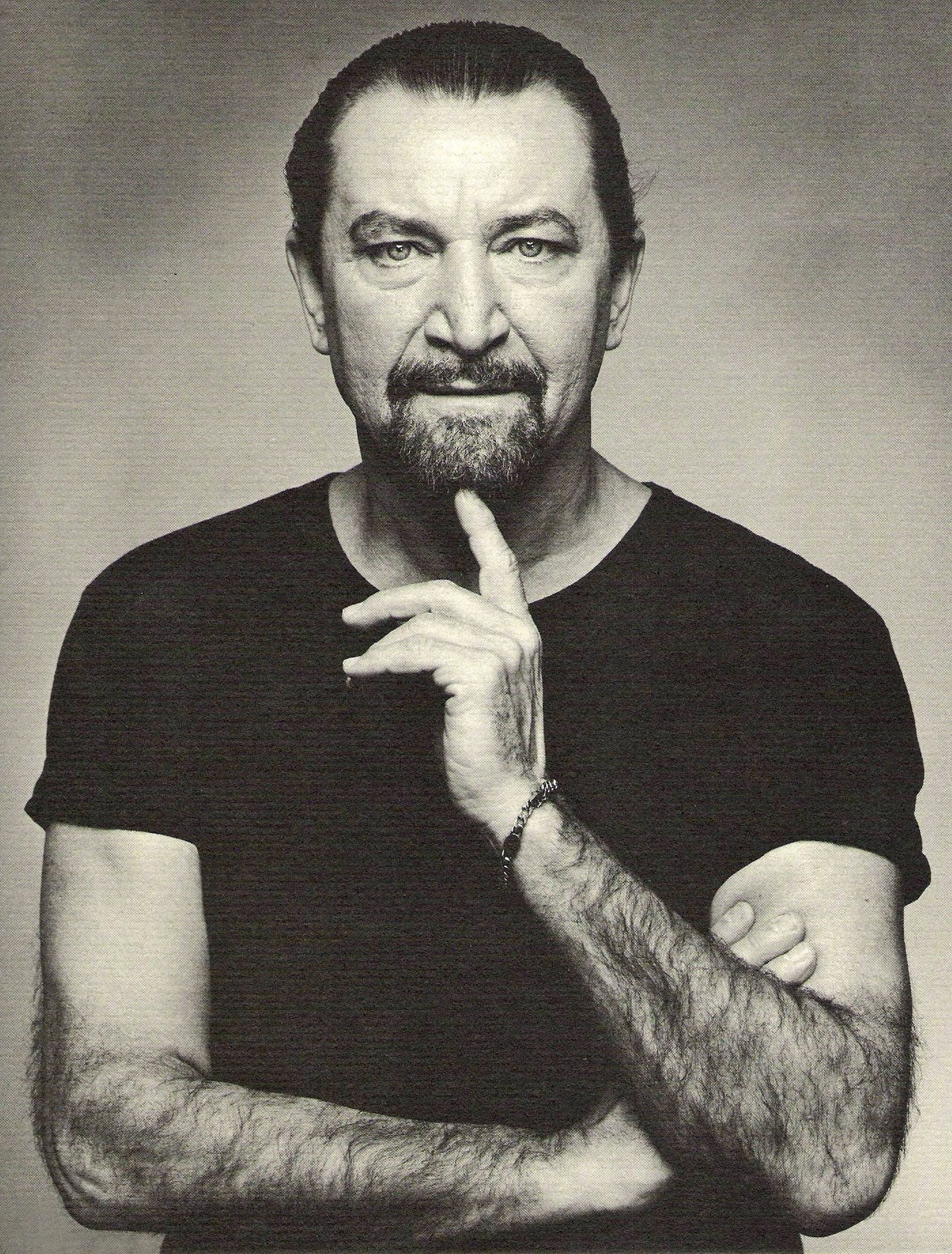
Huster at French Wikipedia · Ex-Commons. Re- · CC BY-SA 3.0
- Full name
- Maurice-Jean Berger.
- Born
- 1927. · Marseille.
- Died
- 2007. · Lausanne.
- Nationality
- France and Switzerland.
- Occupation
- dancer, choreographer, screenwriter, ballet master, scenographer, costume designer and lighting designer.
- Fields
- modern dance and neoclassical ballet.
- Education
- Paris Opera Ballet School.
- Teachers
- Lyubov Egorova, Léo Staats, Boris Knyazev and Vera Volkova.
- Honours
- Erasmus Prize, Praemium Imperiale, Kyoto Prize in Arts and Philosophy, honorary citizen of Brussels, Commandeur des Arts et des Lettres and Deutscher Tanzpreis.
- Languages
- French.
VALÉORINE Encyclopedia
VALÉORINE documentary reading
Documentary summary
Maurice Béjart (French: [beʒaʁ]; 1 January 1927 – 22 November 2007) was a French dancer, choreographer and opera director who ran the Béjart Ballet Lausanne in Switzerland. He developed a popular expressionistic form of modern ballet, tackling vast themes. He was awarded Swiss citizenship posthumously.
Admitted source layer · organised and presented by VALÉORINE
Note VALÉORINE
Maurice Béjart (1927–2007) was a ballet dancer, ballet master and choreographer, among other activities, of French and Swiss nationality. The ballet dancer was born Maurice-Jean Berger in Marseille and died in Lausanne.
Maurice Béjart was educated at Paris Opera Ballet School. The ballet dancer was a member of Académie des beaux-arts.
The work spans modern dance and neoclassical ballet. Languages used include French. Honours include Commandeur des Arts et des Lettres, Deutscher Tanzpreis and Erasmus Prize, among others.
Composed from admitted, traceable facts · 28 September 2026
VALÉORINE
Reference Check
Propose documentary evidence for Maurice Béjart. A contribution is never written directly as fact: identity, source, rights and evidence gates still decide.
Sign in to contribute
World of VALÉORINE
Documentary connections
Only confirmed graph relationships appear here. Images are shown only when their identity and reuse rights both pass the documentary gate.
Documentary evidence
Evidence Panel
not yet certified
- Identity
- resolved
- Independent source families
- 0
- Admitted assertions
- 0
- Open conflicts
- 0
Authority files
museum · 3685993b-37c1-4a6a-905f-9f9ce9388bdd · wikidata · Q217764 · wikipedia · Maurice Béjart
In this article
Biography
Biography
Maurice Béjart studied at Paris Opera Ballet School. Training under Lyubov Egorova, Léo Staats and Boris Knyazev is recorded. Thales Pan Chacon and Achilleas Manolis are recorded as having studied under Maurice Béjart. The recorded working language is French. Subjects and genres recorded for the work are modern dance and neoclassical ballet. Molière is recorded as an influence. Distinctions recorded are Erasmus Prize, Praemium Imperiale, Kyoto Prize in Arts and Philosophy and honorary citizen of Brussels.
Maurice-Jean Berger was born in Marseille, France, in 1927, the son of French philosopher Gaston Berger. Fascinated by a recital of Serge Lifar, he decided to devote himself entirely to dance. In South France days, he had studied under Mathilde Kschessinska. In 1945, he enrolled as a corps de ballet at the Opéra de Marseille. From 1946, he had studied under Madam Rousanne Sarkissian, Léo Staats, Madam Lyubov Yegorova and Olga Preobrajenska at "Studio Wacker", etc. in Paris. In 1948, he also trained with Janine Charrat, Yvette Chauviré and then with Roland Petit, in addition he had studied under Vera Volkova at London. In 1954, he founded the Ballet de l'Étoile company (dissolved in 1957). In 1960 he founded the Ballet du XXe Siècle in Brussels (dissolved in 1987). In 1973, with the Ballet du XXe siecle, he premiered "Golestan", on a poem by Sa'di, based on Iranian traditional music. The ballet was commissioned by the Shiraz-Persepolis Festival of Arts where it was premiered. The first performance of "Improvisation sur Mallarme III" with music by the French composer Pierre Boulez also took place at that Festival in 1973. "Farah", also based on Iranian traditional music was the Ballet's own commission, premiered in Brussels in 1976 and brought to the Shiraz-Persepolis Festival that same year. The 1976 Festival also witnessed the first performance of "Heliogabalus", based on a poem by Artaud. The Festival's patron was Farah Pahlavi, the former Empress of Iran, with whom Béjart kept strong ties to the end. In 1987 he moved to Lausanne in Switzerland, where he founded the Béjart Ballet Lausanne. Among his works is a thoroughly revised version of The Nutcracker, presumably inspired by his own life story, which he staged in 2000. It still uses Tchaikovsky's original score, but completely scraps the original plot and characters, instead supplying a new story about a boy's efforts to re-connect with his mother. We also are given a look into the boy's strange sexual fantasies. The production design is full of erotic images – some of which are most likely shocking to many, such as wombs and vaginal openings. One of the characters is Marius Petipa, who becomes Mephisto. Another character is called Felix the Cat, presumably after the famous cartoon character. The production has been issued on DVD.
Boléro
Boléro
One of Béjart's masterpiece dance works was his choreography to French composer Maurice Ravel's "Boléro." In The New York Times, Jennifer Dunning described Béjart's "Bolero" as "probably his best known and most popular dance." Created in 1960 for the Yugoslav ballerina Duška Sifnios, the dance features a dancer on a tabletop, surrounded by seated men, who slowly participate in the dance, culminating in a climactic union of the dancers atop the table. Dancers who would later perform Béjart's interpretation of "Bolero" include Sylvie Guillem from the Paris Opera Ballet, Grazia Galante, Maya Plisetskaya, Angele Albrecht, and Roberto Bolle. In a twist, Jorge Donn also played the role of the principal dancer, becoming the first male to do so. One of Donn's such performances can be seen in French filmmaker Claude Lelouch's 1981 musical epic, Les Uns et les Autres.
Dance schools
Dance schools
Béjart was the founder of several dance schools: the Mudra School in Brussels, 1970–1988; the Mudra Afrique School in Dakar, 1977–1985; the Rudra School in Lausanne, 1992–2007.
Filmography
Filmography
1975: Je suis né à Venise with Jorge Donn, Shonah Mirk, Philippe Lison and Barbara
Life and career
Dated record
Life and career
The full dated record · 1 entries
2007
Maurice Béjart died at Lausanne.
Places
Named by the record
Places
Only places the record itself states, plotted where the house gazetteer settles their coordinates. Nothing is inferred from a name or a nationality.
Marseille.
Birth place
Lausanne.
Death place
Primary material
Documents and archives
reference work
- Wikidata, structured authority record Q217764: Maurice Béjart
Reputable secondary · Wikimedia Foundation
- “Maurice Béjart”, English Wikipedia, consulted as further reading
Reputable secondary · Wikipedia
Institutional database
- MusicBrainz artist record for Maurice Béjart
Scholarly · MetaBrainz Foundation
Awards
During his lifetime, Béjart received many awards and distinctions for his contributions to the arts. He received the Japanese Order of the Rising Sun. He received the Belgian Ordre de la Couronne. In 1974, he won the Erasmus Prize. In 1994, he was appointed to the Académie des Beaux Arts. Also in 1994, he received the Deutscher Tanzpreis. In 2003, he was appointed Commandeur des Arts et des Lettres. Also in 2003, he won the Prix Benois de la Danse for lifetime achievement.
Notes from the source article
Cited by Wikipedia
Notes from the source article
These works are cited by the source article, in its own numbering. They are recorded as its citations, not as sources VALÉORINE has verified.
- 1.Norwich, John Julius. Oxford illustrated encyclopedia. Oxford University Press. 42. 1985–1993. 0-19-869129-7.
- 2.Maurice Béjart
- 3.Béjart, Maurice (1927-2007)
- 4."Maurice Béjart 1922~2007" Shinsokan Dance Magazine, Special Issue Volume XVII No.4 2008, Japan
- 5.http://www.digitallyobsessed.com/showreview.php3?ID=759
- 6.Dunning, Jennifer. Dance: Bejart Company Performs 'Bolero'. The New York Times. 25 November 1985.
- 7.Anderson, Jack. Review/Ballet; Fashion Merger: Dance, Dollars And a New Scent. The New York Times. 8 June 1990.
- 8.Cruickshank, Judith. Maurice Béjart: Influential choreographer who attracted huge audiences to ballet. The Independent. 24 November 2007.
- 9.Bisherige Preisträger*innen.
References
Citations
References
Each reference names the institution holding it, so a reader may go to the document itself.
Institutional database
MusicBrainz artist record for Maurice BéjartMetaBrainz Foundation
Verifiedreference work
Wikidata, structured authority record Q217764: Maurice BéjartWikimedia Foundation
Partially resolvedreference work
Partially resolved
The Encyclopedia exists whether or not anything is for sale. Corrections are recorded rather than overwritten, and every version of this record is kept. Published 14 August 2026.
Elsewhere in Music memorabilia
42,307 published records in this field, each with its sources named.
- Maurice AbrahamsPerson
- Maurice AbravanelPerson
- Maurice AndrésPerson
- Maurice Arnold StrothottePerson
- Maurice BenguiguiPerson
- Maurice BevanPerson
- Maurice BlackburnPerson
- Maurice BourguePerson
Best supported in this field
For owners
Own a work by Maurice Béjart?
A specialist will read what you send and tell you what the house can establish, what it cannot, and whether the object is suited to sale. There is no charge and no obligation. The object stays with you throughout; nothing is shipped to us unless it is arranged in writing beforehand.