
Martha Gularte
Fermina Gularte Bautista (18 June 1919 – 12 August 2002), better known by her stage name Martha Gularte, was a Uruguayan candombe dancer, choreographer, poet and vedette. She became a symbol of carnival and Afro-Uruguayan culture.
Martha Gularte
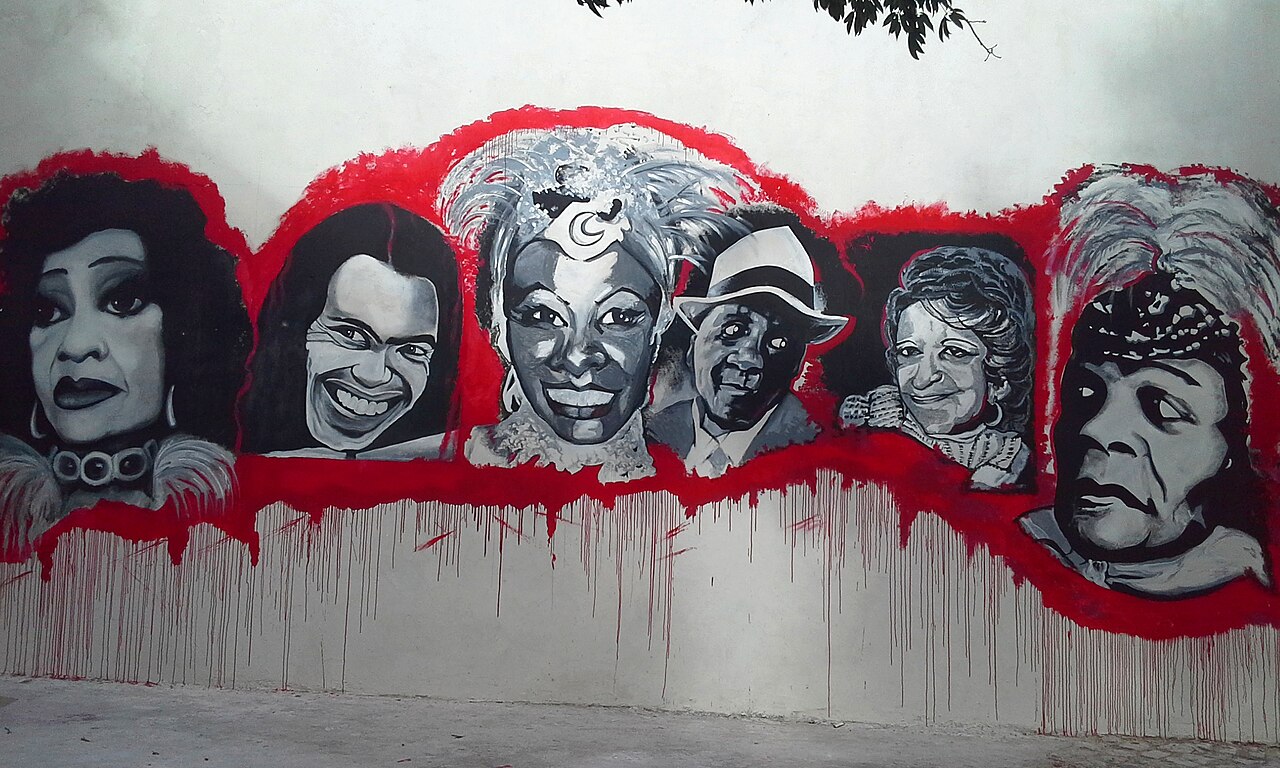
Señoritaleona · CC BY-SA 4.0
- Birth Name
- Fermina Gularte Bautista
- Born
- 18 June 1919
- Birthplace
- Paso de los Novillos, Tacuarembó, Uruguay
- Died
- 12 August 2002
- Place of death
- Montevideo, Uruguay.
- Occupation
- Candombe dancer, choreographer, poet and vedette
- Full name
- Fermina Gularte Bautista.
- Nationality
- Uruguay.
- Languages
- Spanish.
Reference Check
Propose documentary evidence for Martha Gularte. A contribution is never written directly as fact: identity, source, rights and evidence gates still decide.
Sign in to contribute
World of VALÉORINE
Documentary connections
Only confirmed graph relationships appear here. Images are shown only when their identity and reuse rights both pass the documentary gate.
Documentary evidence
Documentary basis
Authority files
wikidata · Q6002110 · wikipedia · Martha Gularte
In this article
Key facts
Key facts
• Birth Name — Fermina Gularte Bautista • Born — 18 June 1919 • Birthplace — Paso de los Novillos, Tacuarembó, Uruguay • Died — 12 August 2002 • Place of death — Montevideo, Uruguay. • Occupation — Candombe dancer, choreographer, poet and vedette • Children — 2
Early life and family
Early life and family
Fermina Gularte Bautista was born on a ranch in Paso de los Novillos, Tacuarembó, Uruguay, in 1919. Her paternal grandfather was an enslaved man in Brazil. Her white mother, Custodia Bautista, died when Gularte was aged 2. Gularte spent her childhood in orphanages in Montevideo. She met the poet Juana de Ibarbourou who was visiting the orphanage. After leaving the orphanage, Gularte worked as a domestic servant. To escape the low pay of this job, she began to dance in cabarets from a young age.
Career
Career
• Illustration — Gularte featured on the "Murals of the Plaza of the Carnival Museum" in Uruguay Gularte danced in cabarets across South America, including in her home country of Uruguay, and in Argentina, Brazil and Chile. She pioneered the role of the female vedette, was a candombe dancer and became a symbol of the Uruguayan Carnival and Afro-Uruguayan culture, along with Rosa Luna. Playwright Fernán Silva Valdéz [es] described her as "a black flower with tambourine petals." In 1946, Gularte was hired to work at Enrico Venturino Soto's "Caupolican Circus," but left as she did not like the roaring of the animals. In 1949, Gularte debuted with the group Añoranzas Negras. Gularte later moved to Spain, where she choreographed the cabaret "El Molino Rojo." In the 1960s, she joined the troupe Morenada. In 1982, she founded the Tanganika troupe with her children. When in her 60s, Gularte began writing, publishing The Boatman of Jordan River, Song to the Bible in 1998. In 1999 she released an autobiography. Gularte also wrote poetry which reflected on Afro-Uruguayan history, losses of cultural continuity and estrangement from the African homeland. Gularte continued to dance alongside writing, before announcing her retirement from the stage in February 2002. Shortly before she died, Gularte featured in the Uruguayan film In This Tricky Life by Beatriz Flores Silva.
Personal life
Personal life
Gulrte had two children, Jorginho and Katy. She gave birth to her son Jorginho, who had an American father, in Porto Alegre, Rio Grande do Sul, Brazil.
Life and career
Dated record
Life and career
The full dated record · 2 entries
1919
Martha Gularte born at Paso de los novillos.
2002
Martha Gularte died at Montevideo.
Places
Named by the record
Places
Only places the record itself states, plotted where the house gazetteer settles their coordinates. Nothing is inferred from a name or a nationality.
Paso de los novillos.
Birth place
Montevideo.
Death place
Death and legacy
Gularte died on 12 August 2002 in Montevideo, Uruguay, aged 83. She is featured on the "Murals of the Plaza of the Carnival Museum" in Uruguay.

Martha Gularte, Uruguayan vedette and Carnival artist.
Fedaro

Uruguayan artist
Fedaro
Text attribution
Licensing
Text attribution
Part of the biographical narrative on this page reuses licensed material. Its origin, revision and licence are recorded here.
The biographical narrative on this page is based on the Wikipedia article Martha Gularte, revision 1315379475 (EN edition), by its contributors. VALÉORINE has edited that text and built its own documentary record around it. The reused material is available under CC BY-SA 4.0, and this page's reuse of it is offered under the same licence. Everything else on this page — the chronology, the holdings, the evidence, the plates and the connections — is VALÉORINE's own record. Sources and licences.
Notes from the source article
Cited by Wikipedia
Notes from the source article
These works are cited by the source article, in its own numbering. They are recorded as its citations, not as sources VALÉORINE has verified.
- 1.Martha Gularte. Museo del Carnaval.
- 2.Lopes, Nei. Enciclopédia brasileira da diáspora africana. Selo Negro Edições. 2014-07-08. 978-85-87478-99-3.
- 3.Suar, Germán. Martha Gularte. Periódico Años Dorados. 2023-02-20.
- 4.Estol, Federico. Fiestas del Uruguay. Mar Dulce. 199. 2009. 978-9974-8218-0-4.
- 5.Ediciones Populares para América Latina. La herencia cultural africana en las Américas. 38. 1998. 978-9974-582-15-6.
- 6.Fuente, Alejandro de la. Afro-Latin American Studies: An Introduction. Cambridge University Press. 77. 2018-04-26. 978-1-107-17762-8.
- 7.Jaramillo, María Mercedes. Stories of Latin American Women of African Heritage: Daughters of Muntu. Taylor & Francis. 2025-07-24. 978-1-040-36906-7.
- 8.Andrews, George Reid. Blackness in the White Nation: A History of Afro-Uruguay. University of North Carolina Press. 79, 169-170. 2010-10-18. 978-0-8078-9960-1.
- 9.Alfaro, Milita. Mediomundo: sur, conventillo y después. Edita Medio & Medio. 53. 2008. 978-9974-8161-0-7.
- 10.Poemas de Martha Gularte: Poetisas Uruguayas. Isliada - Literatura Cubana. 2024-10-08.
- 11.La madre de todas las vedettes. Búsqueda. 2019-01-24.
- 12.Lewis, Marvin A. Afro-Uruguayan Literature: Post-colonial Perspectives. Bucknell University Press. 20-23. 2003. 978-0-8387-5550-1.
- 13.Vilaró, Carlos Páez. Entre colores y tambores: viaje desde la punta de la cerbatana, hasta la lonja del tamboril. C. Paez Vilaró. 222. 2000. 978-950-529-104-5.
- 14.Ramos, Armando Olveira. Crónicas Migrantes: Rosa Luna y Martha Gularte, un clásico memorable del candombe. Crónicas Migrantes. 8 March 2013.
- 15.Vilaró, Carlos Páez. Así te veo-- Montevideo. Milgraf. 43. 1985.
- 16.Marta Gularte. Turismo Tacuarembó.
- 17.Rojas, Gustavo Fripp. ¿Qué es boniato, maestro? Pequeño diccionario ilustrado de uruguayismos para porteños: Contiene como chiquicientas definiciones. Alter ediciones. 2020-04-15. 978-9974-8723-7-0.
- 18.Falca, Marcelo. Inauguraron "Murales de la Plaza del Museo del Carnaval" por los 100 años de Lágrima Ríos. El Explorador. 2024-09-27.
References
Citations
References
Each reference names the institution holding it, so a reader may go to the document itself.
reference work
Secondary witnessreference work
Secondary witness
Further particulars
Held on the record
Further particulars
Open the remaining particulars
Martha Gularte was recorded at birth as Fermina Gularte Bautista. She also worked under the names Martha Gularte and Marta Gularte. Her recorded language was Spanish. One child is recorded: Jorginho Gularte. Recorded as dancer, vedette, writer and poet.
Identity and origins
The Encyclopedia exists whether or not anything is for sale. Corrections are recorded rather than overwritten, and every version of this record is kept. Published 21 August 2026.
Elsewhere in Books
39,529 published records in this field, each with its sources named.
- Martha Daniell LoganAuthor
- Martha DoddAuthor
- Martha GellhornAuthor
- Martha GrimesAuthor
- Martha HildebrandtAuthor
- Martha HollanderAuthor
- Martha LlwydAuthor
- Martha M. Vertreace-DoodyAuthor
Best supported in this field
For owners
Own a work by Martha Gularte?
A specialist will read what you send and tell you what the house can establish, what it cannot, and whether the object is suited to sale. There is no charge and no obligation. The object stays with you throughout; nothing is shipped to us unless it is arranged in writing beforehand.