
Marken
Marken (Marken's dialect: Mereke) is a village in the municipality of Waterland in the province of North Holland, Netherlands. It had a population of 1,730 as of 2024, and occupies a peninsula in the Markermeer. It was, until 1957, an island in the former Zuiderzee.
Marken
- Name
- Marken
VALÉORINE Encyclopedia
VALÉORINE documentary reading
Documentary summary
Marken (Marken's dialect: Mereke) is a village in the municipality of Waterland in the province of North Holland, Netherlands. It had a population of 1,730 as of 2024, and occupies a peninsula in the Markermeer. It was, until 1957, an island in the former Zuiderzee.
Admitted source layer · organised and presented by VALÉORINE
Note VALÉORINE
No house-authored Note is published until its assertions and sources pass the VALÉORINE evidence contract. The documentary article remains available in full while that enrichment is being consolidated.
Documentary enrichment in progress · no unsupported statement published
Reference Check
Propose documentary evidence for Marken. A contribution is never written directly as fact: identity, source, rights and evidence gates still decide.
Sign in to contribute
World of VALÉORINE
Documentary connections
Only confirmed graph relationships appear here. Images are shown only when their identity and reuse rights both pass the documentary gate.

Documentary evidence
Evidence Panel
not yet certified
- Identity
- unresolved
- Independent source families
- 0
- Admitted assertions
- 0
- Open conflicts
- 0
Key facts
Key facts
The characteristic wooden houses of Marken are a tourist attraction.
• Name — Marken • Type — Village • Image Flag — Marker vlag.svg • Image Seal — Marken-wapen.svg • Pushpin Map — Netherlands#Netherlands North Holland • Pushpin Label Position — right • Pushpin Map Size — 250 • Pushpin Caption — Location in the Netherlands##Location in the province of North Holland in the Netherlands • Subdivision Type — Country • Subdivision Name — Netherlands • Subdivision Type1 — Province • Subdivision Name1 — North Holland • Subdivision Type2 — Municipality • Subdivision Name2 — Waterland • Unit Pref — Metric • Elevation M — -0.5 • Area Total Km2 — 2.67 • Population Total — 1,730 • Population As Of — 2024 • Population Density Km2 — auto • Time Zone — CET • Utc Offset — +1 • Time Zone Dst — CEST • Utc Offset Dst — +2 • Postal Code Type — Postal code • Postal Code — 1156 • Area Code Type — Area code • Area Code — 0299 Marken (Marken's dialect: Mereke) is a village in the municipality of Waterland in the province of North Holland, Netherlands. It had a population of 1,730 as of 2024, and occupies a peninsula in the Markermeer. It was, until 1957, an island in the former Zuiderzee. The characteristic wooden houses of Marken are a tourist attraction.
Early years
Early years
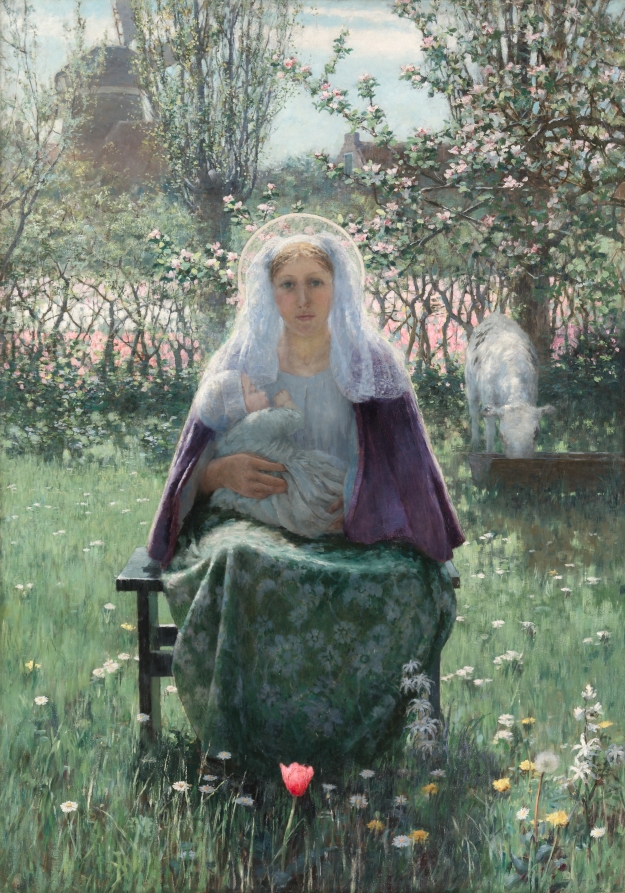
Until 1164, the area that is now Marken was connected to the mainland. It was located in the east of the low peatland of Waterland (region), on the border with Lake Flevo. The name Marken means "borderland," referring to it forming the boundary between the water and the peat. In 1164, the Saint Juliana flood (also known as the Jurriaan flood) engulfed the land around Marken, turning it into an island. Due to this and subsequent floods in the 12th and 13th centuries, the North Sea advanced further and further, and the Lake Flevo eventually became the Zuiderzee. Around 1232, the island was bought by Frisian Premonstratensians. They built the first dike, and through land reclamation, they expanded the island. By draining the water, they transformed the peat soil into pastureland. The built a church and the first settlements in the west and southeast. They mainly lived off livestock farming and founded the settlement of Monnickendam across from Marken as a staple market for their dairy products. In 1345, the Premonstratensians were expelled from Marken as part of the Friso-Hollandic Wars. For some time during the later 19th and early 20th centuries, Marken and its inhabitants were the focus of considerable attention by folklorists, ethnographers and physical anthropologists, who regarded the small fishing town as a relic of the traditional native culture that was destined to disappear as modernization of the Netherlands gained pace. Among them were Johann Friedrich Blumenbach who examined a human skull from the island which he called Batavus genuinus; and the Belgian painter Xavier Mellery who stayed in Marken at the request of Charles De Coster. Mellery was asked to create illustrative work and delivered several intimist works. Cornelis Lely's designs incorporated the island into a proposed Markerwaard. A partial dike, built in 1941 in the north, is the first phase of that project which was stopped by World War II. • Illustration — Girls in traditional costumes (circa 1900) • Illustration — Fisherman in traditional costume (circa 1900)
Recent times
Recent times
The island appeared as a location in the 1970 film Puppet on a Chain. In 1983, the Marker Museum about the history of the island was opened. Marken was a separate municipality until 1991, when it was merged into Waterland.
Geography
Geography
Marken is in the municipality of Waterland in the east of the province of North Holland in the west of the Netherlands. Marken is a peninsula in the Markermeer, of which is it is the namesake, and is connected to the mainland of North Holland by a causeway. • Illustration — Satellite image • Illustration — Street in 2009 • Illustration — Wooden house • Illustration — Havenbuurt about 1970
The Encyclopedia exists whether or not anything is for sale. Corrections are recorded rather than overwritten, and every version of this record is kept. Published 26 September 2026.
Elsewhere in General
14,849 published records in this field, each with its sources named.
- Marist High SchoolOrganisation
- MarjayounPlace
- Mark Keppel High SchoolOrganisation
- Mark Rutherford SchoolOrganisation
- MarkhamPlace
- Markham CollegeOrganisation
- MarkowaPlace
- MarksburgPlace
Best supported in this field
For owners
Own an object connected with Marken?
A specialist will read what you send and tell you what the house can establish, what it cannot, and whether the object is suited to sale. There is no charge and no obligation. The object stays with you throughout; nothing is shipped to us unless it is arranged in writing beforehand.