
Mariana Alcoforado
Sóror Mariana Alcoforado (Santa Maria da Feira, Beja, 22 April 1640Beja, 28 July 1723) was a Portuguese nun living in the convent of the Poor Clares (Convento de Nossa Senhora da Conceição, Convent of Our Lady of the Conception) in Beja, Portugal. Debate continues as to whether Mariana was the real Portuguese author of the Letters of a Portuguese Nun (comprising five letters). Her purported love affair with the French officer Noël Bouton, Marquis de Chamilly and later Marshal of France, has made Beja famous in literary circles, mainly in Portugal and France.
Also recorded as Marianna Alcoforado
Mariana Alcoforado
Georges Jansoone · Self-photographed · CC BY 2.5
- Name
- Mariana Alcoforado
- Born
- 22 April 1640
- Birthplace
- Beja, Portugal
- Died
- 28 July 1723
- Occupation
- Nun, Writer
- Full name
- Mariana Mendes da Costa Alcoforado.
- Nationality
- Kingdom of Portugal.
- Known for
- Letters of a Portuguese Nun.
- Languages
- Portuguese.
VALÉORINE Encyclopedia
VALÉORINE documentary reading
Documentary summary
Sóror Mariana Alcoforado (Santa Maria da Feira, Beja, 22 April 1640Beja, 28 July 1723) was a Portuguese nun living in the convent of the Poor Clares (Convento de Nossa Senhora da Conceição, Convent of Our Lady of the Conception) in Beja, Portugal. Debate continues as to whether Mariana was the real Portuguese author of the Letters of a Portuguese Nun (comprising five letters). Her purported love affair with the French officer Noël Bouton, Marquis de Chamilly and later Marshal of France, has made Beja famous in literary circles, mainly in Portugal and France.
Admitted source layer · organised and presented by VALÉORINE
Note VALÉORINE
Mariana Alcoforado (1640–1723) was a nun and writer, a national of the Kingdom of Portugal. The nun was born Mariana Mendes da Costa Alcoforado in Beja and died in Beja.
Among the works is Letters of a Portuguese Nun. Languages used include Portuguese.
Composed from admitted, traceable facts · 01 October 2026
VALÉORINE
Reference Check
Propose documentary evidence for Mariana Alcoforado. A contribution is never written directly as fact: identity, source, rights and evidence gates still decide.
Sign in to contribute
World of VALÉORINE
Documentary connections
Only confirmed graph relationships appear here. Images are shown only when their identity and reuse rights both pass the documentary gate.
Documentary evidence
Documentary basis
Authority files
wikidata · Q268325 · wikipedia · Mariana Alcoforado
In this article
Biography
Biography
Some literary scholars consider the letters a fictional work and ascribe their authorship to Gabriel-Joseph de Lavergne, comte de Guilleragues (1628–1684), although a real nun named Mariana Alcoforado indeed existed. In her recent book Letters of a Portuguese Nun: Uncovering the Mystery Behind a Seventeenth-Century Forbidden Love (2006), the author Myriam Cyr has attempted to reassert the attribution of the letters to the real Mariana Alcoforado.

dessin de Modigliani
Victorcouto Modigliani

portrait du chevalier de Chamilly
Victorcouto
Key facts
Key facts
• Name — Mariana Alcoforado • Born — 22 April 1640 • Birthplace — Beja, Portugal • Died — 28 July 1723 • Occupation — Nun, Writer • Language — Portuguese • Notable Works — Letters of a Portuguese Nun
Biography
Biography
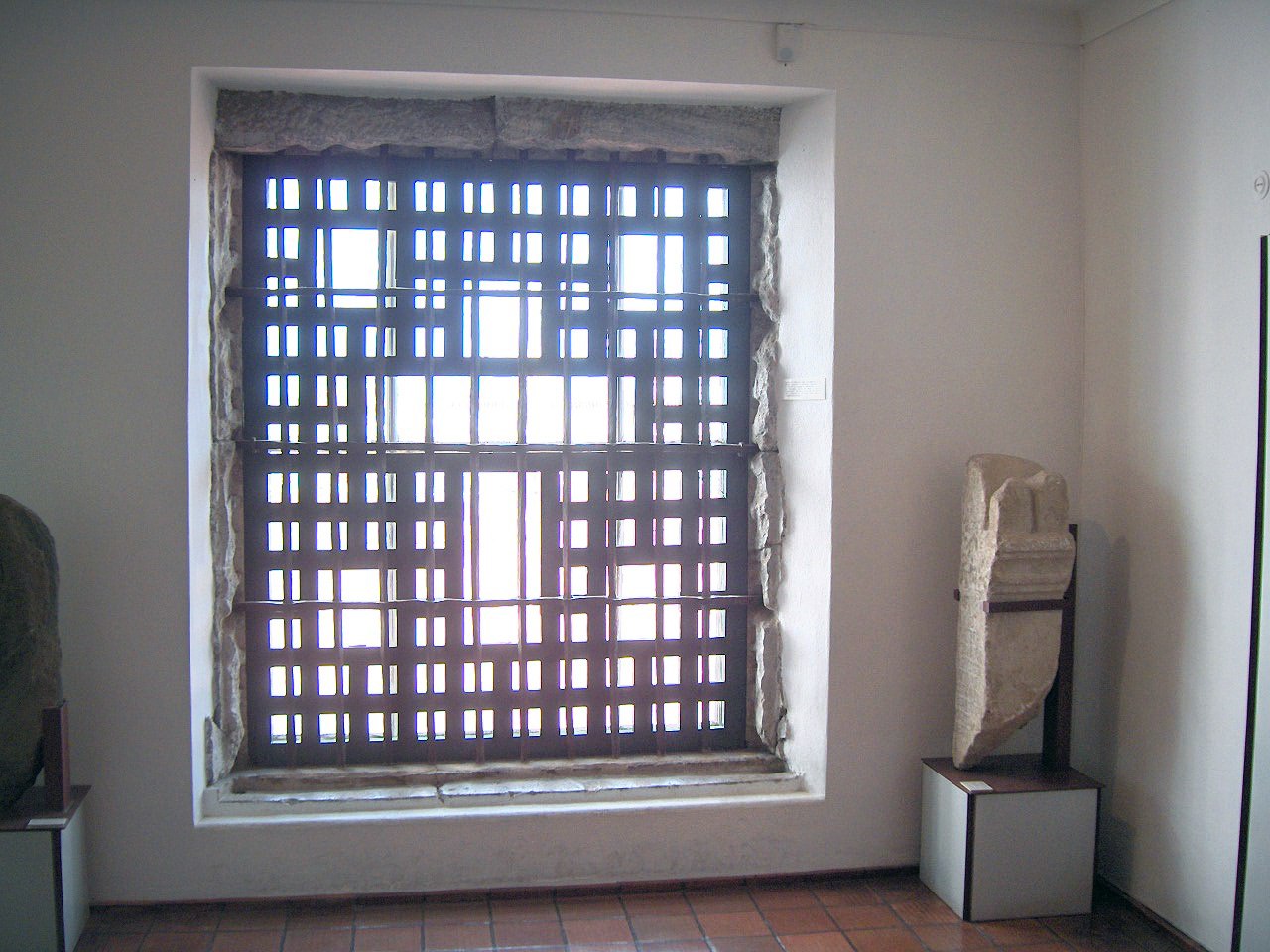
• Note: the following biography is based in large part on the letters and may contain, for that reason, fictionalized elements. • Illustration — The convent where Soror Mariana Alcoforado lived (now a regional museum); in Beja, Portugal. Mariana Alcoforado was born in Beja, daughter of landed proprietor of Alentejo Francisco da Cunha Alcoforado, born at Cortiços, Macedo de Cavaleiros, and first wife Leonor Mendes. She had three brothers: Baltasar Vaz Alcoforado, Miguel da Cunha Alcoforado and Francisco da Cunha Alcoforado, and two sisters: Anna Maria da Cunha Alcoforado, wife of Rui de Mello Lobo Freire, and Maria Peregrina Alcoforado. Beja was the chief garrison town of the province and the principal theatre of the twenty-eight years' war with Spain that followed the Portuguese Revolution of 1640. Mariana's widowed father, occupied with administrative and military commissions, placed her in the wealthy convent of the Conception for security and education. He later remarried and had two more daughters, Maria da Conceição Alcoforado and Catarina Alcoforado, and was also made a Knight of the Order of Christ on 15 December 1647. • Illustration — (Replica of the) window from where the nun spoke with the French officer. She made her religious profession as a Franciscan nun of the Poor Ladies at sixteen or earlier, without any real vocation, and lived a routine life in that somewhat relaxed house until her twenty-fifth year, when she purportedly met the young French nobleman Noël Bouton. This man, afterwards known as marquis of Chamilly, and marshal of France, was one of the French officers who came to Portugal to serve under the captain, Frederick Schomberg, 1st Duke of Schomberg, the re-organizer of the Portuguese army, campaigning against the Spanish army in the Alentejo. During the years 1665-1667, the marquis of Chamilly spent much of his time in and about Beja, and probably became acquainted with the Alcoforado family through Sóror Mariana's brother, who was a soldier. Custom permitted those in religious orders to receive and entertain visitors, and Chamilly found it easy to get round the trustful nun. Before long their affair became known and caused a scandal, and to avoid the consequences Chamilly deserted Soror Mariana and returned to France. This resulted in Soror Mariana writing the letters. There are signs in the fifth letter that Soror Mariana had begun to conquer her passion. After a life of rigid penance, accompanied by much suffering, she died, aged 83. Soror Mariana's life story has also been described in the novel by Katherine Vaz, Mariana, published by Aliform Publishing in 2005.
Fiction
Fiction
• The Three Marias: New Portuguese Letters, by Maria Isabel Barreno, Maria Teresa Horta, and Maria Velho da Costa, translated by Helen R. Lane, 1973 Doubleday; Novas Cartas Portuguesas original title;. • The Love Letters, a novel by Madeleine L'Engle, 1966 Farrar, Straus and Giroux,.
Life and career
Dated record
Life and career
The full dated record · 2 entries
1640
Mariana Alcoforado was born on 22 April 1640.
1723
Mariana Alcoforado died on 28 July 1723.
Notes from the source article
Cited by Wikipedia
Notes from the source article
These works are cited by the source article, in its own numbering. They are recorded as its citations, not as sources VALÉORINE has verified.
- 1.This source assumed the authenticity of the letters.
References
Citations
References
Each reference names the institution holding it, so a reader may go to the document itself.
reference work
Wikidata, structured authority record Q268325: Mariana AlcoforadoWikimedia Foundation
Secondary witnessreference work
Secondary witness
People, houses and institutions
Knowledge graph
People, houses and institutions
Teachers, collaborators, publishers and institutions recorded against this person, each on a stated basis.
Citizenship
1- Kingdom of PortugalPlace
Established from a fact already recorded on a verified source.
Further particulars
Held on the record
Further particulars
Open the remaining particulars
Mariana Alcoforado was recorded at birth as Mariana Mendes da Costa Alcoforado. The authorities additionally record the heading Marianna Alcoforado. Her recorded language was Portuguese. Her recorded confession was Catholicism.
Identity and origins
The Encyclopedia exists whether or not anything is for sale. Corrections are recorded rather than overwritten, and every version of this record is kept. Published 14 August 2026.
Elsewhere in Books
39,200 published records in this field, each with its sources named.
- Marian KeyesAuthor
- Marian MazurAuthor
- Marian PilotAuthor
- Marian TurwidAuthor
- Mariana CodruțAuthor
- Mariana CoelhoAuthor
- Mariana SavkaAuthor
- Mariana StarkeAuthor
Best supported in this field
For owners
Own a work by Mariana Alcoforado?
A specialist will read what you send and tell you what the house can establish, what it cannot, and whether the object is suited to sale. There is no charge and no obligation. The object stays with you throughout; nothing is shipped to us unless it is arranged in writing beforehand.