
Mahilyow
Mahilyow, is a city in eastern Belarus. It is located on the Dnieper River, about 76 km from the border with Russia's Smolensk Oblast and 105 km from Bryansk Oblast. In 2011, its population was 360,918, up from an estimated 106,000 in 1956.
Mahilyow
- Name
- Mogilev
VALÉORINE Encyclopedia
VALÉORINE documentary reading
Documentary summary
Mahilyow, is a city in eastern Belarus. It is located on the Dnieper River, about 76 km from the border with Russia's Smolensk Oblast and 105 km from Bryansk Oblast. In 2011, its population was 360,918, up from an estimated 106,000 in 1956.
Admitted source layer · organised and presented by VALÉORINE
Note VALÉORINE
No house-authored Note is published until its assertions and sources pass the VALÉORINE evidence contract. The documentary article remains available in full while that enrichment is being consolidated.
Documentary enrichment in progress · no unsupported statement published
Reference Check
Propose documentary evidence for Mahilyow. A contribution is never written directly as fact: identity, source, rights and evidence gates still decide.
Sign in to contribute
World of VALÉORINE
Documentary connections
Only confirmed graph relationships appear here. Images are shown only when their identity and reuse rights both pass the documentary gate.

Born In · incoming
Andrey Denyer
Photographer
Портрет фотографа Андрея (Генриха) Ивановича Деньера (1820-1892) - Виртуальный Pусский музей
Born In · incoming
Eduard Kolmanovsky
Person

Born In · incoming
Evgenia Dodina
Person
Michal Aviad מיכל אביעד

Born In · incoming
Mikhail Volpin
Author
[1]

Born In · incoming
Modest Altschuler
Person
J. Willis Sayre Collection of Theatrical Photographs

Born In · incoming
Nachman Syrkin
Author
National Library of Israel, Schwadron collection

Born In · incoming
Petr Elfimov
Person
Petr Elfimov

Born In · incoming
Spiridon Sobol
Author
http://old.stsl.ru/manuscripts/staropechatnye-knigi/147
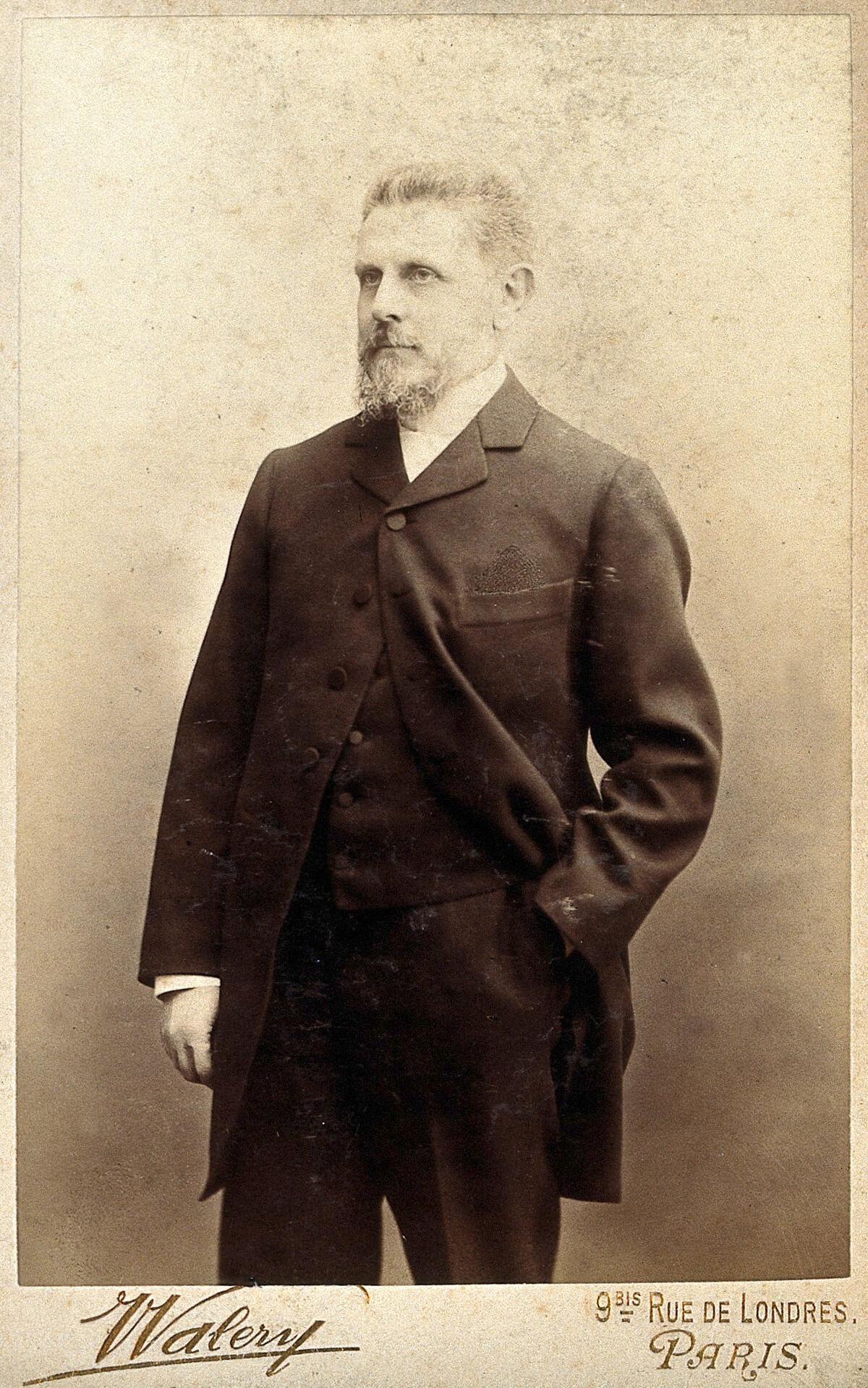
Born In · incoming
Stanisław Julian Ostroróg
Photographer
Wellcome Collection

Born In · incoming
Vladimir Gubarev
Author
Own work

Died In · incoming
Zmicier Zhylunovich
Author
НЕрасстраляныя, эл. архіў Луцкевіч А. За дваццаць пяць гадоў (1903—1928). Успаміны аб працы першых беларускіх палітычных арганізацыяў: Беларуская Рэвалюцыйная Грамада, Беларуская Сацыялістычная Грамад
Documentary evidence
Evidence Panel
not yet certified
- Identity
- unresolved
- Independent source families
- 0
- Admitted assertions
- 0
- Open conflicts
- 0
In this article
Key facts
Key facts
It serves as the administrative centre of Mogilev Region, and is the third-largest city in Belarus.
• Name — Mogilev • Other Name — Mahilyow • Translit Lang1 — Belarusian • Translit Lang1 Type1 — BGN/PCGN • Translit Lang1 Info1 — Mahilyow • Translit Lang1 Type2 — Official • Translit Lang1 Info2 — Mahilioŭ • Translit Lang1 Type3 — Scholarly • Translit Lang1 Info3 — Mahilëŭ • Translit Lang1 Type4 — ALA-LC • Translit Lang1 Info4 — Mahili͡oŭ • Translit Lang1 Type5 — British • Translit Lang1 Info5 — Mahilëw • Translit Lang1 Type6 — Łacinka • Translit Lang1 Info6 — Mahiloŭ • Type — City • Image Flag — Flag of Mahiloŭ.svg • Image Shield — Coat of Arms of Mahiloŭ, Belarus.svg • Flag Size — 150 • Shield Size — 75 • Map Caption — Location of Mogilev, shown within Mogilev Region • Pushpin Map — Belarus • Subdivision Type — Country • Subdivision Name — Belarus • Subdivision Type1 — Region • Subdivision Name1 — Mogilev Region • Leader Title — Mayor • Leader Name — Sergey Chertkov • Established Title — Founded • Established Date — 1267 • Area Total Km2 — 118.50 • Population As Of — 2025 • Population Total — 352,896 • Population Density Km2 — auto • Time Zone — MSK • Utc Offset — +3 • Elevation M — 192 • Postal Code Type — Postal code • Postal Code — 212 001 • Area Code — +375 222 • Custom Label Sec1 — License plate • Custom Data Sec1 — 6 • Website — City's executive committee's official website • Mapframe — yes • Mapframe Wikidata — yes • Mapframe Height — 300 • Mapframe Point — none • Mapframe Stroke Width — 1 • Mapframe Stroke Color — #676669 Mogilev, or Mahilyow, is a city in eastern Belarus. It is located on the Dnieper River, about 76 km from the border with Russia's Smolensk Oblast and 105 km from Bryansk Oblast. As of 2025, it has a population of 352,896. In 2011, its population was 360,918, up from an estimated 106,000 in 1956. It serves as the administrative centre of Mogilev Region, and is the third-largest city in Belarus.
Name
Name
The name Mogilev may be derived from Russian mogila (grave) and lev (lion); according to folk legend, the city was named after the grave of a young peasant, which was known as the "Tomb of the Lion", and it was around this burial mound that a fortress was built. Its founding has also been linked to Galician prince Leo I.
History
History
The city was first mentioned in historical records in 1267. From the 14th century, it was part of the Grand Duchy of Lithuania, and since the Union of Lublin (1569), it has been part of the Polish–Lithuanian Commonwealth, where it became known as Mohylew. In the 16th and 17th centuries, the city flourished as one of the main nodes of the east–west and north–south trading routes. In 1577, Grand Duke Stephen Báthory granted it city rights under Magdeburg law. In 1654, during the Russo-Polish War (1654–1667), the townsmen negotiated a treaty of surrender to the Russians peacefully, if the Jews were to be expelled and their property divided up among Mogilev's inhabitants. Tsar Aleksei Mikhailovitch agreed to their proposal. However, instead of expelling the Jews, the Russian troops massacred them after they had led them to the outskirts of the town. During this war, the city was besieged twice by the Lithuanian army: in 1655, and Siege of Mogilev (1660). In 1661, residents started Mogilev uprising (1661) against the Russian military occupation. The city was set afire by Peter the Great's forces in 1708, during the Great Northern War. After the First Partition of Poland in 1772, Mogilev became part of the Russian Empire and became the centre of the Mogilev Governorate. In the years 1915–1917, during World War I, the Stavka, the headquarters of the Russian Imperial Army, was based in the city and the Tsar, Nicholas II, spent long periods there as Commander-in-Chief. Following the Russian Revolution, in 1918, the city was briefly occupied by Germany and placed under their short-lived Belarusian People's Republic. In 1919, Mogilev was captured by the forces of Soviet Russia and incorporated into the Byelorussian SSR. Up to World War II and the Holocaust, like many other cities in Europe, Mogilev had a significant Jewish population: according to the Russian census of 1897, out of the total population of 41,100, 21,500 were Jews (i.e. over 50 percent). In 1938 the leadership of Soviet Belarus decided to move the capital of the country from Minsk to Mogilev because Minsk was too close to the then-Polish-Soviet border. Due to that, the now-Mogilev City Council building was built in 1938–1940 to be the government building. It was designed to resemble the Minsk Government building. • Illustration — Mogilev in July 1941 During Operation Barbarossa, the city was conquered by Wehrmacht forces on 26 July 1941 and remained under German occupation until 28 June 1944. Mogilev became the official residence of High SS and police leader (HSSPF) Erich von dem Bach. During that period, the Jews of Mogilev were ghettoized and systematically murdered by Ordnungspolizei and SS personnel. Heinrich Himmler personally witnessed the executions of 279 Jews on 23 October 1941. Later that month, several mentally disabled patients were poisoned with car exhaust fumes as an experiment; the method of killing was thereafter applied in several Nazi extermination camps. Initial plans for establishing a death camp in Mogilev were abandoned in favour of Maly Trostenets. In 1944, with the Mogilev offensive, the devastated city was liberated by the Red Army and returned to Soviet control. Mogilev then was the site of a labour camp for German POW soldiers. Since Belarus gained its independence in 1991, Mogilev has remained one of its principal cities.
Religion
Religion
Mohilev was the episcopal see of the Latin Catholic Archdiocese of Mohilev until its 1991 merger into the Roman Catholic Archdiocese of Minsk-Mohilev. It remains the see of the Eparchy (Eastern diocese) of Mogilev and Mstsislaw in the Belarusian Exarchate of the Russian Orthodox Church.
Economy
Economy
After World War II, a huge metallurgy centre with several major steel mills was built. Also, several major factories of cranes, cars, tractors and a chemical plant were established. By the 1950s, tanning was Mogilev's principal industry, and it was a major trading centre for cereal, leather, salt, sugar, fish, timber and flint: the city has been home to a major inland port on the Dnieper river since and an airport since. Since the fall of the Soviet Union and the establishment of Belarus as an independent country, Mogilev has become one of that country's main economic and industrial centres.
Notable sites
Notable sites
The convent of St. Nicholas has a cathedral built in 1668, as well as the original iconostasis, bell tower, walls, and gates. As of 2014 it was under consideration to become a UNESCO World Heritage site. • Illustration — The Convent of St. Nicholas
Climate
Climate
Mogilev has a warm-summer humid continental climate (Köppen climate classification Dfb) with warm summers and cold winters.
Sports
Sports
• Illustration — Spartak Stadium City sports teams: • Football: FC Torpedo Mogilev, FC Dnepr Mogilev and ZhFC Dnepr Mogilev, Nadezhda Mogilev • Hockey: HK Mogilev • Basketball: BC Borisfen
Twin towns – sister cities
Twin towns – sister cities
Mogilev is twinned with: • Al Rayyan, Qatar • Bursa, Turkey • Changsha, China • Eisenach, Germany • Gabrovo, Bulgaria • Kerch, Ukraine • Kragujevac, Serbia • Mykolaiv, Ukraine • Nanjing, China • Penza, Russia • Sokolinaya Gora (Moscow), Russia • Sumgait, Azerbaijan • Tabriz, Iran • Tula, Russia • Villeurbanne, France • Wittenberg, Germany • Pivdenne, Ukraine • Zhengzhou, China • Zvenigorod, Russia
Notable citizens
• Illustration — David Pinski around 1900 • Rita Achkina, cross country skier • Matest M. Agrest, ethnologist and mathematician • Modest Altschuler, orchestra conductor • Abe Anellis, microbiologist • Olga Bogdanova, chemist • Petr Elfimov, musician • Svetlana Baitova, gymnast • Ihar Hershankou, serial killer • Alyona Lanskaya, singer • Eugenia Logvinovna Lashnyukova, nun • Joseph Lookstein, Rabbi and President of Bar-Ilan University • Leonid Isaakovich Mandelshtam, physicist • Andrey Melnikov, soldier and recipient of Hero of the Soviet Union award • Andrej Mryj, satirical writer, journalist, translator and a victim of Stalin's purges • Ivan Nasovič, author of the first Belarusian dictionary • Stanisław Julian Ostroróg, Polish count, Crimean War veteran, noted Victorian Photographic portraitist, naturalised British subject • David Pinski, Yiddish playwright • Simeon Piščević, major-general and governor of Mogilev (1777) • Lev Polugaevsky, International Grandmaster of chess • Leo Rogin, Economist and Writer • Otto Schmidt, scientist, mathematician, astronomer, geophysicist, statesman, academician • Issai Schur, mathematician • Spiridon Sobol, Belarusian enlightener and printer; published the first ABC-book in Belarus in 1631 • Mikałaj Sudziłoŭski, revolutionary and scientist • Sergey Evtuhov (born 1953), painter • Nikolai Sudzilovsky, 1st President of the Hawaii Senate • Helena Zarembina
Knowledge graph
Makers, houses and production
The people, houses and objects recorded in connection with this place.
Born at
1- Petr ElfimovPerson
Established from a fact already recorded on a verified source.
The Encyclopedia exists whether or not anything is for sale. Corrections are recorded rather than overwritten, and every version of this record is kept. Published 26 September 2026.
Elsewhere in General
15,033 published records in this field, each with its sources named.
- Maharaja Sayajirao University of BarodaOrganisation
- MaharashtraPlace
- Maharshi Dayanand UniversityOrganisation
- Mahatma Gandhi CollegeOrganisation
- MahjarTerminology
- MahmoudiyahPlace
- MahoganyTerminology
- Maidstone Grammar SchoolOrganisation
Best supported in this field
For owners
Own an object connected with Mahilyow?
A specialist will read what you send and tell you what the house can establish, what it cannot, and whether the object is suited to sale. There is no charge and no obligation. The object stays with you throughout; nothing is shipped to us unless it is arranged in writing beforehand.