
Louis Le Vau
Louis Le Vau (c. 1612 – 11 October 1670) was a French architect, who worked for King Louis XIV. Along with Salomon de Brosse, Jacques Lemercier, and François Mansart, Louis Le Vau was one of the early exponents of French architectural classicism. He developed a style marked by sensitivity to context and originality of plan.
Also recorded as Louis le Vau · Louis Leveau
Louis Le Vau
Louis Le Vau · Wellcome Collection, London · Wellcome Collection · Public Domain Mark
- Name
- Louis Le Vau
- Born
- c. 1612
- Birth Name
- Louis Le Veau
- Birthplace
- likely Paris, France
- Died
- 11 October 1670 (aged 57 or 58)
- Place of death
- Paris, France
- Nationality
- France.
- Occupation
- architect and artist.
- Movements
- French Baroque architecture.
- Known for
- Château de Meudon, Palace of Versailles, Château du Raincy, Vaux-le-Vicomte and Palais de l'Institut de France.
VALÉORINE Encyclopedia
VALÉORINE documentary reading
Documentary summary
Louis Le Vau (c. 1612 – 11 October 1670) was a French architect, who worked for King Louis XIV. Along with Salomon de Brosse, Jacques Lemercier, and François Mansart, Louis Le Vau was one of the early exponents of French architectural classicism. He developed a style marked by sensitivity to context and originality of plan.
Admitted source layer · organised and presented by VALÉORINE
Note VALÉORINE
Louis Le Vau (1613–1670) was a French architect and artist. The architect was born and died in Paris.
Louis Le Vau was active in Architecture. The architect was associated with French Baroque architecture.
Works include Château de Meudon, Château du Raincy, Palace of Versailles and Palais de l'Institut de France, among others. Languages used include French.
Composed from admitted, traceable facts · 27 September 2026
VALÉORINE
Reference Check
Propose documentary evidence for Louis Le Vau. A contribution is never written directly as fact: identity, source, rights and evidence gates still decide.
Sign in to contribute
World of VALÉORINE
Documentary connections
Only confirmed graph relationships appear here. Images are shown only when their identity and reuse rights both pass the documentary gate.

Documentary evidence
Documentary basis
Authority files
wikidata · Q310530 · wikipedia · Louis Le Vau
In this article
Biography
Biography
His most notable works include the Hôtel Lambert, the château Vaux-le-Vicomte, and the Collège des Quatre-Nations (now the Institut de France).
Key facts
Key facts
• Name — Louis Le Vau • Significant Buildings — * Hôtel Lambert • Château de Versailles • Château de Vincennes • Vaux-le-Vicomte • Louvre Palace • Collège des Quatre-Nations • Born — c. 1612 • Birth Name — Louis Le Veau • Birthplace — likely Paris, France • Died — 11 October 1670 (aged 57 or 58) • Place of death — Paris, France • Significant Design — Oval salon at Vaux-le-Vicomte
Early life and career
Early life and career
Born Louis Le Veau, he was the son of Louis Le Veau (died February 1661), a stonemason, who was active in Paris. His younger brother François Le Vau (born in 1624) also became an architect. The father and his two sons worked together in the 1630s and 1640s. The two brothers later changed the spelling of their surname from "Le Veau" to "Le Vau" to avoid its association with the French word veau (calf). Le Vau started his career by designing the Hotel de Bautru in 1634. By 1639, he was developing town houses (hôtels particuliers) for rich citizens such as Sainctot, Hesselin, Gillier, Gruyn des Bordes, and Jean Baptiste Lambert in the île Saint-Louis, which was being developed as a residential area. His most notable work during this period is the Hôtel Lambert (c. 1638–1653). • Illustration — Plan of the premier étage with the Seine to the right • Illustration — Garden façades viewed from the riverbank Le Vau also designed country houses, including the Château de Livry (c. 1640–1645), later known as the Château du Raincy.
Royal architect
Royal architect
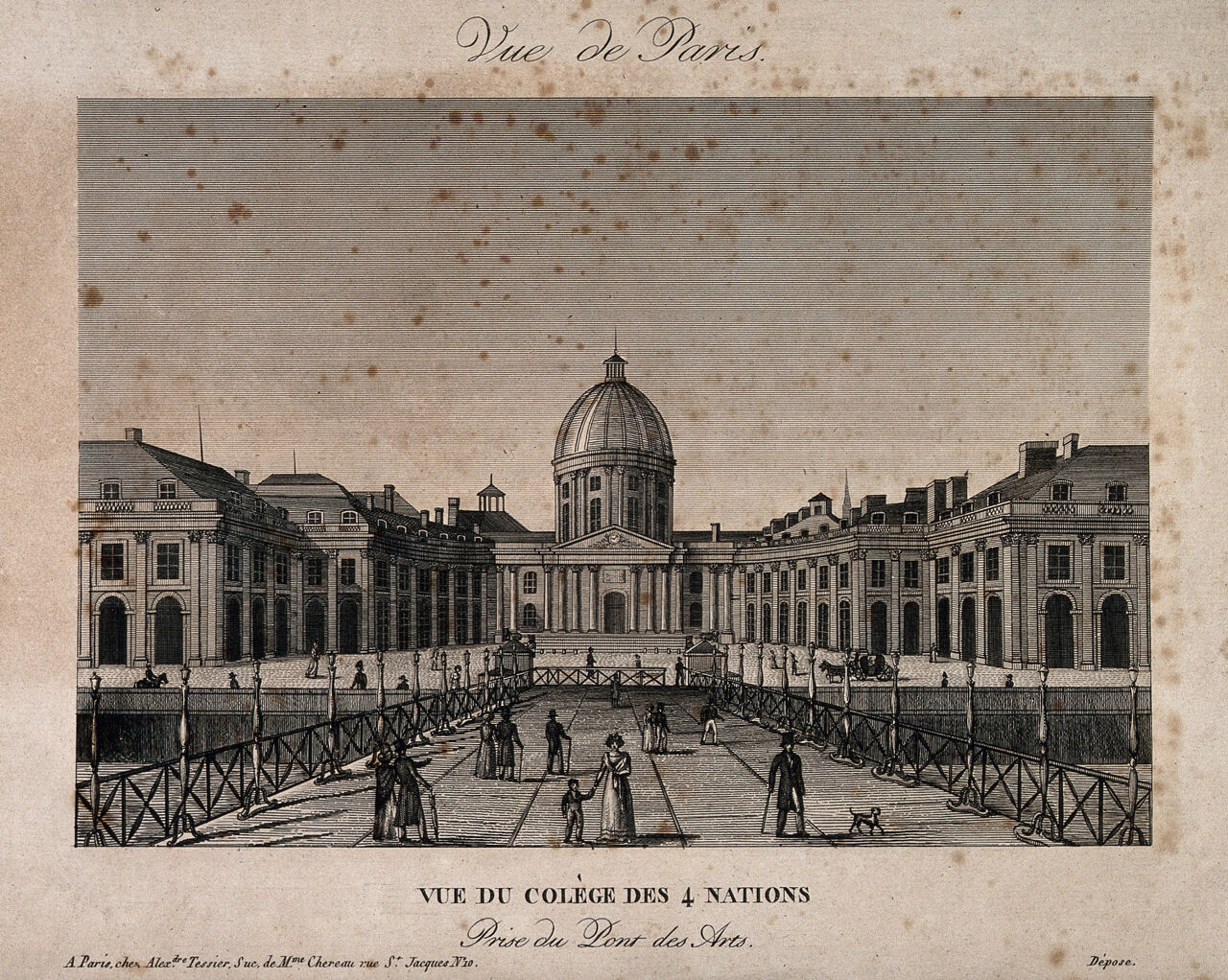
In 1654, his career was advanced through his appointment as the first architect to the king, succeeding Jacques Lemercier. He was commissioned by Cardinal Mazarin to help rebuild part of the medieval Château de Vincennes. • Illustration — Pavilion of the King (east façade) • Illustration — Pavilion of the Queen (west façade) Shortly after, in 1656 he was given the important commission to build the chateau of Nicolas Fouquet, Vaux-le-Vicomte with the help of André Le Nôtre and Charles Le Brun. Le Vau's most notable work in the Vaux-le-Vicomte is the oval salon facing the garden. This design, an example of a salon à l'italienne (vaulted, two-storied room), develops the idea that a simple form governs the shape of the main section of the building. • Illustration — Rhythmic massing of the entrance front • Illustration — View of the garden front with the oval salon In the 1660s Le Vau helped on royal projects, such as the hospital of La Salpêtrière and the facade of the Tuileries Palace. From 1661 to 1664 Le Vau worked on rebuilding the Galerie d'Apollon in the Louvre after it burned in a fire. Claude Perrault and Charles Le Brun were also involved in creating the famous façade for the east front of the Louvre from 1665 to 1674, which acted as a prelude for Classical Architecture in the 18th century. The most notable work of Le Vau's career was at the Palace of Versailles with which he was involved for the remainder of his life. He added service wings to the forecourts and, after 1668, had rebuilt the garden façade to be totally classical. Le Vau was assisted by François d'Orbay, who completed the work after Le Vau's death. Le Vau and d'Orbay's work at Versailles was later modified and extended by Jules Hardouin-Mansart. Le Vau's designs for the Collège des Quatre-Nations (now housing the Institut de France) were completed after his death by his assistant François d' Orbay and showed unlikely rapport with Italian baroque techniques. • Illustration — Le Vau's garden front at the Château de Versailles, c. 1675 • Illustration — Collège des Quatre-Nations in 2014
Death
Death
Louis Le Vau died on 11 October 1670, aged around 57, at the former Hôtel de Longueville and was buried at the church of Saint-Germain l'Auxerrois in Paris.
Identity
Identity
Louis Le Vau is recorded with the occupation architect. Recorded with the occupation artist. Recorded as architect and artist.
Life and career
Dated record
Life and career
Explore 1613–1670
The full dated record · 7 entries
1613
Louis Le Vau was born in 1613.
1646
Church of Saint-Sulpice is dated 1646.
1657
Pitié-Salpêtrière Hospital is dated 1657.
1659
Pavillon Saint-Germain-l'Auxerrois is dated 1659.
1659
Pavillon de Marengo is dated 1659.
1661
Palace of Versailles is dated 1661.
1670
Louis Le Vau died on 11 October 1670.
Places
Named by the record
Places
Only places the record itself states, plotted where the house gazetteer settles their coordinates. Nothing is inferred from a name or a nationality.
Louis Le Vau was born at Paris.
Birthplace
Louis Le Vau died at Paris.
Deathplace
Context
Primary material
Context
The circumstances in which Louis Le Vau stands. Associated with French Baroque architecture.
Documents and archives
Primary material
Documents and archives
Institutional database
- Wikidata, structured authority record Q310530: Louis Le Vau
Scholarly · Wikimedia Foundation
authority file
- VIAF cluster 2740161 for Louis Le Vau, aggregating national library name authorities.
General reference · OCLC
reference work
- “Louis Le Vau”, English Wikipedia, consulted as further reading
Reputable secondary · Wikipedia
Notes from the source article
Cited by Wikipedia
Notes from the source article
These works are cited by the source article, in its own numbering. They are recorded as its citations, not as sources VALÉORINE has verified.
- 1.Feldmann 1996, p. 262.
- 2.Cojannot 2012, p. 341.
- 3.Louis Le Vau: Biography of Baroque Architect. www.visual-arts-cork.com.
- 4."Louis Le Vau", vol. 9, pp. 360-361, in Encyclopedia of World Biography.
- 5.Feldmann 1996, pp. 262–264.
- 6.Berger 1982, p. 697.
- 7.Feldmann 1996, p. 264.
- 8.Ballon 1999, pp. 23–31.
- 9."Vau, Louis Le" in A Dictionary of Architecture and Landscape Architecture (3 ed.). .
- 10.Berger 1982, p. 695.
- 11.Jal 1873, p. 56.
Bibliography printed in the source article · 11
- Bajou, Thierry (1998). La peinture à Versailles : XVIIe siècle. [English edition: Paintings at Versailles: XVIIth Century, translated by Elizabeth Wiles-Portier, p. 76.] Paris: Réunion des musées nationaux. . (English edition).
- Ballon, Hilary (1999). Louis Le Vau: Mazarin's Collège, Colbert's Revenge. Princeton, New Jersey: Princeton University Press. .
- Berger, Robert W. (1982). "Le Vau, Louis", , , in Macmillan Encyclopedia of Architects, edited by Adolf K. Placzek. London: Collier Macmillan. .
- Cojannot, Alexandre (2012). Louis Le Vau et les nouvelles ambitions de l'architecture française 1612–1654 (in French). Paris: Picard. .
- Curl, James Stevens (2006). A Dictionary of Architecture and Landscape Architecture, second edition. Oxford: Oxford University Press. .
- Encyclopedia of World Biography (second edition, 1998), edited by Suzanne M. Bourgoin and Paula K. Byers. Detroit: Gale. .
- Feldmann, Dietrich (1996). "Le Vau (1) Louis Le Vau", , , in The Dictionary of Art (34 vols.), edited by Jane Turner. New York: Grove. . Also at Oxford Art Online, subscription required.
- Hardouin, Christophe (1994). "La Collection de portraits de l'Académie royale de Peinture et de Sculpture: Peintures entrées sous le règne de Louis XIV (1648–1715", Mémoire de D.E.A., Université de Paris IV, 1994, pp. 164–166.
- Jal, Auguste (1873). Abraham du Quesne et la marine de son temps, vol. 2. Paris: Henri Plon. Copy at Google Books.
- Laprade, Albert (1955). "Portraits des premiers architectes de Versailles", Revue des Arts, March 1955, pp. 21–24.
- Laprade, Albert (1960). François d'Orbay: Architecte de Louis XIV. Paris: Éditions Vincent, Fréal. .
References
Citations
References
Each reference names the institution holding it, so a reader may go to the document itself.
Institutional database
Wikidata, structured authority record Q310530: Louis Le VauWikimedia Foundation
Institutional witnessauthority file
Secondary witnessreference work
Secondary witness
People, houses and institutions
Knowledge graph
People, houses and institutions
Teachers, collaborators, publishers and institutions recorded against this person, each on a stated basis.
Further particulars
Held on the record
Further particulars
Open the remaining particulars
Formation and teaching. Each of those relationships is stated by the authority record rather than inferred from style. Work and production. Works recorded as notable number 5: Château de Meudon, Palace of Versailles, Château du Raincy, Vaux-le-Vicomte and Palais de l'Institut de France.
The Encyclopedia exists whether or not anything is for sale. Corrections are recorded rather than overwritten, and every version of this record is kept. Published 14 August 2026.
Elsewhere in Design
11,558 published records in this field, each with its sources named.
- Louis Jules AndréDesigner
- Louis KahnDesigner
- Louis KamperDesigner
- Louis L. LongDesigner
- Louis LenormandDesigner
- Louis Marie CordonnierDesigner
- Louis MétezeauDesigner
- Louis Michel ThibaultDesigner
Best supported in this field
For owners
Own a work by Louis Le Vau?
A specialist will read what you send and tell you what the house can establish, what it cannot, and whether the object is suited to sale. There is no charge and no obligation. The object stays with you throughout; nothing is shipped to us unless it is arranged in writing beforehand.