
Louis Carrogis Carmontelle
Louis Carrogis Carmontelle (15 August 1717 – 26 December 1806) was a French dramatist, painter, architect, set designer, author, and designer of one of the earliest examples of the French landscape garden, Parc Monceau in Paris. He also invented the transparent, an early ancestor of the magic lantern and motion picture, for viewing moving bands of landscape paintings.
Also recorded as Louis Carmontel · Louis De Carmontelle · Carmontelle · Louis Carrogis
Louis Carrogis Carmontelle
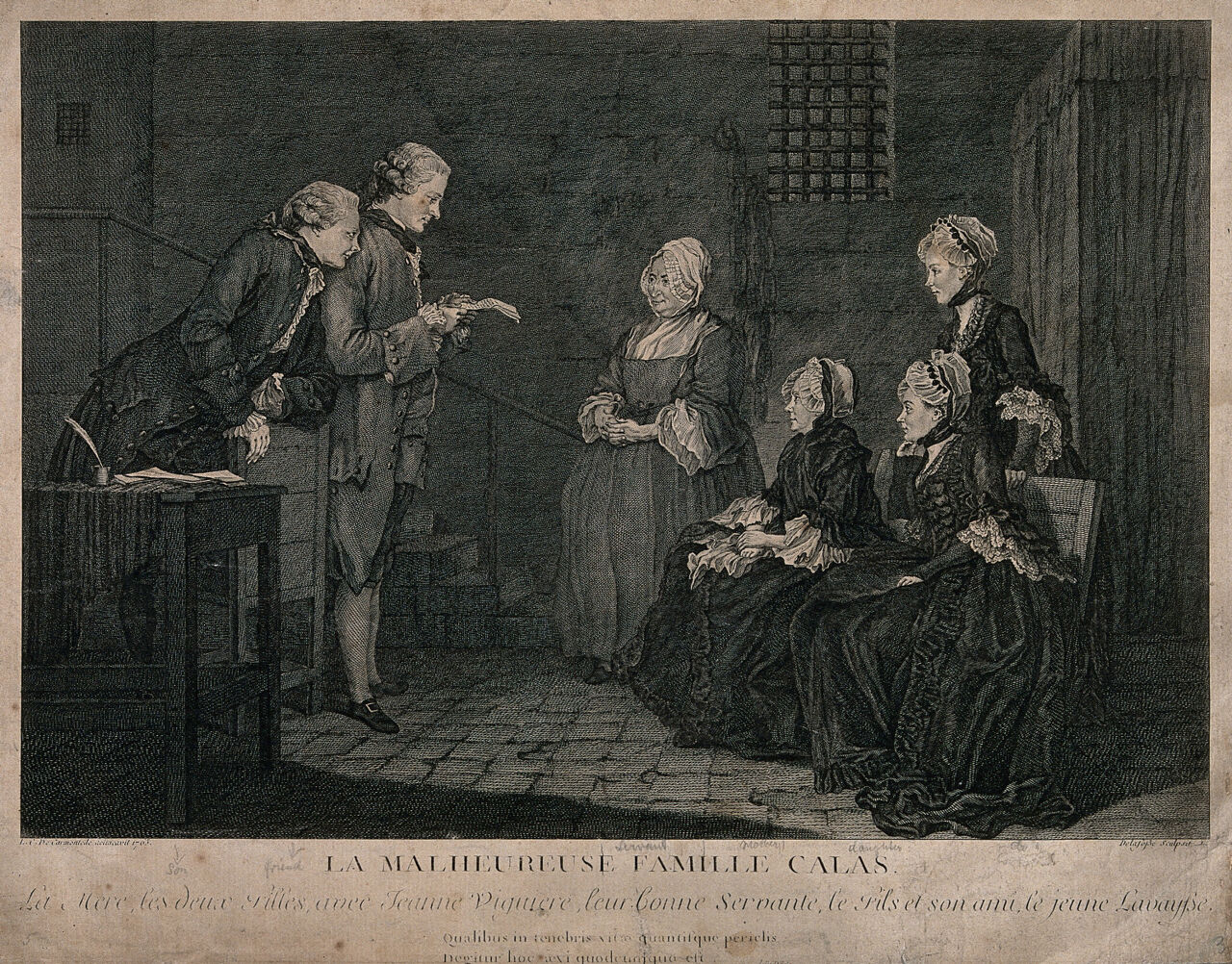
Louis Carrogis Carmontelle · Wellcome Collection, London · Wellcome Collection · Public Domain Mark
- Name
- Louis Carrogis Carmontelle
- Born
- 15 August 1717
- Birthplace
- Paris, France
- Died
- 26 December 1806
- Field
- Painting, watercolor painting
- Movement
- Rococo
- Full name
- Louis Carrogis.
- Nationality
- France.
- Occupation
- painter, architect, playwright, writer, watercolorist, draftsperson, artist and inventor.
- Fields
- portrait.
- Languages
- French.
VALÉORINE Encyclopedia
VALÉORINE documentary reading
Documentary summary
Louis Carrogis Carmontelle (15 August 1717 – 26 December 1806) was a French dramatist, painter, architect, set designer, author, and designer of one of the earliest examples of the French landscape garden, Parc Monceau in Paris. He also invented the transparent, an early ancestor of the magic lantern and motion picture, for viewing moving bands of landscape paintings.
Admitted source layer · organised and presented by VALÉORINE
Reference Check
Propose documentary evidence for Louis Carrogis Carmontelle. A contribution is never written directly as fact: identity, source, rights and evidence gates still decide.
Sign in to contribute
World of VALÉORINE
Documentary connections
Only confirmed graph relationships appear here. Images are shown only when their identity and reuse rights both pass the documentary gate.

Documentary evidence
Documentary basis
Authority files
wikidata · Q982053 · wikipedia · Louis Carrogis Carmontelle
In this article
Biography
Biography
The recorded working language is French. Subjects and genres recorded for the work are portrait. Places of work recorded in the authority are Paris. Work by Louis Carrogis Carmontelle is recorded in the collections of Nationalmuseum, Condé Museum, Buffalo AKG Art Museum, Ackland Art Museum and Musée Carnavalet.
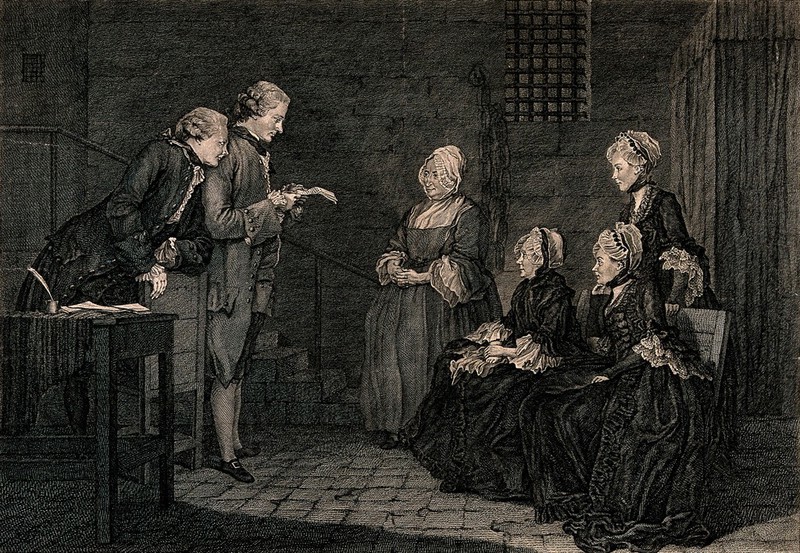
The family of Jean Calas sit listening to Alexandre Lavaysse reading a letter from Calas after his execution. Engraving by J.B. Delafosse, 1765, after L.C. De Carmontelle., 1765, by Louis Carrogis Carmontelle
Louis Carrogis Carmontelle · Wellcome Collection, London · Wellcome Collection
Key facts
Key facts
• Name — Louis Carrogis Carmontelle • Birth Name — Louis Carrogis Carmontelle • Born — 15 August 1717 • Birthplace — Paris, France • Died — 26 December 1806 • Place of death — Paris, France • Field — Painting, watercolor painting • Movement — Rococo
Biography
Biography
Carmontelle was born in Paris, and came from a modest background; his father was a bootmaker. He studied drawing and geometry, and at the age of twenty three qualified for the title of engineer, and entered the service of the Duc de Chevreuse and the Duc de Luynes at the Château de Dampierre, where he taught drawing and mathematics to the children.[1] In 1758, he entered the service of the Comte Pons de Saint-Maurice, governor of the Duc de Chartres and commander of regiment of Orléans-dragons as a topographical engineer. In addition to his drawing duties, he wrote farces and tales. After 1763 he entered into the service of Louis Philippe I, Duke of Orléans as a lecteur, responsible for providing theatrical performances for the family. He wrote and directed plays, decorated the scenery and made the costumes. In this way he invented a new genre of play, the proverbe dramatique, a scene of light comedy designed to be a point of departure for a theatrical improvisation. He also wrote plays for the famous ballerina, Marie-Madeleine Guimard for performance at the private theatre of her residence, Pantin. In addition to his work in the theatre, he was a talented artist, who made portraits in pen and watercolor in less than two hours of notable people that he met. The most famous of his drawings is that of the infant Mozart playing the clavier.[2]
Parc Monceau
Parc Monceau
• Illustration — Carmontelle's watercolour (1763) of Leopold Mozart with Wolfgang Amadeus and Maria Anna is among his best-known works. In 1773, he was asked by the Duc de Chartres, the son of Louis-Philippe d'Orléans and the future Philippe Egalité, to design a garden around a small house that he was building to the northwest of Paris. Between 1773 and 1778, he created the folie de Chartres, (now Parc Monceau), one of the most famous French landscape gardens of the time. It departed from the more natural English landscape gardens of the time by presenting a series of fantastic scenes designed "to unite in one garden all places and all times.".[3] It included a series of fabriques, or architectural structures, while illustrated all the styles known at the time; antiquity, exoticism, Chinese, Turkish, ruins, tombs, and rustic landscapes, all created to surprise and divert the visitor. After the death of the duc d'Orleans in 1785, Carmonetelle entered into the service of the Duc de Chartres, and taught drawing to his son Louis-Philippe of France, the future and last King of France, and his sister Adeleide.
Introduction of animation into painting
Introduction of animation into painting
In the last years of his life, he pioneered a new invention for showing paintings in motion, which was a distant ancestor of the motion picture. In 1783 he began working on what he termed "décors transparents animés." These were paintings of landscapes on long bands of paper, fifty centimeters high and as many as forty two meters long. These were mounted on two wooden rollers in a box, with the light of day coming into the box from behind and passing through the paper. The landscapes were slowly rolled from one roll to the other, giving the illusion of a walk in the garden. The first moving landscapes he titled "Landscapes of France," "English Gardens," "The Seasons," and "The Banks of the Seine." One of the moving landscapes is preserved at the Museum of Sceaux.[4] Carmontelle died in Paris.
Gallery
Gallery
• Illustration — Pierre Victor, Baron de Besenval de Brunstatt, etching by Carmontelle (1780) • Illustration — Carmontelle's watercolour (1760) of Jean-Philippe Rameau • Illustration — A portrait of Baron d'Holbach • Illustration — Carmontelle's watercolour (c. 1762) of Laurence Sterne
Identity and origins
Identity and origins
The authorities additionally record the headings Louis Carmontel, Louis De Carmontelle, Carmontelle, Louis Carrogis and Louis Carrogis De Carmontelle. His recorded language was French.
Life and career
Dated record
Life and career
The full dated record · 2 entries
1717
Louis Carrogis Carmontelle born at Paris.
1806
Louis Carrogis Carmontelle died at former 3rd arrondissement of Paris.
Places
Named by the record
Places
Only places the record itself states, plotted where the house gazetteer settles their coordinates. Nothing is inferred from a name or a nationality.
Paris.
Birth place
former 3rd arrondissement of Paris.
Death place
Notes from the source article
Cited by Wikipedia
Notes from the source article
These works are cited by the source article, in its own numbering. They are recorded as its citations, not as sources VALÉORINE has verified.
- 1.Article on Louis Carmontelle by Monique Mosser in Créateurs de jardins et de paysages en France de la Renaissance au début du XIXe siècle Actes Sud, École Nationale Superieure du Paysage, 2001.
- 2.The Carnavalet Museum in Paris and the Museum of Chantilly possess more than six hundred of his drawings, including the Mozart drawing.
- 3.Monique Mosser, pg. 151.
- 4.Monique Mosser, pg 152.
Bibliography printed in the source article · 5
- Jardins en France, 1760–1820. Caisse nationale des monuments historiques et des sites, Paris.
- Claude Wenzler, Architecture du Jardin. Editions Ouest-France, Rennes, 2003.
- Philippe Prévôt, Histoire des jardins, Editions Sud Ouest, 2006.
- Yves-Marie Allain and Janine Christiany, L'art des jardins en Europe, Citadelles, Paris, 2006
- Créateurs des jardins et de paysages en France de la Renaiisance au XXIe siècle, sous la direction de Michel Racine, Tome I, de la Renaissance au debut du XIX siècle, Actes Sud, École Nationale Supérieure du Paysage, 2001.
References
Citations
References
Each reference names the institution holding it, so a reader may go to the document itself.
reference work
Wikidata, structured authority record Q982053: Louis Carrogis CarmontelleWikimedia Foundation
Secondary witnessreference work
Secondary witness
People, houses and institutions
Knowledge graph
People, houses and institutions
Teachers, collaborators, publishers and institutions recorded against this person, each on a stated basis.
Born at
1- ParisPlace
Established from a fact already recorded on a verified source.
Further particulars
Held on the record
Further particulars
Open the remaining particulars
Louis Carrogis Carmontelle is recorded as painter, architect, playwright, writer and watercolorist. Recorded at birth as Louis Carrogis.
The Encyclopedia exists whether or not anything is for sale. Corrections are recorded rather than overwritten, and every version of this record is kept. Published 14 August 2026.
Elsewhere in Paintings
18,717 published records in this field, each with its sources named.
- Louis BoulangerArtist
- Louis BraunArtist
- Louis CaneArtist
- Louis CaravaqueArtist
- Louis Charles Christopher KriegerArtist
- Louis ChorisArtist
- Louis CreteyArtist
- Louis de CaulleryArtist
Best supported in this field
For owners
Own a work by Louis Carrogis Carmontelle?
A specialist will read what you send and tell you what the house can establish, what it cannot, and whether the object is suited to sale. There is no charge and no obligation. The object stays with you throughout; nothing is shipped to us unless it is arranged in writing beforehand.