
Llewellynn Jewitt
Llewellynn Frederick William Jewitt (or Llewellyn; 24November 18165June 1886) was a British illustrator, engraver, natural scientist and author of The Ceramic Art of Great Britain (1878). His output was prodigious and covered a large range of interests.
Also recorded as Llewellynn Frederick William Jewitt
Llewellynn Jewitt
Llewellynn Jewitt · Wellcome Collection, London · Wellcome Collection · Public Domain Mark
- Name
- Llewellynn Jewitt
- Born
- 24 November 1816
- Birthplace
- near Rotherham, England
- Place of death
- Duffield, Derbyshire, England
- Occupation
- Engraver
- Died
- 1886. · Duffield.
- Nationality
- United Kingdom of Great Britain and Ireland.
VALÉORINE Encyclopedia
VALÉORINE documentary reading
Documentary summary
Llewellynn Frederick William Jewitt (or Llewellyn; 24November 18165June 1886) was a British illustrator, engraver, natural scientist and author of The Ceramic Art of Great Britain (1878). His output was prodigious and covered a large range of interests.
Admitted source layer · organised and presented by VALÉORINE
Reference Check
Propose documentary evidence for Llewellynn Jewitt. A contribution is never written directly as fact: identity, source, rights and evidence gates still decide.
Sign in to contribute
Documentary evidence
Documentary basis
Authority files
wikidata · Q2301268 · wikipedia · Llewellynn Jewitt
In this article
Key facts
Key facts
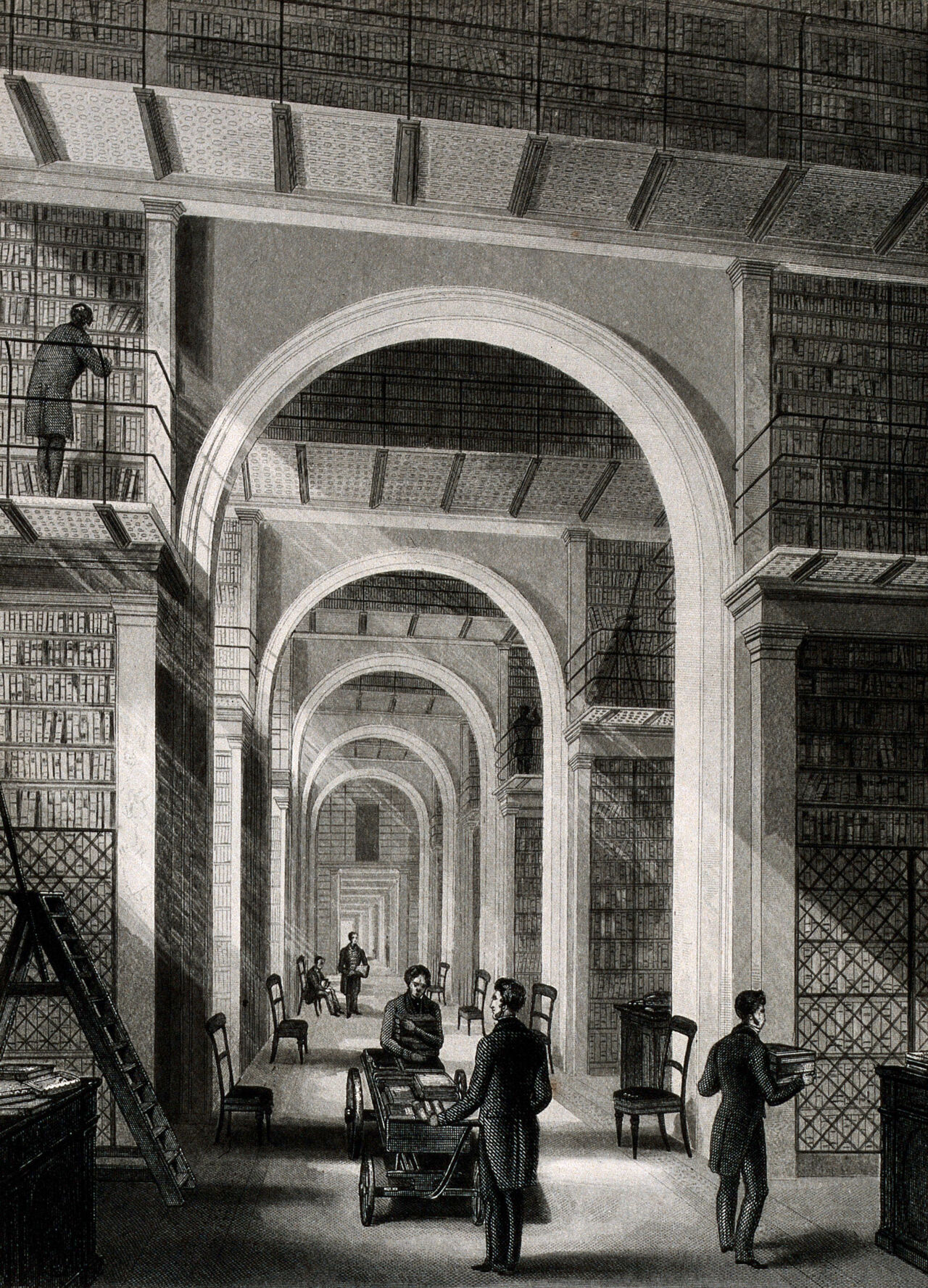
• Name — Llewellynn Jewitt • Born — 24 November 1816 • Birthplace — near Rotherham, England • Place of death — Duffield, Derbyshire, England • Occupation — Engraver • Parents — Arthur and Martha Jewitt • Illustration — St Mary's Bridge Chapel, Derby
Biography
Biography
Jewitt was born at Kimberworth, Rotherham, the seventeenth and final child of artist, author and schoolmaster Arthur Jewitt and his wife Martha. His education, largely from his father, who was master at Kimberworth Endowed School, started in Duffield, Derbyshire where his family moved in 1818. On Christmas Day of 1838 he married Elizabeth Sage, daughter of Isaac Sage of Derby, hurriedly returning to London the same day so as not to fall behind in his work. From 1839 to 1845 he was employed by the engraver Frederick William Fairholt, to illustrate the works of Charles Knight, and contribute to the Pictorial Times, the Saturday Magazine, the Illustrated London News and Punch. He worked at Buckingham Palace in 1845, sketching the palace rooms in preparation for a work on London Interiors. Between 1849 and 1853 Jewitt was the chief librarian of Plymouth Public Library and a member of The Plymouth Institution (now The Plymouth Athenaeum). In September 1853 he returned to Derbyshire to found and edit the Derby Telegraph, the first cheap paper in the county, continuing as its editor to 1868. In 1857, Jewitt became secretary of the Derby Town and County Museum and Natural History Society and its premises were opened to the general public on Saturday mornings. In 1860 Jewitt founded his own heavily illustrated and lavishly produced antiquarian journal The Reliquary, of which he was editor until his death in 1886 when it was continued by others. Under his editorship the journal's focus was heavily on Derbyshire and the Peak, reflecting Jewitt's then home location at Winster Hall, Derbyshire. While at Winster Hall he learned that the local water supply to the nearby villages was contaminated with lead ore in the local limestone, and he led a highly successful local project to supply free water via a three-mile pipe fed by clean springs. He died at The Hollies, Duffield in 1886. The potter William Henry Goss wrote a memoir of him entitled The Life and Death of Llewellynn Jewitt F.S.A., with Fragmentary Memoirs of his Famous Literary and Artistic Friends, especially of Samuel Carter Hall (1889). Jewitt belonged to the British Archaeological Association and helped found the Derbyshire Archaeological Society in 1878. He was a Fellow of the Society of Antiquaries, wrote numerous articles on English antiquities and topography, and edited the tourist handbook Black's Guide to Derbyshire (1857) which was reprinted many times.
Life and career
Dated record
Life and career
The full dated record · 2 entries
1816
Llewellynn Jewitt born at Rotherham.
1886
Llewellynn Jewitt died at Duffield.
Places
Named by the record
Places
Only places the record itself states, plotted where the house gazetteer settles their coordinates. Nothing is inferred from a name or a nationality.
Rotherham.
Birth place
Duffield.
Death place
Books
• Black's Tourist's Guide to Derbyshire (editor; 1857) • The Wedgwoods (1865) • The Ballads and Songs of Derbyshire (1867) • The Life of William Hutton (1869) • Grave-mounds and Their Contents (1870) • Mountain, River, Lake, and Landscape Scenery of Great Britain (1870/78) in 3 vols. • Haddon Hall. An Illustrated Guide, with S. C. Hall (1871) • Domesday Book of Derbyshire (editor; 1871) • A History of Plymouth (1873) • Half-Hours Among Some English Antiquities (1877) • The Stately Homes of England, with S. C. Hall (1877) in 2 vols. • The Ceramic Art of Great Britain (1878) in 2 vols. (revised 1972). Original at Project Gutenberg. • English Coins and Tokens, with a Chapter on Greek and Roman Coins (1879) at Project Gutenberg. • The Life and Works of Jacob Thompson (1882)
Primary material
Documents and archives
reference work
- “Llewellynn Jewitt”, English Wikipedia, consulted as further reading
Reputable secondary · Wikipedia
- Wikidata, structured authority record Q2301268: Llewellynn Jewitt
Reputable secondary · Wikimedia Foundation
scholarly publication
- Jewitt, Llewellynn Frederick William (1816–1886), Oxford Dictionary of National Biography, 2018
Scholarly · Crossref registry · 2018
Notes from the source article
Cited by Wikipedia
Notes from the source article
These works are cited by the source article, in its own numbering. They are recorded as its citations, not as sources VALÉORINE has verified.
- 1.Jewitt, Llewellynn Frederick William. 29.
- 2.Plymouth Athenaeum. Historic People.
- 3.Llewellyn Jewitt - Derbyshire Genius (Tom Bates Derbyshire Peak District Author, Writer, Poet)
- 4.Derbyshire Artists - Artists with Derbyshire connections
- 5.The Life and Works of Jacob Thompson. 16 October 2018. 978-0343570224.
References
Citations
References
Each reference names the institution holding it, so a reader may go to the document itself.
scholarly publication
Jewitt, Llewellynn Frederick William (1816–1886), Oxford Dictionary of National Biography, 2018Crossref registry
Institutional witnessreference work
Secondary witnessreference work
Wikidata, structured authority record Q2301268: Llewellynn JewittWikimedia Foundation
Secondary witness
The Encyclopedia exists whether or not anything is for sale. Corrections are recorded rather than overwritten, and every version of this record is kept. Published 16 August 2026.
Elsewhere in Prints
4,138 published records in this field, each with its sources named.
- Livio AbramoEngraver
- Livio MehusEngraver
- Liz BirdEngraver
- Liza LouEngraver
- Lodewijk de DeysterEngraver
- Lodewijk de VadderEngraver
- Loló SoldevillaEngraver
- Lorenz FrølichEngraver
Best supported in this field
For owners
Own a work by Llewellynn Jewitt?
A specialist will read what you send and tell you what the house can establish, what it cannot, and whether the object is suited to sale. There is no charge and no obligation. The object stays with you throughout; nothing is shipped to us unless it is arranged in writing beforehand.