
Leiden University
Leiden University (abbreviated as LEI; Universiteit Leiden) is a public research university in Leiden, Netherlands. Established in 1575 by William, Prince of Orange as a Protestant institution, it holds the distinction of being the oldest surviving university in the Netherlands. The university has seven academic faculties and over fifty subject departments, housing more than forty national and international research institutes.
Leiden University
- Name
- Leiden University
VALÉORINE Encyclopedia
VALÉORINE documentary reading
Documentary summary
Leiden University (abbreviated as LEI; Universiteit Leiden) is a public research university in Leiden, Netherlands. Established in 1575 by William, Prince of Orange as a Protestant institution, it holds the distinction of being the oldest surviving university in the Netherlands. The university has seven academic faculties and over fifty subject departments, housing more than forty national and international research institutes.
Admitted source layer · organised and presented by VALÉORINE
Note VALÉORINE
No house-authored Note is published until its assertions and sources pass the VALÉORINE evidence contract. The documentary article remains available in full while that enrichment is being consolidated.
Documentary enrichment in progress · no unsupported statement published
Reference Check
Propose documentary evidence for Leiden University. A contribution is never written directly as fact: identity, source, rights and evidence gates still decide.
Sign in to contribute
World of VALÉORINE
Documentary connections
Only confirmed graph relationships appear here. Images are shown only when their identity and reuse rights both pass the documentary gate.

Educated At · incoming
Abraham Jacob van der Aa
Author
copied from [1]

Educated At · incoming
Albert Verwey
Author
Own work

Educated At · incoming
Albrecht von Haller
Author
Burgerbibliothek Bern, Negativnummer 2453

Educated At · incoming
Andreas Gryphius
Author
Bibliothek des allgemeinen und praktischen Wissens. Bd. 5" (1905), Deutsche Literaturgeschichte, Seite 67 Scan by User:Gabor

Educated At · incoming
Anthonie Duyck
Author
https://www.collectiegelderland.nl/zoeken?filter=search_s_creators_uuid-3d89315a-d47b-5152-891e-d259c09b4e9f

Educated At · incoming
Archibald Pitcairne
Author
https://wellcomeimages.org/indexplus/obf_images/a3/d1/d6ed97ca4a6786c94788070b64db.jpg Gallery: https://wellcomeimages.org/indexplus/image/V0004687.html Wellcome Collection gallery (2018-03-23): https

Educated At · incoming
Armin van Buuren
Person
Flickr
Educated At · incoming
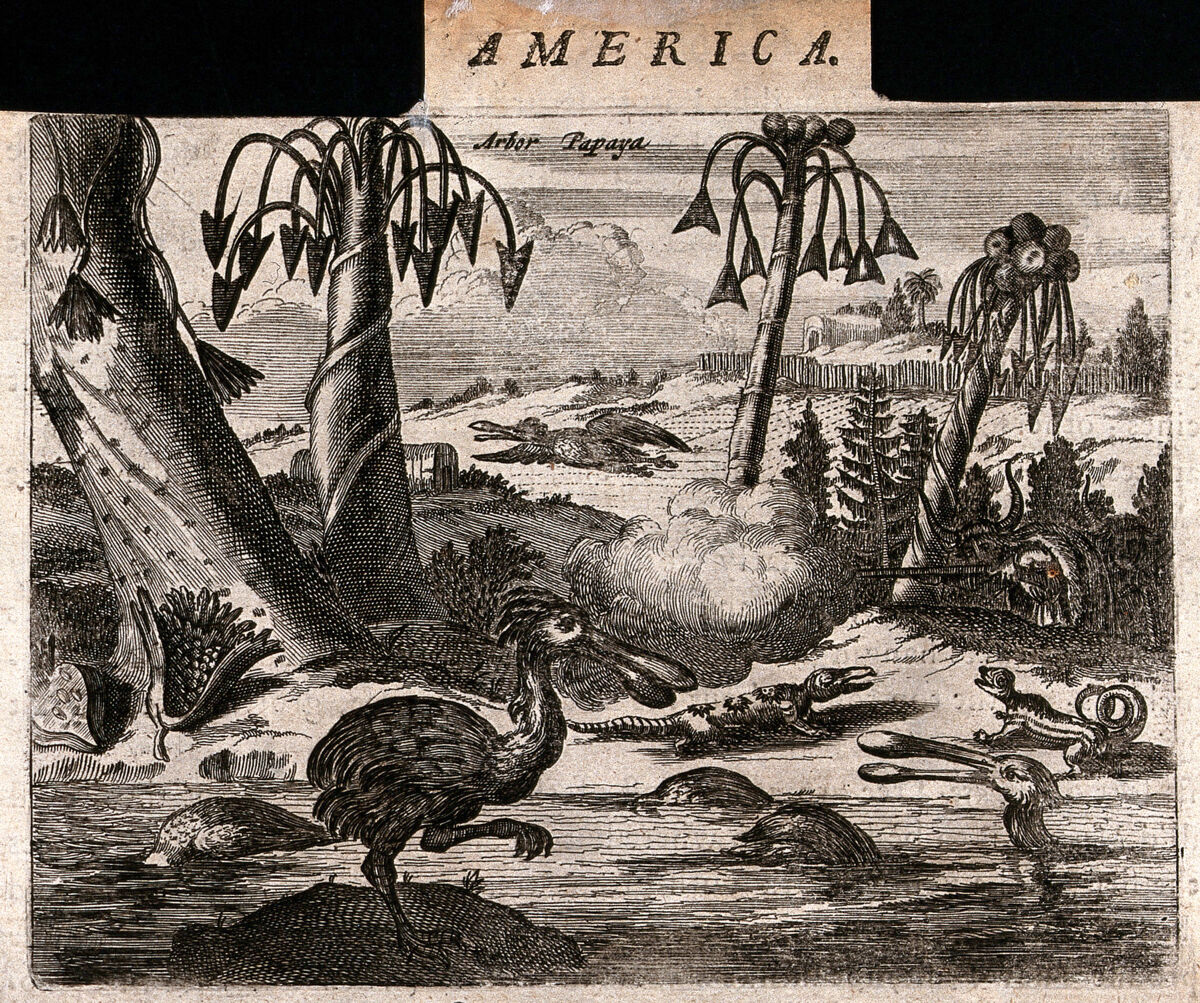
Arnoldus Montanus
Author
Wellcome Collection
Educated At · incoming
Benjamin Prime
Author
Educated At · incoming
Bertien van Manen
Photographer
Educated At · incoming
Burchard de Volder
Author

Educated At · incoming
Caspar Commelijn
Engraver
Municipal Archives Amsterdam

Educated At · incoming
Christian Hoffmann von Hoffmannswaldau
Author
Rudolf Stein, Der Rat und die Ratsgeschlechter des alten Breslau

Educated At · incoming
Christianus Robidé van der Aa
Author
http://hdl.handle.net/10934/RM0001.COLLECT.186927

Educated At · incoming
Constantijn Huygens
Designer
Unknown source Unknown source

Educated At · incoming
Cornelis van Eck
Author
https://hdl.handle.net/10934/RM0001.COLLECT.42944
Documentary evidence
Evidence Panel
not yet certified
- Identity
- unresolved
- Independent source families
- 0
- Admitted assertions
- 0
- Open conflicts
- 0
In this article
Overview
Overview
Its historical primary campus consists of several buildings spread over Leiden, while a second campus located in The Hague houses a liberal arts college (Leiden University College The Hague) and several of its faculties. It is a member of the Coimbra Group, the Europaeum, and a founding member of the League of European Research Universities. The university has produced twenty-six Spinoza Prize Laureates and sixteen Nobel Laureates. Members of the Dutch royal family such as Queen Juliana, Queen Beatrix, and King Willem-Alexander are alumni, and ten prime ministers of the Netherlands including Mark Rutte. US president John Quincy Adams also studied at the university.
Key facts
Key facts
• Name — Leiden University • Native Name — Universiteit Leiden • Motto — Libertatis Praesidium • Motto Lang — la • Motto Eng — Bastion of Freedom • Founders — William of Orange • Type — Public research university • Campus — Urban and College town • Language — Dutch, English (Additional languages for language programmes) • Academic Affiliations — TPC Una Europa • Budget — €974 million (2024) • President — Luc Sels • Rector — Sarah de Rijcke • Faculty — 2,043 (2024) • Administrative Staff — 1,573 • Students — 33,839 (2024–25) • Undergrad — 24,496 (2021–22) • Postgrad — 12,395 (2021–22) • Doctoral — 963 (2024) • City — Leiden and The Hague • Province — South Holland • Country — Netherlands • Latin Name — Academia Lugduno-Batava • Former Names — Rijksuniversiteit Leiden • Website — universiteitleiden.nl • Colours — University blue
Foundation and early history
Foundation and early history
• Illustration — William the Silent, founder of the university, in the 16th century. • Illustration — The academy building of Leiden University in 1614. • Illustration — Leiden anatomical theatre In 1575, the emerging Dutch Republic did not have universities in its northern heartland. The other universities in the Habsburg Netherlands were the University of Leuven and the University of Douai, located in an area under firm Spanish control. Prince William founded Leiden University to give the Northern Netherlands an institution that could educate its citizens in religion and provide the government with educated men in all fields. It is said the choice fell on Leiden as a reward for the heroic defence of Leiden against Spanish attacks in 1574. The name of Philip II of Spain, William's adversary, appears on the official foundation certificate as he was still the de jure count of Holland. Philip II forbade all his subjects to study in Leiden. The new institution was initially located in the Convent of Saint Barbara, then moved to the Faliede Bagijn Church in 1577 (now the location of the university museum) and in 1581 to a former convent of Cistercian nuns, a site which it still occupies, though the original building was destroyed by a fire in 1616. Leiden University's reputation was created in part by the presence of scholars such as Justus Lipsius, Joseph Scaliger, Franciscus Gomarus, Hugo Grotius, Jacobus Arminius, Daniel Heinsius, and Gerhard Johann Vossius within fifty years of its founding. By the 1640s, over five hundred students were enrolled from all across Europe, making it the largest Protestant university. Baruch Spinoza discovered Descartes's work partly at Leiden University, which he visited for periods of study multiple times. In the 18th century, Jacobus Gronovius, Herman Boerhaave, Tiberius Hemsterhuis, and David Ruhnken were among the renowned academics of the university. In 1896, the Zeeman effect was discovered at the institution by Pieter Zeeman and shortly afterward explained by Hendrik Antoon Lorentz. In the world's first university low-temperature laboratory, Professor Heike Kamerlingh Onnes achieved a temperature only one degree above absolute zero. In 1908, he was also the first to succeed in liquifying helium and has played a role in the discovery of superconductivity in metals.
Modern day
Modern day
• Illustration — Leiden University Library in 1610 The University Library has more than 5.2 million books and fifty thousand journals. It also has collections of Western and Oriental manuscripts, printed books, archives, prints, drawings, photographs, maps, and atlases. It houses the world's largest collections on Indonesia and the Caribbean, collected by the Scaliger Institute which studies various aspects of knowledge transmissions and ideas through texts and images from antiquity to the present day. In 2005, the manuscript of Einstein on the quantum theory of the monatomic ideal gas (the Einstein-Bose condensation) was discovered in one of Leiden's libraries.
Partnerships
Partnerships
In 2012 Leiden entered into a strategic alliance with Delft University of Technology and Erasmus University Rotterdam for the universities to increase the quality of their research and teaching. The university is also the unofficial home of the Bilderberg Group, a meeting of high-level political and economic figures from North America and Europe. Leiden University partnered with Duke University School of Law starting in 2017 to run a joint summer program on global and transnational law from its Hague campus.
Location and buildings
Location and buildings
• Illustration — The academy building of Leiden University in modern days The university has no central campus; its buildings are spread over the city. Some buildings, like the Gravensteen, are very old, while Van Steenis, Lipsius and Gorlaeus are much more modern. Among the institutions affiliated with the university are The KITLV or Royal Netherlands Institute of Southeast Asian and Caribbean Studies (founded in 1851), the Leiden Observatory 1633; the Natural History Museum, with a very complete anatomical cabinet; the Rijksmuseum van Oudheden (National Museum of Antiquities), with especially valuable Egyptian and Indian departments; a museum of Dutch antiquities from the earliest times; and three ethnographical museums, of which the nucleus was Philipp Franz von Siebold's Japanese collections. The anatomical and pathological laboratories of the university are modern, and the museums of geology and mineralogy have been restored. The Hortus Botanicus (botanical garden) is the oldest botanical garden in the Netherlands and one of the oldest in the world. Plants from all over the world have been carefully cultivated here by experts for more than four centuries. The Clusius garden (a reconstruction), the 18th-century Orangery with its monumental tub plants, the rare collection of historical trees hundreds of years old, the Japanese Siebold Memorial Museum symbolising the historical link between East and West, the tropical greenhouses with their world-class plant collections, and the central square and Conservatory exhibiting exotic plants from South Africa and southern Europe.
Zweetkamertje
Zweetkamertje
The "Sweat Room" (Zweetkamertje) is a small chamber in the university's Academy Building, traditionally used by doctoral candidates awaiting the results of their PhD defenses. The room is renowned for its walls covered with the signatures of graduates, including notable figures such as Winston Churchill, Nelson Mandela, and members of the Dutch royal family. Originally serving as a meeting room for university curators, the Zweetkamertje became associated with doctoral examinations in the 18th century. Candidates would wait in this room before defending their dissertations, often experiencing considerable anxiety, hence the name. Over time, it became customary for successful candidates to inscribe their names on the walls as a rite of passage. While the tradition is primarily associated with doctoral candidates, all master's students are also permitted to sign the walls upon graduation, meaning that some individuals have added their names multiple times over the course of their academic careers. The tradition of signing the Zweetkamertje walls is a cherished aspect of Leiden University's heritage. The room features thousands of signatures, including those of honorary doctorate recipients. In 2014, a crowdfunding campaign successfully raised funds to restore the room's deteriorating plaster, ensuring the preservation of this unique historical record.
Campus The Hague
Campus The Hague
• Illustration — A lecture hall in the Leiden University campus in the Hague. In 1998, the university has expanded to The Hague which has become home to Campus The Hague, with six of the seven faculties represented and exclusive home to the Faculty of Governance and Global Affairs, International Studies and Leiden University College The Hague, a liberal arts and sciences college. Here, the university offers academic courses in the fields of law, political science, public administration and medicine. It occupied a number of buildings in the centre of the city, including a college building at Lange Voorhout, before moving into the new 'Wijnhaven' building on Turfmarkt in 2016. The Faculty of Governance and Global Affairs was established in 2011, together with the University College, and one of the largest programmes of the Faculty of Humanities, International Studies. Since 2017 Leiden University Medical Center also has a branch at Campus The Hague.
Organisation
Organisation
• Illustration — The Leiden University Medical Centre • Illustration — Entrance of Gorlaeus building of the Faculty of Science • Illustration — Huygens and Oort Buildings of the Faculty of Science • Illustration — Faculty of Law, in the building that once housed Heike Kamerlingh Onnes' laboratory The university is divided into seven major faculties which offer approximately 50 undergraduate degree programmes and over 100 graduate programmes. • Archaeology • Governance and Global Affairs • Humanities • Law • Medicine / LUMC • Science • Social and Behavioural sciences
Undergraduate studies
Undergraduate studies
Most of the university's departments offer their degree programme(s). Undergraduate programmes lead to either a B.A., B.Sc., or LL.B. degree. Other degrees, such as the B.Eng. or B.F.A., are not awarded at Leiden University.
Graduate studies
Graduate studies
Students can choose from a range of graduate programmes. Most of the above-mentioned undergraduate programmes can be continued with either a general or a specialised graduate program. Leiden University offers more than 100 graduate programs leading to either MA, MSc, MPhil, or LLM degrees. The MPhil is the most advanced graduate degree and is awarded by select university departments (mostly in the fields of Arts, Social Sciences, Archeology, Philosophy, and Theology). Admission to these programmes is highly selective and primarily aimed at those students opting for an academic career or before going into law or medicine. Traditionally, the MPhil degree enabled its holder to teach at the university levels as an associate professor. • Illustration — The Pieter de la Court-building, the main building of the Faculty of Social and Behavioural Sciences
Doctorate programmes
Doctorate programmes
• Illustration — Leiden Observatory of the university. In addition, most departments, affiliated (research) institutes, or faculties offer doctorate programmes or positions, leading to the Ph.D. degree. Most of the Ph.D. programmes offered by the university are concentrated in several research schools or institutes.
Research schools and affiliated institutes
Research schools and affiliated institutes
• Illustration — Research building of the Leiden University Medical Centre Leiden University has more than 50 research and graduate schools and institutes. Some of them are fully affiliated with one faculty of the university, while others are interfaculty institutes or interuniversity institutes. • Institute • ACPA — Academy of Creative and Performing Arts • ASC — African Studies Centre Leiden • CML — Institute of Environmental Sciences (CML) • CRC — Crisis Research Centre • CTI — Centre for Language and Identity • CWTS — Centre for Science and Technology Studies • The Meijers Research Institute — Research School for Legal Studies • eLaw@Leiden — Centre for Law in the Information Society • Grotius Centre — Research Centre for International Legal Studies • GSS — Leiden Graduate School of Science • Historical Institute — Leiden University Institute for History • Huizinga Instituut — Research Institute and Graduate School for Cultural History • IBL — Institute of Biology Leiden • IIAS — International Institute for Asian Studies • IIASL — International Institute of Air and Space Law • IOPS — Interuniversity Graduate School of Psychometrics and Sociometrics • ITC — International Tax Centre (ITC) • LACDR — The Leiden Academic Centre for Drug Researchs • LCMBS — Leiden Centre for Molecular BioScience • LEAD — Leiden Ethnosystems and Development Programme, Faculty of Science • Leyden Academy — Leyden Academy on Vitality and Ageing • LGSAS — Leiden Graduate School for Archeology • LIACS — Leiden Institute of Advanced Computer Science • LIAS — Leiden Institute for Area Studies • LIBC — Leiden Institute for Brain and Cognition • LIC — Leiden Institute of Chemistry • LION — Leiden Institute of Physics • LISOR — Leiden Institute for the Study of Religion • LUCAS — Leiden University Centre for the Arts in Society • LUCL — Leiden University Centre for Linguistics • LUMC — Leiden University Medical Centre • Mediëvistiek — Netherlands Research School for Medieval Studies • MI — Mathematical Institute • NIG — Netherlands Institute of Government • NINO — Netherlands Institute for the Near East • NOVA — Netherlands Research School for Astronomy • N.W. Posthumus Instituut — Netherlands Research Institute and School for Economic and Social History • OIKOS — National Research School in Classical Studies • Onderzoekschool Kunstgeschiedenis — Dutch Postgraduate School for Art History • OSL — Netherlands Research School for Literary Studies • PALLAS — Pallas Institute for Cultural Disciplines • Sterrewacht Leiden — Leiden Astronomical Observatory • The Europa Institute — Leiden Law School • Van Vollenhoven Institute — Research Institute for Law, Governance and Society
Key facts
Key facts
• Arwu W — 101-150 • Arwu W Year — 2025 • Cwts W — 72 • Cwts W Year — 2024 • Cwur W — 88 • Cwur W Year — 2025 • Qs W — =119 • Qs W Year — 2026 • Reuters W — 71 • Reuters W Year — 2019 • The W — =73 • The W Year — 2025 • Usnwr W — 56 • Usnwr W Year — 2025-26 • Qs W Law — 25 • Qs W Law Year — 2025 • The W Law — 21 • The W Law Year — 2025 • Arwu W Soc — 27 • Arwu W Soc Year — 2024 • Qs W Arts — =46 • Qs W Arts Year — 2025 • Qs W Politics — 17 • Qs W Politics Year — 2025 • The W Arts — 21 • The W Arts Year — 2025
Nobel laureates
Nobel laureates
Kamerlingh Onnes was awarded the Nobel Prize for Physics in 1913. Three other professors received the Nobel Prize for their research performed at Universiteit Leiden: Hendrik Antoon Lorentz and Pieter Zeeman received the Nobel Prize for their pioneering work in the field of optical and electronic phenomena, and the physiologist Willem Einthoven for his invention of the string galvanometer, which among other things, enabled the development of electrocardiography. Nobel laureates associated with Leiden include the physicists Albert Einstein, Enrico Fermi, and Paul Ehrenfest. Other Leiden-affiliated Nobel laureates include Jacobus Henricus van 't Hoff, Johannes Diderik van der Waals, Tobias Asser, Albert Szent-Györgyi, Igor Tamm, Jan Tinbergen, Nikolaas Tinbergen, Tjalling Koopmans, Nicolaas Bloembergen, and Niels Jerne.
Notable alumni and professors
Of the 112 Spinoza Prize laureates (the highest scientific award of The Netherlands), twenty-nine were granted to professors of Leiden University. Literary historian Frits van Oostrom was the first professor of Leiden to be granted the Spinoza award for his work on developing the NLCM centre (Dutch literature and culture in the Middle Ages) into a top research centre. Other Spinoza Prize winners are: • Carlo Beenakker, physicist • Dirk Bouwmeester, physicist • Eveline Crone, cognitive psychologist • Ewine van Dishoeck, astronomer • Carsten de Dreu, organisation psychologist • Naomi Ellemers, social psychologist • Bernet Elzinga, psychopathologist • Michel Ferrari, neurologist • Marijn Franx, astronomer • Els Goulmy, transplantation biologist • Corinne Hofman, archeologist • Marinus van IJzendoorn, pedagogue • Marc Koper, electrochemist • Frederik Kortlandt, linguist • Hendrik Lenstra, mathematician • Pieter Muysken, linguist • Sjaak Neefjes, chemical immunologist • Frits van Oostrom, literary historian • Michel Orrit, physicist • Hermen Overkleeft, biologist • Judith Pollmann, historian • Wil Roebroeks, archeologist • Frits Rosendaal, epidemiologist • Ineke Sluiter, classicist • Ignaas Snellen, astrophysicist • Alexander Tielens, astronomer • Aad van der Vaart, statistician • Maria Yazdanbakhsh, parasitologist • Jan Zaanen, physicist The Stevin Prize laureates who have achieved exceptional success in knowledge exchange and impact for society include the following Leiden professors: health psychologist Andrea Evers, immunology technologist Ton Schumacher and psychologist Judi Mesman. Other notable Leiden researchers were the Arabist and Islam expert Christiaan Snouck Hurgronje, the law expert Cornelis van Vollenhoven and historian Johan Huizinga, all during the 1920s and 1930s. Martinus Beijerinck, one of the founders of virology, finished his Ph.D. at Leiden in 1877.
Knowledge graph
People and holdings
Those recorded as working within this institution, and the records it holds or is connected with.
Studied at
12- Andreas GryphiusAuthor
Established from a fact already recorded on a verified source.
- Armin van BuurenPerson
Established from a fact already recorded on a verified source.
- Erik ZürcherAuthor
Established from a fact already recorded on a verified source.
- Jan Andrzej MorsztynAuthor
Established from a fact already recorded on a verified source.
- John VanderpantPhotographer
Established from a fact already recorded on a verified source.
- M. VasalisAuthor
Established from a fact already recorded on a verified source.
The Encyclopedia exists whether or not anything is for sale. Corrections are recorded rather than overwritten, and every version of this record is kept. Published 27 September 2026.
Elsewhere in General
22,759 published records in this field, each with its sources named.
- LehnicePlace
- LehrePlace
- LeicesterPlace
- LeichlingenPlace
- Leigh High SchoolOrganisation
- Leigh-on-SeaPlace
- LeightonPlace
- Leighton Park SchoolOrganisation
Best supported in this field
For owners
Own an object connected with Leiden University?
A specialist will read what you send and tell you what the house can establish, what it cannot, and whether the object is suited to sale. There is no charge and no obligation. The object stays with you throughout; nothing is shipped to us unless it is arranged in writing beforehand.