
Katsukawa Shunshō
Katsukawa • Illustration — Kabuki actor, by Katsukawa Shunshō Shunshō Katsukawa (1726 – 19 January 1793) was a Japanese painter and printmaker in the ukiyo-e style, and the leading artist of the Katsukawa school. Shunshō studied under Miyagawa Shunsui, son and student of Miyagawa Chōshun, both equally famous and talented ukiyo-e artists. Shunshō is best known for introducing a new form of yakusha-e, prints depicting Kabuki actors.
Also recorded as Shugasei · Shunshō Katsukawa · Shōgasei · Shunshō Miyagawa
Katsukawa Shunshō
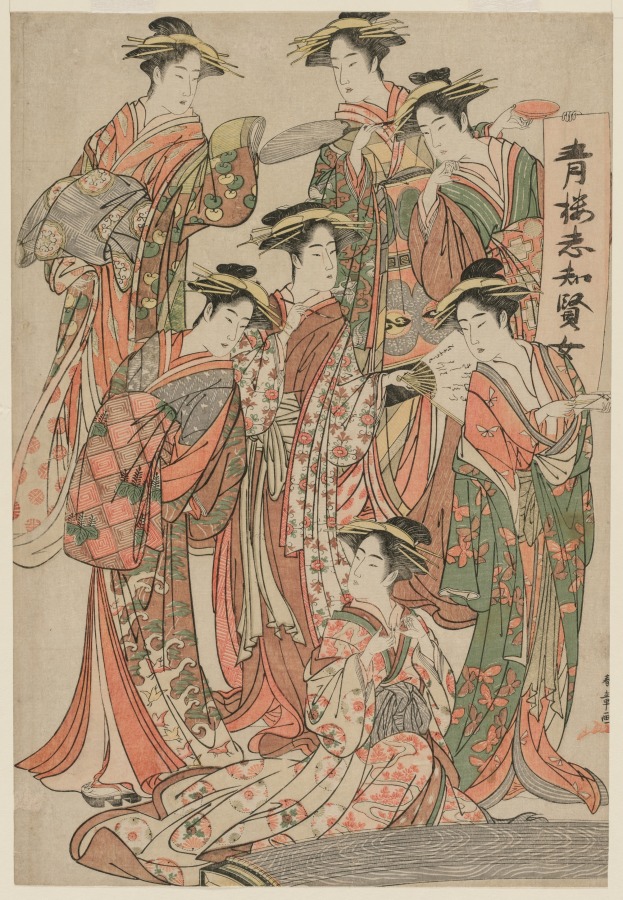
Katsukawa Shunshō · The Cleveland Museum of Art · Bequest of James Parmelee · CC0
- Born
- 1726
- Died
- 1793
- Nationality
- Japan
- Occupation
- painter · ukiyo-e artist · xylographer · printmaker
- Movements
- Katsukawa school
VALÉORINE Encyclopedia
VALÉORINE documentary reading
Documentary summary
Katsukawa • Illustration — Kabuki actor, by Katsukawa Shunshō Shunshō Katsukawa (1726 – 19 January 1793) was a Japanese painter and printmaker in the ukiyo-e style, and the leading artist of the Katsukawa school. Shunshō studied under Miyagawa Shunsui, son and student of Miyagawa Chōshun, both equally famous and talented ukiyo-e artists. Shunshō is best known for introducing a new form of yakusha-e, prints depicting Kabuki actors.
Admitted source layer · organised and presented by VALÉORINE
Reference Check
Propose documentary evidence for Katsukawa Shunshō. A contribution is never written directly as fact: identity, source, rights and evidence gates still decide.
Sign in to contribute
Documentary evidence
Documentary basis
Authority files
getty · 500118856 · wikidata · Q1358636 · wikipedia · Katsukawa Shunshō
In this article
Biography
Biography
However, his bijin-ga (images of beautiful women) paintings, while less famous, are said by some scholars to be "the best in the second half of the [18th] century".
Shunshō first came to Edo to study haiku and painting. He became a noted printmaker of actors with his first works dating from 1760. Though originally a member of the Torii school, he soon broke away and began his own style, which would later be dubbed the Katsukawa school. Among his students were the famous ukiyo-e artists Shunchō, Shun'ei, and Hokusai. In 1770 Shunshō collaborated with Ippitsusai Bunchō on Ehon Butai Ōgi, an illustrated book depicting leading kabuki actors of the day on folding fans; carved by Endō Matsugorō and published in three volumes by Kariganeya Ihei, it proved so popular that it was reprinted several times and is still regarded as one of the most important woodblock-printed books in the history of ukiyo-e, offering a clear view of the nigao-e likeness-based style of actor portraiture that both artists helped establish. Most of Shunshō's actor prints are in the hoso-e (33 xx) format common at the time, but he created a great number of works in triptych or pentaptych sets. However, what truly set his work apart from that of earlier artists was the depiction of large portrait-style heads and the insides of actors' dressing rooms. He was also one of the first to pioneer realistic depictions of actors; in Shunshō's prints, unlike in the works of the Torii school, it was possible for the first time to distinguish not only the theatrical role, but also the actor portraying that role. Shunshō also made use often of the long and narrow hashira-e format. Though he painted many revered paintings of bijin, he produced very few prints depicting them. Seirō Bijin Awase Sugata Kagami (青楼美人合姿鏡), "A Mirror Reflecting the Forms of Fair Women of the Green-Houses"), a printed book on which he collaborated with Kitao Shigemasa, is one of the only printed works containing bijin-ga by Shunshō. His paintings not only depicted elegantly painted women and fashions, but great attention is also paid to the landscape elements and architecture of the backgrounds. Though his prints belie a strong fascination with the theatre world, his paintings suggest the complete opposite.
Names
Names
Originally Katsumiyagawa Yūsuke, "Katsukawa Shunshō" is one of many art-names (gō) taken on by the artist during his life. Others include Jūgasei, Ririn, Yūji, Kyokurōsei, and Rokurokuan. Prior to signing his works with one of these gō, he used a stamp in the shape of a gourd surrounding the character mori (森), meaning "forest"。
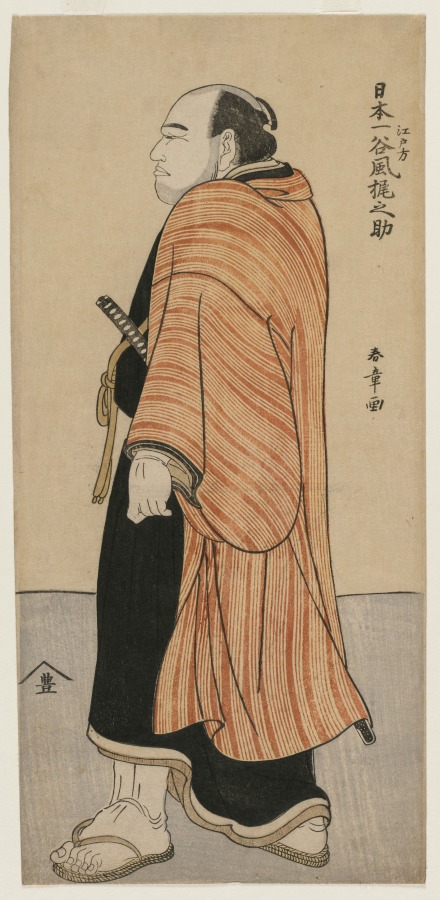
Tanikaze Kajinosuke, c. mid-1780s, by Katsukawa Shunshō
Katsukawa Shunshō · The Cleveland Museum of Art · Bequest of Edward L. Whittemore
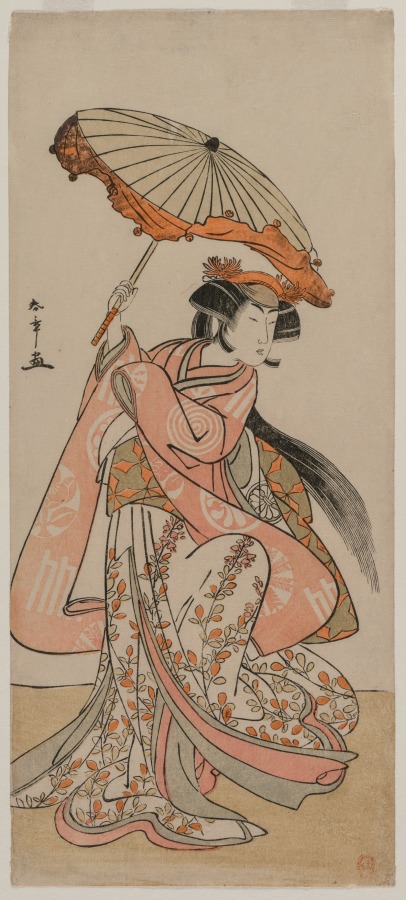
The Actor Segawa Kikunojo II Dancing with a Parasol, late 1770s, by Katsukawa Shunshō
Katsukawa Shunshō · The Cleveland Museum of Art · The Kelvin Smith Collection, given by Mrs. Kelvin Smith
Life and career
Dated record
Life and career
The full dated record · 2 entries
1726
Katsukawa Shunshō was born in 1726.
1793
Katsukawa Shunshō died in 1793.
Primary material
Documents and archives
reference work
- Wikidata, structured authority record Q1358636: Katsukawa Shunshō
Reputable secondary · Wikimedia Foundation
- “Katsukawa Shunshō”, English Wikipedia, consulted as further reading
Reputable secondary · Wikipedia
authority file
- Getty Union List of Artist Names 500118856, Katsukawa Shunshō.
General reference · The Getty Research Institute
Notes from the source article
Cited by Wikipedia
Notes from the source article
These works are cited by the source article, in its own numbering. They are recorded as its citations, not as sources VALÉORINE has verified.
- 1.Paine, Robert Treat and Alexander Soper (1955). The Art and Architecture of Japan. New Haven: Yale University Press. p. 263.
- 2.Milone, Marco. Ukiyo-e. L'Erudita. 87. 2022. 9788867707270.
- 3.Frédéric, Louis (2002). "Japan Encyclopedia". Cambridge, Massachusetts: Harvard University Press.
References
Citations
References
Each reference names the institution holding it, so a reader may go to the document itself.
authority file
Getty Union List of Artist Names 500118856, Katsukawa Shunshō.The Getty Research Institute
Secondary witnessreference work
Wikidata, structured authority record Q1358636: Katsukawa ShunshōWikimedia Foundation
Secondary witnessreference work
Secondary witness
Further particulars
Held on the record
Further particulars
Open the remaining particulars
He trained under Kō Sūkoku. Each of those relationships is stated by the authority record rather than inferred from style.
The authorities additionally record the headings Shugasei, Shunshō Katsukawa, Shōgasei, Shunshō Miyagawa and Gifu. His recorded languages were Japanese and German. Other recorded relations include Katsukawa Shunkyō.
Identity and origins
Recognition and collections
Work by Katsukawa Shunshō is
Minneapolis Institute of Art, Museo del Prado, Auckland Art Gallery and National Gallery of Victoria
The Encyclopedia exists whether or not anything is for sale. Corrections are recorded rather than overwritten, and every version of this record is kept. Published 14 August 2026.
Elsewhere in Prints
4,138 published records in this field, each with its sources named.
- Kathan BrownEngraver
- Kathleen BrowneEngraver
- Kathleen JebbEngraver
- Katinka MannEngraver
- Katsushika HokusaiEngraver
- Kavavaow MannomeeEngraver
- Kawanishi HideEngraver
- Kay AmertEngraver
Best supported in this field
For owners
Own a work by Katsukawa Shunshō?
A specialist will read what you send and tell you what the house can establish, what it cannot, and whether the object is suited to sale. There is no charge and no obligation. The object stays with you throughout; nothing is shipped to us unless it is arranged in writing beforehand.