
Kampen
Kampen (Nl-Kampen.ogg) is a city and municipality in the province of Overijssel, Netherlands. A member of the former Hanseatic League, it is located at the lower reaches of the river IJssel. The municipality of Kampen had a population of in popbaseyear and covers an area of Kampen km2.
Kampen
- Name
- Kampen
Reference Check
Propose documentary evidence for Kampen. A contribution is never written directly as fact: identity, source, rights and evidence gates still decide.
Sign in to contribute
World of VALÉORINE
Documentary connections
Only confirmed graph relationships appear here. Images are shown only when their identity and reuse rights both pass the documentary gate.

Died In · incoming
Anita Rée
Artist
Own work

Born In · incoming
Barend Christiaan van Calker
Engraver
Amsterdam Museum

Died In · incoming
Barent Avercamp
Artist
Copied from an art book
Born In · incoming
Barent Avercamp
Artist
Copied from an art book

Born In · incoming
Cornelia toe Boecop
Artist
Own work

Died In · incoming
Ferdinand Avenarius
Author
Deutsche Fotothek (Aufnahme-Nr.: df_hauptkatalog_0033498 Datensatz-Nr.: obj 70255091)

Born In · incoming
Gerard Hengeveld
Person
GaHetNa (Nationaal Archief NL) 916-0558
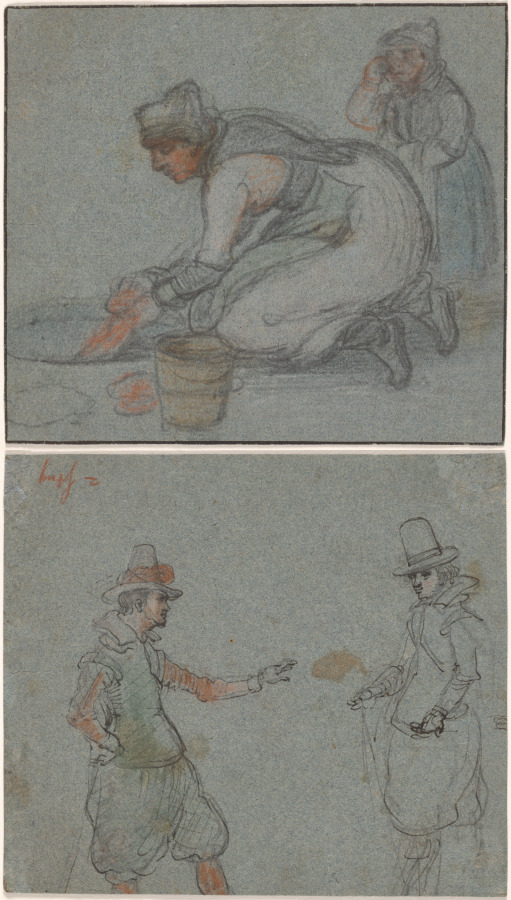
Died In · incoming
Hendrick Avercamp
Artist
Norman O. Stone and Ella A. Stone Memorial Fund

Born In · incoming
Hendrik van Steenwijk I
Artist
http://hdl.handle.net/10934/RM0001.COLLECT.134280

Born In · incoming
Jacob Eduard van Heemskerck van Beest
Artist
National Portret Gallery
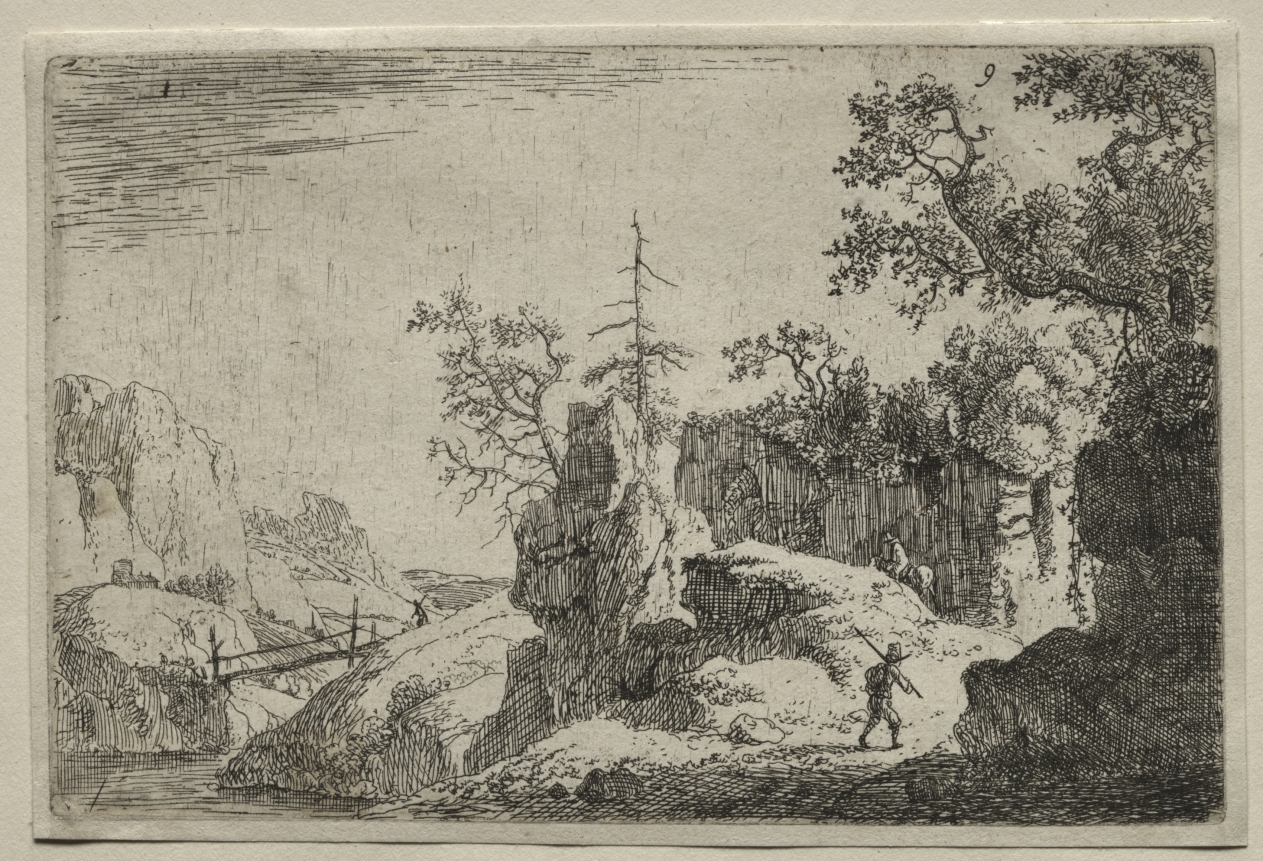
Born In · incoming
Jan van Aken
Engraver
Mr. and Mrs. Lewis B. Williams Collection

Born In · incoming
Jean-Pierre Cluysenaar
Designer
oude prentkaart - publiek domein

Born In · incoming
Jo Koster
Designer
https://www.museumgouda.nl/tentoonstelling/jo-koster-kunstenaar/
Born In · incoming
Johannes Wanning
Person
Born In · incoming
Margaretha toe Boecop
Artist
Born In · incoming
Margi Geerlinks
Photographer
In this article
Overview
Overview
Located in the North West of Overijssel and is the largest city in this region. The city of Kampen itself has around 37,000 inhabitants. Kampen has one of the best preserved old town centres of the Netherlands, including remains of the ancient city wall (of which three gates are still standing) and numerous churches. Also notable are the three bridges over the IJssel which connect Kampen with IJsselmuiden and Kampereiland, the agricultural area between the branches which form the IJssel delta, and a windmill (d' Olde Zwarver – the Old Vagabond). Since November 2018, the town and some communes are on a river island. Between the 14th and 16th century it was one of the biggest towns in the Northern Netherlands (modern day European Netherlands). The town is about 90 kilometer northeast of Amsterdam. Traditionally people in Kampen speak a variation of the Sallands dialect, known as Kampers.
Key facts
Key facts
• Name — Kampen • Type — City and municipality • Shield Size — 100x80px • Subdivision Type — Country • Subdivision Name — Netherlands • Subdivision Type1 — Province • Subdivision Name1 — Overijssel • Seat Type — City Hall • Seat — Kampen City Hall • Governing Body — Municipal council • Leader Party — CDA • Leader Title — Mayor • Leader Name — Sander de Rouwe • Unit Pref — Metric • Area Total Km2 — Kampen • Area Land Km2 — Kampen • Area Water Km2 — Kampen • Elevation M — 1 • Population Total — Kampen • Population As Of — popbasemonth popbaseyear • Population Density Km2 — Kampen • Population Demonym — Kampenaar • Time Zone — CET • Utc Offset — +1 • Time Zone Dst — CEST • Utc Offset Dst — +2 • Postal Code Type — Postcode • Postal Code — 8260–8279 • Area Code Type — Area code • Area Code — 038 • Website — 1=http: www.kampen.nl
Middle Ages
Middle Ages
By 1150, there were already wooden buildings on the site where Kampen is currently located. The name Kampen, however, is not mentioned until 1277. The city has had city rights since 1236. As a result of its convenient location on the busy trade route between the Zuiderzee and the Rhine, Kampen quickly developed from simple settlements into a prosperous trading town, to become one of the most powerful and leading cities of northwestern Europe. In the 14th century, Kampen exchanged with the bishop of Utrecht, Jan van Arkel, the Mastenbroek polder against the right to increase the IJsseldelta. The silting up of the IJssel brought a gradual end to the prosperity of Kampen from 1430 on. For a long time Kampen did not want to sign a union and make economic and political concessions to other cities, as was usual in the Hanseatic League. When the County of Holland went to war with the Hanseatic League this situation came to an end: the city was forced to choose a side in the war. Kampen was originally more oriented toward the Baltic trade and commerce with the hinterland of the Rhine, and therefore in 1441 formally joined the Hanseatic League. The city had much influence in the League; despite loud protests from the other towns in lower reaches of the IJssel and from other Hanseatic cities, the League agreed in 1448 to build a bridge over the river. This project was accomplished in just five months. With this bridge Kampen hoped to be able to develop closer relationships with the hinterland.
Post-Medieval
Post-Medieval
• Illustration — Kampen (Blaeu's Toonneel der Steden Dutch city maps, by Willem and Joan Blaeu, 1652 • Illustration — Winter landscape with skaters c. 1625 On 11 August 1572 Kampen was conquered from the Spaniards by Willem van den Bergh, a brother of William of Orange. After the massacre of Zutphen on 15 November, the city voluntarily surrendered to the Spanish. In 1578, the city changed ownership again after the Siege of Kampen, led by George van Lalaing. Due to its right to increase the IJsseldelta, Kampen was owner of the growing Kampereiland. From 1500 the islands were leased. The rents were so large that the city did not need to raise taxes. In October 1670, Kampen was the first of four Dutch cities to raise capital by issuing a Tontine. The Franco-Dutch War, fought by the Republic of the United Netherlands against the Kingdom of France, Sweden, the Bishopric of Münster, the Archbishopric of Cologne and the Kingdom of England, marked a definitive end to the enormous power of the city. Kampen became well known again in the 19th century. The city was difficult to reach from the sea, because the surrounding wetlands became silted up and shallow. During the preceding centuries, the watercourse of the river IJssel was dredged several times, but the costs were relatively high and within a few years, the river silted up again. As the IJssel had several delta-like mouths here, the main route of the river shifted several times. In the 19th century, a new strategy was put in place to counter this problem: some watercourses were dammed to allow for more water at a higher speed through one or two main routes. This had the advantage that less sand and silt were deposited and resulted in a river course that "swept itself clean". A key figure in this story is city architect Nicolaas Plomp, who, besides his work for the current IJssel front of the city of Kampen, was also involved in hydraulic engineering. Due to the emerging industry in the 19th century and the importance of roads and railways for the economy, highways and paved roads were constructed to replace transportation over sand and mud roads.
Geography
Geography
• Illustration — Topographic map of the city of Kampen, March 2014 • Illustration — Primary channel: river IJssel Secondary channel: IJssel (19th century); Ganzendiep (modern) Secondary channel: Ganzendiep Secondary channel: Goot Primary channel: Regtediep (19th century); River IJssel (modern) Secondary channel: Regtediep (19th century); Kattendiep (modern) Primary channel: Keteldiep Secondary channel: Noorderdiep (19th century); Noorddiep (modern) Historical city center of Kampen Oost-Flevoland polder, province of Flevoland Noordoostpolder, Flevoland All other land areas on the map are part of the region of Salland in the province of Overijssel. Kampen is part of the province of Overijssel ('Over-IJssel' i.e. (mostly) trans-/across the river IJssel, as seen from the perspective of the bishopric of Utrecht by which it was held until 1528) in the Eastern part of The Netherlands, situated between the provinces of Gelderland, Flevoland, Drenthe and Friesland. The city of Kampen is situated at the mouth of the river IJssel. Opposite Kampen, along the IJssel, lies IJsselmuiden, which is the second largest residential nucleus of the municipality Kampen. The municipality of Kampen has five other population centers: Grafhorst, 's-Heerenbroek, Kamperveen, Wilsum and Zalk.
Historical landmarks
Historical landmarks
Kampen has a large number of old buildings, including remains of the ancient city wall (whose city gates are still standing) and the Church of St Nicholas (Bovenkerk). The structure of the walled fortress city is still visible in the streets. Significant structures include: • The Koornmarktpoort: a city gate located near the river IJssel which probably dates from the 14th century. In the 15th century two squat towers were added at the outer corners. • The Broederpoort: a rectangular city gate with four slender towers, originally from 1465, rebuilt in Renaissance style in 1615 • The Cellebroederspoort: a rectangular city gate, flanked by two heavy round towers, originally from 1465, rebuilt in 1617 in Renaissance style • The Stedelijk Museum Kampen: located in the former town hall of Kampen, which dates from the late 14th century • The Gotisch huis: built around 1500. This was the location of the Stedelijk Museum Kampen before it moved to its current location in the old town hall. • The Nieuwe Toren: a tower with a carillon designed by Philips Vingboons and dating from 1648 to 1664 • The Church of St. Nicholas (Bovenkerk): a Gothic basilica dating from the 14th and 15th centuries. The interior of the church houses an early-Renaissance choir screen (1552), a stone pulpit (circa 1500) and a monumental organ from 1670 to 1676. • The Broederkerk: a 14th-century church which originally belonged to a Franciscan monastery • The Buitenkerk: a 14th-century church • The Burgwalkerk: a neoclassical 19th-century church • A windmill called d'Olde Zwarver, built in 1842 • A monastery gate dating from 1665 called Linnenweverspoortje • The city auditorium (Stadsgehoorzaal), dating from 1891 • An old tobacco factory, De Olifant, where cigars are still made with 19th-century equipment. De Olifant cigars are sold in the shop. Throughout the town of Kampen, there are colorful murals which are in fact old commercials for now-defunct business in Kampen. These murals, which include Art Nouveau influences, were made by local artists and are now referred to as "frescoes of the middle class". As a result of current municipal policy, wherever these murals are discovered under old plaster, they are restored. Notable individuals with a connection to Kampen are honoured with a commemorative stone bearing their name and achievements. These stones are incorporated into the pavement of the Oude Raadhuisplein (formerly Koeplein), the square in between the old town hall, the former Post Office and Nieuwe Toren.
Gallery
Gallery
• Illustration — Former synagogue in Kampen • Illustration — Former town hall • Illustration — Church: Bovenkerk • Illustration — Bridge (Kalverhekkenbrug) and church (Buitenkerk) • Illustration — Reformed church • Illustration — Windmill: d' Olde Zwarver • Illustration — Towngate: Korenmarktpoort • Illustration — Bridge: Stadsbrug • Illustration — Ship at the IJsselkade • Illustration — Office building of the ABN AMRO bank at the IJsselkade • Illustration — Liberation memorial at the De La Sablonairekade • Illustration — The new Anabranch called Reevediep • Illustration — The westside of the island of Kampen, with marches going into the Drontermeer • Illustration — Protestant Theological University Kampen • Illustration — New Tower (Nieuwe Toren) • Illustration — Cellebroederspoort in Kampen
Festivals and events
Festivals and events
An annual festival during the summer months is the Kamper ui(t) day. The name is derived from a series of folk tales in which the inhabitants of Kampen were portrayed as stupid. Another summer event is the Full Color Festival, which is organized annually. Every third Saturday of August, a comics event, called the Kamper Stripspektakel, is organized with over 100 booths. Once every three years Sail Kampen takes place, a sailing spectacle with (old) sailing ships. A weekend before Christmas Christmas in Oud Kampen is organized. There is street theater, where pieces of famous musicals are played, and mid-nineteenth-century characters are walking around the city.
Sports
Sports
Kampen is the home of football team Go Ahead Kampen and its rivals Dos Kampen, KHC Kampen, VV Kampen and IJVV.
Humor
Humor
• Illustration — Kamper Sturgeon with a cowbell The foolish wisdom of the residents of the Dutch city of Kampen gave rise to the term "Kamper onion" (Kamper ui, plural: Kamper uien) for town-of-fools type stories, as well for the "Kampersteur" ("Kamper Sturgeon") dish, which is made not of sturgeon, but of eggs: to greet a visiting bishop the Kampers caught a large sturgeon, and to keep it fresh they tied a cowbell to it and let it back in water. When the bishop arrived, the fish was gone, and a dish made of eggs was served instead. The "onion" in "Kamper onion" comes from the tale, variants of which are known in various cultures: a tramp convinces a farmer and his wife that he knows how to cook a nutritious stew from onion and salt. But while cooking he adds plenty of other stuff "to improve the taste".
Twin towns
Twin towns
Kampen is twinned with: • * Eilat, Israel * Meinerzhagen, Germany — | * Soest, Germany * Pápa, Hungary
Transportation
Transportation
• Illustration — Kampen South railway station The Kampen railway station opened in 1865 as terminus of the Kamperlijntje branch from Overijssel's capital city Zwolle. It is served by a non-stop diesel service on a single track. The line was renovated in 2017 to be electrified. In December 2017, Keolis Nederland took over the line, after Nederlandse Spoorwegen lost the line in a tendering process. There is an alternative railway connection with Zwolle via the Hanzelijn, which links Zwolle with Amsterdam via Dronten, Lelystad and Almere. It was inaugurated by Queen Beatrix in December 2012. Kampen Zuid railway station was built a few kilometers south of Kampen near the junction of the national roads N50 and N764, where a new residential development is planned. Somewhat confusingly, there was a Kampen Zuid railway station in existence before, between 1 October 1913 and 15 May 1934. This was the terminus of the Kampen–Hattem railway line, which connected with the Zwolle–Apeldoorn service via Wapenveld and Heerde. Surface roads connecting the city include N760, N763, N765 and N307.
Education
Education
Kampen had two theological universities: the Theological University of the Protestant Church in the Netherlands (PThU) and the theological college of the Reformed Church of the Netherlands (TUK).
Notable residents
Notable residents
• Illustration — Jacob Eduard van Heemskerck van Beest, 1870s • Illustration — Coen Hissink, 1917
The arts
The arts
• Hendrick Avercamp (1585 – 1634 in Kampen) a painter of small winter landscapes • Barent Avercamp (1612 in Kampen – 1679) a Dutch painter • Jacob Eduard van Heemskerck van Beest (1828 in Kampen – 1894) a Dutch painter • Coen Hissink (1878 in Kampen – 1942) a Dutch film actor of the silent era • Ida Gerhardt (1905 in Gorinchem – 1997) Dutch poet and classicist. • Gerard Hengeveld (1910 in Kampen – 2001) pianist, harpsichordist and composer. • Sybren Polet (1924 in Kampen – 2015) a Dutch prose writer and poet • Gait L. Berk (1927 in Kampen – 2006) writer and film maker about boats and trees • Henk van Ulsen (born 1927 in Kampen – 2009) actor • Klaas Jan Mulder (1930 in Kampen - 2008) Dutch organist, pianist and conductor. • Wim Ramaker (1943 in Kampen – 1992) Dutch broadcaster, writer and poet • Harry van der Kamp (1947 in Kampen – 2026) bass-baritone, ensemble leader and singer
Public thinking & public service
Public thinking & public service
• Illustration — Godfried van Voorst tot Voorst, 1948 • Albert Pighius (ca. 1490 in Kampen - 1542) a Dutch Roman Catholic theologian, mathematician and astronomer. • Jacob van Deventer (ca.1500/1505 in Kampen – 1575) a Dutch cartographer • Andries Hudde (1608 in Kampen – 1663) landowner and colonial official of New Netherland • François Adriaan van der Kemp (1752 in Kampen – 1829) a Dutch radical leaders of the Patriots • Jan Willem de Winter (1761 in Kampen – 1812) a Dutch admiral of the Napoleonic Wars • Pieter Hendrik van Zuylen van Nijevelt (1782 in Kampen – 1825) a Dutch count and baron and Army general • Francina Broese Gunningh (1783 in Kampen - 1824) a Dutch soldier • Jean-Pierre Cluysenaar (1811 in Kampen – 1880) a Belgian architect • Hendrik Tonneboeijer (1814 in Kampen – 1837) a Dutch colonial officer in Dutch Gold Coast • Lucien von Römer (1873 in Kampen - 1965), a Dutch physician, botanist and writer • Jan Joseph Godfried, Baron van Voorst tot Voorst Jr. (1880 in Kampen – 1963) commander of the Dutch armed forces during WWII and strategist • Klaas Schilder (1890 in Kampen – 1952) Reformed theologian and professor in the Reformed Churches in the Netherlands • Adriaan Schuurman, Dutch Wiki (1904 in Kampen – 1998) organist and Protestant church musician • Wiert Berghuis, Dutch Wiki (1911 in Kampen - 1989) Mayor of Kampen 1952–1970, chairman of the Anti-Revolutionary Party • Dr. Willem Johan Kolff (1911 in Leiden – 2009) physician at the former municipal hospital, pioneer of haemodialysis. • G. A. den Hartogh (born 1943 in Kampen) a Dutch moral, legal and political philosopher
Sport
Sport
• Illustration — Petra van Staveren, 1984 • Benjamin Leussen (1876 in Kampen - 1924) chess master • Petra van Staveren (born 1966 in Kampen), swimmer, golden medalist at the 1984 Summer Olympics • Jaap Stam (born 1972 in Kampen), retired football player with 415 club caps • Reinder Nummerdor (born 1976) a Dutch volleyball player, competed in five consecutive Summer Olympics • Robert de Wilde (born 1977 in Kampen), BMX World Champion, competed at the 2008 Summer Olympics
Other
Other
• Aalt Mondria (born 1957 in Kampen - 2011) a Dutch criminal and serial killer
Text attribution
Licensing
Text attribution
Part of the biographical narrative on this page reuses licensed material. Its origin, revision and licence are recorded here.
The biographical narrative on this page is based on the Wikipedia article Kampen, Overijssel, revision 1376273956 (EN edition), by its contributors. VALÉORINE has edited that text and built its own documentary record around it. The reused material is available under CC BY-SA 4.0, and this page's reuse of it is offered under the same licence. Everything else on this page — the chronology, the holdings, the evidence, the plates and the connections — is VALÉORINE's own record. Sources and licences.
Makers, houses and production
Knowledge graph
Makers, houses and production
The people, houses and objects recorded in connection with this place.
Born at
5- Barend Christiaan van CalkerEngraver
Established from a fact already recorded on a verified source.
- Jean-Pierre CluysenaarDesigner
Established from a fact already recorded on a verified source.
- Jo KosterDesigner
Established from a fact already recorded on a verified source.
- Johannes WanningPerson
Established from a fact already recorded on a verified source.
- Sybren PoletAuthor
Established from a fact already recorded on a verified source.
The Encyclopedia exists whether or not anything is for sale. Corrections are recorded rather than overwritten, and every version of this record is kept. Published 26 September 2026.
Elsewhere in General
22,760 published records in this field, each with its sources named.
- KamloopsPlace
- Kamo districtPlace
- KamogawaPlace
- KampalaPlace
- Kamphaeng PhetPlace
- Kampong Chhnang ProvincePlace
- Kampot ProvincePlace
- Kampung AwahPlace
Best supported in this field
For owners
Own an object connected with Kampen?
A specialist will read what you send and tell you what the house can establish, what it cannot, and whether the object is suited to sale. There is no charge and no obligation. The object stays with you throughout; nothing is shipped to us unless it is arranged in writing beforehand.