
John Hoppner
John Hoppner (4 April 175823 January 1810) was an English painter, very largely of portraits. He was much influenced by Joshua Reynolds, and was regarded as a fine colourist. He had a successful career painting the high society of his native London, including the Prince Regent.
Also recorded as John Hopner · hoppner j. · John Hoppner R. A. · R.A. Hoppner
John Hoppner
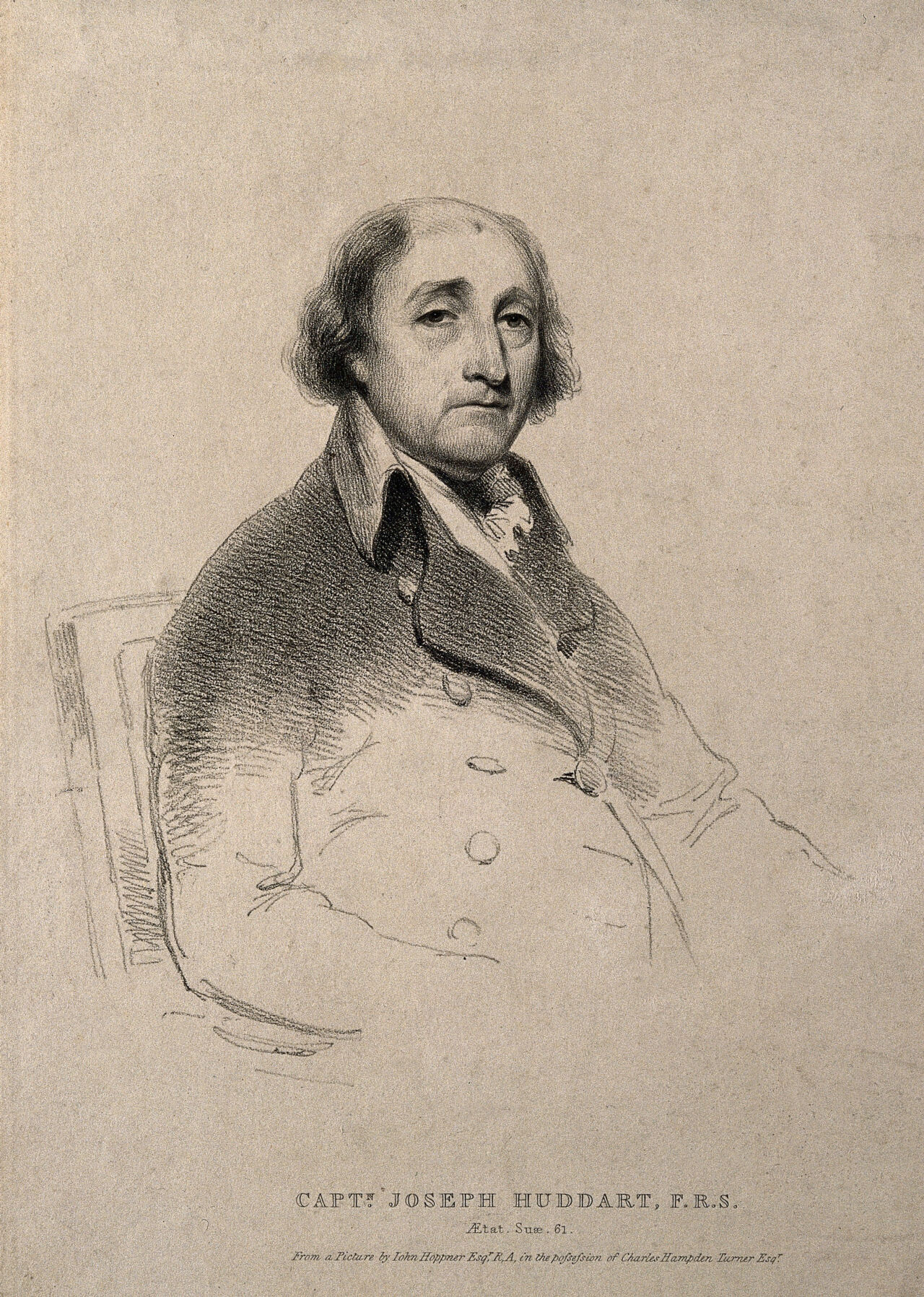
John Hoppner · Wellcome Collection, London · Wellcome Collection · Public Domain Mark
- Birthplace
- Whitechapel, London
- Died
- 23 January 1810
- Place of death
- London, England
- Known for
- Portrait painting
- Born
- 1758
- Nationality
- United Kingdom
- Occupation
- painter · engraver · draftsperson · artist
- Fields
- portrait
VALÉORINE Encyclopedia
VALÉORINE documentary reading
Documentary summary
John Hoppner (4 April 175823 January 1810) was an English painter, very largely of portraits. He was much influenced by Joshua Reynolds, and was regarded as a fine colourist. He had a successful career painting the high society of his native London, including the Prince Regent.
Admitted source layer · organised and presented by VALÉORINE
Reference Check
Propose documentary evidence for John Hoppner. A contribution is never written directly as fact: identity, source, rights and evidence gates still decide.
Sign in to contribute
Documentary evidence
Documentary basis
Authority files
wikidata · Q326066 · wikipedia · John Hoppner
In this article
Key facts
Key facts
• Birthplace — Whitechapel, London • Died — 23 January 1810 • Place of death — London, England • Known for — Portrait painting • Baptised — 1758 4 4
Early life
Early life
• Illustration — The Frankland Sisters, 1795 • Illustration — Miss Mary Linwood, about 1800, John Hoppner V&A Museum no. 1439-1874 Hoppner was born in Whitechapel, London, the son of German parents – his mother was one of the German attendants at the royal palace. George III showed a fatherly interest and patronage of the young boy that gave rise to rumours, quite unfounded, that he may have been his illegitimate son. Hoppner became a chorister at the royal chapel, but, showing strong inclination for art, in 1775 he entered the Royal Academy. In 1778, he took a silver medal for drawing from life, and in 1782 the Academy's highest award, the gold medal for historical painting, his subject being King Lear.
Career
Career
Hoppner first exhibited at the Royal Academy in 1780. His earliest love was for landscape, but necessity obliged him to turn to the more lucrative business of portrait painting. At once successful, he had throughout life the most fashionable and wealthy sitters, and was the greatest rival to the growing attraction of Thomas Lawrence. He rarely attempted subjects from history painting or mythology, though a Sleeping Venus, Belisarius, Jupiter and Io, a Bacchante and Cupid and Psyche are recorded among his works. The Prince of Wales visited him especially often, and many of his finest portraits were hung in the state apartments at St James's Palace, notably those of the prince himself, the Duke and Duchess of York, Lord Rodney and Lord Nelson. His other sitters included Sir Walter Scott, the Duke of Wellington, Henry Bartle Frere and Sir George Beaumont. • Illustration — Sleeping Nymph and Cupid, 1806, now at Petworth House. The model for the nymph was said at the time to be Georgiana Leicester, Baroness de Tabley. According to the 1911 edition of the Encyclopædia Britannica: Competent judges have deemed his most successful works to be his portraits of women and children... He was confessedly an imitator of Reynolds. When first painted, his works were much admired for the brilliancy and harmony of their colouring, but the injury due to destructive mediums and lapse of time which many of them suffered caused a great depreciation in his reputation. The appearance, however, of some of his pictures in good condition has shown that his fame as a brilliant colourist was well-founded. His drawing is faulty, but his touch has qualities of breadth and freedom that give to his paintings a faint reflection of the charm of Reynolds. In 1803, he published A Series of Portraits of Ladies, engraved after his paintings by Charles Wilkin, and in 1805 a volume of translations of Eastern tales into English verse. Unusually Hoppner painted the background and perhaps more of a full-length portrait of Charlotte, Countess Talbot by Thomas Gainsborough in 1788, the year in which Gainsborough died. It is now in the Dunedin Public Art Gallery.
Personal life
Personal life
He married Phoebe Wright, the daughter of American-born sculptor Patience Wright. They had five children, although little is known about the youngest: • Catherine Hampden Hoppner (1784–1828), Magistrate, East India Company • Richard Belgrave Hoppner (1786–1872), British Consul general, Venice, and friend of Byron (ref: Oxford DNB, entry on RBH in entry on John Hoppner) • Wilson (sometimes known as William) Lascelles Hoppner (1788-?), artist • Henry Parkyns Hoppner (1795–1833), officer of the Royal Navy, Arctic explorer, draughtsman/artist • youngest unknown Hoppner
Death
Death
In his later years Hoppner suffered from a chronic disease of the liver. He died on 23 January 1810.
Gallery
Gallery
• Illustration — Richard Brinsley Sheridan, c.1788 • Illustration — Joseph Haydn, c.1791, Royal Collection • Illustration — Dorothea Jordan as Hippolyta, 1791 • Illustration — George, Prince of Wales, 1792, Wallace Collection • Illustration — Portrait of Arthur Wellesley, 1795 • Illustration — Portrait of William Lamb, 1796, Royal Collection • Illustration — Duke of Bedford, 1796, Royal Collection • Illustration — Countess of Oxford, 1797, National Gallery • Illustration — Lord Paget, 1798, National Trust • Illustration — Sir Ralph Abercromby, 1798 • Illustration — Admiral Duncan, c.1798 • Illustration — Duke of Kent, c.1799, Royal Collection • Illustration — Portrait of Lord Grenville, c.1800 • Illustration — Thomas Maitland, 1800 • Illustration — Lady Hertford, 1800 • Illustration — Portrait of Anne Isabella Milbanke, 1800 • Illustration — Georgiana St Leger and her son Pascoe St Leger Grenfell c.1800 • Illustration — Lord Nelson, c.1801, Royal Collection • Illustration — Charles Abbot, c.1802 • Illustration — Arthur Paget, 1804, National Trust • Illustration — Henry Blackwood, c.1806 • Illustration — John Hookham Frere, 1806 • Illustration — Portrait of Lord Camden, 1806 • Illustration — Dr. Matthias Hoffman, Province House (Nova Scotia) • Illustration — Girl with rabbit, 1800, Städelsches Kunstinstitut
Identity and overview
Identity and overview
The following is established of the heading itself. Institutional cataloguing adds that john Hoppner is recorded as United Kingdom.
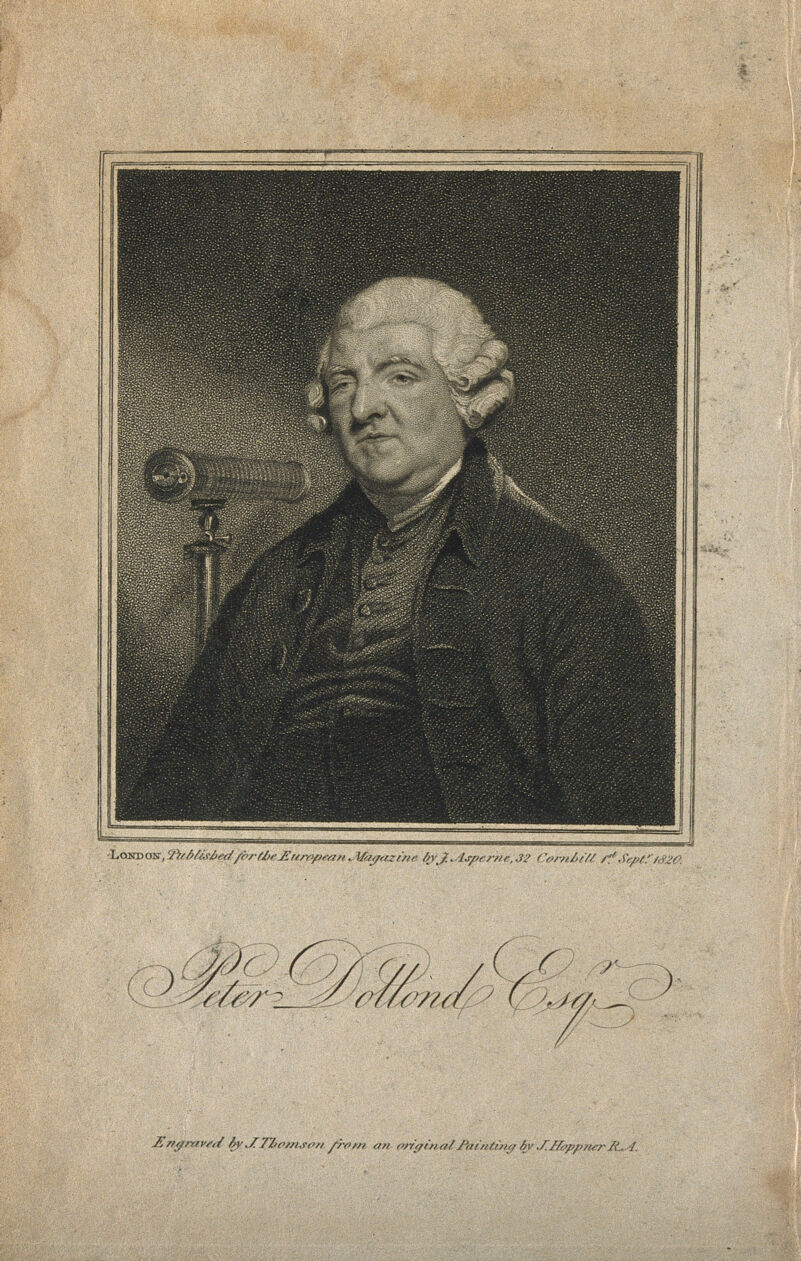
Peter Dollond. Stipple engraving by J. Thomson, 1820, after J. Hoppner., by John Hoppner
John Hoppner · Wellcome Collection, London · Wellcome Collection
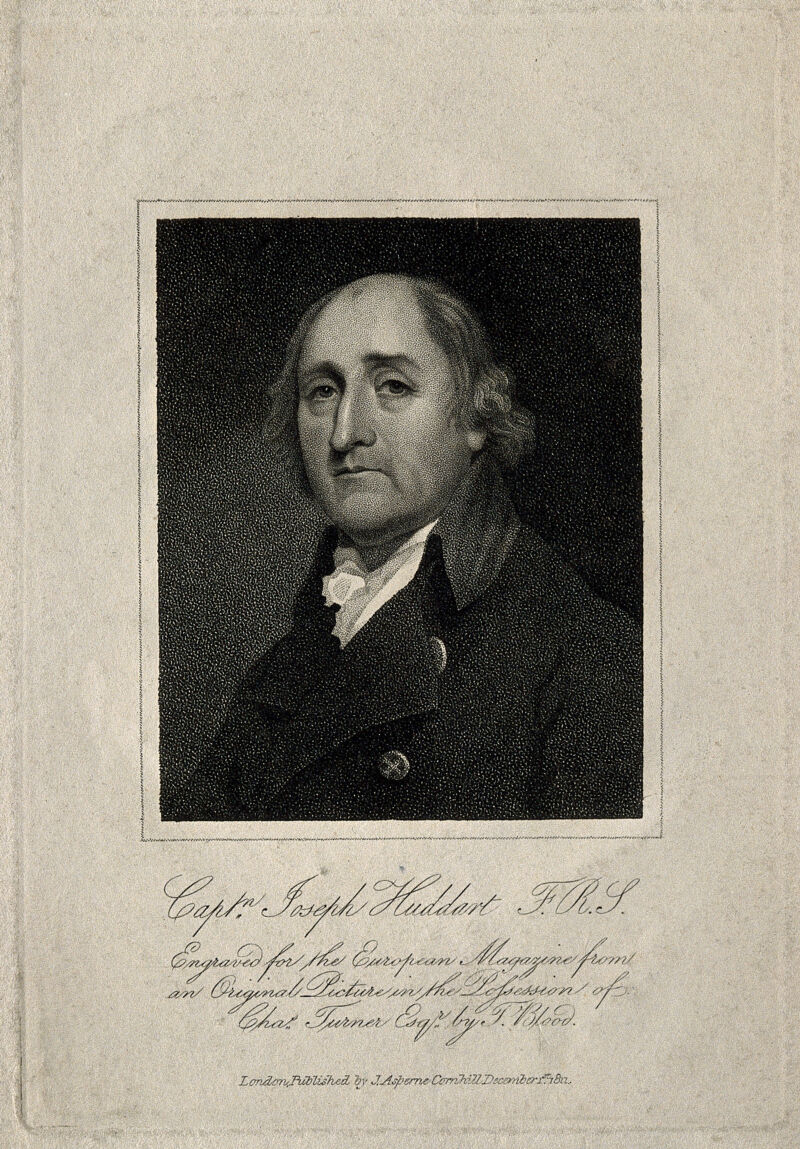
Joseph Huddart. Stipple engraving by T. Blood, 1811, after J. Hoppner., 1811, by John Hoppner
John Hoppner · Wellcome Collection, London · Wellcome Collection
Primary material
Documents and archives
scholarly publication
- Hoppner, John (1758–1810), portrait painter, Oxford Dictionary of National Biography, 2004
Scholarly · Crossref registry · 2004
- Hoppner, John, Benezit Dictionary of Artists, 2011
Scholarly · Crossref registry · 2011
Institutional database
- Wikidata, structured authority record Q326066: John Hoppner
Scholarly · Wikimedia Foundation
reference work
- “John Hoppner”, English Wikipedia, consulted as further reading
Reputable secondary · Wikipedia
Notes from the source article
Cited by Wikipedia
Notes from the source article
These works are cited by the source article, in its own numbering. They are recorded as its citations, not as sources VALÉORINE has verified.
- 1.Artist Info. www.nga.gov via www.ngabiographies.org.
- 2.Encyclopædia Britannica 1911
- 3.Smith, John Chaloner. British mezzotinto portraits : being a descriptive catalogue of these engravings from the introduction of the art to the early part of the present century : arranged according to the engravers, the inscriptions given at full length, and the variations of state precisely set forth : accompanied by biographical notes, and appendix of a selection of the prices produced at public sales by some of the specimens, down to the present time. London : H. Sotheran. 1884.
- 4.Chapman and Hall. First Proofs of the Universal Catalogue of Books on Art, Volume 1. 868. 1870.
- 5.The Gentleman's Magazine. 445. 1834.
Bibliography printed in the source article · 6
- Hoppner, John. Oriental Tales (London: J. Hatchard, 1805).
- 27. 342.
- Cole, Timothy. Old English Masters (New York : The Century Co., 1902) p. 91 ff.
- Skipton, H. P. K. John Hoppner (Methuen & Co, 1905)
- McKay, William & Roberts, William. John Hoppner (John Lane, The Bodley Head, 1909)
- Wilson, John, John Hoppner entry in Oxford DNB.
References
Citations
References
Each reference names the institution holding it, so a reader may go to the document itself.
scholarly publication
Hoppner, John (1758–1810), portrait painter, Oxford Dictionary of National Biography, 2004Crossref registry
Institutional witnessscholarly publication
Hoppner, John, Benezit Dictionary of Artists, 2011Crossref registry
Institutional witnessInstitutional database
Wikidata, structured authority record Q326066: John HoppnerWikimedia Foundation
Institutional witnessreference work
Secondary witness
The Encyclopedia exists whether or not anything is for sale. Corrections are recorded rather than overwritten, and every version of this record is kept. Published 14 August 2026.
Elsewhere in Prints
4,138 published records in this field, each with its sources named.
- John Henry BuffordEngraver
- John Henry Le KeuxEngraver
- John Henry RobinsonEngraver
- John Henry WalkerEngraver
- John HorsburghEngraver
- John Howard BensonEngraver
- John HoylandEngraver
- John HultbergEngraver
Best supported in this field
For owners
Own a work by John Hoppner?
A specialist will read what you send and tell you what the house can establish, what it cannot, and whether the object is suited to sale. There is no charge and no obligation. The object stays with you throughout; nothing is shipped to us unless it is arranged in writing beforehand.