
John Gibson Lockhart
John Gibson Lockhart (12 June 1794 – 25 November 1854) was a Scottish writer and editor. He is best known as the author of the seminal, and much-admired, seven-volume biography of his father-in-law Sir Walter Scott: Memoirs of the Life of Sir Walter Scott. He produced four novels in the early 1820s including Adam Blair and Reginald Dalton.
Also recorded as J. G. Lockhart · J G. Lockhart · J.G Lockhart · J. G Lockhart
John Gibson Lockhart
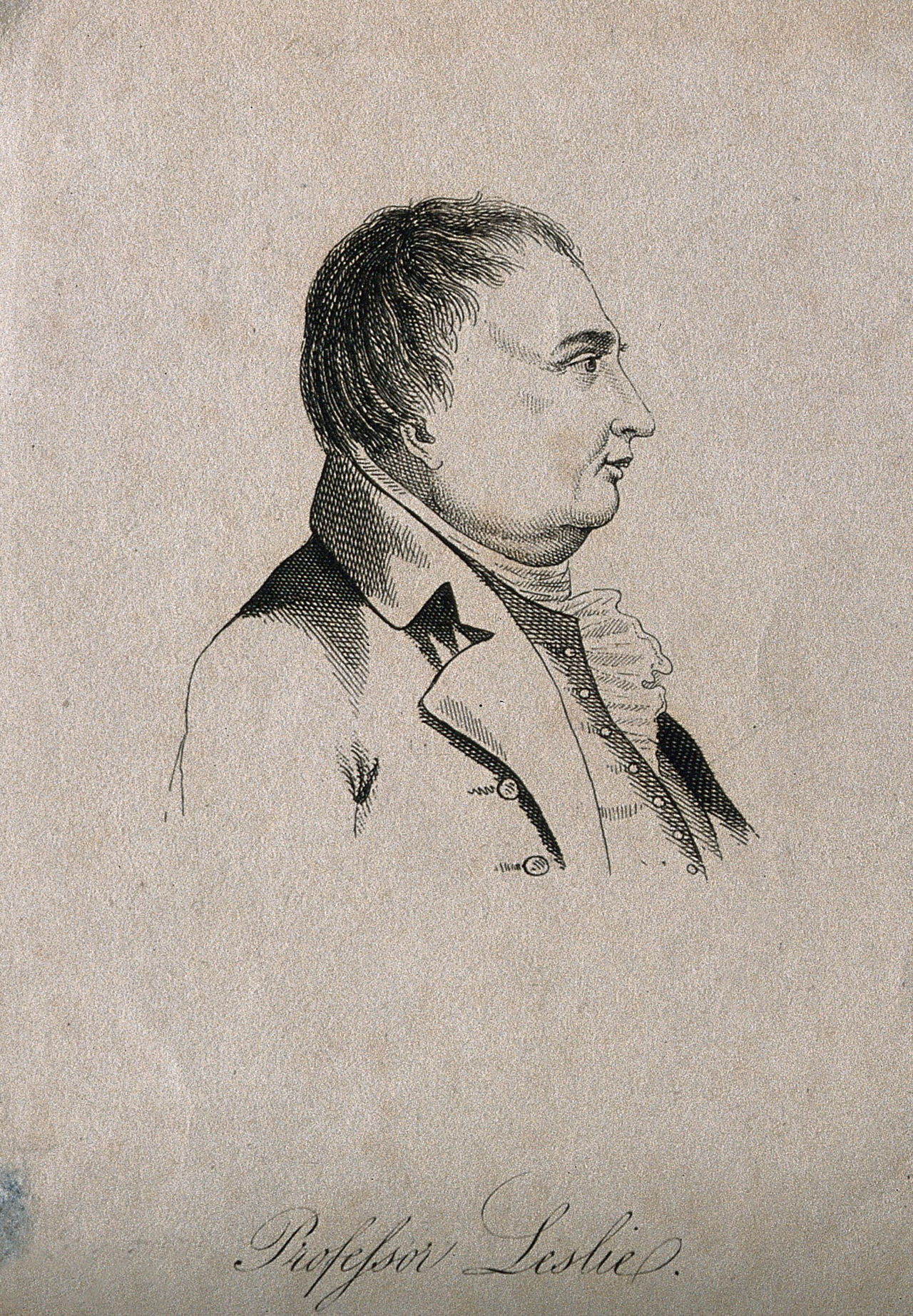
John Gibson Lockhart · Wellcome Collection, London · Wellcome Collection · Public Domain Mark
- Name
- John Gibson Lockhart
- Born
- 12 June 1794
- Birthplace
- Cambusnethan House, Lanarkshire, Scotland
- Died
- 25 November 1854
- Place of death
- Abbotsford, Roxburghshire, Scotland
- Occupation
- * Writer
- Nationality
- United Kingdom of Great Britain and Ireland · Kingdom of Great Britain
- Education
- Balliol College · University of Edinburgh · University of Glasgow
- Languages
- English
VALÉORINE Encyclopedia
VALÉORINE documentary reading
Documentary summary
John Gibson Lockhart (12 June 1794 – 25 November 1854) was a Scottish writer and editor. He is best known as the author of the seminal, and much-admired, seven-volume biography of his father-in-law Sir Walter Scott: Memoirs of the Life of Sir Walter Scott. He produced four novels in the early 1820s including Adam Blair and Reginald Dalton.
Admitted source layer · organised and presented by VALÉORINE
Note VALÉORINE
John Gibson Lockhart (1794–1854) was a biographer, editor and journalist, among other activities, of British and British nationality. The biographer was born in Cambusnethan House and died in Abbotsford House.
John Gibson Lockhart was educated at Balliol College, University of Edinburgh and University of Glasgow. The biographer was a member of Maitland Club. Languages used include English.
Composed from admitted, traceable facts · 30 September 2026
VALÉORINE
Reference Check
Propose documentary evidence for John Gibson Lockhart. A contribution is never written directly as fact: identity, source, rights and evidence gates still decide.
Sign in to contribute
World of VALÉORINE
Documentary connections
Only confirmed graph relationships appear here. Images are shown only when their identity and reuse rights both pass the documentary gate.
Documentary evidence
Documentary basis
Authority files
gnd · 4692401-2 · wikidata · Q2723567 · wikipedia · John Gibson Lockhart
In this article
Key facts
Key facts
• Name — John Gibson Lockhart • Born — 12 June 1794 • Birthplace — Cambusnethan House, Lanarkshire, Scotland • Died — 25 November 1854 • Place of death — Abbotsford, Roxburghshire, Scotland • Occupation — * Writer • editor
Early years
Early years
Lockhart was born on 12 June 1794 in the manse of Cambusnethan House in Lanarkshire to Dr John Lockhart, who transferred in 1796 to Glasgow, and was appointed minister in the Presbyterian Church of Scotland, and his second wife Elizabeth Gibson (1767–1834), daughter of Margaret Mary Pringle and Reverend John Gibson, minister of St Cuthbert's, Edinburgh. He was the younger paternal half-brother of the politician William Lockhart. Lockhart attended Glasgow High School, where he showed himself clever rather than industrious. He fell into ill-health, and had to be removed from school before he was 12; but on his recovery he was sent at this early age to the University of Glasgow, and displayed so much precocious learning, especially in Greek, that he was offered a Snell exhibition at Oxford. He was not yet 14 when he entered Balliol College, Oxford, where he acquired a great store of knowledge outside the regular curriculum. He read French, Italian, German and Spanish, was interested in antiquities, and became versed in heraldic and genealogical lore.
Blackwood's Magazine and a literary duel
Blackwood's Magazine and a literary duel
• Illustration — Plaque to John Gibson Lockhart at 25 Northumberland St, Edinburgh In 1813, Lockhart took a first in classics then, for two years after leaving Oxford, lived in Glasgow before settling to the study of Scots law at the University of Edinburgh where, in 1816, he was elected to the Faculty of Advocates. A tour on the continent in 1817, when he visited Goethe at Weimar, was made possible when he was hired by the publisher William Blackwood to translate Friedrich Schlegel's Lectures on the History of Literature. Edinburgh was then the stronghold of the Whig party, whose organ was the Edinburgh Review; and it was not until 1817 that the Scottish Tories found a means of expression in Blackwood's Magazine. After changing its name following a hum-drum launch as the Edinburgh Monthly Magazine, Blackwood's suddenly electrified Edinburgh with an outburst of brilliant criticism. Lockhart (along with John Wilson (Christopher North)), had joined its staff upon his return from Europe in 1817, and contributed to the caustic and aggressive articles that marked the early years of Blackwood's. Lockhart wrote virulent articles on "The Cockney School of Poetry" of Leigh Hunt, Keats and their contemporaries, although he did show appreciation of Coleridge and Wordsworth, and he praised Percy Bysshe Shelley, calling him "a man of genius". One of the main literary organs of the Cockney School was The London Magazine. Its editor, John Scott, felt that Blackwood’s hounding of Keats had contributed to his 1821 death, at age 25. Scott also felt it was his duty to defend his authors against Lockhart and Blackwood’s. To that end, he published an attack of Lockhart and Blackwood’s; Lockhart promptly asked a London friend, Jonathan Henry Christie, to visit Scott and demand an apology. Scott refused; a series of letters were exchanged and the argument evolved into Scott’s insistence that Lockhart admit that he (Lockhart) was, in fact, the anonymous editor of Blackwood’s (it was common practice at the time to act an editor, and/or as a writer, anonymously, or using a pseudonym). According to the papers of Scott’s friend Peter George Patmore, who tried to negotiate a truce and kept a meticulous record of the matter, not only did Lockhart refuse to admit to his editorship, but he responded with "abusive epithets". With both men seeing their honour at stake, there was no going back and, on 16 February 1821, they proceeded with the duel near the Chalk Farm Tavern. But Lockhart did not attend; Jonathan Christie stepped into his place with his friend, James Traill, as his second. John Scott was wounded and died ten days later. Christie and Traill were tried for murder. They were acquitted, but Christie’s life was ruined. Lockhart was not blamed.
Literary contributions
Literary contributions
Between 1818 and 1825 Lockhart worked indefatigably. In 1819 Peter's Letters to his Kinsfolk appeared, and in 1822 he edited Peter Motteux's edition of Don Quixote, to which he prefixed a life of author Miguel de Cervantes. Four novels followed: Valerius in 1821, Adam Blair in 1822, Reginald Dalton in 1823 and Matthew Wald in 1824. However, his strength did not lie in novel writing. He also contributed to Blackwood translations of Spanish ballads, which in 1823 were published separately. In 1825 Lockhart acted as an agent on behalf of the Faculty of Advocates to purchase the Astorga Collection. The collection is now housed at the National Library of Scotland. In 1825 Benjamin Disraeli visited him at his father-in-law's estate at Abbotsford in an unsuccessful attempt to persuade him to accept the editorship of The Representative a newspaper he was trying to establish with the backing of the publisher John Murray. Instead the same year Lockhart accepted Murray's offer of the editorship of the Quarterly Review, which had been in the hands of Sir John Taylor Coleridge since William Gifford's resignation in 1824. • Illustration — Lockhart's fictional Peter Morris M.D., 1819 engraving by William Home Lizars At this time he was living at 25 Northumberland Street in Edinburgh's New Town. In 1825 he sold the house to Andrew and George Combe. As the next heir to the Scotland property belonging to his unmarried half-brother, Milton Lockhart, he was sufficiently independent. In London he had social success, and was recognised as an editor. He contributed largely to the Quarterly Review himself, particularly biographical articles. He showed the old, railing spirit in an article in the Quarterly against Tennyson's Poems of 1833. He continued to write for Blackwood's, producing for Constable's Miscellany Vol. XXIII in 1828 a controversial Life of Robert Burns. Snyder wrote of it, "The best that one can say of it today...is that it occasioned Carlyle's review. It is inexcusably inaccurate from beginning to end, at times demonstrably mendacious, and should never be trusted in any respect or detail."
Later works
Later works
Lockhart undertook the editorial supervision of Murray's Family Library, which he opened in 1829 with a History of Napoleon. However, his major work, and the one for which he is known, is the Life of Walter Scott (7 vols, 1837–1838; 2nd edition, 10 vols., 1839). This biography included the publishing of a great number of Scott's letters. Thomas Carlyle assessed it in a criticism contributed to the London and Westminster Review (1837). Lockhart's account of the business transactions between Scott and the Ballantynes and Constable caused an outcry; and in the discussion that followed he showed bitterness in his pamphlet The Ballantyne Humbug handled. The Life of Scott has been called, after Boswell's Life of Samuel Johnson, the most admirable biography in the English language. The proceeds, which were considerable, Lockhart resigned for the benefit of Scott's creditors.
Family and final years
Family and final years
• Illustration — Lockhart and Sophia, by Robert Scott Lauder In 1818, Lockhart met Sir Walter Scott, who introduced him to his family. Lockhart married Scott's eldest daughter Sophia in April 1820. It was a happy marriage, with winters spent in Edinburgh and summers at Chiefswood, a cottage on Scott's Abbotsford estate, where the Lockharts' first child John Hugh ‘Johnnie’ was born. John Hugh was born with spina bifida and spent much of his time with his grandfather, listening to Scott’s stories about Scottish history, hence Scott’s book, Tales of a Grandfather. Johnnie died in 1831, at age eleven. The Lockharts experienced many personal losses. A baby girl died soon after birth. Sir Walter died in 1832 and in 1837, Sophia died suddenly, at age 38. Lockhart also struggled with the loss of his parents and sister. His third child was Walter Scott Lockhart, who became an army officer, but fell into bad company, ruined his health, and died in his father’s arms in January 1853 at the age of 26. Lockhart became seriously depressed, almost starving himself to death. He resigned his editorship of the Quarterly Review and spent some time in Italy, but returned without recovering his health. He moved back to Scotland to live with his only surviving child Charlotte, who was settled at Abbotsford with her husband James Hope-Scott, grandson of the 2nd Earl of Hopetoun. The two had converted to Catholicism, which made for an uncomfortable atmosphere in the home (Charlotte would die in childbirth in 1858, at age 30). Lockhart died a few weeks after his arrival at Abbotsford, on 25 November 1854. He was buried at Dryburgh Abbey, beside his son and father-in-law. • Illustration — Scott family graves at Dryburgh Abbey – Lockhart's grave is on the right; the largest is that of Sir Walter and Lady Charlotte Scott; the inscribed slab covers the Scotts' son's grave, Lieutenant Colonel Sir Walter Scott His obituary in The Times, dated 9 December 1854, included the paragraph "Endowed with the very highest order of manly beauty, both of features and expression, he retained the brilliancy of youth and a stately strength of person comparatively unimpaired in ripened life; and then, though sorrow and sickness suddenly brought on a premature old age which none could witness unmoved, yet the beauty of the head and of the bearing so far gained in melancholy loftiness of expression what they lost in animation, that the last phase, whether to the eye of painter or of anxious friend, seemed always the finest."
Freemasonry
Freemasonry
Like his father-in-law he was a Freemason although he was initiated in a different Edinburgh Lodge – Lodge Canongate Kilwinning, No. 2, on 26 January 1826.
Identity and origins
Identity and origins
The authorities additionally record the headings J. Lockhart, J G. Lockhart, J.G Lockhart, J. G Lockhart and JG Lockhart. His recorded language was English. He was the child of Elizabeth Gibson Lockhart. He married Charlotte Sophia Lockhart. One child is recorded: Charlotte Harriet Jane Lockhart. Recorded as linguist, lawyer, translator, writer and novelist.
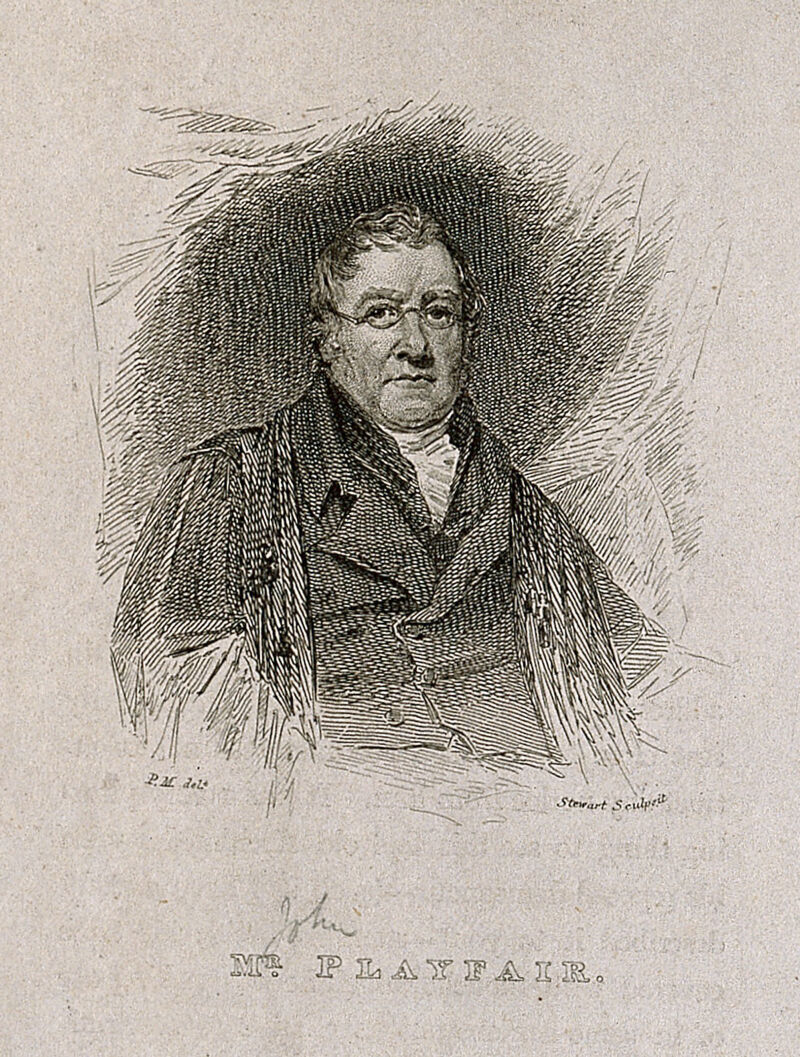
John Playfair. Line engraving by Stewart, 1819, after P. Morris (J.G. Lockhart)., by John Gibson Lockhart
John Gibson Lockhart · Wellcome Collection, London · Wellcome Collection

Robert Jameson. Line engraving by W. H. Lizars, 1819, after Peter Morris (J. G. Lockhart)., by John Gibson Lockhart
John Gibson Lockhart · Wellcome Collection, London · Wellcome Collection
Life and career
Dated record
Life and career
The full dated record · 2 entries
1794
John Gibson Lockhart born at Cambusnethan House.
1854
John Gibson Lockhart died at Abbotsford House.
Places
Named by the record
Places
Only places the record itself states, plotted where the house gazetteer settles their coordinates. Nothing is inferred from a name or a nationality.
Cambusnethan House.
Birth place
Abbotsford House.
Death place
Legacy
Robert Scott Lauder painted two portraits of Lockhart, one of him alone, and the other with Charlotte Scott. The composer Hubert Parry set a modified version of the second half of Lockhart's poem 'Beyond' to music, "There is an old belief" as the fourth of his collection of six choral motets, Songs of Farewell. The pieces were first performed at a concert at the Royal College of Music on 22 May 1916. The song/poem was later sung at the composer's funeral in St Paul's Cathedral on 23 February 1919.
Primary material
Documents and archives
reference work
- Wikidata, structured authority record Q2723567: John Gibson Lockhart
Reputable secondary · Wikimedia Foundation
- “John Gibson Lockhart”, English Wikipedia, consulted as further reading
Reputable secondary · Wikipedia
authority file
- Gemeinsame Normdatei 4692401-2, The life and letters of John Gibson Lockhart.
General reference · Deutsche Nationalbibliothek
Notes from the source article
Cited by Wikipedia
Notes from the source article
These works are cited by the source article, in its own numbering. They are recorded as its citations, not as sources VALÉORINE has verified.
- 1.Isabelle, Bour. John Gibson Lockhart's Memoirs of the Life of Sir Walter Scott, Bart, or the Absent Author (1996). scholarcommons.sc.edu. Scottish Literature Collections at Scholar Commons.
- 2.National Records of Scotland. John Gibson Lockhart (1794-1854). nrscotland.gov.uk. 31 May 2013.
- 3.Rogers, Rev. Charles. Genealogical Memoirs of the Family of Sir Walter Scott, Bart. of Abbotsford. archive.org. Internet Archive. 1877.
- 4.The Oxford Dictionary of National Biography. ref:odnb/16904. 2004-09-23. 10.1093/ref:odnb/16904.
- 5.Lang, Andrew. Life of J.G. Lockhart. lordbyron.org. Lord Byron and His Times.
- 6.Lockhart, John Gibson. 16. 853.
- 7.HathiTrust Digital Library. Lectures on the history of literature, ancient and modern. From the German of Frederick Schlegel, W Blackwood 1818. catalog.hathitrust.org.
- 8.Emmert, Roger A. An Analysis of the Criticism in Blackwood's Edinburgh Magazine, 1965. ecommons.udayton.edu. University of Dayton.
- 9.Lockhart, John Gibson. On the Cockney School of Poetry. No. I, 1817. spenserians.cath.vt.edu. Virginia Tech.
- 10.Lockhart, John Gibson. Review of Leigh Hunt, Lord Byron and some of his Contemporaries, 1828. spenserians.cath.vt.edu. Virginia Tech.
- 11.Lockhart, John Gibson. The Cockney School of Poetry. No. IV. spenserians.cath.vt.edu. Virginia Tech.
- 12.Lockhart, John Gibson. On the Cockney School of Poetry. No. I. spenserians.cath.vt.edu. Virginia Tech.
- 13.Aster, Leora. Review: Alastor, or The Spirit of Solitude. November 1819. web.english.upenn.edu. University of Pennsylvania.
- 14.Poetry Foundation. John Keats Biography. poetryfoundation.org.
- 15.Old Bailey Proceedings Online. JONATHAN HENRY CHRISTIE, JAMES TRAILL. Trial Record: Murder. oldbaileyonline.org.
- 16.Patmore, Derek. A Literary Duel, 1954. jstor.org. JSTOR, Princeton University Library. 26403046.
- 17.Hill Radcliffe, David. Blackwood's Magazine, the London Magazine, and the Scott-Christie Duel. lordbyron.org. Lord Byron and His Times.
- 18.Lennon, Paul Joseph. Caveat Emptor: The Curious Case of Scotland's Astorga Collection. The Library. 25. 1. 53–71. 2024. 0024-2160.
- 19.Astorga. National Library of Scotland.
- 20.<Hibbert, Christopher. Disraeli: A Personal History. Harper Perennial, 2004. P.26-28
- 21.Friends of Cambusnethan Priory, Facebook. John Gibson Lockhart. facebook.com.
- 22.History of the Lodge Canongate Kilwinning, No.2, compiled from the records 1677–1888. By Alan MacKenzie. 1888. p. 24.
- 23.Shrock, Dennis. Choral Repertoire. Oxford University Press, USA. 2009. 9780195327786.
- 24.Dibble, Jeremy. C. Hubert H. Parry: His Life and Music. Clarendon Press. 496. 1992. 9780193153301.
- 25.Keen, Basil. The Bach Choir: The First Hundred Years. Routledge. 96–7. 2017. 9781351546072.
References
Citations
References
Each reference names the institution holding it, so a reader may go to the document itself.
authority file
Gemeinsame Normdatei 4692401-2, The life and letters of John Gibson Lockhart.Deutsche Nationalbibliothek
Secondary witnessreference work
Wikidata, structured authority record Q2723567: John Gibson LockhartWikimedia Foundation
Secondary witnessreference work
Secondary witness
The Encyclopedia exists whether or not anything is for sale. Corrections are recorded rather than overwritten, and every version of this record is kept. Published 15 August 2026.
Elsewhere in Books
38,960 published records in this field, each with its sources named.
- John Gardner WilkinsonAuthor
- John GawsworthAuthor
- John GeometresAuthor
- John George WoodAuthor
- John GierachAuthor
- John Gilbert CooperAuthor
- John GilborneAuthor
- John GilchristAuthor
Best supported in this field
For owners
Own a work by John Gibson Lockhart?
A specialist will read what you send and tell you what the house can establish, what it cannot, and whether the object is suited to sale. There is no charge and no obligation. The object stays with you throughout; nothing is shipped to us unless it is arranged in writing beforehand.