
John Faber
Johan Faber, anglicized as John Faber (c. 1660–1721), commonly referred to as John Faber the Elder, was a Dutch miniaturist and portrait engraver active in London, where he set up a shop for producing and marketing his own work. His son John Faber the Younger was also active in this field.
Also recorded as John Faber Senior · John Faber the Elder · Johan, I Faber · Johan I Faber
John Faber
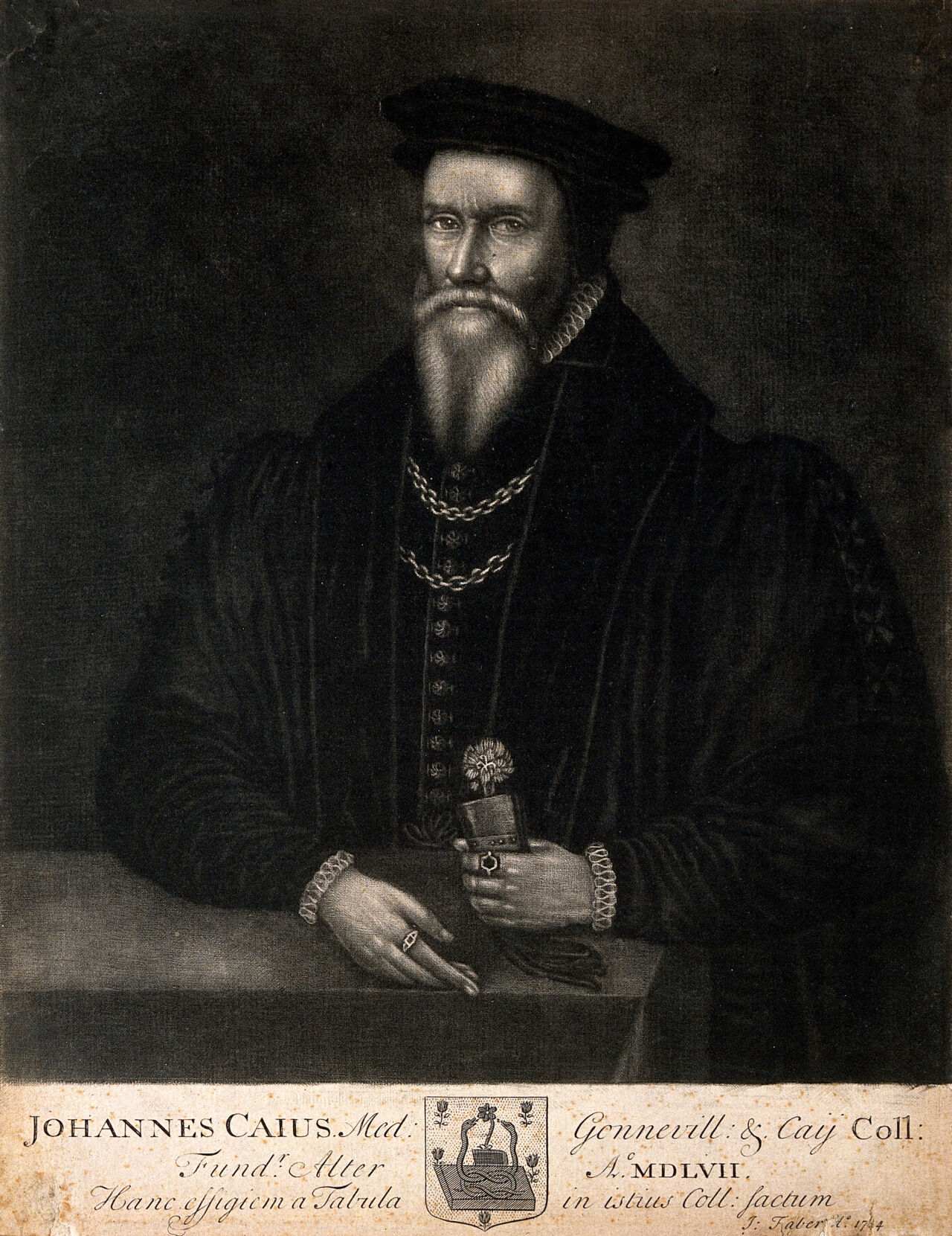
John Faber · Wellcome Collection, London · Wellcome Collection · Public Domain Mark
- Born
- 1660 · The Hague.
- Died
- 1721 · Bristol.
- Nationality
- Netherlands
- Occupation
- painter
- Fields
- portrait
- Languages
- Dutch
VALÉORINE Encyclopedia
VALÉORINE documentary reading
Documentary summary
Johan Faber, anglicized as John Faber (c. 1660–1721), commonly referred to as John Faber the Elder, was a Dutch miniaturist and portrait engraver active in London, where he set up a shop for producing and marketing his own work. His son John Faber the Younger was also active in this field.
Admitted source layer · organised and presented by VALÉORINE
Reference Check
Propose documentary evidence for John Faber. A contribution is never written directly as fact: identity, source, rights and evidence gates still decide.
Sign in to contribute
World of VALÉORINE
Documentary connections
Only confirmed graph relationships appear here. Images are shown only when their identity and reuse rights both pass the documentary gate.
Documentary evidence
Documentary basis
Authority files
wikidata · Q6232619
In this article
Life
Life
The recorded working language is Dutch. Subjects and genres recorded for the work are portrait. Places of work recorded in the authority are The Hague, London and Oxford. Work by John Faber is recorded in the collections of National Library of Wales, Yale Center for British Art, Print Collection and Het Scheepvaartmuseum.
Born in The Hague, Dutch Republic, Faber initially worked in Amsterdam as a miniaturist. He moved to England in the late 1690s. In 1707 Faber was settled in The Strand, near the Savoy Hospital, where he kept a print-shop, and practised as a mezzotint engraver. He died at Bristol in May 1721.
Works
Works
• Illustration — Mezzotint portrait of Sir Walter Mildmay, founder of Emmanuel College, Cambridge, by John Faber the Elder. • Illustration — Mezzotint portrait of William Smyth, Bishop of Lincoln, and founder of Brasenose College, Oxford, by John Faber Senior. Faber was noted for the small portraits which he drew from the life on vellum with a pen, one being of Simon Episcopius. He engraved many portraits from the life, among them being those of Francis Atterbury, Hans Caspar von Bothmer, John Hough, and Henry Sacheverell, besides numerous portraits of dissenting clergy. In 1712 he was employed at Oxford to engrave a set of the portraits of the founders of the colleges; this was followed by a similar set of portraits at Cambridge, making forty-five in all. To his visit to Oxford were due also the engraved portraits of Samuel Butler, Charles I, Geoffrey Chaucer, Duns Scotus, John Hevelius, Ben Jonson, and others. He also engraved sets of portraits, such as 12 Ancient Philosophers, after Rubens, The Four Indian Kings (1710), and The 21 Reformers.
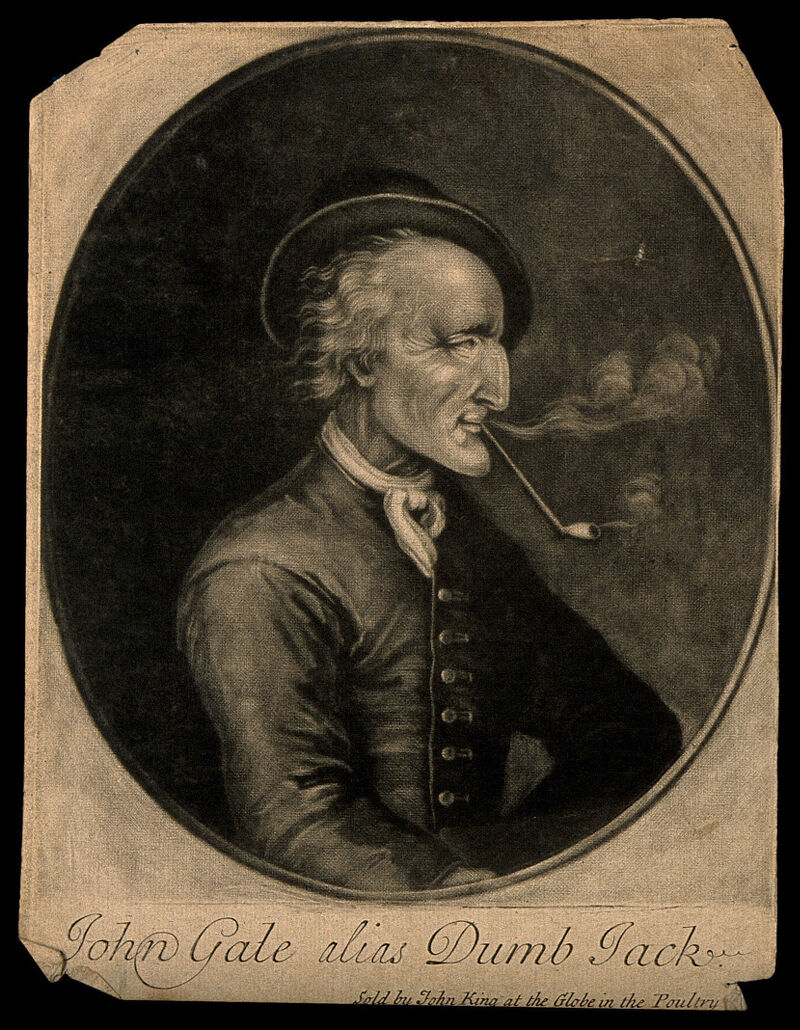
John Gale, known as Dumb Jack, a deaf mute man. Mezzotint by J. Faber the elder., 1700-1799, by John Faber
John Faber · Wellcome Collection, London · Wellcome Collection
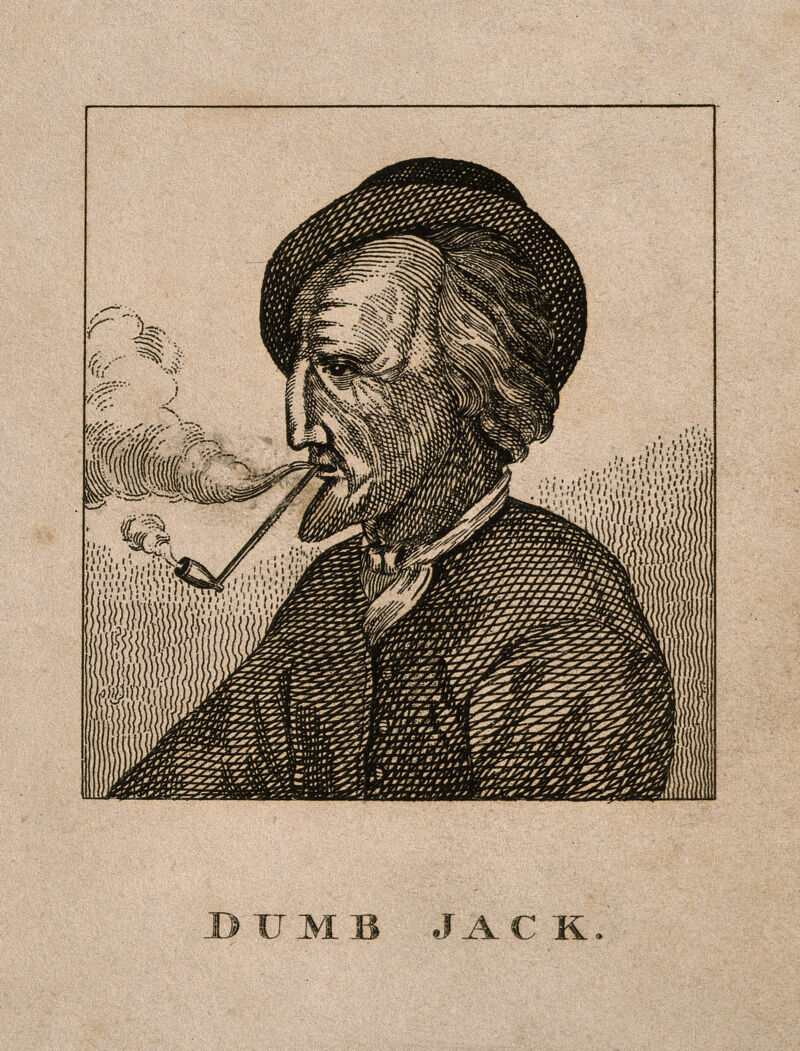
John Gale, known as Dumb Jack, a deaf mute man. Etching after John Faber the elder., by John Faber
John Faber · Wellcome Collection, London · Wellcome Collection
Places
Named by the record
Places
Only places the record itself states, plotted where the house gazetteer settles their coordinates. Nothing is inferred from a name or a nationality.
The Hague.
Birth place
Bristol.
Death place
Notes from the source article
Cited by Wikipedia
Notes from the source article
These works are cited by the source article, in its own numbering. They are recorded as its citations, not as sources VALÉORINE has verified.
- 1.Kramm, 1858, p=471 ; .
- 2.Whitman, 1898, pp=24, 25 .
- 3.Arms, 1934, p=108 ; .
- 4.Cust, 1889, p=112 .
Bibliography printed in the source article · 27
- Arms, John Taylor. Handbook of Print Making and Print Makers. Macmillan. 108. 1934. 609230931.
- Bénézit, Emmanuel. Benezit Dictionary of Artists. Gründ. 5. 384. 2006. 2-7000-3075-3.
- Brown, David Blayney. Faber, John, the elder. The Dictionary of Art. Grove's Dictionaries. 10. 720. 1996. 1-884446-00-0.
- Bryan, Michael. Bryan's Dictionary of Painters and Engravers. Macmillan. 2. 138. 1903. 1041637252.
- Calloway, Stephen. English Prints for the Collectors. Lutterworth Press, Overlook Press. 32. 1981. 0-87951-120-6.
- Chelsum, James. A History of the Art of Engraving in Mezzotinto. J. Robbins. 85–86. 1786. 1157144486.
- Clayton, Timothy. The English Print, 1688–1802. Yale University Press. 20, 61, 293 n. 8. 1997. 0-300-06650-3.
- Cust, Lionel Henry. 18. 112.
- Davenport, Cyril. Mezzotints. Methuen and Co. 113–114. 1904. 1049687052.
- Feurer, Rudolf. Faber, John (Johan). Allgemeines Künstlerlexikon. Saur. 36. 42. 2003. 3-598-22776-0.
- Foskett, Daphne. A Dictionary of British Miniature Painters. Praeger. 52, 265. 1972. 1148791574.
- Hind, Arthur M. A History of Engraving & Etching from the 15th Century to the Year 1914. Dover. 270, 381. 1963. 1035610203.
- Kramm, Christiaan. De levens en werken der Hollandsche en Vlaamsche kunstschilders, beeldhouwers, graveurs en bouwmeesters, van den vroegsten tot op onzen tijd. 2. 471. 1858. 1043270752.
- Mackenzie, Ian. British Prints: Dictionary and Price Guide. Antique Collectors' Club. 116. 1987. 0-902028-96-0.
- Salaman, Malcolm C. The Old Engravers of England in Their Relation to Contemporary Life and Art (1540-1800). Cassell and Co. 89, 97. 1906. 1049965266.
- Sharp, Richard. Faber, John (c. 1660–1721). Oxford Dictionary of National Biography. Oxford University Press. 18. 876–877. 2004. 0-19-861368-7.
- Smith, John Chaloner. British Mezzotinto Portraits. H. Sotheran. pt. 1, pp. 266–299. 1878–1884. 1041598596.
- Strutt, Joseph. A Biographical Dictionary Containing All the Engravers, From the Earliest Period of the Art of Engraving to the Present Day. Robert Faulder. 1. 281. 1785. 1045376483.
- E. A. Seemann. Faber, John I (Johan). Allgemeines Lexikon der bildenden Künstler. 11. 154–155. 1915. 1039502179.
- Vertue, George. A Catalogue of Engravers. Thomas Kirgate. 130. 1765. 1039533429.
- Vertue, George. The Note-Books of George Vertue Relating to Artists and Collections in England (I). The Walpole Society. 18. whole issue. 1930. i40086539.
- Vertue, George. The Note-Books of George Vertue Relating to Artists and Collections in England (II). The Walpole Society. 20. whole issue. 1932. i40086519.
- Vertue, George. The Note-Books of George Vertue Relating to Artists and Collections in England (IV). The Walpole Society. 24. whole issue. 1936. i40086511.
- Walpole, Horace. Anecdotes Of Painting In England. Ward, Lock, and Co. 461. 1879. 1039484687.
- Wax, Carol. The Mezzotint: History and Technique. H. N. Abrams. 32, 54, 74. 1990. 0810936038.
- Whinney, Margaret. English Art, 1625–1714. Clarendon Press. 8. 102. 1957. 1150992276.
- Whitman, Alfred. The Masters of Mezzotint: The Men and Their Work. G. Bell and Sons. 1898. 741495781.
References
Citations
References
Each reference names the institution holding it, so a reader may go to the document itself.
authority record
General reference
The Encyclopedia exists whether or not anything is for sale. Corrections are recorded rather than overwritten, and every version of this record is kept. Published 18 August 2026.
Elsewhere in Paintings
18,623 published records in this field, each with its sources named.
- John Evan HodgsonArtist
- John F. CarlsonArtist
- John F. FrancisArtist
- John F. PetoArtist
- John FaedArtist
- John FaulknerArtist
- John FeknerArtist
- John FeryArtist
Best supported in this field
For owners
Own a work by John Faber?
A specialist will read what you send and tell you what the house can establish, what it cannot, and whether the object is suited to sale. There is no charge and no obligation. The object stays with you throughout; nothing is shipped to us unless it is arranged in writing beforehand.