
John Eckstein
Illustration — A rural scene with a wagon, from John Eckstein's American Drawing Magazine, 1805 Johann or John Eckstein (1735–1817), was a German-born sculptor, engraver and painter who worked briefly in London before establishing himself in his homeland and then in America. He is not to be confused with his son, also known as John, a painter who worked in England and the West Indies.
Also recorded as Johann Eckstein · Johannes Eckstein · Johannes, II Eckstein
John Eckstein
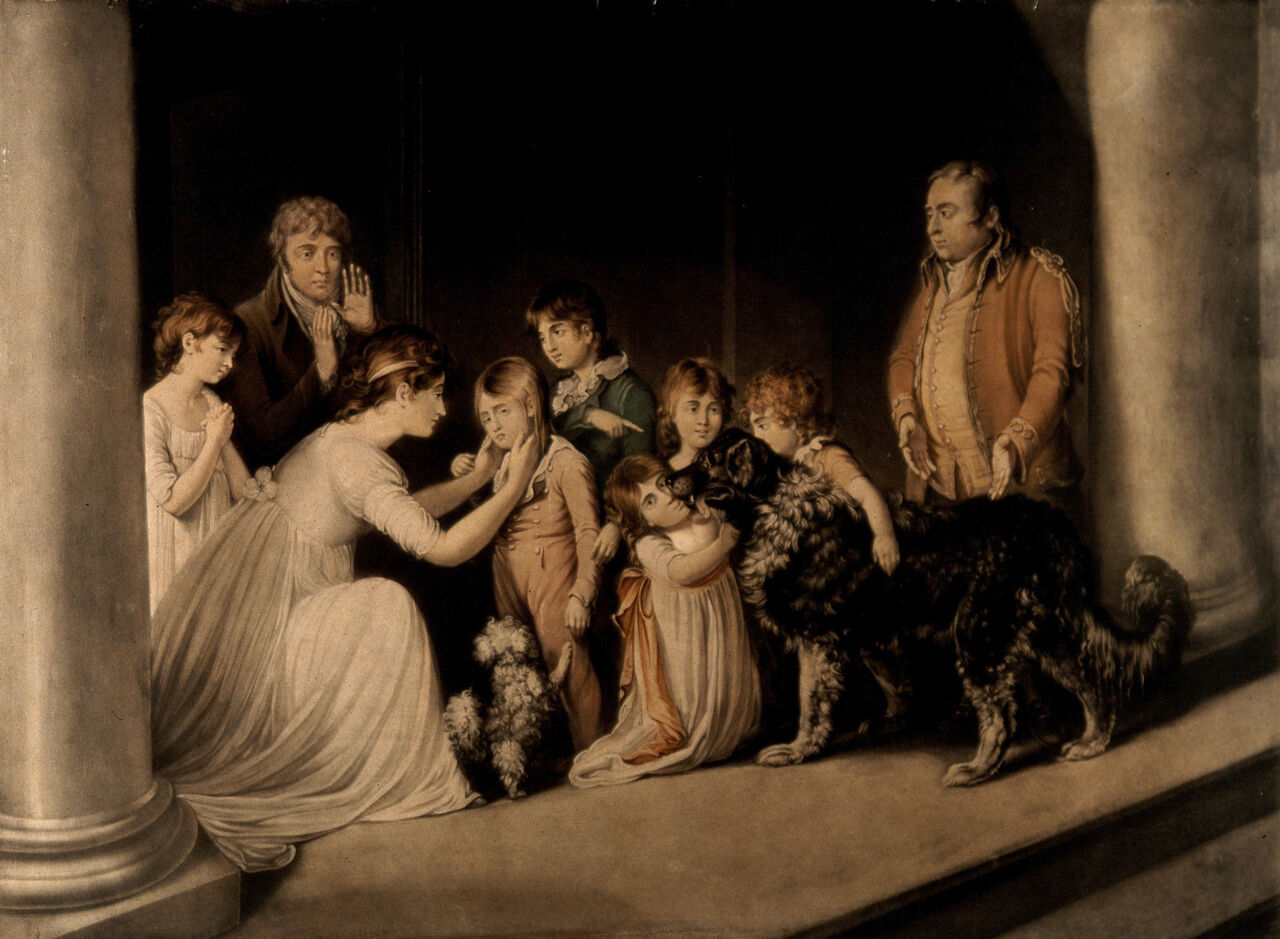
John Eckstein · Wellcome Collection, London · Wellcome Collection · Public Domain Mark
- Born
- 1735. · Poppenreuth.
- Died
- 1817. · Havana.
- Nationality
- Germany.
- Occupation
- painter and sculptor.
- Fields
- painting.
- Languages
- German.
VALÉORINE Encyclopedia
VALÉORINE documentary reading
Documentary summary
Illustration — A rural scene with a wagon, from John Eckstein's American Drawing Magazine, 1805 Johann or John Eckstein (1735–1817), was a German-born sculptor, engraver and painter who worked briefly in London before establishing himself in his homeland and then in America. He is not to be confused with his son, also known as John, a painter who worked in England and the West Indies.
Admitted source layer · organised and presented by VALÉORINE
Reference Check
Propose documentary evidence for John Eckstein. A contribution is never written directly as fact: identity, source, rights and evidence gates still decide.
Sign in to contribute
World of VALÉORINE
Documentary connections
Only confirmed graph relationships appear here. Images are shown only when their identity and reuse rights both pass the documentary gate.
Documentary evidence
Documentary basis
Authority files
wikidata · Q6231125 · wikipedia · John Eckstein
In this article
Life
Life
He was born at Poppenreuth near Nuremberg on 25 November 1735, the son of Conrad Eckstein, a woodcarver and cabinet-maker, and was the elder brother of George Paul Eckstein (1739–1828) who was also a sculptor in England. He studied under Preissler, at the Nuremberg Academy of Arts before moving to England.
London
London
He was in London from 1758 to 1765. Something is known of Eckstein's early career in London from the fact that he signed the relief on the monument to Roger Townshend in Westminster Abbey (erected 1761), made in the workshop of Benjamin and Thomas Carter at hanover Square in London. However, he did not design the relief himself, but worked from a terracotta model by Luc-François Breton. In April 1762 the Society of Arts awarded him a premium for a Portland stone relief, which he exhibited the next year at the Society of Artists. Another premium followed in 1764.
Return to Germany
Return to Germany
In 1765 Eckstein accepted an invitation from Frederick the Great to work at the Prussian court, where he became the king's principal sculptor, executing numerous works at Potsdam and Sans Souci. In 1769 another invitation took him to the court of the Grand Duke of Mecklenburg at Ludwigslust, who sent him a mission to England the next year. In London he met with an enthusiastic reception and exhibited wax portraits at the Royal Academy. After a year he returned to the Grand Ducal court, where he worked on the sculpture of the Hofkirche and made wax reliefs, including a surviving portrait of Friedrich Franz I. After four years at Ludwigslust he moved back to Berlin at the invitation of the king. In 1775–6 he modelled for the porcelain factory there, and exhibited at the academy. In 1786 he took the death mask of Frederick, from which he made the heads for wax busts. He continued to receive royal patronage from Frederick's successor, Frederick William, and may have carved metopes from models by Johann Gottfried Schadow for the Brandenburg Gate in Berlin in 1792.
Philadelphia
Philadelphia
In 1793 Eckstein wrote to George Washington from Potsdam, requesting money to pay for his passage to the United States, as he intended to settle in Philadelphia. It is not known if Washington responded, but Eckstein was in America by November of the same year, when he and his son Frederick advertised an exhibition of paintings, sculpture, and wax models at their house at 323 Market Street, Philadelphia. Eckstein became a founder member of the Philadelphia Academy and between 1810 and 1814 also showed work at the Society of Artists, where his exhibits included an equestrian figure of Washington, apparently intended for a monument to be erected in the city. In 1805 he published the first part of The American Drawing Magazine, or, A Complete System of Drawing, described in a subtitle as "adapted to the use of all persons who would become accomplished in this branch of education, by which they may be instructed without the aid of a teacher, and also become acquainted with the first rudiments of painting, sculpture, and architecture". It is not known whether any of the other eleven planned parts was ever issued. He did not find great success in the United States. According to an obituary "he had to lament that his professional labours did not meet with that encouragement in a new country, which is so liberally bestowed upon genius in Europe; and, like many of his brother artists, he had to struggle with adversity during many of the latter years of his life." Thomas Sully described him as "a thorough-going drudge in the arts. He could do you a picture in still life – history – landscape – portrait – he could model – cut a head in marble – anything you please". One of his last works was a marble bust of Emanuel Swedenborg commissioned by William Schlatter. In January 1817 Eckstein sailed for Havana, drawn by the prospect of being employed to finish a large monument that had been left incomplete. He died in Havana on 27 June 1817, aged 81.
Family
Family
Eckstein was the father of another John Eckstein, a painter who exhibited at the Royal Academy in London between 1787 and 1802. In 1803 he accompanied Samuel Hood to the "Diamond Rock" near Martinique. He then went to Barbados where he painted portraits of officers stationed on the island, and seems to have died in the West Indies in about 1838.
Identity
Identity
John Eckstein is recorded as painter and sculptor. Recognition and collections.
Life and career
Dated record
Life and career
Explore 1735–1817
The full dated record · 6 entries
1735
John Eckstein born at Poppenreuth.
1780
4 groups of candlestick holders in front of the façade of Schloss Bellevue is dated 1780.
1780
candlestick figure ‘Young man with two candlestick holders’ is dated 1780.
1789
putti group with basket on the Belvedere in the Gardens of Charlottenburg Palace is dated 1789.
1795
Metope Triglyph frieze is dated 1795.
1817
John Eckstein died at Havana.
Places
Named by the record
Places
Only places the record itself states, plotted where the house gazetteer settles their coordinates. Nothing is inferred from a name or a nationality.
Poppenreuth.
Birth place
Havana.
Death place
Citations
References
Each reference names the institution holding it, so a reader may go to the document itself.
reference work
Wikidata, structured authority record Q6231125: John EcksteinWikimedia Foundation
Secondary witnessreference work
Secondary witness
The Encyclopedia exists whether or not anything is for sale. Corrections are recorded rather than overwritten, and every version of this record is kept. Published 16 August 2026.
Elsewhere in Sculpture
6,174 published records in this field, each with its sources named.
- John DeareArtist
- John DoubledayArtist
- John Duncan FergussonArtist
- John E. BuckArtist
- John ErnestArtist
- John Evan ThomasArtist
- John Ferguson WeirArtist
- John FlannaganArtist
Best supported in this field
For owners
Own a work by John Eckstein?
A specialist will read what you send and tell you what the house can establish, what it cannot, and whether the object is suited to sale. There is no charge and no obligation. The object stays with you throughout; nothing is shipped to us unless it is arranged in writing beforehand.