
Joe Zawinul
Josef Erich Zawinul (ZOV-in-əl; 7 July 1932 – 11 September 2007) was an Austrian jazz and jazz fusion keyboardist and composer. First coming to prominence with saxophonist Cannonball Adderley, Zawinul went on to play with Miles Davis and to become one of the creators of jazz fusion, a musical genre that combined jazz with rock. He co-founded the groups Weather Report and The Zawinul Syndicate.
Also recorded as Josef Erich Zawinul
Joe Zawinul

Alex Ex · CC BY 2.5
- Born
- 1932.
- Died
- 2007.
- Nationality
- Austria and United States.
- Occupation
- pianist, organist, composer, jazz musician, keyboardist, recording artist, singer and musician.
- Fields
- jazz, jazz fusion, cool jazz and soul.
- Known for
- Mercy, Mercy and Mercy.
VALÉORINE Encyclopedia
VALÉORINE documentary reading
Documentary summary
Josef Erich Zawinul (ZOV-in-əl; 7 July 1932 – 11 September 2007) was an Austrian jazz and jazz fusion keyboardist and composer. First coming to prominence with saxophonist Cannonball Adderley, Zawinul went on to play with Miles Davis and to become one of the creators of jazz fusion, a musical genre that combined jazz with rock. He co-founded the groups Weather Report and The Zawinul Syndicate.
Admitted source layer · organised and presented by VALÉORINE
Note VALÉORINE
Joe Zawinul (1932–2007) was a composer, jazz musician and keyboardist, among other activities, of Austrian and American nationality. The composer was born Josef Erich Zawinul in Vienna and died in Vienna.
Joe Zawinul was educated at Berklee College of Music. The composer was a member of The Cannonball Adderley Quintet and Weather Report.
Among the works is Mercy, Mercy, Mercy. The work spans cool jazz, jazz and jazz fusion, among others. Languages used include English and German. Honours include Amadeus Austrian Music Awards, Paul Acket Award and Ring of Honour of the City of Vienna.
Composed from admitted, traceable facts · 26 September 2026
VALÉORINE
Reference Check
Propose documentary evidence for Joe Zawinul. A contribution is never written directly as fact: identity, source, rights and evidence gates still decide.
Sign in to contribute
Documentary evidence
Documentary basis
Authority files
wikidata · Q44767 · wikipedia · Joe Zawinul
In this article
Early life and career
Early life and career
He pioneered the use of electric piano and synthesizer, and was named "Best Electric Keyboardist" twenty-eight times by the readers of DownBeat magazine.
Zawinul grew up in Vienna, Austria. Accordion was his first instrument. When he was six or seven, he studied clarinet, violin, and piano at the Vienna Conservatory (Konservatorium Wien). During the 1950s, he was a staff pianist for Polydor. He worked as a jazz musician with Hans Koller, Friedrich Gulda, Karl Drewo, and Fatty George. In 1959, he moved to the U.S. to attend Berklee College of Music, but a week later he received a job offer from Maynard Ferguson, so he left school and went on tour. He then accompanied Dinah Washington. He spent most of the 1960s with Cannonball Adderley. During this time, he wrote "Mercy, Mercy, Mercy", "Walk Tall" and "Country Preacher", and played electric piano. As recounted in Zawinul's New York Times obituary, "It was uncommon then for a black bandleader like Adderley to hire a white sideman like Mr. Zawinul and touring could be problematic. 'I often had to sit in the bottom of the car when we drove through certain parts of the South,' Mr. Zawinul said in a 1997 interview with Anil Prasad of Innerviews magazine. But, he added, with characteristic bravado, 'Those kinds of things never fazed me; I wanted to play music with the best, and I could play on that level with the best.'" At the end of the decade, Zawinul recorded with Miles Davis on In a Silent Way and Bitches Brew, as Davis established the genre of jazz fusion by combining jazz with rock.
With Weather Report
With Weather Report
In 1970, Zawinul founded Weather Report with Wayne Shorter. Their first two years emphasized a relatively open, group improvisation format similar to what Miles Davis was doing in a more rock-oriented format. However, Zawinul started making changes with their third album, Sweetnighter. Funk elements such as bass guitar and wah-wah pedal began to be introduced to the band's sound. With the fourth album, Mysterious Traveller, the musical forms were composed similar to classical music, and the combination of jazz harmonies with 1970s groove helped move the band into its most commercially successful period. The band's biggest commercial success came from Zawinul's composition "Birdland" on the 1977 album Heavy Weather, which peaked at number 30 on the Billboard pop albums chart. "Birdland" is one of the most recognizable jazz pieces of the 1970s, recorded by The Manhattan Transfer, Quincy Jones, Maynard Ferguson, and Buddy Rich among others. The song won him three Grammys. Weather Report was active until the mid-1980s, with Zawinul and Shorter remaining the sole constant members through multiple personnel shifts. Shorter and Zawinul went separate ways after recording Sportin' Life, but it was discovered they had to do one more album to fulfill their contract with CBS Records. This Is This! therefore became the band's final album. In 1991, Zawinul was awarded an Honorary Doctorate of Music from Berklee College of Music and on this occasion performed with a group consisting of Matthew Garrison, Torsten de Winkel, Abe Laboriel Jr. and Melvin Butler.
With The Zawinul Syndicate
With The Zawinul Syndicate
The Zawinul Syndicate was a jazz fusion band formed in 1988. It evolved out of Weather Report. Their style could be described as a combination of unusual grooves, driving and swinging rhythms and many borrowings from different music cultures. Zawinul himself stated that he gave the band its name due to a syndicate bearing more resemblance to a family than "just" a band. After the death of Zawinul in 2007, several members of the Zawinul Syndicate decided to reform and perform Zawinul's music live under their shortened name the Syndicate. Several major members of the Syndicate over the years include Scott Henderson, Bobby Thomas Jr, Linley Marthe, Paco Sery, Manolo Badrena, Nathaniel Townsley, Sabine Kabongo, Gary Poulson, Richard Bona, and Victor Bailey.
Stories of the Danube
Stories of the Danube
Zawinul also wrote a symphony, called Stories of the Danube, which was commissioned by the Brucknerhaus, Linz. It was first performed as part of the Linzer Klangwolke (a large-scale open-air broadcast event), for the opening of the 1993 Bruckner Festival in Linz. In its seven movements, the symphony traces the course of the Danube from Donaueschingen through various countries ending at the Black Sea. It was recorded in 1995 by the Czech State Philharmonic Orchestra, Brno, conducted by Caspar Richter.
Death
Death
Zawinul became ill and was hospitalized in his native Vienna on 7 August 2007, after concluding a five-week European tour. He died a little over a month later from a rare form of skin cancer (Merkel cell carcinoma) on 11 September 2007. He was cremated at Feuerhalle Simmering and his ashes buried in Vienna Central Cemetery. His wife Maxine had died earlier the same year. They were survived by their sons Erich, Ivan, and Anthony. Keyboardist/composer Dave Greenslade wrote the song "Born in Eternity Time" from his 2011 album Routes/Roots as a memorial to Zawinul. He explained the title in the liner notes: "On his passing in 2007 his son remarked his father was now born in eternity time."
As leader/co-leader
As leader/co-leader
Compilations Concerto Retitled (Atlantic, 1976) The ESC Years (ESC, 2011) As leader of Weather Report 1971: Weather Report (Columbia, 1971) 1972: I Sing the Body Electric (Columbia, 1972) 1972: Live in Tokyo (CBS/Sony, 1972) – live 1973: Sweetnighter (Columbia, 1973) 1974: Mysterious Traveller (Columbia, 1974) 1975: Tale Spinnin' (Columbia, 1975) 1975–76: Black Market (Columbia, 1976) 1976–77: Heavy Weather (Columbia, 1977) 1978: Mr. Gone (Columbia, 1978) 1978–79: 8:30 (Columbia, 1979) – live 1980: Night Passage (Columbia, 1980) 1981: Weather Report (Columbia, 1982) 1983: Procession (Columbia, 1983) 1983: Domino Theory (Columbia, 1984) 1984: Sportin' Life (Columbia, 1985) 1985: This Is This! (Columbia, 1986) Posthumous compilations Live and Unreleased (Columbia, 2002)[2CD] Forecast: Tomorrow (Columbia, 2006)[3CD & DVD-Video] The Legendary Live Tapes: 1978-1981 (Columbia, 2015)[4CD] As leader of Weather Update Joe Zawinul and Weather Update (Pioneer/Geneon, 2005)[DVD-Video] – live rec. 1986 at the Munich Philharmonic hall. Posthumous release.
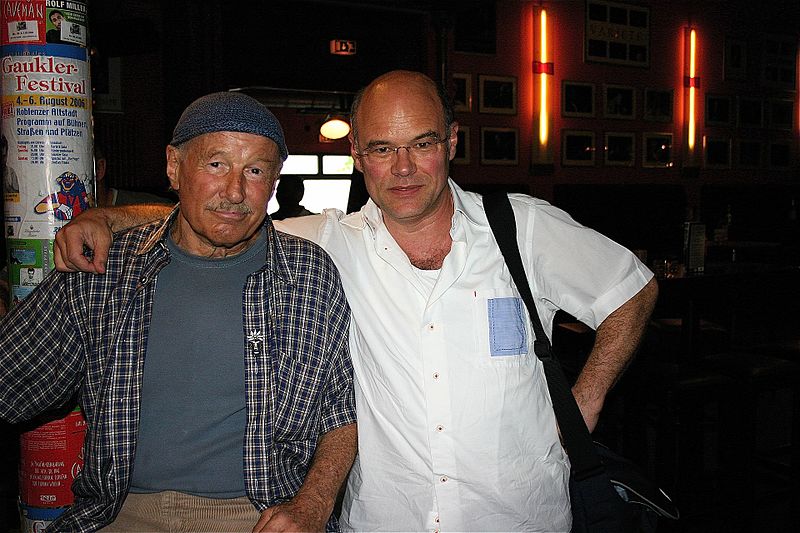
Meeting with my Mentor
CostaCalma
Notes from the source article
Cited by Wikipedia
Notes from the source article
These works are cited by the source article, in its own numbering. They are recorded as its citations, not as sources VALÉORINE has verified.
- 1.Carlberg, Robert. Joe Zawinul Interview. Electronic Musician. Mix Publications. 44. April 1986.
- 2.Richard S. Ginell. Joe Zawinul. AllMusic.
- 3.http://www.zawinulmusic.com/biography
- 4.Walters, John L. Obituary: Joe Zawinul. The Guardian. 13 September 2007.
- 5.Kernfeld, Barry. The New Grove Dictionary of Jazz. Grove's Dictionaries. 3. 1015–1016. 2002. 1-56159-284-6.
- 6.Gale. Encyclopedia of World Biography, v. 28. 389.391. 2008. 9780787622213.
- 7.Keepnews, Peter. Joe Zawinul, 75, Jazz Fusion Pioneer, Dies. The New York Times. September 12, 2007.
- 8.Joe Zawinul, 75, influential jazz keyboardist. Archive.boston.com.
- 9.Joe Zawinul Biography & History. AllMusic.
- 10.Bianchi, Curt. Zawinul Online » 20 Years of the Zawinul Syndicate. Zawinulonline.org.
- 11.Bianchi, Curt. Zawinul Online » 2015 Tour Dates. Zawinulonline.org.
- 12.Curt Bianchi. Joe Zawinul Hospitalized in Vienna. Zawinulonline.org. 7 August 2007.
- 13.McDonald, Ray. Keyboardist Joe Zawinul Dies. VOA News. Voice of America. 12 September 2007.
- 14.Schudel, Matt. Joe Zawinul, 75; Keyboardist Was a Pioneer of Jazz Fusion. The Washington Post. 12 September 2007.
- 15.All GRAMMY Awards and Nominations for Joe Zawinul. The Recording Academy.
- 16.Uraufführung der Orchesterfassung von Joe Zawinuls "Mauthausen … vom großen Sterben hören" im MuTh. MUK. October 25, 2022.
Bibliography printed in the source article · 1
- Joe Zawinul. Music Technology. 6. 2. 36. January 1992. 0957-6606.
References
Citations
References
Each reference names the institution holding it, so a reader may go to the document itself.
reference work
Secondary witnessreference work
Secondary witness
The Encyclopedia exists whether or not anything is for sale. Corrections are recorded rather than overwritten, and every version of this record is kept. Published 14 August 2026.
Elsewhere in Music memorabilia
42,866 published records in this field, each with its sources named.
- Joe WilliamsPerson
- Joe WilsonPerson
- Joe YamanakaPerson
- Joe YuklPerson
- Joel AlmePerson
- Joel BerglundPerson
- Joël BlomqvistPerson
- Joel CorryPerson
Best supported in this field
For owners
Own a work by Joe Zawinul?
A specialist will read what you send and tell you what the house can establish, what it cannot, and whether the object is suited to sale. There is no charge and no obligation. The object stays with you throughout; nothing is shipped to us unless it is arranged in writing beforehand.