
Jean-Baptiste Carpeaux
Jean-Baptiste Carpeaux (ʒɑ̃ batist kaʁpo; 11 May 1827 – 12 October 1875) was a French sculptor and painter during the Second Empire under Napoleon III.
Also recorded as Jean Baptiste Carpeaux · Jules Carpeaux · Ernest Blagny · jean pierre carpeaux
Jean-Baptiste Carpeaux
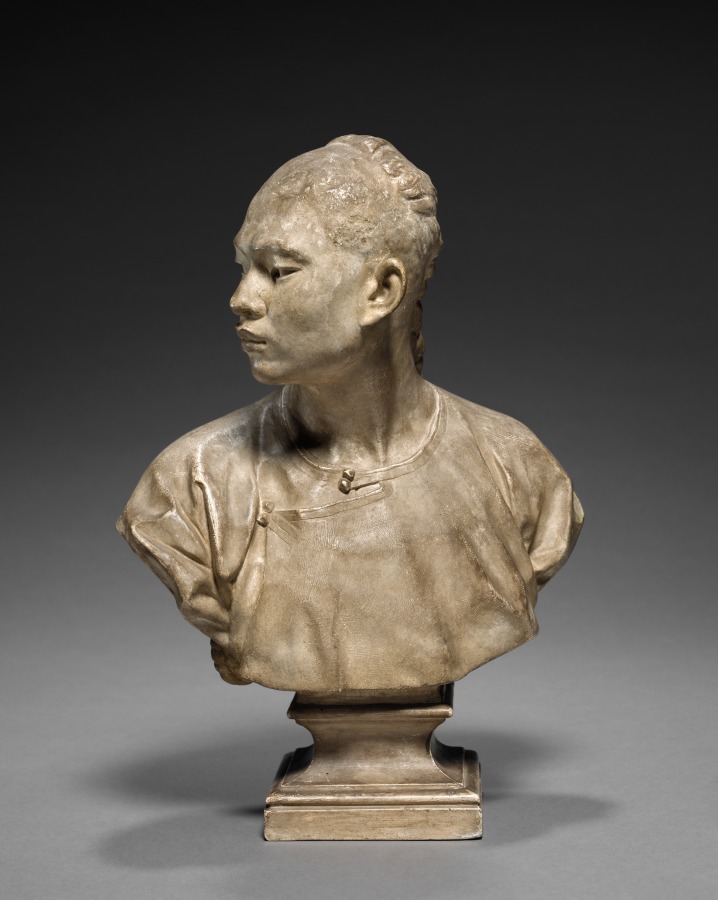
Jean-Baptiste Carpeaux · The Cleveland Museum of Art · John L. Severance Fund · CC0
- Name
- Jean-Baptiste Carpeaux
- Born
- 11 May 1827
- Birthplace
- Valenciennes, France
- Died
- 12 October 1875
- Place of death
- Bécon-les-Bruyères (Courbevoie), France
- Known for
- Sculpture, painting
- Nationality
- France
- Occupation
- sculptor · painter · printmaker · draftsperson
- Fields
- portrait
- Movements
- Romanticism
VALÉORINE Encyclopedia
VALÉORINE documentary reading
Documentary summary
Jean-Baptiste Carpeaux (ʒɑ̃ batist kaʁpo; 11 May 1827 – 12 October 1875) was a French sculptor and painter during the Second Empire under Napoleon III.
Admitted source layer · organised and presented by VALÉORINE
Note VALÉORINE
Jean-Baptiste Carpeaux (1827–1875) was a draftsperson, painter and printmaker, among other activities, of French nationality. The draftsperson was born in Valenciennes and died in Courbevoie.
Jean-Baptiste Carpeaux was educated at Beaux-Arts de Paris and French Academy in Rome. The draftsperson worked in Florence, London and Paris. Jean-Baptiste Carpeaux was associated with Romanticism.
Among the works are buste of Charles Garnier, fontaine de l'Observatoire, The Negress and Ugolin entouré de ses quatre enfants. The work spans portrait. Languages used include French. Honours include Prix de Rome.
Composed from admitted, traceable facts · 26 September 2026
VALÉORINE
Reference Check
Propose documentary evidence for Jean-Baptiste Carpeaux. A contribution is never written directly as fact: identity, source, rights and evidence gates still decide.
Sign in to contribute
Documentary evidence
Documentary basis
Authority files
gnd · 1091443041 · wikidata · Q182791 · wikipedia · Jean-Baptiste Carpeaux
In this article
Key facts
Key facts
• Name — Jean-Baptiste Carpeaux • Born — 11 May 1827 • Birthplace — Valenciennes, France • Died — 12 October 1875 • Place of death — Bécon-les-Bruyères (Courbevoie), France • Known for — Sculpture, painting • Notable Works — La Fontaine des quatre parties due monde Triomphe de Flore Le Génie de la Danse Le Pécheur napolitain La Frileuse • Patrons — Jean-Baptiste Foucart
Life
Life
Born in Valenciennes, Nord, son of a mason, his early studies were under François Rude. Carpeaux entered the École des Beaux-Arts in 1844 and won the Prix de Rome in 1854, and moving to Rome to find inspiration, he there studied the works of Michelangelo, Donatello and Verrocchio. Staying in Rome from 1854 to 1861, he obtained a taste for movement and spontaneity, which he joined with the great principles of baroque art. Carpeaux sought real life subjects in the streets and broke with the classical tradition. Carpeaux debuted at the Salon of 1853 exhibiting La Soumission d'Abd-el-Kader al'Empereur, a bas-relief in plaster that did not attract much attention. Carpeaux was an admirer of Napoléon III and followed him from city to city during Napoléon's official trip through the north of France. After initially not making any contact with the emperor, he finally succeeded in arranging a face-to-face encounter at Amiens where he managed to convince Napoléon to commission a marble statue that was to be carried out by a practitioner, Charles Romain Capellaro. Carpeaux soon grew tired of academicism and became a wanderer on the streets of Rome. He spent free time admiring the frescoes of Michelangelo at the Sistine Chapel. Carpeaux said, "When an artist feels pale and cold, he runs to Michelangelo in order to warm himself, as with the rays of the sun". While a student in Rome, Carpeaux submitted a plaster version of Pêcheur napolitain à la coquille, the Neapolitan Fisherboy, to the French Academy. He carved the marble version several years later, showing it in the Salon of 1863. It was purchased for Napoleon III's empress, Eugénie. The statue of the young smiling boy was very popular, and Carpeaux created a number of reproductions and variations in marble and bronze. There is a copy, for instance, in the Samuel H. Kress Collection in the National Gallery of Art in Washington, D.C. Some years later, he carved the Girl with a Shell, a similar study. In 1861, he made a bust of Princess Mathilde, and this later brought him several commissions from Napoleon III. Then in 1866, he established his own atelier in order to reproduce and make work on a grander scale. In 1866, he was made chevalier of the Legion of Honour. He employed his brother as the sales manager and made a calculated effort to produce work that would appeal to a larger audience. On 12 October 1875, he died at George Barbu Știrbei's château in Bécon-les-Bruyères, outside Courbevoie. Among his students were Jules Dalou, Jean-Louis Forain and the American sculptor Olin Levi Warner.
Work
Work
• Ugolin et ses fils (Ugolino and His Sons) (1861; Metropolitan Museum of Art) with versions in other museums including the Musée d'Orsay, Paris. • The Dance, commissioned for the Opera Garnier in 1869, featuring several nude figures in a wild and boisterous dance, criticized as an offense to common decency • Pêcheur à la coquille (Neapolitan Fisherboy) (Musée du Louvre, Paris) • Young girl with a shell, Valenciennes • Antoine Watteau monument, Valenciennes • Flora and bas-reliefs for the southern facade of the Pavillon de Flore, Palais du Louvre, for architect Hector Lefuel, 1865 • The multifigure allegorical group on the top of the Hôtel de Ville (City Hall) of his home town, Valenciennes, 1860–1873 • Fontaine de l'Observatoire, also known as the Carpeaux Fountain, south of the Jardin du Luxembourg. Partly complete at his death, Carpeaux finished the terrestrial globe with the cardinal points represented by the four figures of Asia (East), Europe (North), America (West) and Africa (South). • L'Amour à la folie, part of a group La Danse for the facade of the Opera Garnier (1869)
In popular culture
In popular culture
The Carpeaux: a cake made with butter cream and candied chestnuts between two oval macaroons is named in tribute to Jean-Baptiste Carpeaux.
Images
Images
• Illustration — Bust of Carpeaux Saint Roch Cemetery • Illustration — The Seasons turning the celestial Sphere for the Fountain of the Observatory, Jardin du Luxembourg • Illustration — Why Born Enslaved! 1868, National Museum in Warsaw • Illustration — Patinated plaster model for Valenciennes defending the arts of peace with the arts of war • Illustration — La Danse (The Dance), 1868, for the Opera Garnier, heavily criticized as being indecent • Illustration — Ugolino and His Sons, 1857–1860. Photographed at the Metropolitan Museum of Art • Illustration — Young Girl With a Shell, Valenciennes • Illustration — Le Triomphe de Flore (The Triumph of Flora), 1866. South façade of the Pavillon de Flore, Louvre Palace, Paris
Identity and origins
Identity and origins
The authorities additionally record the headings Jean Baptiste Carpeaux, Jules Carpeaux, Ernest Blagny, jean pierre carpeaux and Carpeaux. His recorded language was French. He married Amélie de Montfort. 3 children are recorded: Charles Carpeaux, Louise Clément-Carpeaux and Louis Carpeaux. Other recorded relations include Philippe Joseph Henri Lemaire.
Work and production
Work and production
Works recorded as notable number 4: buste of Charles Garnier, Ugolin entouré de ses quatre enfants, The Negress and Pourquoi naître esclave? His recorded genre is portrait.
Identity
Identity
Jean-Baptiste Carpeaux is recorded as sculptor, painter, printmaker and draftsperson.
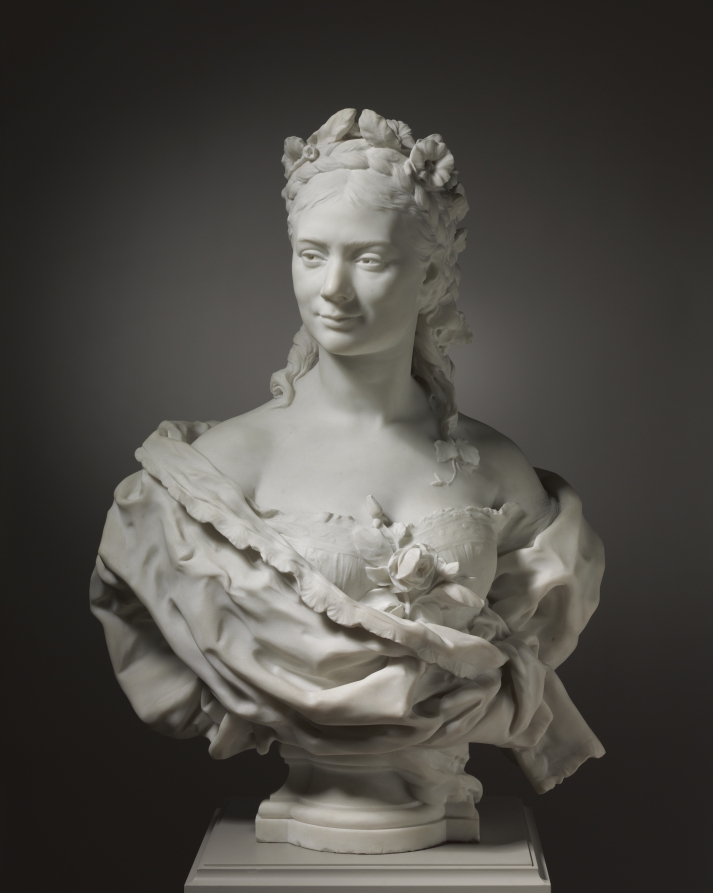
Bust of a Lady (possibly Fanny Coleman), 1872, by Jean-Baptiste Carpeaux
Jean-Baptiste Carpeaux · The Cleveland Museum of Art · John L. Severance Fund
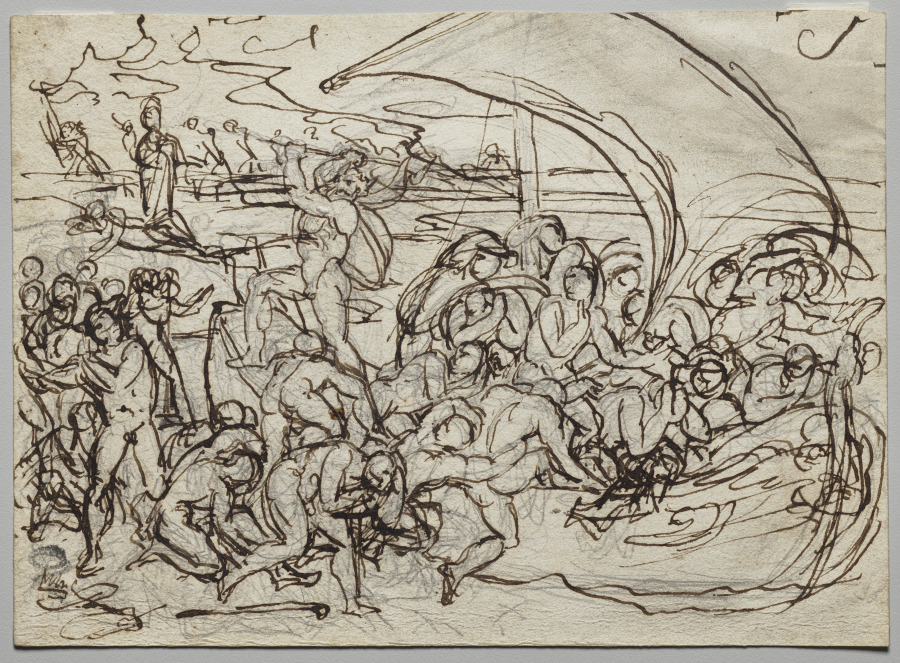
Charon and the Souls of the Dead, c. 1858, by Jean-Baptiste Carpeaux
Jean-Baptiste Carpeaux · The Cleveland Museum of Art · Bequest of Muriel Butkin
Life and career
Dated record
Life and career
The full dated record · 2 entries
1827
Jean-Baptiste Carpeaux born at Valenciennes.
1875
Jean-Baptiste Carpeaux died at Courbevoie.
Collections
Collections
Carpeaux's works are in the following collections: • Art Institute of Chicago • J. Paul Getty Museum • Metropolitan Museum of Art • Museum of Fine Arts, Boston • Nasher Museum of Art at Duke University • National Gallery of Art • Smithsonian American Art Museum
Context
Primary material
Context
The circumstances in which Jean-Baptiste Carpeaux stands. Charon and the Souls of the Dead is dated c. Napoleon on St. Helena is dated c.
Documents and archives
Primary material
Documents and archives
Institutional database
- Wikidata, structured authority record Q182791: Jean-Baptiste Carpeaux
Scholarly · Wikimedia Foundation
authority file
- Gemeinsame Normdatei 1091443041, Jean-Baptiste Carpeaux, 1827 - 1875: Zeichnungen aus dem Museum von Valenciennes (1993 : Wuppertal).
General reference · Deutsche Nationalbibliothek
reference work
- “Jean-Baptiste Carpeaux”, English Wikipedia, consulted as further reading
Reputable secondary · Wikipedia
Literature
Literature
35252, 1874-12-28, CARPEAUX [(Jean Baptiste)], Art Sales Catalogues Online. 34924, 1874-05-23, CARPEAUX [(Jean Baptiste)], statuaire, Art Sales Catalogues Online. 34380, 1873-12-20, CARPEAUX [(Jean-Baptiste)], Art Sales Catalogues Online.
Carpeaux, Jean-Baptiste, Oxford Art Online, 2003
Carpeaux, Jean-Baptiste, Benezit Dictionary of Artists, 2011
Milano, 1881: Courbet e Carpeaux tra le “macchiette” di Navarro della Miraglia, ACME, 2022
Notes from the source article
Cited by Wikipedia
Notes from the source article
These works are cited by the source article, in its own numbering. They are recorded as its citations, not as sources VALÉORINE has verified.
- 1.Kjellberg, Pierre. Bronzes of the 19th Century. Schiffer Publishing, Ltd. 174. 1994. 0-88740-629-7.
- 2.5. 384.
- 3.Frusco, Peter, Janson, H.W., The Romantics to Rodin, George Braziller, Inc., 1980
- 4.Ugolin et ses fils.
- 5.Pêcheur à la coquille.
- 6.See the article by Elizabeth McGrath in The Slave in European Art: From Renaissance Trophy to Abolitionist Emblem, ed Elizabeth Mcgrath and Jean Michel Massing, London (The Warburg Institute) 2012
- 7.Jean Baptiste Carpeaux. The Art Institute of Chicago. 1827.
- 8.Jean-Baptiste Carpeaux (The J. Paul Getty Museum Collection). The J. Paul Getty Museum Collection.
- 9."Jean-Baptiste Carpeaux" - The Metropolitan Museum of Art. www.metmuseum.org.
- 10.Museum of Fine Arts, Boston. collections.mfa.org.
- 11.Works – Jean-Baptiste Carpeaux – People – Nasher Museum of Art at Duke University. emuseum.nasher.duke.edu.
- 12.National Gallery of Art. www.nga.gov.
- 13.Jean Baptiste Carpeaux Smithsonian American Art Museum. americanart.si.edu.
- 14.Dominique Auzias, Jean-Paul Labourdette, Hauts de France 2018/2019 Petit Futé, Paris, (2018)
- 15.Carpeaux's Dance.
- 16.Smarthistory at Khan Academy. Carpeaux's Dance.
References
Citations
References
Each reference names the institution holding it, so a reader may go to the document itself.
Institutional database
Wikidata, structured authority record Q182791: Jean-Baptiste CarpeauxWikimedia Foundation
Institutional witnessauthority file
Gemeinsame Normdatei 1091443041, Jean-Baptiste Carpeaux, 1827 - 1875: Zeichnungen aus dem Museum von Valenciennes (1993 : Wuppertal).Deutsche Nationalbibliothek
Secondary witnessreference work
Secondary witness
Further particulars
Held on the record
Further particulars
Open the remaining particulars
Jean-Baptiste Carpeaux studied at Beaux-Arts de Paris and French Academy in Rome. He trained under René Fache and Jean Baptiste Bernard. Each of those relationships is stated by the authority record rather than inferred from style.
The Encyclopedia exists whether or not anything is for sale. Corrections are recorded rather than overwritten, and every version of this record is kept. Published 14 August 2026.
Elsewhere in Prints
4,138 published records in this field, each with its sources named.
- Jean-Antoine GrosEngraver
- Jean-Antoine WatteauEngraver
- Jean-Baptiste AudebertEngraver
- Jean-Baptiste Camille CorotEngraver
- Jean-Baptiste CorneilleEngraver
- Jean-Baptiste de BougeEngraver
- Jean-Baptiste Henri Durand-BragerEngraver
- Jean-Baptiste LallemandEngraver
Best supported in this field
For owners
Own a work by Jean-Baptiste Carpeaux?
A specialist will read what you send and tell you what the house can establish, what it cannot, and whether the object is suited to sale. There is no charge and no obligation. The object stays with you throughout; nothing is shipped to us unless it is arranged in writing beforehand.