
James Wills
James Wills (1 January 1790 – 23 November 1868) was an Irish writer, poet, and Anglican clergyman.
James Wills
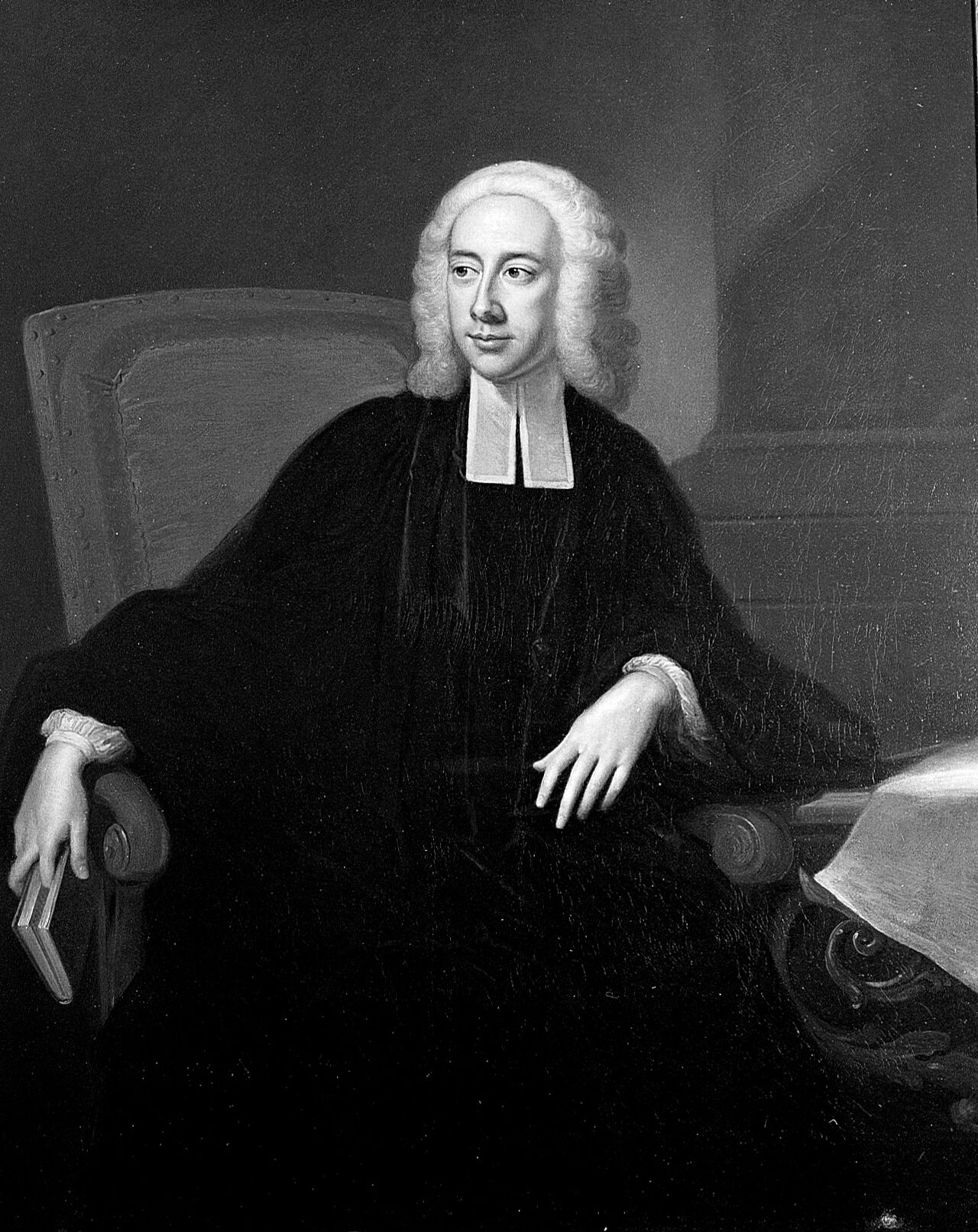
James Wills · Wellcome Collection, London · Wellcome Collection · Attribution 4.0 International (CC BY 4.0)
- Born
- 1790 · County Roscommon.
- Died
- 1868
- Nationality
- Ireland
- Occupation
- poet · writer
- Languages
- English
VALÉORINE Encyclopedia
VALÉORINE documentary reading
Documentary summary
James Wills (1 January 1790 – 23 November 1868) was an Irish writer, poet, and Anglican clergyman.
Admitted source layer · organised and presented by VALÉORINE
Note VALÉORINE
James Wills (1790–1868) was an Irish poet and writer. The poet was born in County Roscommon. Languages used include English.
Composed from admitted, traceable facts · 27 September 2026
VALÉORINE
Reference Check
Propose documentary evidence for James Wills. A contribution is never written directly as fact: identity, source, rights and evidence gates still decide.
Sign in to contribute
Documentary evidence
Documentary basis
Authority files
wikidata · Q1681309
In this article
Early life and education
Early life and education
Wills was born in County Roscommon, the younger son of landowner Thomas Wills of Willsgrove, and his second wife, a daughter of Capt. James Browne of Moyne, County Roscommon. The Wills family were landed gentry in Roscommon. His grandfather Col. Godfrey Wills was an amateur architect. His father died when he was 2 and was succeeded by his eldest son from his first marriage, William Robert Wills, who married Mary Grey Sanford, the niece and co-heiress of Henry Sandford, 1st Baron Mount Sandford of Castlerea House. He assumed the name and arms of Sandford in 1847. James was educated at Trinity College, Dublin, and studied law in the Middle Temple, London but was forced to abandon his legal career after his mentally unstable brother Thomas (born 1788) squandered his inheritance. In 1829, Thomas Wills, after being discharged from a mental asylum, sold the remainder of the estate for £30,000. He sailed for America but disappeared, and his family suspected he was murdered by his valet. James' older half-brother, now known as William Robert Wills, offered him the family estate of Willsgrove, but he declined because of the ongoing costs, and instead entered the church.
Career
Career
From 1822 to 1838, Wills lived in Dublin, at number 3 Sherrard Street Lower, and wrote in the Dublin University Magazine, Blackwood's Magazine and other periodicals. He supported the Reverend Caesar Otway in building up the Irish Quarterly Review. In 1831, he published The Disembodied and other Poems. The Philosophy of Unbelief (1835) attracted much attention. He actually wrote the famous poem "The Universe", even though it was published in 1821 under the name of Charles Maturin. He was editor of the Dublin University Magazine in 1841 and 1842. His largest work was Lives of Illustrious and Distinguished Irishmen, published in six volumes (1840–1847), and his last publication The Idolatress (1868). In all his writings gave evidence of a powerful personality. His poems are spirited, and in some cases show considerable dramatic qualities. In 1841, Wills was appointed curate of Pollrone, County Kilkenny, and became the vicar five years later. In 1848, he years later he was promoted to the living of Kilmacow, and in 1861 ultimately to Attanagh. He was appointed Donnellan lecturer at Trinity College Dublin in 1855–56. In 1860, he gave a series of lectures on Christianity at TCD, where he "delighted the students" with his delivery.
Family
Family
In 1822, Wills married Katherine Gorman, daughter of the Rev. W. Gorman and niece of the chief justice Charles Kendal Bushe. They had three sons and a daughter, Elizabeth. His middle son was the dramatist and painter William Gorman Wills. His other two sons entered the church: The eldest, Rev. Thomas Bushe Wills, was curate of Attanagh under his father and the youngest, the Rev. Freeman Crofts Wills (1837–1913), was vicar of St Agatha's. He died in Attanagh, County Laois.
Notes from the source article
Cited by Wikipedia
Notes from the source article
These works are cited by the source article, in its own numbering. They are recorded as its citations, not as sources VALÉORINE has verified.
- 1.Hourican, Bridget. Wills, James. Dictionary of Irish Biography. Royal Irish Academy. August 2012.
- 2.Burke, Bernard. A genealogical and heraldic history of the landed gentry of Ireland. Harrison. 624. 1912.
- 3.Godfrey Wills. Dictionary of Irish Architects: 1720–1940.
- 4.Carm, Augustine Dillon Cosgrave, O. North Dublin City. Dublin Historical Record. 23. 1. 3–22. 1969. 0012-6861.
- 5.Dublin University Magazine 1875, pg. 403-425
References
Citations
References
Each reference names the institution holding it, so a reader may go to the document itself.
reference work
Secondary witness
The Encyclopedia exists whether or not anything is for sale. Corrections are recorded rather than overwritten, and every version of this record is kept. Published 20 August 2026.
Elsewhere in Books
38,988 published records in this field, each with its sources named.
- James WhitcombAuthor
- James Whitcomb RileyAuthor
- James WhiteheadAuthor
- James Willard SchultzAuthor
- James Wm. ChichettoAuthor
- James WoodAuthor
- Jamgon Kongtrul Lodro TayeAuthor
- Jamie BabbitAuthor
Best supported in this field
For owners
Own a work by James Wills?
A specialist will read what you send and tell you what the house can establish, what it cannot, and whether the object is suited to sale. There is no charge and no obligation. The object stays with you throughout; nothing is shipped to us unless it is arranged in writing beforehand.