
James Heath
James Heath (19 April 1757 – 15 November 1834) was a British engraver. He enjoyed the patronage of George III and successive monarchs.
Also recorded as Heath Senr
James Heath
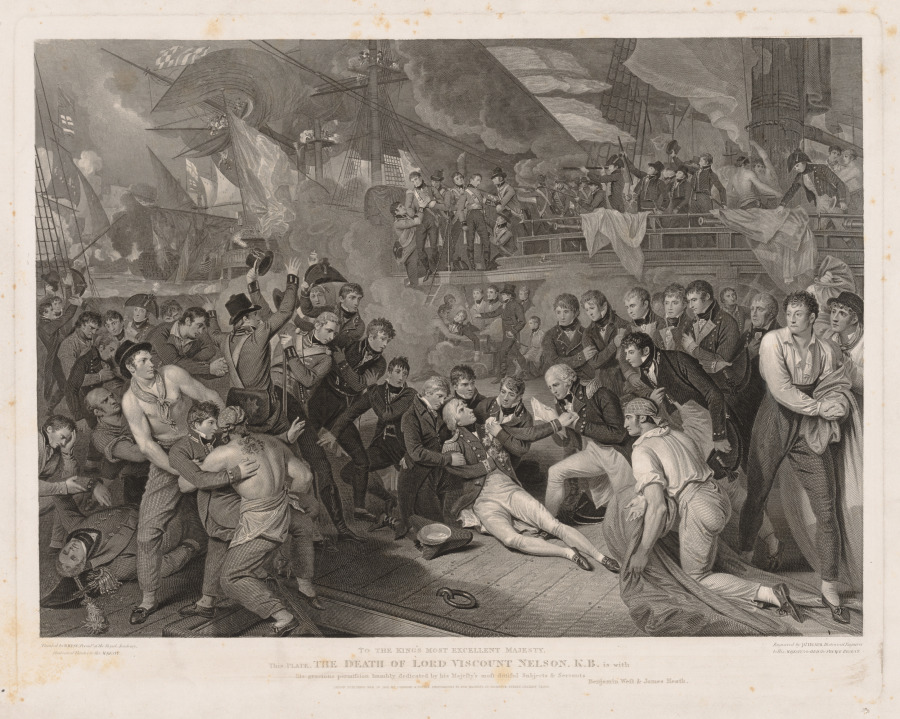
James Heath · The Cleveland Museum of Art · Gift of George A. Goddard · CC0
- Name
- James Heath
- Born
- 19 April 1757
- Birthplace
- Newgate, London, England
- Died
- 15 November 1834
- Place of death
- London, England
- Known for
- Engraver
- Nationality
- Kingdom of Great Britain
- Occupation
- printmaker · artist · copper engraver · steel engraver
- Languages
- English
VALÉORINE Encyclopedia
VALÉORINE documentary reading
Documentary summary
James Heath (19 April 1757 – 15 November 1834) was a British engraver. He enjoyed the patronage of George III and successive monarchs.
Admitted source layer · organised and presented by VALÉORINE
Note VALÉORINE
James Heath (1757–1834) was an artist, copper engraver and printmaker, among other activities, of British nationality. The artist was born and died in London. James Heath was a member of Royal Academy of Arts and worked in London.
Languages used include English. Works are held at Auckland Art Gallery, Australian National Maritime Museum and British Museum, among others.
Composed from admitted, traceable facts · 26 September 2026
VALÉORINE
Reference Check
Propose documentary evidence for James Heath. A contribution is never written directly as fact: identity, source, rights and evidence gates still decide.
Sign in to contribute
World of VALÉORINE
Documentary connections
Only confirmed graph relationships appear here. Images are shown only when their identity and reuse rights both pass the documentary gate.
Citizen Of · outgoing
Kingdom of Great Britain
Place

Born In · outgoing
London
Place
Pencil sketch by George Henry Harlow, 1814, http://www.npg.org.uk/collections/search/largerimage.php?mkey=mw05495
Died In · outgoing
London
Place
Pencil sketch by George Henry Harlow, 1814, http://www.npg.org.uk/collections/search/largerimage.php?mkey=mw05495
Documentary evidence
Documentary basis
Authority files
getty · 500015381 · wikidata · Q6135818
In this article
Biography
Biography
John Pye, Charles Pye and Henry Corbould are recorded as having studied under James Heath. The recorded working language is English. Places of work recorded in the authority are London. Work by James Heath is recorded in the collections of Minneapolis Institute of Art, Auckland Art Gallery, Australian National Maritime Museum, Musée national des beaux-arts du Québec and Scottish National Portrait Gallery.
Key facts
Key facts
• Name — James Heath • Birth Name — James Heath • Born — 19 April 1757 • Birthplace — Newgate, London, England • Died — 15 November 1834 • Place of death — London, England • Known for — Engraver • Illustration — Joseph Black (stipple engraving after Henry Raeburn, 1800) • Illustration — Scene from "Romeo and Juliet (1792, engraving after James Northcote)
Life and work
Life and work
Heath was born in Newgate, London, the son of George Heath, a bookbinder (d. 1773). He was articled to the engraver Joseph Collyer the younger, an exacting master who required steady application from his pupil - as a result, Heath acquired a great mechanical skill in his art. His earliest engravings were of portraits in the collected edition of Horace Walpole's works. He was subsequently employed to engrave Thomas Stothard's designs for Harrison's The Novelist's Magazine and Bell's Poets of Great Britain, and the taste and dexterity with which he rendered these small illustrations brought this style of illustration into great popularity. He made many engravings after artists such as Stothard, Smirke, and others, and these were to be found in publications such as: Sharpe's British Classics, the Lady's Poetical Magazine, Forster's Arabian Nights, Glover's Leonidas, and many similar editions of popular works. He engraved some of the plates for John Boydell's Shakespeare and also, in 1802, published his own six-volume illustrated edition of Shakespeare. In 1780, he exhibited three engravings at the exhibition of the Society of Artists. In 1791, he was elected an associate engraver of the Royal Academy, and, in 1794, was appointed historical engraver to George III, continuing in that post under successive sovereigns until his death. He engraved some large plates, notably "The Dead Soldier" (after Joseph Wright of Derby), "The Death of Nelson" (after Benjamin West), "The Riots in Broad Street. 1780" (after Francis Wheatley), "The Death of Major Pierson" (after J S Copley), "Titian's daughter" (after Titian),"The Holy Family" and "The Good Shepherd" (after Murillo), "The Holy family" (after Raphael) etc. He worked first in stipple and afterwards in line, sometimes in conjunction with others, keeping a large number of pupils working under his direction. He re-engraved the existing set of Hogarth's plates, and completed the engravings of Stothard's "Canterbury Pilgrims", left unfinished by Schiavonetti at his death. He also engraved numerous portraits. Heath amassed a considerable fortune, but lost much property by a fire in 1789. About 1823 he retired from his profession and his stock of proofs and other engravings was dispersed by auction in that year. Around 1777, he married Elizabeth Thomas (daughter of the Rev. Dr. Thomas, a Welsh clergyman), and they had one son, George Heath, who became a Serjeant-at-law. His illegitimate son was Charles Heath (1785–1848), also a notable engraver.
Death
Death
James Heath died in Great Coram Street, London, on 15 July 1834. His portraits were painted by Joshua Reynolds, James Lonsdale (1777–1839), William Behnes, L. F. Abbott, and Thomas George (fl. 1829–1838); the latter three were engraved. A small oval portrait was also engraved for the Monthly Mirror in 1796. In 1834, he exhibited "Children playing with a Donkey" at the Royal Academy, but it was not stated to have been on engraving.
Identity and overview
Identity and overview
The following is established of the heading itself.
Works and production
Works and production
James Heath is recorded with the occupation printmaker. It is also recorded that james Heath is recorded with the occupation visual artist. It is also recorded that james Heath was born on 19 April 1757. Heath died on 15 November 1834. Institutional cataloguing adds that james Heath is recorded with the occupation copper engraver. It is also recorded that james Heath is recorded with the occupation artist. Recorded with the occupation steel engraver. Recorded as a citizen of Kingdom of Great Britain. Institutional cataloguing adds that james Heath is recorded with the gender male. Heath worked at London.
Where the work is held
Collections and holdings
Institutional holdings are recorded as follows.
Notes from the source article
Cited by Wikipedia
Notes from the source article
These works are cited by the source article, in its own numbering. They are recorded as its citations, not as sources VALÉORINE has verified.
- 1.The Novelist's Magazine, Volume 1 (Harrison & Co. 1780).
- 2.The Lady's poetical magazine, volume 1 (London Harrison, 1781).
- 3.Heath, James (1757-1834). 25. 343–4.
Bibliography printed in the source article · 1
- John Heath. The Heath Family Engravers. (In three volumes. Scolar Press, 1993. Quacks, 1999).
References
Citations
References
Each reference names the institution holding it, so a reader may go to the document itself.
Institutional database
Wikidata, structured authority record Q6135818: James HeathWikimedia Foundation
Institutional witness
The Encyclopedia exists whether or not anything is for sale. Corrections are recorded rather than overwritten, and every version of this record is kept. Published 16 August 2026.
Elsewhere in Prints
4,138 published records in this field, each with its sources named.
- James FaedEngraver
- James FittlerEngraver
- James Gabriel HuquierEngraver
- James GodbyEngraver
- James Henry DowdEngraver
- James Hopwood the ElderEngraver
- James Hopwood the YoungerEngraver
- James KellyEngraver
Best supported in this field
For owners
Own a work by James Heath?
A specialist will read what you send and tell you what the house can establish, what it cannot, and whether the object is suited to sale. There is no charge and no obligation. The object stays with you throughout; nothing is shipped to us unless it is arranged in writing beforehand.