
James Anderson
Illustration — James Anderson circa 1792 James Anderson FRSE FSAScot (1739 – 15 October 1808) was a Scottish agriculturist, journalist and economist. A member of the Edinburgh Philosophical Society, Anderson was a prominent figure in the Scottish Enlightenment. He invented the Scotch plough.
Also recorded as James Anderson of Hermiston · Scotch plough
James Anderson
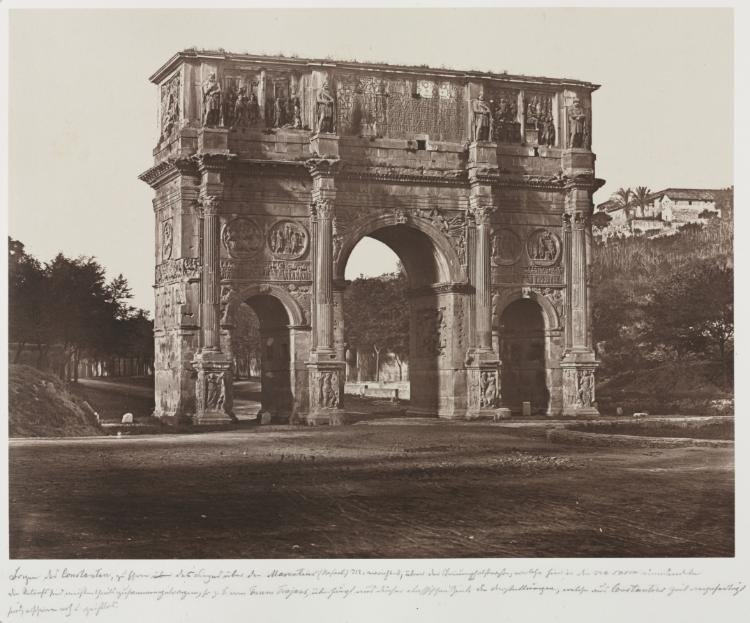
James Anderson · The Cleveland Museum of Art · John L. Severance Fund · CC0
- Born
- 1739 · Edinburgh.
- Died
- 1808 · West Ham.
- Nationality
- Kingdom of Great Britain
- Occupation
- economist · journalist · writer · farmer · agronomist · chemist · editing staff
- Education
- University of Edinburgh
- Honours
- Fellow of the Society of Antiquaries of Scotland
- Languages
- English
VALÉORINE Encyclopedia
VALÉORINE documentary reading
Documentary summary
Illustration — James Anderson circa 1792 James Anderson FRSE FSAScot (1739 – 15 October 1808) was a Scottish agriculturist, journalist and economist. A member of the Edinburgh Philosophical Society, Anderson was a prominent figure in the Scottish Enlightenment. He invented the Scotch plough.
Admitted source layer · organised and presented by VALÉORINE
Reference Check
Propose documentary evidence for James Anderson. A contribution is never written directly as fact: identity, source, rights and evidence gates still decide.
Sign in to contribute
World of VALÉORINE
Documentary connections
Only confirmed graph relationships appear here. Images are shown only when their identity and reuse rights both pass the documentary gate.
Documentary evidence
Documentary basis
Authority files
gnd · 1205477934 · wikidata · Q617109 · wikipedia · James Anderson of Hermiston
In this article
Life
Life
Anderson was born at Hermiston, Midlothian the son of a farmer and while still young attended lectures on chemistry by William Cullen, at the University of Edinburgh. At the age of 15, after the death of his father, he took over the working of the ancestral farm. In 1768 he moved to Aberdeenshire to manage the 1300 acre farm of Monkshill on land owned by Mr. Udny of Udny under a long lease granted to him for the purpose of demonstrating the benefits of improved agriculture.
Economic theorist
Economic theorist
• Illustration — James Anderson, engraving published in the Gentleman's Magazine of May 1809 In 1777 Anderson published An Enquiry into the Nature of the Corn Laws, in which he anticipated David Ricardo's theory of rent. Some historians believe Anderson was the root source for Marx's critique of capitalist agriculture. Rent, Anderson argued, was a charge for the use of the more fertile soil. The least fertile soils in cultivation generated an income that simply covered the costs of production, while the more fertile soils received a "certain premium for an exclusive privilege to cultivate them; which will be greater or smaller according to the more or less fertility of the soil. It is this premium which constitutes what we now call rent; a medium by means of which the expence of cultivating soils of very different degrees of fertility may be reduced to a perfect quality." Anderson argued that improvement of the soil was possible; but also that humans could degrade the soil. He argued also that since where farm land in England was held by capitalists, the farmer would tend to avoid improvements the full return for which would not be received during the lease. Karl Marx's critique of capitalist agriculture drew upon Anderson's analysis and he insisted that soil fertility was a historical issue, and that fertility could both improve or decline. The irrationality of capitalist agriculture, he argued, was bound up with the whole antagonism of town and country out of which bourgeois society had arisen.
Publisher
Publisher
In 1771 he published "Essays on Planting". In 1773 he contributed the article "Monsoon" to the first Encyclopedia Britannica. In 1783 he settled in Edinburgh. From 1790 to 1797 he lived at Springfield on Leith Walk north of the city. In 1791 he started a weekly publication called The Bee, which was largely written by himself, and of which 18 volumes were published. In 1797 he began to reside at Isleworth, and from 1799 to 1802 he produced a monthly publication, Recreations in Agriculture, Natural History, Arts and Miscellaneous Literature. He was also the author of many pamphlets on agricultural and economical topics, under numerous aliases, including Agricola, Germanicus, and Timothy Hairbrain. One of his first publications was A Practical Treatise on Chimneys (1776). He was a friend of Jeremy Bentham, and involved in the latter's idea of an ideal prison or Panopticon. Anderson also corresponded with George Washington.
Inventor
Inventor
The engineer James Green, responsible for the building of some of the first canalboat lifts, credited their invention to Dr James Anderson. The Scotch plough or Scots plough (not to be confused with the Scottish hand plough) was a wood and iron, animal draft, primary tillage implement (plough) for use on heavy ground invented in the 19th century by James Anderson.
Family
Family
In 1768 Anderson married Margaret Seton (d. 1788). Together they had 13 children, one daughter and five sons survived their father; their son, John, was apprenticed to Thomas Bewick. Their daughter, Margaret (1778–1863), married Benjamin Outram.
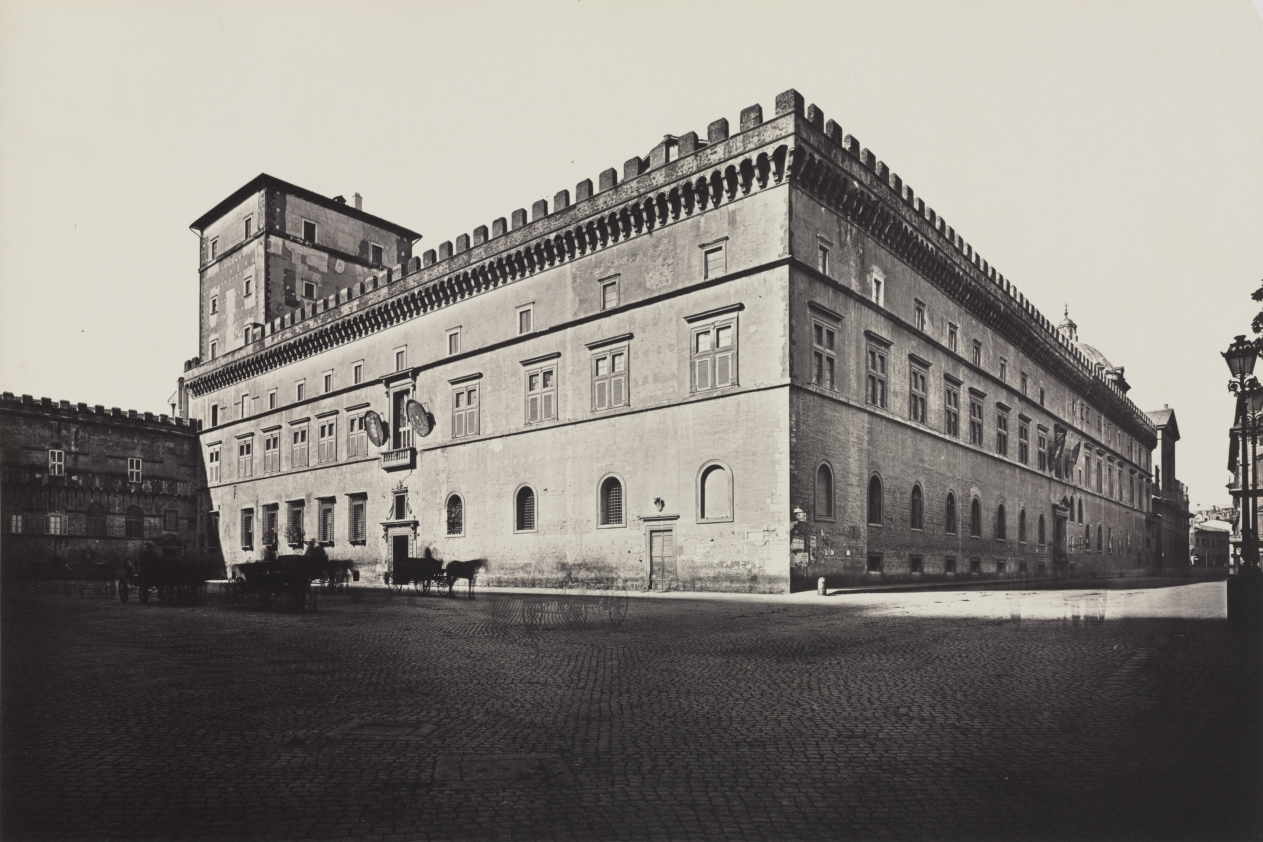
Palazzetto Venezia, Rome, c. 1870s, by James Anderson
James Anderson · The Cleveland Museum of Art · Gift of Thomas Halsted, The Halsted Gallery, in honor of Evan Turner
Life and career
Dated record
Life and career
The full dated record · 2 entries
1739
James Anderson born at Edinburgh.
1808
James Anderson died at West Ham.
Places
Named by the record
Places
Only places the record itself states, plotted where the house gazetteer settles their coordinates. Nothing is inferred from a name or a nationality.
Edinburgh.
Birth place
West Ham.
Death place
Honorarium
In 1780 Anderson received an LLD (honorary doctorate in law) from the University of Aberdeen. He was elected a member of the American Philosophical Society in 1791. He died in West Ham, Essex on 15 October 1808.
Notes from the source article
Cited by Wikipedia
Notes from the source article
These works are cited by the source article, in its own numbering. They are recorded as its citations, not as sources VALÉORINE has verified.
- 1.Waterston, Charles D. Former Fellows of the Royal Society of Edinburgh 1783-2002: Biographical Index. The Royal Society of Edinburgh. I. July 2006. 978-0-902198-84-5.
- 2.Grant's Old and New Edinburgh vol.6 p.335
- 3.Mitchinson, Rosalind. Anderson, James (1739–1808).
- 4.Alexander, William (1892), The Making of Aberdeenshire in Transactions of the Aberdeen Philosophical Society 2, 1892, pp. 102 - 122
- 5.James Anderson. freemasonry.bcy.ca.
- 6.Foster, John Bellamy. (2002) Ecology Against Capitalism, New York: Monthly Review Press
- 7.Edinburgh and Leith Post Office Directory 1790
- 8.Anderson, James (Agriculturist). 959.
- 9.The Canals of Southwest England Charles Hadfield Page 104
- 10.Old and New Ploughs. worldburnsclub.com. 2008.
- 11.American Philosophical Society. James Anderson. American Philosophical Society Member History.
Bibliography printed in the source article · 1
- Anderson, James, of Hermiston. 56-58.
References
Citations
References
Each reference names the institution holding it, so a reader may go to the document itself.
reference work
Secondary witness
Further particulars
Held on the record
Further particulars
Open the remaining particulars
His recorded language was English. 3 children are recorded: John Anderson, Margaret Anderson and George Anderson. Recorded as economist, journalist, writer, farmer and agronomist.
Identity and origins
The Encyclopedia exists whether or not anything is for sale. Corrections are recorded rather than overwritten, and every version of this record is kept. Published 15 August 2026.
Elsewhere in Books
38,988 published records in this field, each with its sources named.
- James AldrichAuthor
- James AldridgeAuthor
- James AllenAuthor
- James Amaziah WhitneyAuthor
- James Anthony FroudeAuthor
- James AveryAuthor
- James B. ReuterAuthor
- James BaldwinAuthor
Best supported in this field
For owners
Own a work by James Anderson?
A specialist will read what you send and tell you what the house can establish, what it cannot, and whether the object is suited to sale. There is no charge and no obligation. The object stays with you throughout; nothing is shipped to us unless it is arranged in writing beforehand.