
Jacob van Campen
Jacob van Campen (2 February 1596 — 13 September 1657) was a Dutch artist and architect of the Golden Age.
Also recorded as Jacob van Kampen · Jacob Van Campen · Jacob Van Kampen · Jacob Pietersz Van Campen
Jacob van Campen
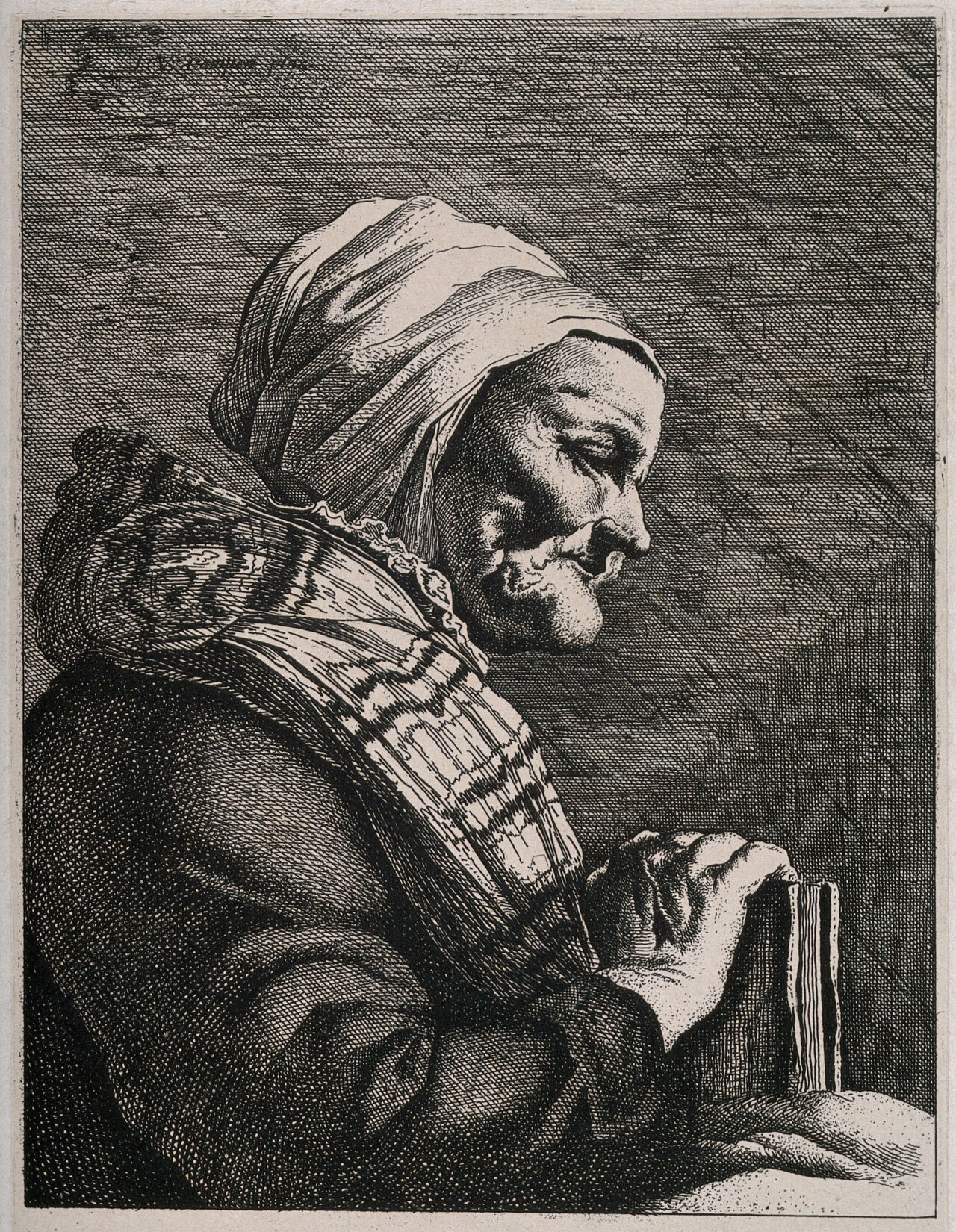
Jacob van Campen · Wellcome Collection, London · Wellcome Collection · Public Domain Mark
- Name
- Jacob van Campen
- Born
- 2 February 1596
- Birthplace
- Haarlem, Holland, Dutch Republic
- Died
- 13 September 1657
- Place of death
- Amersfoort, Utrecht, Dutch Republic
- Nationality
- Dutch Republic
- Occupation
- painter · architect · artist · designer · visual artist · draftsperson
- Movements
- Dutch Baroque architecture
- Known for
- Royal Palace of Amsterdam · Noordeinde Palace · Koepelkerk · Marekerk · Argus and Mercury and Io · Double Portrait of Constantijn Huygens (1596-1687) and Suzanna van Baerle (1599-1637)
VALÉORINE Encyclopedia
VALÉORINE documentary reading
Documentary summary
Jacob van Campen (2 February 1596 — 13 September 1657) was a Dutch artist and architect of the Golden Age.
Admitted source layer · organised and presented by VALÉORINE
Reference Check
Propose documentary evidence for Jacob van Campen. A contribution is never written directly as fact: identity, source, rights and evidence gates still decide.
Sign in to contribute
Documentary evidence
Documentary basis
Authority files
loc · no2020113556 · wikidata · Q536951 · wikipedia · Jacob van Campen
In this article
Key facts
Key facts
• Name — Jacob van Campen • Born — 2 February 1596 • Birthplace — Haarlem, Holland, Dutch Republic • Died — 13 September 1657 • Place of death — Amersfoort, Utrecht, Dutch Republic • Significant Buildings — Mauritshuis Huis ten Bosch Royal Palace • Illustration — Mauritshuis, The Hague • Illustration — The Paleis Noordeinde, The Hague • Illustration — The "Nieuwe Kerk", Haarlem
Biography
Biography
He was born into a wealthy family at Haarlem and spent his youth in his hometown. Being of noble birth and with time on his hands, he took up painting mainly as a pastime. In 1614, he became a member of the Guild of Saint Luke (in Haarlem the architects and painters were both in the same guild, and many were both, such as Pieter Saenredam and Salomon de Bray), and he was in an apprenticeship under painter Frans de Grebber — a number of Van Campen's oils survive. About 1616 to 1624 he is thought to have lived in Italy. On his return to the Netherlands, Van Campen turned to architecture, applying ideas borrowed from Andrea Palladio, Vincenzo Scamozzi, and classical influences from Vitruvius. He was primarily responsible for introducing the classical revival style into Dutch Baroque architecture, combining the native, Dutch brick style with the Vitruvian principles he had learnt to produce "Dutch Classicism", an internationally influential style. Van Campen was friendly with Constantijn Huygens, and together they designed a new house for Huygens. Even after Van Campen's death, his work greatly influenced Johan Maurits van Nassau-Siegen, the designer of the Kleefse gardens (the gardens of Cleve), and Frederick William, Elector of Brandenburg. The latter owned a book by Van Campen regardless of the expense. The city hall and city palace of Potsdam owe a debt to ideas by Van Campen. Van Campen's first known building was the Coymans house built in 1625 in Amsterdam. In the 1630s, Van Campen and Pieter Post designed the Mauritshuis in The Hague, a palace that is now home to a Royal Picture Gallery, and Van Campen alone designed the Netherlands' first theatre, Amsterdam's Stadsschouwburg. About 1645 Van Campen designed the Nieuwe Kerk in Haarlem, a church that influenced Christopher Wren. His best-known work is probably the large Town Hall of Amsterdam (begun 1648), now the Royal Palace in Dam Square. Van Campen worked as an architect, a painter and a designer of decorative schemes, like that for the church organ in Alkmaar. His art also influenced sculpture. He was assisted in his work by Pieter Post, Daniël Stalpaert, Matthias Withoos, Philips Vingboons, Artus Quellinus, Tielman van Gameren and Rombout Verhulst. During the building of the city hall, Van Campen lived in very expensive lodgings in the nearby Kalverstraat and he spent freely. In 1654 Van Campen (and Willem de Keyser left after an argument, probably in connection with the design of the barrel vaults. Stalpaert won, but his completion of the project was reported to be less fine than Van Campen's designs. After a long career, Van Campen died in 1657 in his buitenplaats (residence) Randenbroek near Amersfoort, which he had inherited from his mother, and was buried there. He had expanded it himself and had it decorated by Caesar van Everdingen. Van Campen never married but had one son, Alexander Van Campen.
Designs
Designs
Van Campen was selective in what projects he took on. His best known works are: • The Royal Palace, Amsterdam, former city hall. In 1647, his name is mentioned for the first time in connection with the design of the new city hall. It was to be a perfect building, perfect in its proportions and in the message it conveyed to the spectator. Its power lies in its strict and perfect proportions and extremely moderate decoration. Critics loathed the simple entrance - without stairs - on the ground floor. • He is suspected to have had a hand in the alteration of the Rembrandthuis at the Jodenbreestraat in Amsterdam (1627), and in the design of the castle Drakensteyn at Baarn • The Mauritshuis in The Hague (1633). • the Theatre of Van Campen (1638), based on the example of Teatro Olimpico in Vicenza, in Amsterdam. • the Paleis Noordeinde, a royal palace in The Hague (1640). As well as houses and palaces, he also designed a number of churches, such as those at Renswoude and at Hooge Zwaluwe, and the Nieuwe Kerk in Haarlem. Of that design, Pieter Saenredam made no fewer than three paintings and eight engravings. Furthermore, Van Campen designed gates and towers, e.g. for the Westerkerk and Nieuwe Kerk, both in Amsterdam. His paintings and wall decorations (such as those at Paleis Huis ten Bosch), show some similarity with the work of Paulus Bor, one of the founders of a group of painters calling themselves the Bentvueghels.
Identity and origins
Identity and origins
The authorities additionally record the headings Jacob van Kampen, Jacob Van Campen, Jacob Van Kampen, Jacob Pietersz Van Campen and J. van Campen. He was the child of Pieter van Campen, Heer van Randenbroek and Gerritge Claes Jansdr. Berents, Vrouwe van Randenbroek.
Work and production
Work and production
Works recorded as notable number 7: Royal Palace of Amsterdam, Noordeinde Palace, Koepelkerk, Marekerk, Argus, Mercury and Io, Double Portrait of Constantijn Huygens (1596-1687) and Suzanna van Baerle (1599-1637) and Drie aaneengesloten friezen van een kamerbeschildering: Hercules haalt Cerberus uit de onderwereld, geflankeerd door twee stillevens (rechter zijwand); vijf nissen met vruchtstillevens en guirlandes (.
Identity
Identity
Jacob van Campen is recorded as painter, architect, artist and designer.
Life and career
Dated record
Life and career
The full dated record · 2 entries
1596
Jacob van Campen was born in 1596.
1657
Jacob van Campen died at Amersfoort.
Primary material
Documents and archives
reference work
- Wikidata, structured authority record Q536951: Jacob van Campen
Reputable secondary · Wikimedia Foundation
- “Jacob van Campen”, English Wikipedia, consulted as further reading
Reputable secondary · Wikipedia
authority file
- VIAF cluster 51837623 for Jacob van Campen, aggregating national library name authorities.
General reference · OCLC
References
Citations
References
Each reference names the institution holding it, so a reader may go to the document itself.
authority file
Secondary witnessreference work
Wikidata, structured authority record Q536951: Jacob van CampenWikimedia Foundation
Secondary witnessreference work
Secondary witness
Further particulars
Held on the record
Further particulars
Open the remaining particulars
Formation and teaching. Each of those relationships is stated by the authority record rather than inferred from style. His work is associated with Dutch Baroque architecture. He belonged to Haarlem Guild of St. He worked at Haarlem, The Hague, Amsterdam and Italy.
Career and activity
The Encyclopedia exists whether or not anything is for sale. Corrections are recorded rather than overwritten, and every version of this record is kept. Published 14 August 2026.
Elsewhere in Design
11,558 published records in this field, each with its sources named.
- Jacob ReesDesigner
- Jacob SnyderDesigner
- Jacob Staël von HolsteinDesigner
- Jacob van AakenDesigner
- Jacob van RijsDesigner
- Jacob van ThienenDesigner
- Jacob W. HoltDesigner
- Jacob Wilhelm NordanDesigner
Best supported in this field
For owners
Own a work by Jacob van Campen?
A specialist will read what you send and tell you what the house can establish, what it cannot, and whether the object is suited to sale. There is no charge and no obligation. The object stays with you throughout; nothing is shipped to us unless it is arranged in writing beforehand.