
Isabella Piccini
Isabella Piccini (born Elisabetta Piccini 1644-1732) was an Italian artist and nun. She worked in the mediums of etching, engraving, and illustration.
Also recorded as Elisabetta Piccini · Suor. I. P. · Isabella Piccinni · Suor I. P.
Isabella Piccini
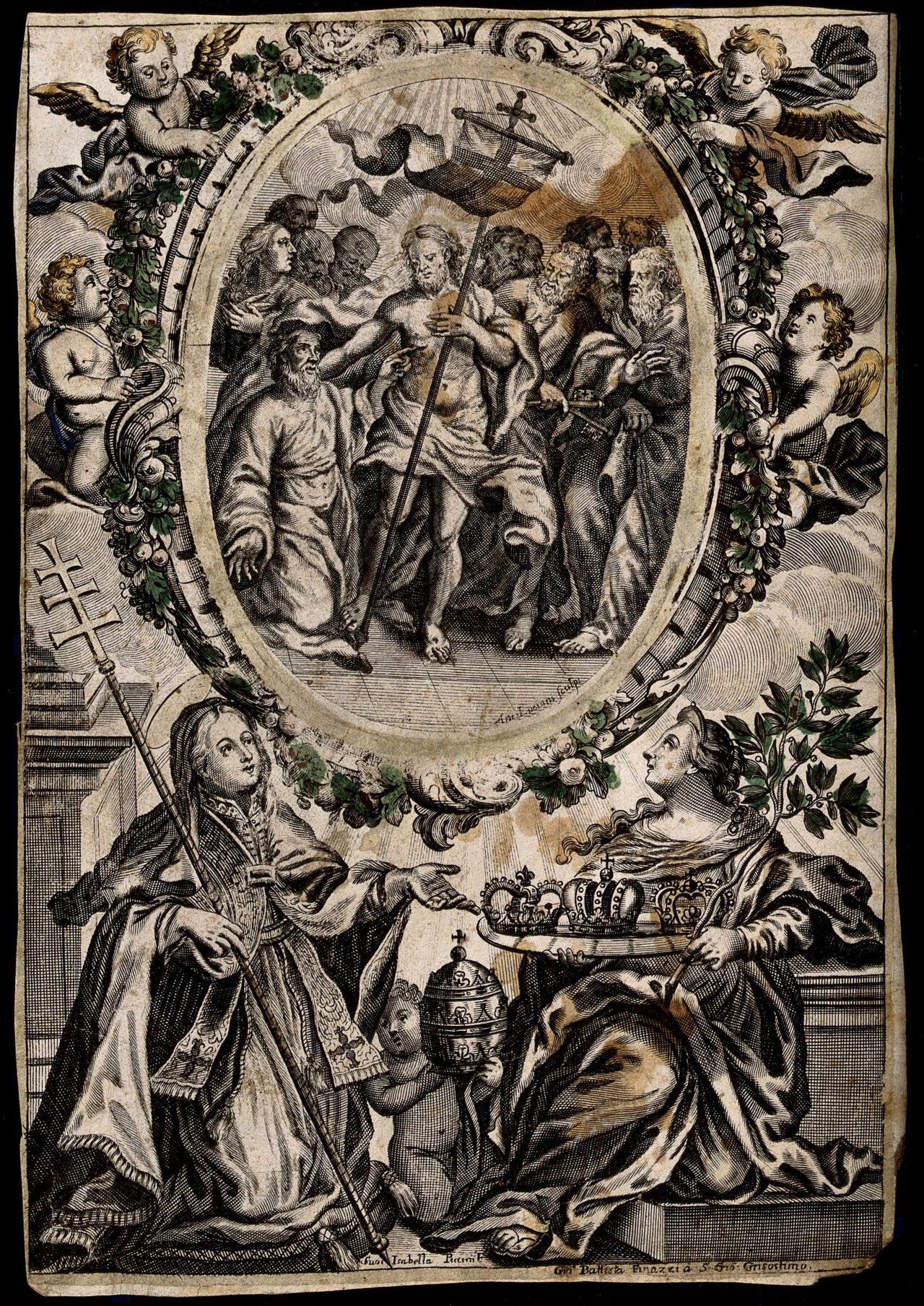
Isabella Piccini · Wellcome Collection, London · Wellcome Collection · Public Domain Mark
- Name
- Isabella Piccini
- Birth Name
- Elisabetta Piccini
- Born
- 1644
- Birthplace
- Venice, Republic of Venice
- Died
- 29 April 1732
- Known for
- Etching Engraving Illustration
- Nationality
- Republic of Venice.
- Occupation
- abbess, publisher, etcher, printmaker, nun, artist and copper engraver.
- Languages
- Italian.
VALÉORINE Encyclopedia
VALÉORINE documentary reading
Documentary summary
Isabella Piccini (born Elisabetta Piccini 1644-1732) was an Italian artist and nun. She worked in the mediums of etching, engraving, and illustration.
Admitted source layer · organised and presented by VALÉORINE
Reference Check
Propose documentary evidence for Isabella Piccini. A contribution is never written directly as fact: identity, source, rights and evidence gates still decide.
Sign in to contribute
World of VALÉORINE
Documentary connections
Only confirmed graph relationships appear here. Images are shown only when their identity and reuse rights both pass the documentary gate.
Documentary evidence
Documentary basis
Authority files
wikidata · Q27955543 · wikipedia · Isabella Piccini
In this article
Biography
Biography
The recorded working language is Italian. The field of work recorded is visual arts, engraving and monastic life. Places of work recorded in the authority are Venice. Work by Isabella Piccini is recorded in the collections of Print Collection and Museu Nacional d'Art de Catalunya.
Key facts
Key facts
• Name — Isabella Piccini • Birth Name — Elisabetta Piccini • Born — 1644 • Birthplace — Venice, Republic of Venice • Died — 29 April 1732 • Place of death — Venice, Republic of Venice • Known for — Etching Engraving Illustration
Life and work
Life and work
Piccini was born in Venice in 1644. Her father was etcher and engraver Giacomo Piccini. He trained Piccini in engraving and illustration in the style of the great masters such as Peter Paul Rubens and Titian. Piccini became a Franciscan nun in 1666, joining the Convent of Santa Croce. Upon joining, she changed her name to Sister Isabella. Prominent Italians commissioned works from her, including portraits and religious artworks. Giovanni Antonio Remondini distributed her prints throughout Europe. All income she made was split between her convent and her family.
Gallery
Gallery
• Illustration — Vita beatae Zitae virginis Lucensis, ex vetustissimo codice m.s. fidelitèr transumpta.Ferrara: Typographia Filoniana, 1688 • Illustration — Engraving of Saint Jovan Vladimir, 1690 • Illustration — Cavallo imperfetto del Polesine, 1692 • Illustration — Simboli predicabili: estratti da sacri evangeli che corrono nella quadragesima: delineati con morali, & eruditi discorsi, 1692 • Illustration — Portrait of poet Ottavio de' Rossi • Illustration — Portrait of writer Francesco Fulvio Frugoni
Notable collections
• Title Page Dittionario Italiano, e Francese Del Signor Veneroni, 1644–1734, Metropolitan Museum of Art
Citations
References
Each reference names the institution holding it, so a reader may go to the document itself.
reference work
Secondary witnessreference work
Secondary witness
The Encyclopedia exists whether or not anything is for sale. Corrections are recorded rather than overwritten, and every version of this record is kept. Published 17 August 2026.
Elsewhere in Prints
4,138 published records in this field, each with its sources named.
- Isaac SoriousEngraver
- Isaac TaylorEngraver
- Isaak TirionEngraver
- Isabella ParasoleEngraver
- Isabelle GreenbergerEngraver
- Isami DoiEngraver
- Isidor AscheimEngraver
- Isidore van KinsbergenEngraver
Best supported in this field
For owners
Own a work by Isabella Piccini?
A specialist will read what you send and tell you what the house can establish, what it cannot, and whether the object is suited to sale. There is no charge and no obligation. The object stays with you throughout; nothing is shipped to us unless it is arranged in writing beforehand.