
Heteka
Illustration — A Heteka bed on display at the National Museum of Finland • Illustration — Children sitting on a Heteka bed in the 1950s Heteka is a Finnish brand name for a steel-framed bed with springs. The name comes from the company Helsingin Teräshuonekalutehdas ("Helsinki Steel Furniture Factory") founded by Kalle Kärkkäinen, which started producing Heteka beds in 1932. Production of Heteka beds has been discontinued, but contrary to popular belief the name "Heteka" still remains a registered trademark.
Heteka
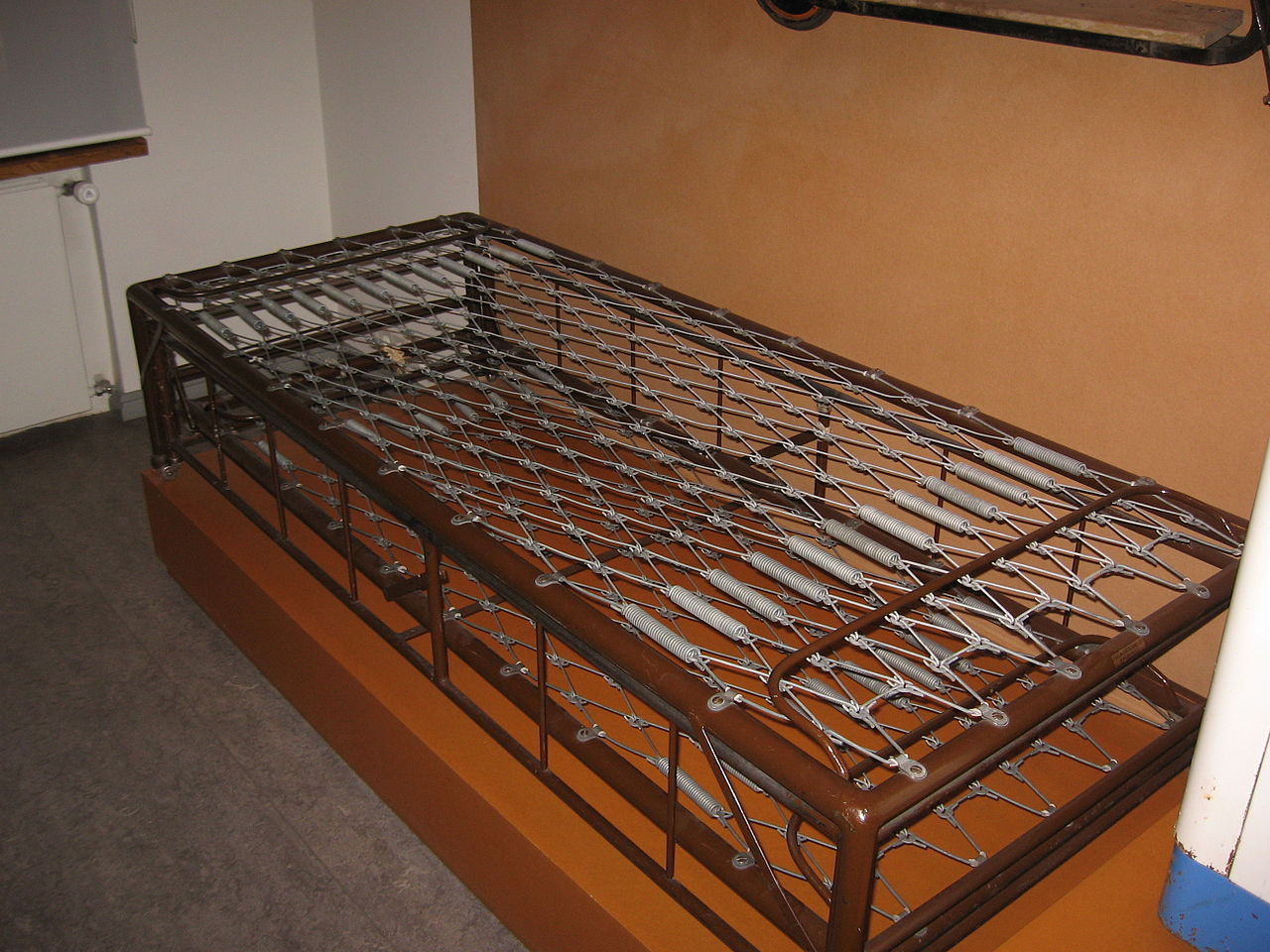
Pasixxxxx · Bed photographed at Finnish National Museum · CC BY-SA 3.0
- Field
- bed
- Region
- Finland
VALÉORINE Encyclopedia
VALÉORINE documentary reading
Documentary summary
Illustration — A Heteka bed on display at the National Museum of Finland • Illustration — Children sitting on a Heteka bed in the 1950s Heteka is a Finnish brand name for a steel-framed bed with springs. The name comes from the company Helsingin Teräshuonekalutehdas ("Helsinki Steel Furniture Factory") founded by Kalle Kärkkäinen, which started producing Heteka beds in 1932. Production of Heteka beds has been discontinued, but contrary to popular belief the name "Heteka" still remains a registered trademark.
Admitted source layer · organised and presented by VALÉORINE
Reference Check
Propose documentary evidence for Heteka. A contribution is never written directly as fact: identity, source, rights and evidence gates still decide.
Sign in to contribute
World of VALÉORINE
Documentary connections
Only confirmed graph relationships appear here. Images are shown only when their identity and reuse rights both pass the documentary gate.
Documentary evidence
Documentary basis
Authority files
wikidata · Q10523040 · wikipedia · Heteka
In this article
In popular culture
In popular culture
Before the Winter War there were six factories in Finland producing double couchette beds of iron, of which Helsingin Teräshuonekalutehdas fared the best. A Heteka bed consists of two beds inside each other, of which the inner one can be pulled out from under the outer one. The beds have a steel pipe frame and a metal lattice bottom, and the inner bed usually has small wheels. The bottom of the inner bed is lifted up at nighttime, producing another bed. At daytime the bottom is put back down and the bed with its linens is pushed back inside the outer bed. Covered in bedcovers, the Heteka bed now becomes a couch to sit on, without a back rest or arm rests. Advertised as repelling bed bugs, because bed bugs and other pests which thrived in old wooden beds could not nestle in beds made of a steel frame. Heteka enjoyed great success from the 1930s to the 1950s. A total of two million beds were produced before Helsingin Teräshuonekalutehdas was discontinued in 1964, and nearly every Finnish home had a Heteka bed. In smaller homes, which lacked a separate bedroom, a Heteka bed usually functioned as a couch at daytime and was spread out to form a double bed in the evening. At first Heteka beds used a spiral spring bottom made of small-twisted steel wire, which was as silent as the advertisements promised. The legs of the outer bed were also silenced with rubber feet. Later, apparently for cost reasons during wartime, the bottom was changed to a sparse wire lattice, which creaked noisily especially in older beds. Continual sleeping caused the lattice bottom to become warped and lose its shape. Back doctors were critical of worn-out Heteka beds and advised patients to fix them with plywood plates. Some models even lost the rubber feet, causing the legs to scratch the floor. During wartime even the steel frame was sometimes replaced with a wooden one.
The Heteka bed has left its mark in Finnish popular culture. It has inspired several schlager and pop music songs: "Serenadi hetekalle" by Veikko Lavi (1978) and "Vanha heteka" by Kunto Korlin (1992); "Rottinkihetekka" (a slight misspelling of the trademarked name) by the band Ilona (band) (1987) can also be counted. The Heteka is also mentioned in Juha Vainio's song "Eräänlainen sotaveteraani": "Mä oon vain yksinäinen sotaveteraani, eikä kukaan lämmitä mun hetekaani" ("I am just a lonely war veteran, and no one is warming my Heteka bed"). Pekka Ruuska song "Matalassa majassa" contains the verse: "On hetekan syli niin hellä, se mua kannattaa kainosti kitisten - on kuin lepäisi höyhenellä." ("The embrace of the Heteka bed is so gentle, it supports me creaking modestly - it's as if I were resting on a feather.") Reino Palmroth, known as "Palle", sang: "Vaikk' näyttää että yhdelle, se antaakin unen kahdelle. Ihme tavaton tuo hetekamme on." ("Although it looks like it seats only one, it gives sleep to two. Such a miracle is our Heteka bed.") Before the time of wellie wanging and wife-carrying humorous sports in Finland included Heteka bed pushing and Heteka bed pulling (more specifically, pulling the inner wheeled Heteka bed).
Places
Named by the record
Places
Only places the record itself states, plotted where the house gazetteer settles their coordinates. Nothing is inferred from a name or a nationality.
- Finland
Named but not plotted · 1
Heteka is associated with Finland.
Country
Primary material
Documents and archives
reference work
- “Heteka”, English Wikipedia, consulted as further reading
Reputable secondary · Wikipedia
authority record
- Wikidata, structured authority record Q10523040: Heteka
General reference · Wikidata
Notes from the source article
Cited by Wikipedia
Notes from the source article
These works are cited by the source article, in its own numbering. They are recorded as its citations, not as sources VALÉORINE has verified.
- 1.Oksanen, Juha et al.: Suomalaisia innovaatioita Suomi-konepistoolista Habbo Hotelliin, p. 32. Gummerus, 2011. .
- 2.Hurtta, Heikki: Donjuanin heteka, Institute for domestic languages in Finland, published in Helsingin Sanomat 22 June 2004. Accessed on 27 November 2017.
- 3.Finnish database for trademarks. Accessed on 27 November 2017.
- 4.Seppovaara, Juhani: "Natisuta hetekata", Muistojen markkinoilla – sinivalkoisen arjen klassikot. Helsinki: Otava, 2004. .
- 5.Pilhjerta, Matti: , Yks'Kaks issue #9/1993. Accessed on 13 January 2007.
- 6.Kolbe, Pirkko: Päivästä päivään. Helsingin Sanomat 23 September 1982, p. 15.
- 7.Pen name "Entinen hetekanvedon ME-mies": Hetekanvedon ME. Letters to the editor, Helsingin Sanomat 25 March 1964, p. 33.
References
Citations
References
Each reference names the institution holding it, so a reader may go to the document itself.
reference work
Secondary witnessauthority record
Secondary witness
The Encyclopedia exists whether or not anything is for sale. Corrections are recorded rather than overwritten, and every version of this record is kept. Published 16 August 2026.
Elsewhere in Furniture
924 published records in this field, each with its sources named.
- headboardTerminology
- Heller AltarpieceTerminology
- Herculean Sarcophagus of GenzanoTerminology
- Herrenberg AltarpieceTerminology
- Hezilo chandelierTerminology
- high chairTerminology
- high strikerTerminology
- Hikone screenTerminology
Best supported in this field
For owners
Own an object connected with Heteka?
A specialist will read what you send and tell you what the house can establish, what it cannot, and whether the object is suited to sale. There is no charge and no obligation. The object stays with you throughout; nothing is shipped to us unless it is arranged in writing beforehand.