
Henry Peach Robinson
Henry Peach Robinson (9 July 1830 – 21 February 1901) was an English pictorialist photographer best known for his pioneering combination printing, an early example of photomontage. He engaged in contemporary debates in the photographic press and associations about the legitimacy of 'art photography' and in particular the combining of separate images into one.
Also recorded as Henry Robinson · Henry Peach · H. P. Robinson · H.P. Robinson
Henry Peach Robinson
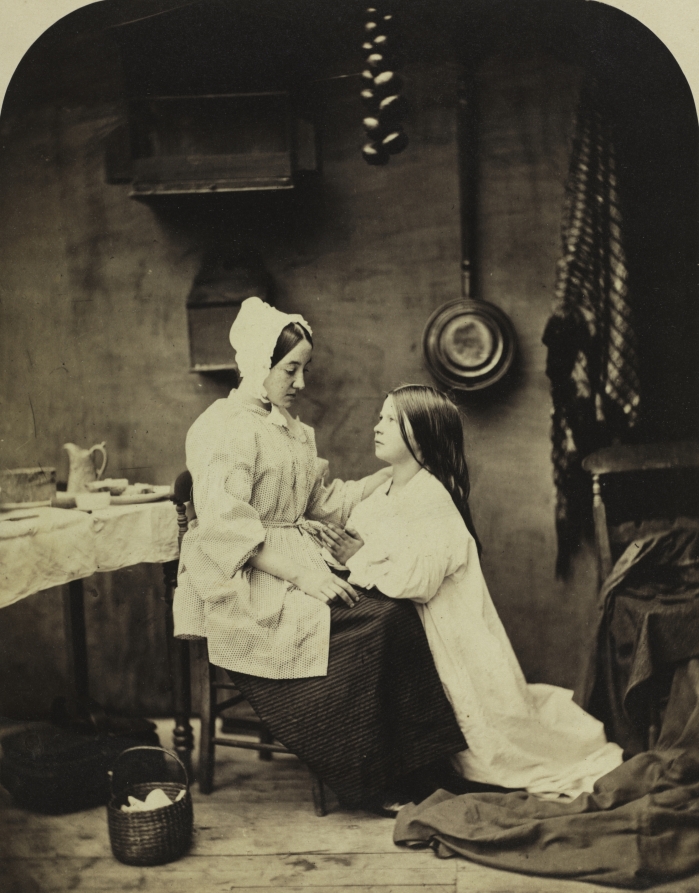
Henry Peach Robinson · The Cleveland Museum of Art · John L. Severance Fund · CC0
- Born
- 1830.
- Died
- 1901.
- Nationality
- United Kingdom of Great Britain and Ireland.
- Occupation
- photographer.
- Fields
- portrait, photography and painting.
- Movements
- pictorialism.
VALÉORINE Encyclopedia
VALÉORINE documentary reading
Documentary summary
Henry Peach Robinson (9 July 1830 – 21 February 1901) was an English pictorialist photographer best known for his pioneering combination printing, an early example of photomontage. He engaged in contemporary debates in the photographic press and associations about the legitimacy of 'art photography' and in particular the combining of separate images into one.
Admitted source layer · organised and presented by VALÉORINE
Note VALÉORINE
Henry Peach Robinson (1830–1901) was a photographer, of British nationality. The photographer was associated with pictorialism. The work spans painting, photography and portrait.
Composed from admitted, traceable facts · 27 September 2026
VALÉORINE
Reference Check
Propose documentary evidence for Henry Peach Robinson. A contribution is never written directly as fact: identity, source, rights and evidence gates still decide.
Sign in to contribute
World of VALÉORINE
Documentary connections
Only confirmed graph relationships appear here. Images are shown only when their identity and reuse rights both pass the documentary gate.

Documentary evidence
Evidence Panel
not yet certified
- Identity
- resolved
- Independent source families
- 0
- Admitted assertions
- 0
- Open conflicts
- 0
Authority files
wikidata · Q574144 · wikipedia · Henry Peach Robinson
In this article
Life
Life
Robinson was born in Ludlow, Shropshire the oldest of four children of John Robinson, a Ludlow schoolmaster, and his wife Eliza. He was educated at Horatio Russell's academy in Ludlow until he was thirteen. He left the academy to take up a year's drawing tuition with Richard Penwarne before being apprenticed to bookseller and printer, Richard Jones. While continuing to study art, his initial career was in bookselling. In 1850 he worked for Bromsgrove bookseller Benjamin Maund, then in 1851 for the London-based Whittaker & Co. In 1852 he exhibited an oil painting, On the Teme Near Ludlow, at the Royal Academy. This year also marked the beginning of his photographic work. Five years later, following a meeting with the photographer Hugh Welch Diamond, he decided to devote himself to that medium. He opened his first studio in 1855 in Leamington Spa to sell portraits. In 1856, with Oscar Rejlander, he was a founding member of the Birmingham Photographic Society. In 1859, he married Selina Grieves, daughter of a Ludlow chemist, John Edward Grieves. His son, Ralph Winwood Robinson, was also a photographer. In 1864, at the age of 34, Robinson was forced to give up his studio due to ill-health from exposure to toxic photographic chemicals. Photography historian Gernsheim has shown that thereafter Robinson preferred the easier 'scissors and paste-pot' method of making his combination prints, rather than the more exacting darkroom method employed by Rejlander. Relocating to London, Robinson kept up his involvement with the theoretical side of photography, writing the influential essay Pictorial Effect in Photography (1869) and Being Hints on Composition and Chiaroscuro for Photographers, (1868). Around this time his health had improved sufficiently to open a new studio in Tunbridge Wells with Nelson King Cherrill, and in 1870 he became vice-president of the Royal Photographic Society. He advocated strongly for photography to be regarded as an art form. The partnership with Cherrill dissolved in 1875. Robinson continued the business until his retirement in 1888 when his son, Ralph Winwood Robinson, took over the studio business. Following internal disputes within the Photographic Society, he resigned in 1891 to become one of the early members of the rival Linked Ring society, in which he was active until 1897, when he was also elected an honorary member of the Royal Photographic Society. Robinson was an early supporter of the Photographic Convention of the United Kingdom and took part in this institution's long running debates about photography as an art form. He was invited to serve as the President of the PCUK in 1891 but, as he described later, 'I felt compelled to decline, knowing that I could not carry out the duties as they should be carried out, having a defect of voice which would not allow me to read my own address'. He was subsequently persuaded to serve as President in 1896, when his presidential speeches were read out by a colleague. He died aged 70 and was buried in Royal Tunbridge Wells.
Works
Works
Robinson was one of the most prominent art photographers of his day. His third and the most famous composite picture, "Fading Away" (1858), was both popular and fashionably morbid. He created it using five photographic negatives. It depicts a young woman dying of tuberculosis, and some reviewers were "scandalized" because they believed the photograph's subject really had been dying. He was a follower of the pre-Raphaelites and was influenced by the aesthetic views of John Ruskin. In his Pre-Raphaelite phase he attempted to realize moments of timeless significance in a "mediaeval" setting, anticipating the work of Julia Margaret Cameron, Burne-Jones and the Symbolists. According to his letters, he was influenced by the paintings of J. M. W. Turner. He defended composite photography, asserting that the creation of combination photographs was as demanding of the photographer as paintings were of the artist. Robinson compared the making of Fading Away with Zeuxis' legendary combining of the best features of five young ladies from Crotona to produce his picture of Helena.
Life and career
Dated record
Life and career
The full dated record · 2 entries
1830
Henry Peach Robinson was born in 1830.
1901
Henry Peach Robinson died at Royal Tunbridge Wells.
Books about Henry Peach Robinson
Fineman, Mia; Metropolitan Museum of Art (New York, N.Y.); National Gallery of Art (U.S.); Museum of Fine Arts, Houston (2012), Faking it: manipulated photography before Photoshop, Metropolitan Museum of Art; New Haven: Distributed by Yale University Press, ISBN 978-1-58839-473-6 Handy, Ellen (2004) "Robinson, Henry Peach (1830–1901)", Oxford Dictionary of National Biography, Oxford University Press, 2004 accessed 17 Dec 2007 Handy, Ellen; Rice, Shelley; Lukacher, Brian (1994), Pictorial effect naturalistic vision: the photographs and theories of Henry Peach Robinson and Peter Henry Emerson, Chrysler Museum, ISBN 978-0-940744-66-0 Harker, Margaret F. (Margaret Florence) (1988), Henry Peach Robinson: master of photographic art, 1830-1901, B. Blackwell, ISBN 978-0-631-16172-1 Roberts, Pam; Smith, Lindsay; Lamb, Jenny (2003), Fading Away: Henry Peach Robinson Revisited, Warwick District Council (published 2009), ISBN 978-1-872-940113 Shiner, L. E. (Larry E.) (September 2001), The invention of art: a cultural history, University of Chicago Press (published 2001), ISBN 978-0-226-75342-3
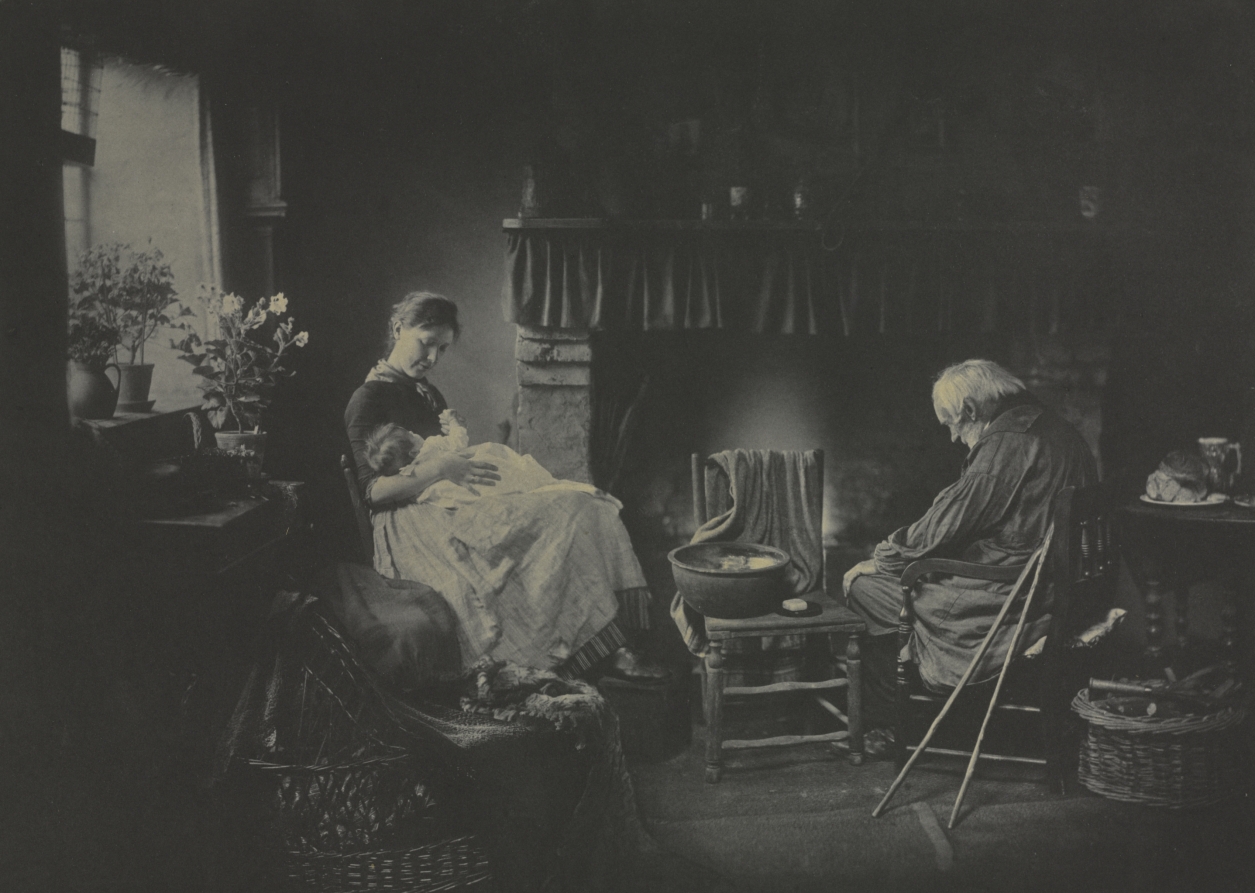
Dawn and Sunset, 1885, by Henry Peach Robinson
Henry Peach Robinson · The Cleveland Museum of Art · Purchase from the J. H. Wade Fund
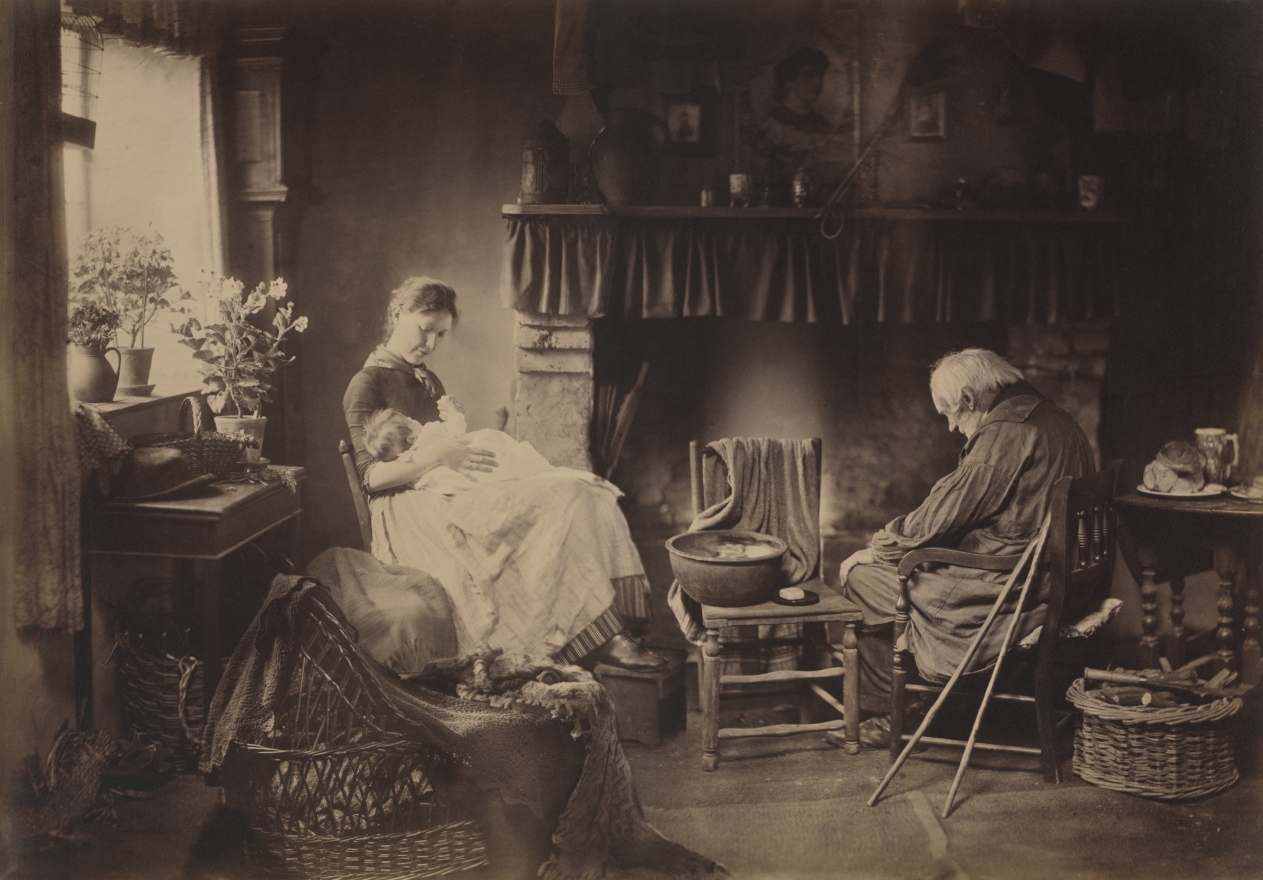
Dawn and Sunset, 1885, by Henry Peach Robinson
Henry Peach Robinson · The Cleveland Museum of Art · Purchase from the J. H. Wade Fund
Collections
Collections
Robinson's work is held in the permanent collections of several institutions, including: Johnson Museum of Art Clark Art Institute Seattle Art Museum Saint Louis Art Museum George Eastman Museum Worcester Art Museum SFMOMA University of Michigan Museum of Art LACMA Harvard Art Museums Princeton University Art Museum Metropolitan Museum of Art J. Paul Getty Museum National Gallery of Victoria
Documents and archives
Primary material
Documents and archives
scholarly publication
- ‘Radically Vicious’: Henry Peach Robinson, Alfred Henry Wall and the Critical Reception of Composition Photography, 1859–63, Photography and the Arts, 2020
Scholarly · Crossref registry · 2020
- Henry Peach Robinson and Victorian theory, History of Photography, 1979
Scholarly · Crossref registry · 1979
reference work
- “Henry Peach Robinson”, English Wikipedia, consulted as further reading
Reputable secondary · Wikipedia
authority record
- Wikidata, structured authority record Q574144: Henry Peach Robinson
Unverified · Wikidata
Notes from the source article
Cited by Wikipedia
Notes from the source article
These works are cited by the source article, in its own numbering. They are recorded as its citations, not as sources VALÉORINE has verified.
- 1.Oxford University Press. Darwin's camera : art and photography in the theory of evolution. 166. 22 October 2009. 978-0-19-515031-5.
- 2.Robinson, H. P. (1860). On Printing Photographic Pictures from Several Negatives. British Journal of Photography, 7(115), 94.
- 3.Vertrees, A. (1982). The picture making of Henry Peach Robinson'. Perspectives on Photography, Austin, Texas, Humanities Research Center, University of Texas, 79, 101.
- 4.Robinson, H. P. (1860). Composition NOT Patchwork. British Journal of Photography, 7(121), 190.
- 5.Harker, M. (1989). Henry Peach Robinson:“The Grammar of Art.”. British Photography in the Nineteenth Century.
- 6.B. Blackwell. Henry Peach Robinson : master of photographic art, 1830-1901. 1988. 978-0-631-16172-1.
- 7.The journal 'The Photogram', in a brief biography of HP Robinson, wrote: :Mr Robinson ... early took to artistic and literary pursuits. While quite a boy, he contributed both matter and sketches to 'The London Illustrated News' and 'The Journal of the Archaeological Society'; and before he came of age, exhibited a painting at the Exhibition of the Royal Academy [The Photogram, March 1895, p.81]
- 8.Ralph Winwood Robinson - National Portrait Gallery.
- 9.The National Portrait Gallery, London holds several examples of commercial portraits he made there
- 10.British Journal of Photography July 14th 1999 pages 437 pp, Presidential address by William Crooke to the Photographic Convention of the United Kingdom, July 10, 1899.
- 11.British Journal of Photography July 17th 1896 pages 454 pp, Presidential address by H.P. Robinson to the Photographic Convention of the United Kingdom, July 13th 1896
- 12.In 1895, the journal 'The Photogram', in a brief biography of HP Robinson, wrote: :"Mr Robinson stands, as he has done for years, as probably the best known man in photography, and the one whose words and example have done more than those of any other man to create and encourage photographic workers." [The Photogram, March 1895, p.81]
- 13.Mogensen, J. U. (2006). Fading into Innocence: Death, Sexuality and Moral Restoration in Henry Peach Robinson's Fading Away. Victorian Review, 1-17. Chicago
- 14.“Fading Away presents an image of mortality that can be viewed alternately as an incriminating paradigm of Victorian bathos and the nineteenth-century cult of the beautiful death, or as an eerie visualizing of Roland Barthes’s solemn pronouncement that death is the eidos of photography." Brian Lukacher, "Powers of Sight: Robinson, Emerson and the Polemics of Pictorial Photography, ” in Pictorial Effect, Naturalistic Vision: The Photographs and Theories of Henry Peach Robinson and Peter Henry Emerson, ed. Ellen Handy (Norfolk, Va.: Chrysler Museum, 1994), 32.
- 15.Green, John (2025). Everything Is Tuberculosis. New York: Penguin Random House. p. 68. .
- 16.Bartram, Michael (1985). The pre-Raphaelite camera : aspects of Victorian photography. Weidenfeld & Nicolson, London
- 17.John Taylor (1979) Henry Peach Robinson and Victorian theory, History of Photography, 3:4, 295–303,
- 18.The Art journal (1 February 1863) p. 38
- 19.Fading Away was made from five separate negatives and required three years' practice before the principal subject was sufficiently able to convey the appearance of slipping into oblivion (see Brit. journ. Photo. (1860) p. 95 and Robinson's Pictorial Eflect in Photography (1869))
- 20.Helping Her Over (from Figures in Landscape series, N.Wales). emuseum.cornell.edu.
- 21.After the Lunch. www.clarkart.edu.
- 22.A Merry Tale. Seattle Art Museum.
- 23.Little Red Riding Hood. Saint Louis Art Museum.
- 24.Going a Milking. collections.eastman.org.
- 25.Rusthall Common, Tunbridge. worcester.emuseum.com.
- 26.Dawn and Sunset. SFMOMA.
- 27.Exchange: The Shortest Way in Summertime. exchange.umma.umich.edu.
- 28.When Day's Work Is Done LACMA Collections. collections.lacma.org.
- 29.Harvard. From the Harvard Art Museums' collections A Moving Tale. harvardartmuseums.org.
- 30.Feeding the Calves (x1983-1547). artmuseum.princeton.edu.
- 31.Henry Peach Robinson | Fear. www.metmuseum.org.
- 32.When the Day's Work Is Done (Getty Museum). The J. Paul Getty in Los Angeles.
- 33.Works NGV View Work. www.ngv.vic.gov.au.
References
Citations
References
Each reference names the institution holding it, so a reader may go to the document itself.
scholarly publication
Verifiedscholarly publication
Verifiedreference work
Partially resolvedauthority record
Unverified
The Encyclopedia exists whether or not anything is for sale. Corrections are recorded rather than overwritten, and every version of this record is kept. Published 14 August 2026.
Elsewhere in Photography
11,392 published records in this field, each with its sources named.
- Henry K. LandisPhotographer
- Henry MaullPhotographer
- Henry MobsbyPhotographer
- Henry Neville HutchinsonPhotographer
- Henry Piet Drury van AschPhotographer
- Henry Snowden WardPhotographer
- Henry SwiftPhotographer
- Henry T. AnthonyPhotographer
Best supported in this field
For owners
Own a work by Henry Peach Robinson?
A specialist will read what you send and tell you what the house can establish, what it cannot, and whether the object is suited to sale. There is no charge and no obligation. The object stays with you throughout; nothing is shipped to us unless it is arranged in writing beforehand.