
Henry Ossawa Tanner
Henry Ossawa Tanner (June 21, 1859 – May 25, 1937) was an American artist who spent much of his career in France. He became the first African-American painter to gain international acclaim. Tanner moved to Paris, France, in 1891 to study at the Académie Julian and gained acclaim in French artistic circles.
Also recorded as Henri Tanner · Henri Ossawa Tanner · H. O. Tanner · Henry O. Tanner
Henry Ossawa Tanner
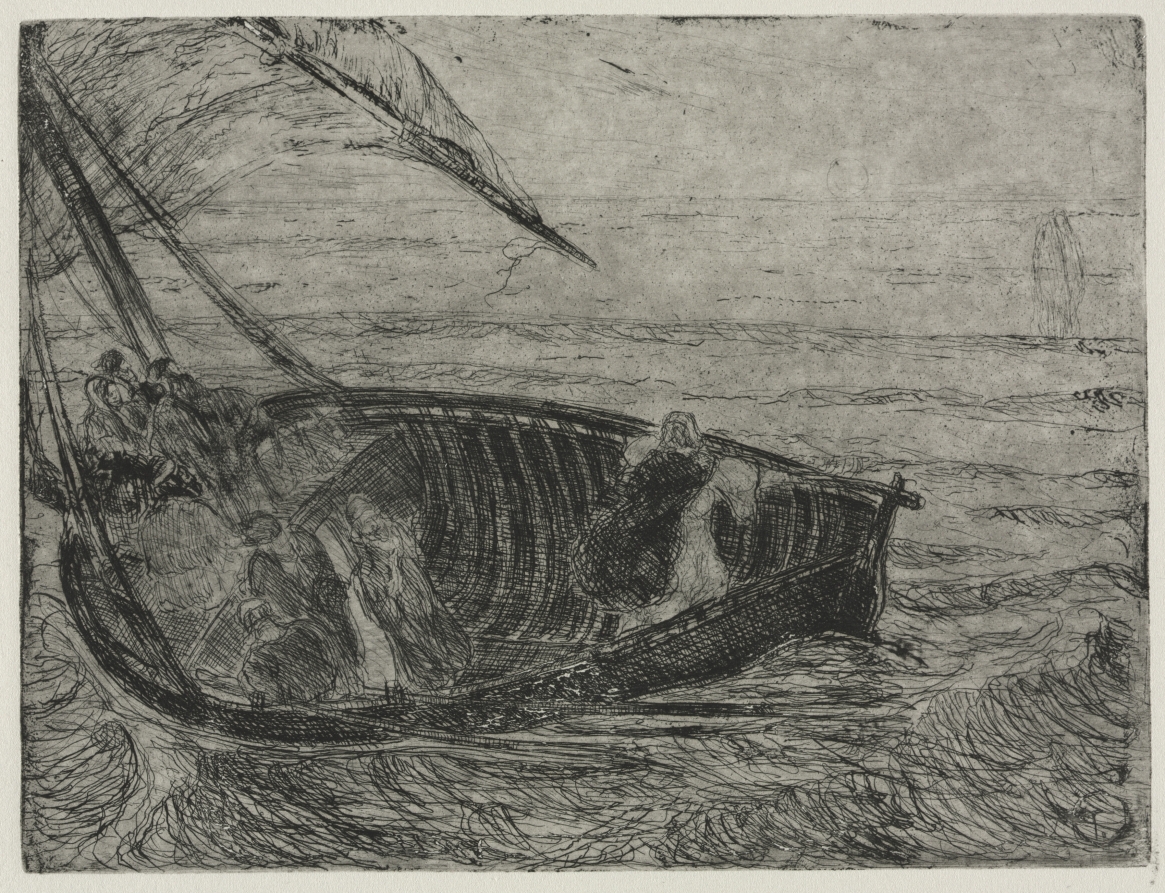
Henry Ossawa Tanner · The Cleveland Museum of Art · Gift of Mr. and Mrs. Samuel L. Rosenfeld, New York City · CC0
- Born
- 1859.
- Died
- sources differ (1937 and 1937).
- Nationality
- United States.
- Occupation
- painter, university teacher, printmaker, photographer, illustrator, graphic artist and pastellist.
- Fields
- genre painting, figure painting, religious painting and landscape painting.
- Movements
- realism.
- Known for
- Moroccan Scene, The Thankful Poor, The Banjo Lesson and The Young Sabot Maker.
VALÉORINE Encyclopedia
VALÉORINE documentary reading
Documentary summary
Henry Ossawa Tanner (June 21, 1859 – May 25, 1937) was an American artist who spent much of his career in France. He became the first African-American painter to gain international acclaim. Tanner moved to Paris, France, in 1891 to study at the Académie Julian and gained acclaim in French artistic circles.
Admitted source layer · organised and presented by VALÉORINE
Note VALÉORINE
Henry Ossawa Tanner (1859–1937) was a graphic artist, illustrator and painter, among other activities, of American nationality. The graphic artist was born in Pittsburgh and died in 6th arrondissement of Paris.
Henry Ossawa Tanner was educated at Académie Julian and Pennsylvania Academy of the Fine Arts. The graphic artist worked for Clark University and worked in Paris, Philadelphia and Pont-Aven. Activity centred on painting. The graphic artist was associated with realism.
Among the works are Moroccan Scene, The Banjo Lesson, The Thankful Poor and The Young Sabot Maker. The work spans figure painting, genre painting and landscape painting, among others. Languages used include English. Honours include Knight of the Legion of Honour.
Composed from admitted, traceable facts · 30 September 2026
VALÉORINE
Reference Check
Propose documentary evidence for Henry Ossawa Tanner. A contribution is never written directly as fact: identity, source, rights and evidence gates still decide.
Sign in to contribute
Documentary evidence
Documentary basis
Authority files
wikidata · Q1374436 · wikipedia · Henry Ossawa Tanner
In this article
Early life
Early life
In 1923, the French government elected Tanner chevalier of the Legion of Honor.
Henry Ossawa Tanner was born in Pittsburgh, Pennsylvania. His father Benjamin Tucker Tanner (1835–1923) became a bishop in the African Methodist Episcopal Church (AME), the first independent black denomination in the United States. He was educated at Avery College and Western Theological Seminary in Pittsburgh, and developed a literary career. In addition, he was a political activist, supporting abolition of slavery. Henry Tanner's mother Sarah Elizabeth Tanner may have been born into slavery in Virginia. Two different stories have emerged concerning her living in freedom; in one, her father drives the family from Winchester, Virginia to "the free state of Pennsylvania" in an ox cart. In the other, she escapes as a refugee to the North via the Underground Railroad. There she met and married Benjamin Tucker Tanner. Tanner was the first of nine children; and two of his brothers, Benjamin and Horace, died in infancy. One of his sisters, Halle Tanner Dillon Johnson, was the first woman to be certified to practice medicine in Alabama. His parents gave him a middle name that commemorated the struggle at Osawatomie between pro- and anti-slavery partisans. The family moved from Pittsburgh to Philadelphia when Tanner was a teenager. There his father became a friend of Frederick Douglass, sometimes supporting him, sometimes criticizing. Robert Douglass, Jr., a successful black artist in Philadelphia, was an early neighbor of the Tanner family, and Tanner wrote that he "used to pass and always stopped to look at his pictures in the window." When Tanner was about 13 years old, he saw a landscape painter working in Fairmount Park, where he was walking with his father. He decided that he wanted to be a painter.
Education
Education
Although many white artists refused to accept an African-American apprentice, in 1879 Tanner enrolled at the Pennsylvania Academy of the Fine Arts in Philadelphia, becoming the only black student. His decision to attend the school came at a time when art academies increasingly focused on study from live models rather than plaster casts. Thomas Eakins, a professor at the Pennsylvania Academy, was one of the first American artists to promote new approaches to artistic education including increased study from live models, discussion of anatomy in classes of both male and female students, and dissections of cadavers to teach anatomy. Eakins's progressive approach to art education had a profound effect on Tanner. The young artist was one of Eakins' favorite students; two decades after Tanner left the Academy, Eakins painted his portrait. At the Academy, Tanner befriended artists with whom he kept in contact throughout the rest of his life, most notably Robert Henri, one of the founders of the Ashcan School. During a relatively short time at the Academy, Tanner developed a thorough knowledge of anatomy and the skill to express his understanding of the weight and structure of the human figure on the canvas. Tanner's artistic studies were disrupted by illness, which was reported in November 1881 and said to have persisted into the following summer, when Tanner spent time recovering in the Adirondack Mountains. Tanner's teachers included Thomas Eakins (American realism, photography), Thomas Hovenden (American realism), Benjamin Constant (orientalist paintings and portraits, French academic) and Jean-Paul Laurens (history painting, French academic).
Painting style
Painting style
Tanner painted landscapes, religious subjects, and scenes of daily life in a realistic style that echoed that of Eakins. While works like The Banjo Lesson depicted everyday scenes of African American life, Tanner later painted religious subjects. It is likely that Tanner's father, a minister in the African Methodist Episcopal Church, was a formative influence for him. Tanner was not limited to one specific approach to painting and drawing. His works reflect at times meticulous attention to detail and loose, expressive brushstrokes in others. Often both methods are employed simultaneously. Tanner was also interested in the effects that color could have in a painting. Warmer compositions such as The Resurrection of Lazarus (1896) and The Annunciation (1898) express the intensity and fire of religious moments, and the elation of transcendence between the divine and humanity. Other paintings emphasize cool hues, which became dominant in his work after the mid-1890s. A palette of indigo and turquoise—referred to as the "Tanner blues"—characterizes works such as The Three Marys (1910), Gateway (1912) and The Arch (1919). Works such as The Good Shepherd (1903) and Return of the Holy Women (1904) evoke a feeling of somber religiosity and introspection. Tanner often experimented with light in his works, which at times adds symbolic meaning. In The Annunciation (1898), for example, the archangel Gabriel is represented as a column of light that forms, together with the shelf in the upper left corner, a cross.
Issues of racism
Issues of racism
Although Tanner gained confidence as an artist and began to sell his work, he faced racism working as a professional artist in Philadelphia. In his autobiography, The Story of an Artist's Life, Tanner described the burden of racism: I was extremely timid and to be made to feel that I was not wanted, although in a place where I had every right to be, even months afterwards caused me sometimes weeks of pain. Every time any one of these disagreeable incidents came into my mind, my heart sank, and I was anew tortured by the thought of what I had endured, almost as much as the incident itself. In the hope of earning enough money to travel to Europe, Tanner operated a photography studio in Atlanta during the late 1880s. The venture was unsuccessful. During this period Tanner met Bishop Joseph Crane Hartzell, a trustee of Clark College (now Clark Atlanta University). Hartzell and his wife befriended Tanner, became his patrons, and recommended him for a teaching job at the college. Tanner taught drawing at Clark College for a short period.
1891
1891
Tanner set out for Rome by way of Liverpool and Paris on the ship City of Chester on 4 January 1891. He found Paris to his liking and discovered the Académie Julian, where he began his studies in France. He also joined the American Art Students Club. Paris was a welcome escape for Tanner; within French art circles, race mattered little. Tanner discovered the Paris Salon and set a goal to get his artwork accepted.
The Banjo Lesson
The Banjo Lesson
On a return visit to the United States in 1893, Tanner presented "The American Negro in Art", an essay, at the World's Congress on Africa in Chicago, and painted The Banjo Lesson, one of his most recognized works that began as a series of sketches of Black people living in Appalachia. The painting shows an elderly black man teaching a boy, assumed to be his grandson, how to play the banjo. The image of a black man playing the banjo appears throughout American art of the late 19th century.
Life in Paris
Life in Paris
Except for occasional brief returns home, Tanner spent the rest of his life in Paris. He acclimated quickly to Parisian life, and became friends with Atherton Curtis. He was part of a community of artists in Mount Kisco, New York for six months in 1902, at the behest of Curtis, and returned the following winter. In Paris, Tanner continued his studies under renowned artists such as Jean Joseph Benjamin Constant and Jean-Paul Laurens. With their guidance, he began to establish a reputation in France. He settled at the Étaples art colony in Normandy. There he was introduced to many artists whose works would affect his approach to art. At the Louvre, he encountered and studied the works of Gustave Courbet, Jean-Baptiste Chardin and Louis Le Nain. These artists had painted scenes of ordinary people in their environment, and the influence in Tanner's work is noticeable. That of Courbet's The Stone Breakers (1850; destroyed) can be seen in the similarities in Tanner's The Young Sabot Maker (1895). Both paintings explore the themes of apprenticeship and manual labor. Earlier, Tanner had painted marine scenes of man's struggle with the sea, but by 1895 he was creating mostly religious works. His shift to painting biblical scenes occurred as he was undergoing a spiritual struggle. In a letter he wrote to his parents on Christmas 1896, he stated, "I have made up my mind to serve Him [God] more faithfully." A transitional work from this period is the recently rediscovered painting of a fishing boat tossed on the waves, which is held by the Smithsonian American Art Museum. Tanner's painting Daniel in the Lions' Den was accepted into the 1896 Salon. Later that year he painted The Resurrection of Lazarus (1896, Musée d'Orsay, Paris) that was purchased by the French government after winning the third-place medal at the 1897 Salon. Upon seeing The Resurrection of Lazarus, Rodman Wanamaker, an art critic and a "major patron of contemporary religious art," offered to pay all the expenses for Tanner to visit the Middle East. Wanamaker felt that any serious painter of biblical scenes needed to see the environment firsthand and that a painter of Tanner's caliber was well worth the investment. Tanner accepted Wanamaker's offer. For four months in 1897 and, again, for six months in 1898-1899, he trekked a popular tourist route through Palestine and North Africa, pitching his tent in the arid region. Tanner did not exhibit at the Salon in 1907, due to eye strain, but in 1908 entered The Wise and Foolish Virgins which he worked on in 1906, 1907 and finished in 1908. Newspapers don't record a Salon entry for 1909; but he focused his 1908 energy on a one-man exhibition of his artwork in New York, and the 1909 papers continued to talk about that event. Tanner may have avoided displaying at the Salon 1910, 1911, 1912, and 1913. In 1914, Tanner's mother died, World War I started, and he returned to the Paris Salon after "several years of absence," bringing his 1912 painting Christ in the House of Lazarus and Mary. He had remarked in 1910 "that he would not exhibit in the salon again as they had stuck his picture into a corner which everyone knows is almost an insult." French artists were upset over a U.S. tariff on their paintings, and said to be taking revenge in the Salon.
Later years
Later years
During World War I, Tanner worked for the Red Cross Public Information Department, during which time he also painted images from the front lines of the war. His works featuring African-American troops were rare during the war. In 1923 the French state made him a knight of the Legion of Honour for his work as an artist. Tanner met with fellow African-American artist Palmer Hayden in Paris circa 1927. They discussed artistic technique and he gave Hayden advice on interacting with French society. He was also an inspiration to other artists studying in France, including Hale Woodruff, Romare Bearden, and other artists associated with Black Abstractionism. Several of Tanner's paintings were purchased by Atlanta art collector J. J. Haverty, who founded Haverty Furniture Co. and was instrumental in establishing the High Museum of Art. Tanner's Étaples Fisher Folk is among several paintings from the Haverty collection now in the High Museum's permanent collection. Tanner died peacefully at his home in Paris, France, on May 25, 1937. He is buried at Sceaux Cemetery in Sceaux, Hauts-de-Seine, a suburb of Paris.
Marriage and family
Marriage and family
In 1899 he married Jessie Olsson, a Swedish-American opera singer. A contemporary, Virginia Walker Course, described their relationship as one of equal talents, but racist attitudes insisted the relationship was unequal: Fan, did you ever hear of a miss [sic] Olsson of Portland? She has a beautiful voice I believe and came to Paris to cultivate it and she has married a darkey artist... He is an awefully [sic] talented man but he is black.... She seems like a well educated girl and really very nice but it makes me sick to see a cultivated woman marry a man like that. I don't know his work but he is very talented they say. Jessie Tanner died in 1925, twelve years before her husband, and he grieved her deeply through the 1920s. He sold the family home in Les Charmes where they had been so happy together. They are buried next to each other in Sceaux, Hauts-de-Seine. They had a son, Jesse, who survived Tanner at his death.
Friends and colleagues
Friends and colleagues
Tanner's friends and colleagues included Hermon MacNeil (sculptor), Hermann Dudley Murphy (landscapes), Paul Gauguin (synthetism), Myron G. Barlow (genre painting), Charles Hovey Pepper (Japanese style woodblocks). Charles Filiger (symbolist), Armand Séguin (Post-Impressionism), Jan Verkade (Post-Impressionism, Christian symbolist), Paul Sérusier (abstract art), and Gustave Loiseau (Post-Impressionism).
Exhibitions
Exhibitions
1972: The Art of Henry Ossawa Tanner. Glen Falls, New York: The Hyde Collection. 1972: 19th Century American Landscape. New York: Metropolitan Museum of Art. 1976: Two Centuries of Black American Art. Los Angeles County Museum of Art. 1989: Black Art Ancestral Legacy: The African Impulse in African-American Art. Dallas Museum of Art. 1993: Revisiting the White City: American Art at the 1893 World's Fair 2010: Henry Ossawa Tanner and His Contemporaries, Des Moines Art Center (December–February 2011). 2012: Henry Ossawa Tanner: Modern Spirit, Pennsylvania Academy of the Fine Arts, Philadelphia (January–April), then to Cincinnati Art Museum (May–September) and to Houston Museum of Fine Arts (October–January 2013)
Selected works
Selected works
Seascape-Jetty (c. 1876–78) Pomp at the Zoo (1880). Private Collection Joachim Leaving the Temple (c. 1882–1888). Baltimore Museum of Art Boy and Sheep Lying under a Tree (1881). Private Collection (On display at the Philadelphia Museum of Art) Sand Dunes at Sunset, Atlantic City (1886). Estate of Sadie T. M. Alexander (On permanent display at the White House) The Bagpipe Lesson (1893). Hampton University Museum, Virginia The Banjo Lesson (1893). Hampton University Museum, Virginia The Thankful Poor (1894). Art Bridges The Young Sabot Maker (1895). The Nelson-Atkins Museum of Art, Kansas City, Missouri Daniel in the Lions' Den (1895). Los Angeles County Museum of Art The Resurrection of Lazarus (1896). Musée d'Orsay, Paris Bishop Benjamin Tucker Tanner (1897). Baltimore Museum of Art Lions in the Desert (c. 1897–1900). Smithsonian American Art Museum The Annunciation (1898). Philadelphia Museum of Art, W.P. Wilstach Collection Moonlight Landscape (1898–1900). Muscarelle Museum of Art, Williamsburg, VA. The Good Shepherd (1903). Jane Voorhees Zimmerli Art Museum, Rutgers University Return of the Holy Women (1904). Cedar Rapids Art Gallery, Iowa Two Disciples at the Tomb (1905–06). Art Institute of Chicago The Visitation (1909–10). Kalamazoo Institute of Arts The Holy Family (1909–10). Muskegon Museum of Art, Michigan, Hackley Picture Fund Moroccan Scene (about 1912). Birmingham Museum of Art, Alabama Palace of Justice, Tangier (1912–13). Smithsonian American Art Museum Scene in Cairo. Mabee-Gerrer Museum of Art, Shawnee, Oklahoma
Life and career
Dated record
Life and career
The full dated record · 2 entries
1859
Henry Ossawa Tanner born at Pittsburgh.
1937
Henry Ossawa Tanner died at 6th arrondissement of Paris.
Legacy
Tanner's work was influential during his career; he has been called "the greatest African American painter to date." The early paintings of William Edouard Scott, who studied with Tanner in France, show the influence of Tanner's technique. In addition, some of Norman Rockwell's illustrations deal with the same themes and compositions that Tanner pursued. Rockwell's proposed cover of the Literary Digest in 1922, for example, shows an older black man playing the banjo for his grandson. The light sources are nearly identical to those in Tanner's Banjo Lesson. A fireplace illuminates the right side of the picture, while natural light enters from the left. Both use similar objects as well such as the clothing, chair, crumpled hat on the floor. Some other major artists Tanner mentored include William A. Harper and Hale Woodruff. Tanner's Sand Dunes at Sunset, Atlantic City (c. 1885; oil on canvas) hangs in the Green Room at the White House; it is the first painting by an African-American artist to have been purchased for the permanent collection of the White House. The painting is a landscape with a "view across the cool gray of a shadowed beach to dunes made pink by the late afternoon sunlight. A low haze over the water partially hides the sun." It was bought for $100,000 by the White House Endowment Fund during the Bill Clinton administration from Dr. Rae Alexander-Minter, grandniece of the artist. His correspondence with Curtis between 1904 and 1937 is held at the Smithsonian Institution. Tanner's work was included in the 2015 exhibition We Speak: Black Artists in Philadelphia, 1920s-1970s at the Woodmere Art Museum.
Awards
1895, Atlanta, Cotton States and International Exposition: bronze medal for The Bagpipe Lesson. 1896, Salon: honorable mention for Daniel in the Lions' Den 1897, Salon: third class medal for Raising of Lazarus 1899, Philadelphia Academy of Fine Art: Walter Lippincott prize for Christ and Nicodemus on a Rooftop 1900, Paris Exposition: silver medal for Daniel in the Lions' Den 1901, Buffalo Exposition: silver medal for Daniel in the Lions' Den 1904, St. Louis Exposition: silver medal for Daniel in the Lions' Den 1906, Salon: second class medal for The Disciples at Emmaus 1906, Art Institute of Chicago, Norman Wait Harris silver medal for The Two Disciples at the Tomb 1915, Panama–Pacific International Exposition, San Francisco: gold medal for Christ at the Home of Lazarus (This link is to the study, not the final painting). 1922, France: Knighthood of the Legion of Honor for his efforts in World War I, part of the Red Cross 1927, New York, National Arts Club: bronze medal for Flight into Egypt (At the Gates) 1930, New York City, Grand Central Art Gallery: Walter L. Clark prize for Etaples Fisher Folk
Notes from the source article
Cited by Wikipedia
Notes from the source article
These works are cited by the source article, in its own numbering. They are recorded as its citations, not as sources VALÉORINE has verified.
- 1.Henry Ossawa Tanner.
- 2.www.nga.gov via www.ngabiographies.org. Artist Info.
- 3.Mosby, Dewey F. Henry Ossawa Tanner. Philadelphia Museum of Art; Rizzoli International Publications. 50. 1991. 978-0-8478-1346-9.
- 4.The Civil War in America: Benjamin Tucker Tanner, Library of Congress Exhibitions
- 5.Oxford University Press. Homespun Heroines and other women of distinction. 32–33. 1988.
- 6.Smithsonian American Art Museum. Mother of Henry O. Tanner.
- 7.Woods, Naurice Frank. Henry Ossawa Tanner Art, Faith, Race, and Legacy. Taylor and Francis. 2018. 978-1-138-24194-7.
- 8.Wright, A. J. Halle Tanner Dillon. Encyclopedia of Alabama. May 18, 2017.
- 9.Kelly Jeanette Baker. Race, Religion, and Visual Mysticism. Florida State University. 2003.
- 10.Angelica Villa. Preservationists Move to Save Painter Henry Ossawa Tanner's Childhood Home in Philadelphia. ARTnews. November 29, 2022.
- 11.Oxford University Press. Encyclopedia of African American History 1619–1895. 3. 224. 2006.
- 12.Tanner, Henry Ossawa. Henry Ossawa Tanner: Modern Spirit. Univ of California Press. 19. 2012. 978-0-520-27074-9.
- 13.Parry, Ellwood C. III. Three Nineteenth Century Afro-American Artists. Cedar Rapids, IA: Cedar Rapids Art Center, 1980.
- 14.Matthews, Marcia. Henry Ossawa Tanner: American Artist. Chicago: The University of Chicago Press, 1969.
- 15.Woods, Naurice Frank Jr. Henry Ossawa Tanner: Art, Faith, Race, and Legacy. Taylor & Francis. 29. July 6, 2017. 978-1-315-27948-0.
- 16.Mosby, Dewey F. Henry Ossawa Tanner. Philadelphia Museum of Art; Rizzoli International Publications. 20–21, 59, 90. 93. 1991. 978-0-8478-1346-9.
- 17.Schantz, Michael. Thomas Hovenden: American Painter of Hearth and Homeland. American Art Review. October–November 2005.
- 18.Henry Ossawa Tanner Online.
- 19.Realism – Realism Art.
- 20.Kettlewell, James K. The Art of Henry Ossawa Tanner. Glen Falls, NY: The Hyde Collection, 1975.
- 21.Farrington, Lisa. African-American Art A visual and Cultural History. Oxford University Press. 97–98. 2017. 978-0-19-999539-4.
- 22.Philadelphia Museum of Art. Teacher Resources: The Annunciation. The Annunciation, Henry Ossawa Tanner.
- 23.Henry Ossawa Tanner Smithsonian American Art Museum. americanart.si.edu.
- 24.Matthews, Marcia (1994). Henry Ossawa Tanner: American Artist. Chicago: The University of Chicago Press. p. 36. .
- 25.Springfield Museum of Art. Henry Ossawa Tanner.
- 26.Tanner, Henry Ossawa. Story of an artist's life I. The World's Work. 18. 3. 11666. July 1909.
- 27.Tanner, Henry Ossawa. Story of an artist's life II. Recognition. The World's Work. 18. 3. 11770. July 1909.
- 28.Artist Info. www.nga.gov via www.ngabiographies.org.
- 29.Khalid, Farisa. "Henry Ossawa Tanner, The Banjo Lesson . SmartHistory. The Center for Public Art History. https://smarthistory.org/tanner-banjo/
- 30.Woods, Naurice Frank Jr., Ph.D. Insuperable Obstacles: The Impact of the Creative and Personal Development of Four Nineteenth Century African American Artists. The Union Institute, 1993.
- 31.Woods, Naurice Frank Jr. Henry Ossawa Tanner: Art, Faith, Race, and Legacy. Taylor & Francis. 2018. 978-1-315-27948-0.
- 32.Zenith Books. Six Black Masters of American Art. 55. 1972. 978-0-385-01211-9.
- 33.Atherton Curtis letter to Jessie Tanner after the death of H. O. Tanner in 1937.
- 34.Bruce, Marcus C. Henry Ossawa Tanner. New York: Crossroad Publishing, 2002.
- 35.Shaw, Thomas M. What Manner of Men? A Reconsideration across the Synapses of Art History of Three Paintings and their Images of Men of African Descent. Lanham, MD: University Press of America, 1997.
- 36.Woods, Naurice Frank. "Embarking on a New Covenant: Henry Ossawa Tanner's Spiritual Crisis of 1896." American Art, vol. 27, no. 1, 2013, pp. 94–103. JSTOR, www.jstor.org/stable/10.1086/670686.
- 37.Details on the museum site
- 38.Negroartist.com. Negro Artist site.
- 39.Negroartist.com. Negro Artist site. November 2025.
- 40.Richmond-Moll, Jeffrey. Souvenir from the Holy Land: On Henry Ossawa Tanner’s Abraham’s Oak. Smithsonian American Art Museum. https://americanart.si.edu/blog/art-bites-tanners-abrahams-oak
- 41.Tanner, Henry Ossawa. Mary, c. 1914, oil on canvas, × in (115.5 × 88.2 cm), Smithsonian American Art Museum, Gift of Mrs. Dorothy L. McGuire, 1991.102. https://americanart.si.edu/artwork/mary-32409
- 42.Mosby, Dewey F. Henry Ossawa Tanner. First trade edition. Philadelphia, PA: Philadelphia Museum of Art; New York, NY Rizzoli International Publications. 1991.
- 43.Artists Allege Discrimination out of Revenge. The Montreal Star. 3. 2 July 1910.
- 44.Henry Ossawa Tanner.
- 45.Oxford University Press. Encyclopedia of African American History (1896 to the present). 2. 393. 2009.
- 46.Marley, Anna O. "Introduction" in Modern Spirit Pennsylvania Academy of the Fine Arts. Philadelphia. 2012.
- 47.Course, Virginia Walker qtd. by Jean-Claude Lesage in "Tanner, the Pillar of Trepied". Modern Spirit. Pennsylvania Academy of the Fine Arts. Philadelphia. 2012, p. 88.
- 48.Marley (2012), p. 41.
- 49.Smithsonian Archives of American Art. Henry Ossawa Tanner papers, 1860s-1978, bulk 1890-1937 311: Photographs of Artwork, circa 1920s.
- 50.Smithsonian Archives of American Art. Henry Ossawa Tanner papers, 1860s-1978, bulk 1890-1937: Henry Tanner and family dining outdoors, 1907 or 1908.
- 51.Blogs.artinfo.com. A modest improvement at the National Gallery | Tyler Green: Modern Art Notes | ARTINFO.com. February 3, 2012.
- 52.Oxford University Press. Encyclopedia of African American History 1619–1895. 1. 101. 2006.
- 53."White House Announces Acquisition of Henry Ossawa Tanner Painting for Permanent White House Collection" . Life in the White House.
- 54.Henry Ossawa Tanner correspondence with Atherton Curtis and Ingeborg Curtis (1904–1937).
- 55.We Speak: Black Artists in Philadelphia, 1920s-1970s. Woodmere Art Museum.
- 56.Carlyn G. Crannell Romeyn. Henry O. Tanner: Atlanta Interlude. The Atlanta Historical Journal. 27. 4. 38. Winter 1983–1984.
- 57.Henry Ossawa Tanner — Artist. The Northwestern Bulletin-Appeal. 2. July 25, 1925.
- 58.Mosby, Dewey F. Henry Ossawa Tanner. Philadelphia Museum of Art; Rizzoli International Publications. 39. 1991. 978-0-8478-1346-9.
- 59.Henry Ossawa Tanner 1859/1937. Detroit Free Press. 284–285. July 14, 1991.
- 60.American Oil Paintings and Sculpture: 28th Annual Art Exhibition, Art Institute of Chicago November 16, 1915 to January 2, 1916.
- 61.Noted artist dies abroad. Pittsburgh Post-Gazette. 17. May 27, 1937.
- 62.Mosby, Dewey F. Henry Ossawa Tanner: catalogue. Philadelphia Museum of Art. 32. 1991. 0-87633-086-3.
- 63.Henry Ossawa Tanner and His Contemporaries.
- 64."Henry Ossawa Tanner: Modern Spirit", PAFA.
- 65.Upcoming Exhibitions.
- 66.The Thankful Poor. Art Bridges.
- 67.Muscarelle Museum of Art. Moonlight Landscape, (oil on canvas). Art in Bloom. September 2023.
- 68.Palace of Justice, Tangier, Morocco. World Digital Library. 1890–1900.
- 69.Henry Ossawa Tanner Lot 41: Henry Ossawa Tanner, (American, 1859-1937), Woman from the French West Indies, c. 1891.
- 70.Mathews, Marcia M. Henry Ossawa Tanner, American artist. University of Chicago Press. 69–74. 1969.
- 71.Henry Ossawa Tanner. The Story of an Artist's Life: II Recognition. The World's Work. Open Court Publishing Co. 18. 3. 11772. July 1909.
Bibliography printed in the source article · 5
- Anna O. Marley, ed. Henry Ossawa Tanner: Modern Spirit (University of California Press: 2012).
- Marcia M. Matthews, Henry Ossawa Tanner: American Artist (University of Chicago Press: 1995).
- Kristin Schwain, Signs of Grace: Religion and American Art in the Gilded Age (Cornell University Press: 2007).
- Will South, "A Missing Question Mark: The Unknown Henry Ossawa Tanner", Nineteenth-Century Art Worldwide, vol. 8. issue 2 (Autumn 2009).
- Judith Wilson, "Lifting 'The Veil': Henry O. Tanner's The Banjo Lesson and The Thankful Poor , Contributions in Black Studies: A Journal of African and Afro-American Studies, volume 9, article 4.
References
Citations
References
Each reference names the institution holding it, so a reader may go to the document itself.
reference work
Wikidata, structured authority record Q1374436: Henry Ossawa TannerWikimedia Foundation
Secondary witnessreference work
Secondary witness
The Encyclopedia exists whether or not anything is for sale. Corrections are recorded rather than overwritten, and every version of this record is kept. Published 14 August 2026.
Elsewhere in Prints
4,138 published records in this field, each with its sources named.
- Henry HulsberghEngraver
- Henry LerolleEngraver
- Henry MooreEngraver
- Henry MosesEngraver
- Henry TayaliEngraver
- Henry Thomas AlkenEngraver
- Henry ViandenEngraver
- Henry WinklesEngraver
Best supported in this field
For owners
Own a work by Henry Ossawa Tanner?
A specialist will read what you send and tell you what the house can establish, what it cannot, and whether the object is suited to sale. There is no charge and no obligation. The object stays with you throughout; nothing is shipped to us unless it is arranged in writing beforehand.