
Henry Farrer
Henry Farrer (March 23, 1844 – February 24, 1903) was an English-born American artist known for his tonalist watercolor landscapes and etchings. • Illustration — Funerary monument of Henry Farrer in Brompton Cemetery, London
Also recorded as Henri Farrer · Henry Farrar · H Farrer
Henry Farrer
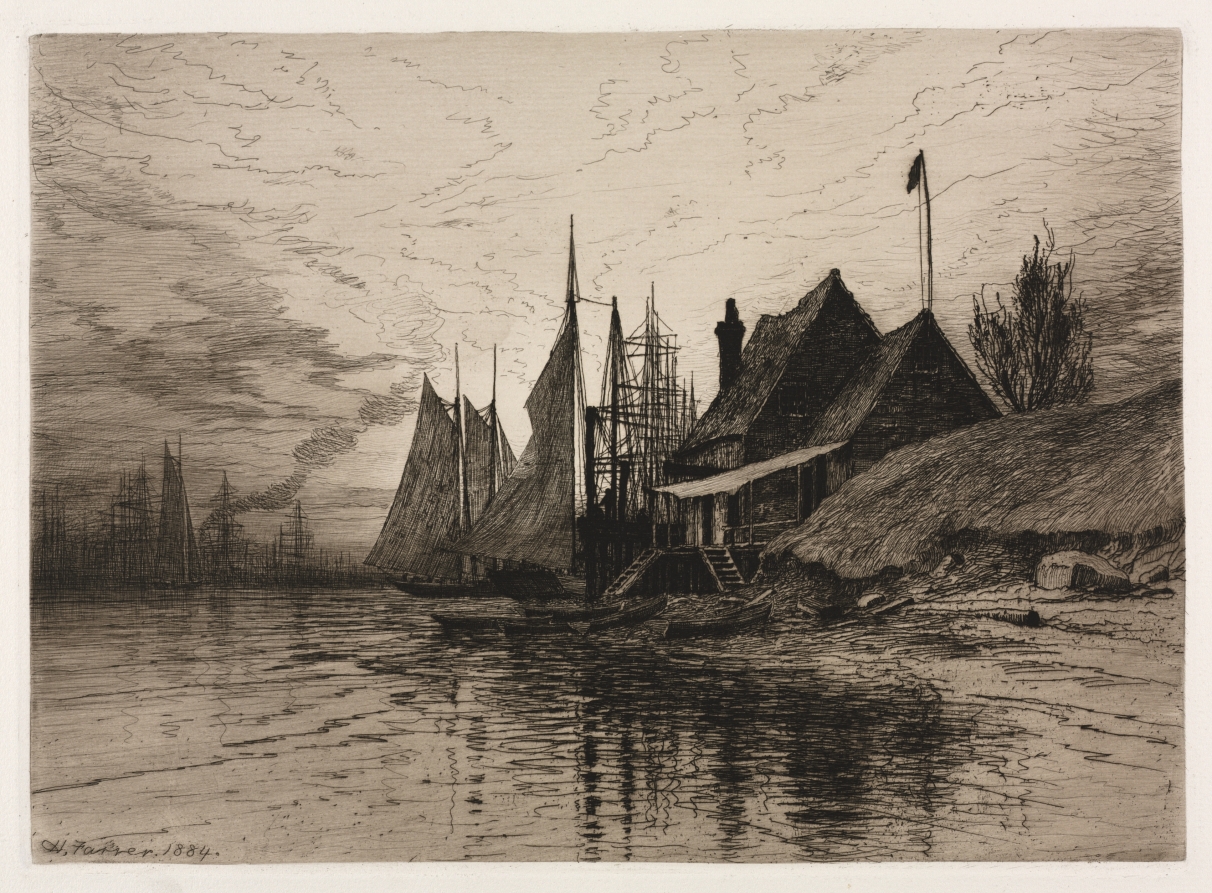
Henry Farrer · The Cleveland Museum of Art · Gift of George A. Goddard · CC0
- Name
- Henry Farrer
- Born
- 23 March 1844
- Birthplace
- London, England, UK
- Died
- 24 February 1903
- Known for
- Watercolor painting, etching
- Training
- Self-taught
- Movement
- Tonalism
- Nationality
- United Kingdom of Great Britain and Ireland
- Occupation
- painter · etcher · printmaker · artist
- Fields
- watercolor
VALÉORINE Encyclopedia
VALÉORINE documentary reading
Documentary summary
Henry Farrer (March 23, 1844 – February 24, 1903) was an English-born American artist known for his tonalist watercolor landscapes and etchings. • Illustration — Funerary monument of Henry Farrer in Brompton Cemetery, London
Admitted source layer · organised and presented by VALÉORINE
Note VALÉORINE
Henry Farrer (1843–1903) was a British artist, etcher and painter, among other activities. Born in London, the artist died in Brooklyn.
Henry Farrer worked in United States. The artist was active in watercolor. Works by Henry Farrer are held at Het Scheepvaartmuseum, Metropolitan Museum of Art and Minneapolis Institute of Art, among others.
Composed from admitted, traceable facts · 26 September 2026
VALÉORINE
Reference Check
Propose documentary evidence for Henry Farrer. A contribution is never written directly as fact: identity, source, rights and evidence gates still decide.
Sign in to contribute
World of VALÉORINE
Documentary connections
Only confirmed graph relationships appear here. Images are shown only when their identity and reuse rights both pass the documentary gate.

Documentary evidence
Documentary basis
Authority files
wikidata · Q5721138 · wikipedia · Henry Farrer
In this article
Biography
Biography
The field of work recorded is watercolor. Places of work recorded in the authority are United States. Work by Henry Farrer is recorded in the collections of Minneapolis Institute of Art, Metropolitan Museum of Art, Museum of Fine Arts, Houston, Vanderbilt Museum of Art and Smithsonian American Art Museum.
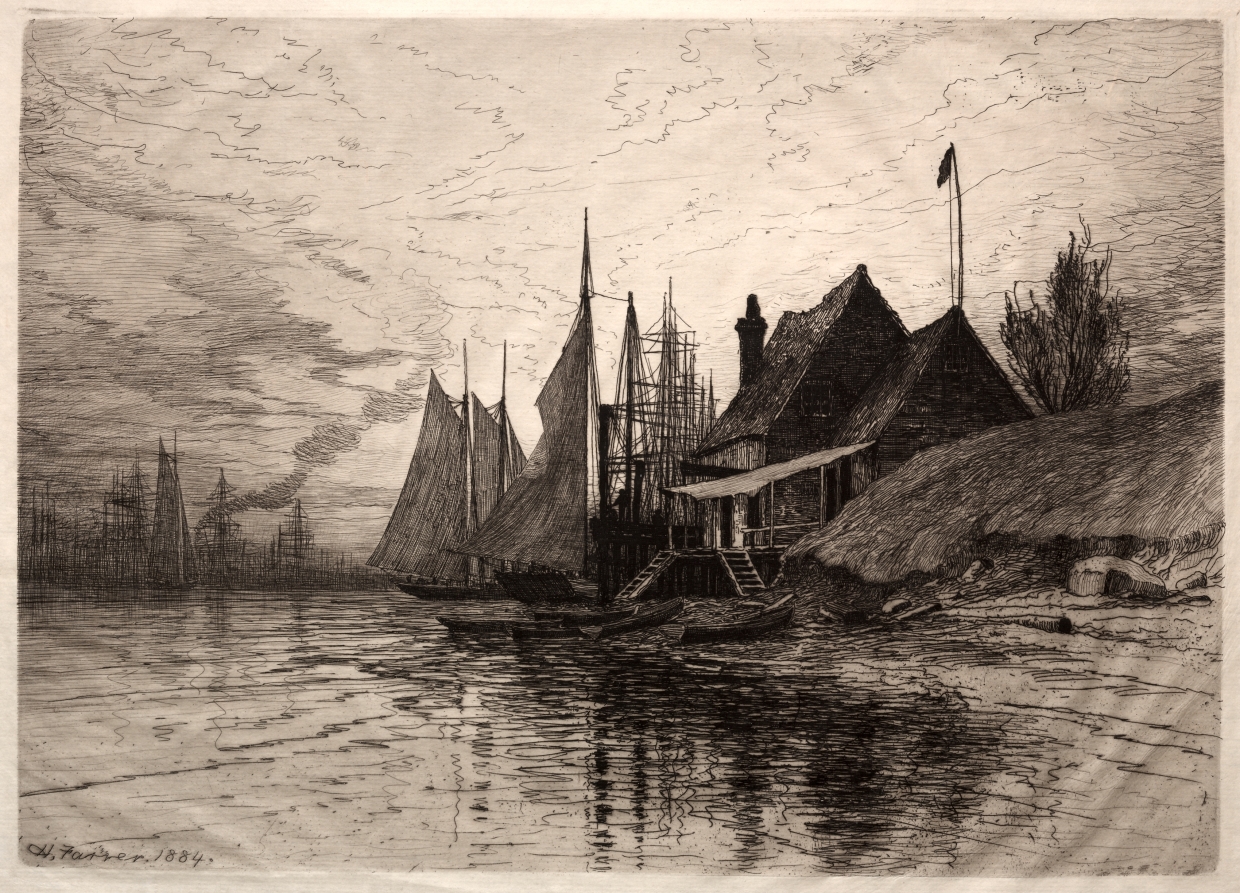
Evening, New York Harbor, 1884, by Henry Farrer
Henry Farrer · The Cleveland Museum of Art · Gift of Mitzie Verne in memory of Dr. Daniel Verne
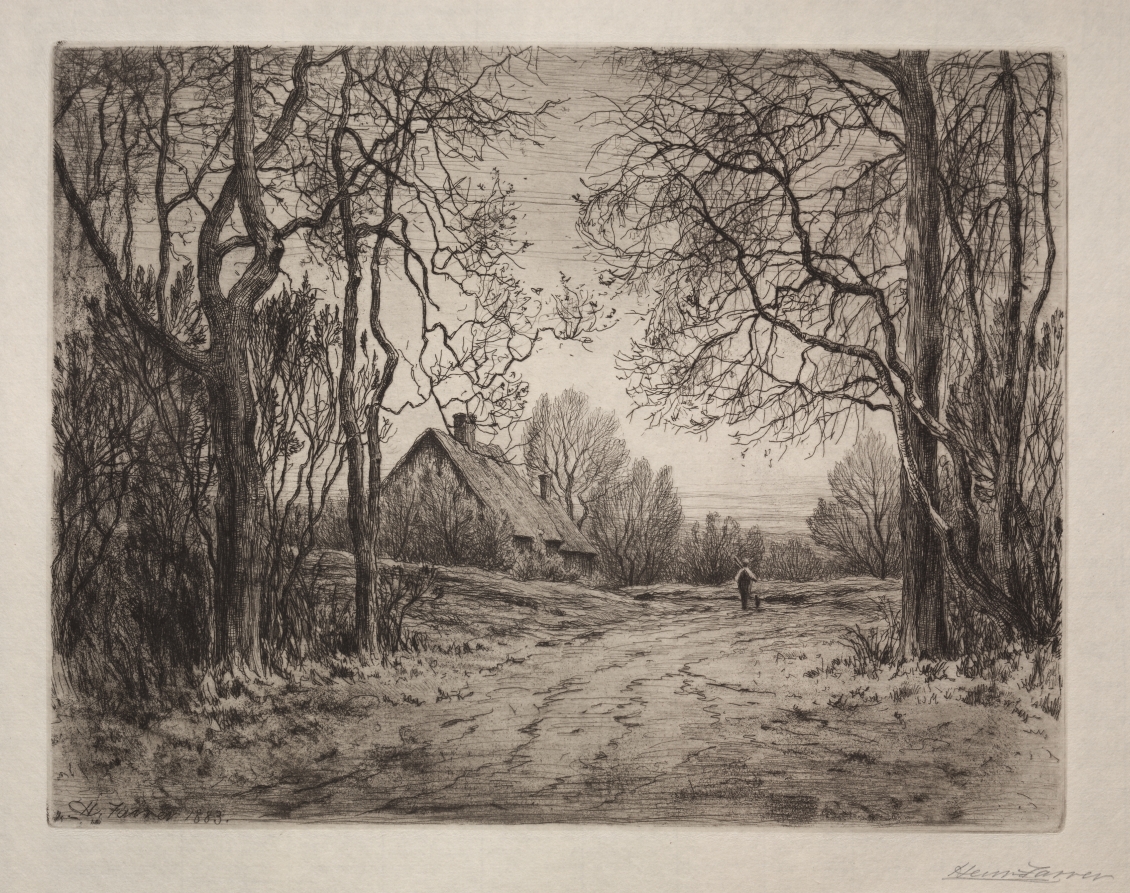
Winter Evening, 1883, by Henry Farrer
Henry Farrer · The Cleveland Museum of Art · Gift of George A. Goddard
Key facts
Key facts
• Name — Henry Farrer • Birth Name — Henry Farrer • Born — 23 March 1844 • Birthplace — London, England, UK • Died — 24 February 1903 • Known for — Watercolor painting, etching • Training — Self-taught • Movement — Tonalism
Life
Life
Farrer was born in London, the younger brother of artist Thomas Charles Farrer. Thomas had studied in Britain under John Ruskin and Dante Gabriel Rossetti, members of the Pre-Raphaelite Brotherhood. Henry was self-taught, and may have aligned his style with that of his older brother. Farrer immigrated to America in 1863 and opened a studio in New York. As a newcomer to the American art world, he became a member of the Society for the Advancement of Truth in Art, a short-lived organization co-founded by his brother and centered on the Pre-Raphaelite tradition of truthful and highly realistic artistic depictions. In his first years as a professional artist in the 1860s, Farrer painted Pre-Raphaelite still lives, some landscapes and marine works, and also began his first efforts at etching. In the 1870s, Farrer's landscape work shifted to the tonalist style for which he is best remembered. He co-founded the American Watercolor Society and, unlike most artists of the time, painted in water colours almost exclusively. His tonalist landscapes, which he continued to create into the 1890s, typically depict a misty or cloudy landscape with a marsh or small pond in the foreground. The sun is often setting in a Farrer painting, and the overall feeling one of stillness. His use of subdued, earthy colors gives his works a meditative mood. During the same period, Farrer became a driving force in the Etching Revival in America. He was a founding member of the New York Etching Club in 1877, and active in the promotion of etching as a creative medium rather than a reproductive one. Farrer's best known etchings depict New York. He etched a series of street scenes in the 1860s, and another series of New York Harbor scenes in the late 1870s and 1880s. Farrer is buried in Brompton Cemetery, London.
Identity and origins
Identity and origins
The authorities additionally record the headings Henri Farrer, Henry Farrar and H Farrer. He was the child of Thomas Farrer and Martha Kennington.
Life and career
Dated record
Life and career
The full dated record · 2 entries
1843
Henry Farrer born at London.
1903
Henry Farrer died at Brooklyn.
Places
Named by the record
Places
Only places the record itself states, plotted where the house gazetteer settles their coordinates. Nothing is inferred from a name or a nationality.
London.
Birth place
Brooklyn.
Death place
Primary material
Documents and archives
scholarly publication
- Farrer, Henry, Benezit Dictionary of Artists, 2011
Scholarly · Crossref registry · 2011
- Farrer, Henry, Benezit Dictionary of Artists, 2011
Scholarly · Crossref registry · 2011
reference work
- Wikidata, structured authority record Q5721138: Henry Farrer
Reputable secondary · Wikimedia Foundation
- “Henry Farrer”, English Wikipedia, consulted as further reading
Reputable secondary · Wikipedia
Literature
Scholarly footprint
A count of publications is evidence of attention, not of standing, and is given here only as a measure.
Notes from the source article
Cited by Wikipedia
Notes from the source article
These works are cited by the source article, in its own numbering. They are recorded as its citations, not as sources VALÉORINE has verified.
- 1.Avery, Kevin J. "North America 1700-1900". The Metropolitan Museum of Art Bulletin, New Series, Vol. 57, No. 2, 1999. pp. 50-55.
- 2.Avery, Kevin J. "Winter Scene in Moonlight, 1869". Metropolitan Museum of Art. Retrieved on January 18, 2008.
- 3.Schneider, Rona. "The American Etching Revival: Its French Sources and Early Years". American Art Journal, Vol. 14, No. 4, 1982. pp. 40-65.
References
Citations
References
Each reference names the institution holding it, so a reader may go to the document itself.
scholarly publication
Farrer, Henry, Benezit Dictionary of Artists, 2011Crossref registry
Institutional witnessscholarly publication
Farrer, Henry, Benezit Dictionary of Artists, 2011Crossref registry
Institutional witnessreference work
Wikidata, structured authority record Q5721138: Henry FarrerWikimedia Foundation
Secondary witnessreference work
Secondary witness
The Encyclopedia exists whether or not anything is for sale. Corrections are recorded rather than overwritten, and every version of this record is kept. Published 16 August 2026.
Elsewhere in Prints
4,138 published records in this field, each with its sources named.
- Henry Brocas the youngerEngraver
- Henry Bryan HallEngraver
- Henry Chawner ShentonEngraver
- Henry DaweEngraver
- Henry FletcherEngraver
- Henry GastineauEngraver
- Henry HoleEngraver
- Henry Hoppner MeyerEngraver
Best supported in this field
For owners
Own a work by Henry Farrer?
A specialist will read what you send and tell you what the house can establish, what it cannot, and whether the object is suited to sale. There is no charge and no obligation. The object stays with you throughout; nothing is shipped to us unless it is arranged in writing beforehand.