
Helal Hafiz
Helal Hafiz (7 October 1948 – 13 December 2024) was a Bangladeshi poet. He is considered a true representative of poets of his generation, having certain creative traits in an age when his nation and countries in the neighbourhood witnessed dramatic transitions, particularly in the arena of politics. He won the Bangla Academy Literary Award (2013).
Helal Hafiz

Hasive · CC BY-SA 4.0
- Name
- Helal Hafiz
- Born
- 7 October 1948
- Birthplace
- Netrokona, Dhaka Division, East Bengal, Pakistan
- Died
- 13 December 2024
- Place of death
- Dhaka, Bangladesh
- Occupation
- * Writer
- Education
- University of Dhaka
- Awards
- Bangla Academy Literary Award (2014) Ekushey Padak (2025)
- Nationality
- Bangladesh
- Honours
- Bangla Academy Literary Award
- Languages
- Bangla
VALÉORINE Encyclopedia
VALÉORINE documentary reading
Documentary summary
Helal Hafiz (7 October 1948 – 13 December 2024) was a Bangladeshi poet. He is considered a true representative of poets of his generation, having certain creative traits in an age when his nation and countries in the neighbourhood witnessed dramatic transitions, particularly in the arena of politics. He won the Bangla Academy Literary Award (2013).
Admitted source layer · organised and presented by VALÉORINE
Reference Check
Propose documentary evidence for Helal Hafiz. A contribution is never written directly as fact: identity, source, rights and evidence gates still decide.
Sign in to contribute
World of VALÉORINE
Documentary connections
Only confirmed graph relationships appear here. Images are shown only when their identity and reuse rights both pass the documentary gate.
Documentary evidence
Documentary basis
Authority files
wikidata · Q5701463 · wikipedia · Helal Hafiz
In this article
Biography
Biography
Hafiz died in Dhaka on 13 December 2024, at the age of 76.
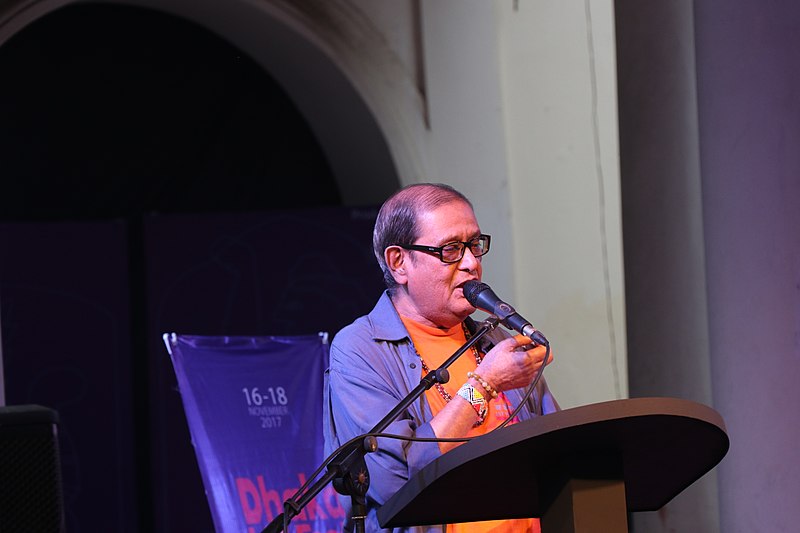
Helal Hafiz is a Bangladeshi poet
Hasive

Helal Hafiz is a Bangladeshi poet
Hasive
Key facts
Key facts
• Name — Helal Hafiz • Native Name — হেলাল হাফিজ • Born — 7 October 1948 • Birthplace — Netrokona, Dhaka Division, East Bengal, Pakistan • Died — 13 December 2024 • Place of death — Dhaka, Bangladesh • Occupation — * Writer • literary editor • Language — Bengali • Education — University of Dhaka • Awards — Bangla Academy Literary Award (2014) Ekushey Padak (2025)
Early life, education, and career
Early life, education, and career
On completion of his schooling and college studies in his hometown in northern Netrokona, Hafiz enrolled at the University of Dhaka, at a time when it appeared as the main centre of the brewing nationalist movement, which eventually saw the 1971 emergence of independent Bangladesh. He is considered a true representative of the poets of his generation. He studied at Netrokona Datta High School, Netrokona College, and University of Dhaka. Hafiz earned the reputation of being an established poet of verve, vigour and emptiness long ahead of the publication of his first collection of poems: Je Jale Agun Jwale (The water where fire is ignited) in 1986. It earned the best sellers status in Ekushey Book Fair of the year, discarding novels by popular writers who traditionally occupy the position in Bangladesh's biggest annual book fair. "Nishiddha Sampadakiya" (The Banned Editorial), one of his most quoted poems inspired at least two generations since the pre-independence nationalist upsurge of 1969 and pro-democracy campaigns in post independence periods.
Poetry
Poetry
• Illustration — Hafiz in 2021 Hafiz never associated himself directly with any political activity, but his famous verses “এখন যৌবন যার যুদ্ধে যাবার তার শ্রেষ্ঠ সময়” (It's the best time for one to go to war who is in his youth) were seen in wall writings, posters, and leaflets and chanted in processions at university campuses and street side walls to inspire the youths to get prepared for the Independence War against Pakistan. It returned as a popular slogan of student activists and left-leaning organisations during popular movements against military or autocratic rules in independent Bangladesh. But Hafiz, who appeared to be a sensitive man on questions of quality, visibly preferred a self-exile from the literary arena for years after the publication of the Je Jale Agun Jwale. He explained his silence as the outcome of a sense of fright of losing popularity after the tremendous success that reached him to the peak of fame. Hafiz, however, gradually resumed his literary activities, recently coming up with his Kabita Ekattur (Poems Seventy One) to make visible again his formidable presence in the literary arena, while his third book is set to hit the bookstalls in a few months. A journalist by profession, Hafiz eventually found the literature section of newspapers as his professional abode while he served as a literary editor of a number of newspapers over the past four decades. But the instability in the newspaper industry also threw him out of the job several times, exposing him to extreme difficulties. His luck in gambling earned him the reputation of being a great gambler in close circle and in one of his newspaper interviews, Hafiz bluntly said that during his state of joblessness, gambling appeared to be his major income source for a period. A dichotomy of love of land and devotion to the lover is clearly visible in his poems, but Hafiz finds a way toward a compromise, projecting himself as a tender lover and rebel patriot as he wrote “Rather today let us like the songs of Jahidur/Summon boshekh from the heart, bring in both lives /Do you know, Helen.
Places
Named by the record
Places
Only places the record itself states, plotted where the house gazetteer settles their coordinates. Nothing is inferred from a name or a nationality.
Netrokona District.
Birth place
Dhaka.
Death place
Primary material
Documents and archives
reference work
- “Helal Hafiz”, English Wikipedia, consulted as further reading
Reputable secondary · Wikipedia
authority record
- Wikidata, structured authority record Q5701463: Helal Hafiz
General reference · Wikidata
References
Citations
References
Each reference names the institution holding it, so a reader may go to the document itself.
reference work
Secondary witnessauthority record
General reference
People, houses and institutions
Knowledge graph
People, houses and institutions
Teachers, collaborators, publishers and institutions recorded against this person, each on a stated basis.
Citizenship
1- BangladeshPlace
Established from a fact already recorded on a verified source.
The Encyclopedia exists whether or not anything is for sale. Corrections are recorded rather than overwritten, and every version of this record is kept. Published 18 August 2026.
Elsewhere in Books
39,529 published records in this field, each with its sources named.
- Heinz PiontekAuthor
- Heiric of AuxerreAuthor
- Heiti TalvikAuthor
- Hekimoğlu Ali PashaAuthor
- Hélder MacedoAuthor
- Hélder ProençaAuthor
- Hélé BéjiAuthor
- Helen AdolfAuthor
Best supported in this field
For owners
Own a work by Helal Hafiz?
A specialist will read what you send and tell you what the house can establish, what it cannot, and whether the object is suited to sale. There is no charge and no obligation. The object stays with you throughout; nothing is shipped to us unless it is arranged in writing beforehand.