
Harrison
Harrison is a town and village in Westchester County, New York, United States. It is a suburb of New York City, located approximately 11 mi northeast of Manhattan. The population was 28,218 at the 2020 census.
Harrison
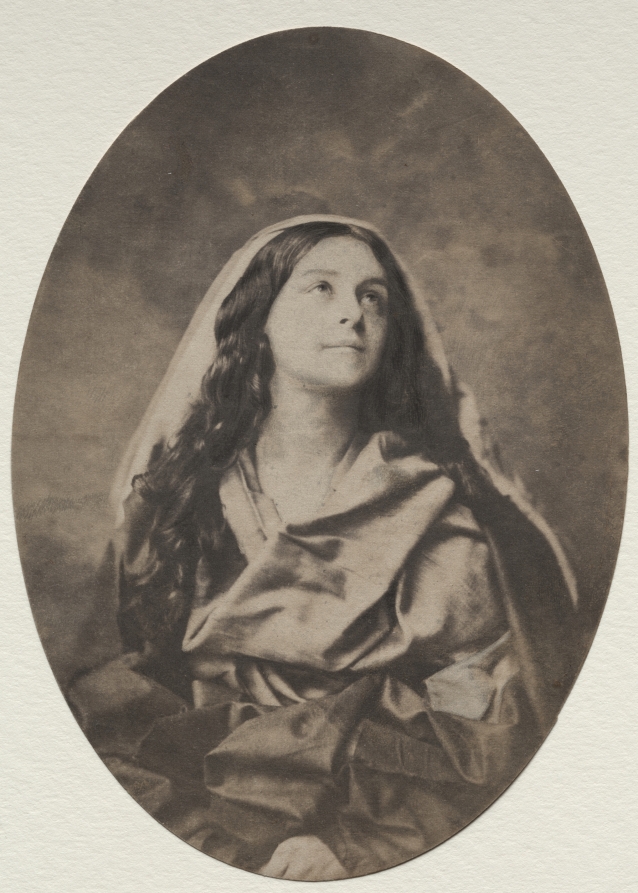
Harrison(?) · The Cleveland Museum of Art · Gift of Charles Isaacs and Carol Nigro · CC0
- Name
- Harrison
Reference Check
Propose documentary evidence for Harrison. A contribution is never written directly as fact: identity, source, rights and evidence gates still decide.
Sign in to contribute
World of VALÉORINE
Documentary connections
Only confirmed graph relationships appear here. Images are shown only when their identity and reuse rights both pass the documentary gate.

In this article
Key facts
Key facts
• Name — Harrison • Type — Coterminous town/village • Subdivision Type — Country • Subdivision Name — United States • Subdivision Type1 — State • Subdivision Name1 — New York • Subdivision Type2 — County • Subdivision Name2 — Westchester • Government Type — Mayor–council government • Leader Title — Supervisor/Mayor • Leader Name — Tom Scappaticci (R) • Established Title — Founded • Established Date — 1696 • Established Title1 — Town • Established Date1 — March 7, 1788 • Established Title2 — Town/village • Established Date2 — 1975 • Named For — John Harrison • Unit Pref — Imperial • Area Total Km2 — 45.17 • Area Land Km2 — 43.42 • Area Water Km2 — 1.75 • Area Total Sq Mi — 17.44 • Area Land Sq Mi — 16.77 • Area Water Sq Mi — 0.67 • Population As Of — 2020 • Population Total — 28218 • Population Density Km2 — 649.84 • Population Density Sq Mi — 1683.05 • Population Demonym — Harrisonite • Time Zone — Eastern (EST) • Utc Offset — −5 • Time Zone Dst — Eastern (EDT) • Utc Offset Dst — −4 • Elevation M — 21 • Elevation Ft — 69 • Postal Code Type — ZIP Code • Postal Code — 10528, 10604 • Area Code — 914 • Custom Label Sec1 — FIPS code • Custom Data Sec1 — 36-32402 • Custom Label1 Sec1 — GNIS feature ID • Custom Data1 Sec1 — 0977345 • Website — http: www.harrison-ny.gov
17th century
17th century
• Illustration — Harrison Metro-North Railroad station house Harrison was established in 1696 by a patent granted by the British government to John Harrison and three others, who had a year earlier bargained with local Native Americans to purchase an area of land above Westchester Path, an old trail that led from Manhattan to Port Chester and below Rye Lake. Local custom holds that Harrison was given 24 hours to ride his horse around the area he could claim, and the horse could not swim or did not want to get its feet wet, but this is folklore. In fact, the land below Westchester Path and along Long Island Sound had already been purchased and partly developed by the settlers of Rye, New York. The area that became Harrison had also been sold in 1661 or 1662, and again in 1666, to Peter Disbrow, John Budd, and other investors or early residents of Rye. Disbrow and Budd evidently lost their paperwork and the land was ultimately granted to Harrison and his co-investors in 1696. So upset were the people of Rye that they seceded to the Colony of Connecticut until 1700, when the King of England ordered Rye to rejoin the Colony of New York.
18th century
18th century
The first permanent residents of Harrison's Purchase, as it was called, arrived in about 1725, and many early settlers were Quakers, who set up a Friend's Meeting House at a settlement located in the part of Harrison now called Purchase. Harrison's Purchase was administered jointly by the settlers of Rye until it was incorporated as a town on March 7, 1788, by an act of the New York State legislature. Merritt's Hill in West Harrison was part of the site of the Battle of White Plains during the Revolutionary War. One company of the New York Militia that fought in the battle was composed solely of people from Harrison.
19th century
19th century
During the 1830s, David Haviland settled in Harrison where he produced Haviland China which he sold in his store in New York City before returning to his native France. Today there exists a Haviland Street in the downtown business district, as well as a Haviland Road in the Sterling Ridge neighborhood of Harrison, whose only street sign is of a historic wrought iron design in scrolled shapes, quite older than many others throughout the town. In 1867, Benjamin Holladay purchased a tract of land, which is now the campus of Manhattanville College. He constructed an elaborate granite mansion, now known as the college's Reid Castle, and an elaborate Norman-style Roman Catholic chapel for his wife. The castle hosted the King and Queen of Siam in the early 1930s. The castle was at one time known as Ophir House, in reference to different owners. In 1875, Sunny Ridge farm mansion was renovated to include a 14th-century woodcut from Europe, installed into the wall over the living room fireplace, among several other ancient relics, built into the home. The home was sold for the first time since the 1920s renovation in the summer of 2017, and was demolished to make way for two new homes. It was not protected by any state or local historic preservation acts. What is the present-day Metro-North Railroad's New Haven Line, running from Manhattan in New York City, to Greenwich, Connecticut, first came through Harrison in 1848, though the first station was not built until 1870. Before that time, Harrisonites had to flag down the train to get a ride. Harrison remained generally free of factories through the Industrial Revolution, while large factory districts grew in the neighboring towns of White Plains, Port Chester and Mamaroneck.
20th century
20th century
In 1929, the Hutchinson River Parkway was extended to Harrison. The same year, Harrison's former Sunnyridge Farm, located less than a half mile from the train station, was purchased by real estate developer Sidney H. Sonn, of H. & S. Sonn Co., based in New York City, and subdivided into lots for a real estate development. H. & S. Sonn laid out new streets throughout, preserving the farm's private access road to the farm residence as today's Sunny Ridge Road. According to a 1928 article in The New York Times, "[H. & S. Sonn] virtually transformed their part of the old farm into a park, installed winding tree-lined motorways and water, gas, sewers, and electricity, and landscaped the entire 165 acres, then they erected ten English-type houses which were designed by Julius Gregory, one of them being completely furnished by Charles of London." H. & S. Sonn contracted Julius Gregory to develop house plans for single family houses in their new Sunny Ridge development, as it was termed. A new model was developed to construct homes that were of durable materials, to be resistant to exterior maintenance, using only brick, stone, and old-growth oak timber as exterior materials. The fashionable new neighborhood attracted the attention of New York banking, business, and entertainment elites, attracting Wall Street financier William Harty, then owner of Condé Nast, Joseph J. Lane; musical star Louise Groody; and Fitzhugh Green, of Putnam's Publishing House, among the first residents of the new neighborhood. Sidney Sonn renovated the farm's original house, an immense, elaborate, 20-room, 1875 Victorian mansion, into an English Tudor, designed by renowned architect Julius Gregory, father of the American Tudor-Revival style and movement of the 1920s, as a residence for himself. Only a small handful of homes were sold and constructed before the economic downturn of the Great Depression. The remaining vast majority of homes were constructed beginning in the middle-1940s, with the last plots filled during the 1950s. The styles of the newer, 1940s-era homes was primarily of colonial revival style, with the newest ranging into Mid-century-Modern. The older, Tudor homes as a result remain quite notable. In 1967, 200 residents stated support for a plan to incorporate Purchase, a community in Harrison, so that corporations could not build in the community. In response, officials from the Town of Harrison put forward plans to try to become a city to try to stop Purchase from seceding from Harrison. The resolution was for the Town became a hybrid "Town / Village", which it remains today. John A. Passidomo (1921–2005) was first elected mayor in 1965 by only 67 votes. Re-elected eight times, he served until 1983 when he resigned to become Commissioner of the New York State Department of Motor Vehicles. In his two and a half years at that job, he helped pass one of the nation's first seat-belt laws despite the law's unpopularity. Harrison's "Platinum Mile", a string of corporate office parks along I-287 in the Purchase section of Harrison, developed under Passidomo. The mayor played an instrumental role in attracting large corporations such as PepsiCo, MasterCard and Texaco. In the early 1970s, under Passidomo's supervision, a group in the Purchase section of town, concerned about the town's overdevelopment, attempted to incorporate as a village and thereby separate from the town of Harrison. Creatively, to avoid being served papers that would have begun the legal proceedings for Purchase to incorporate as a village, Passidomo entered his office through the fire escape. He then immediately made sure that the town Harrison became a village but remained as a town to end to the possibility of Purchase's secession, since a village cannot legally be formed in another village. The documented list of supervisors and mayors begins in 1946; though there were mayors before that. The documented list includes: • Alfred F. Sulla Jr. 1946–1955 • James M. Landis 1955-1958 • Alfred F. Sulla Jr. 1958–1965 • John Passidomo 1965–1983 • Pat V. Angarano 1983–1990 • Charles Balancia 1990–1994 • Philip A. Marraccini (R) 1994–1998 • Ronald Bianchi (D) 1998–2002 • Stephen Malfitano (R) 2002–2008 • Joan Walsh (D) 2008–2012 • Ronald Belmont (R) 2012–2022 • Richard Dionisio (R) 2022–2025 • Tom Scappaticci (R) 2026-present
Geography
Geography
Harrison is an affluent town and village in Westchester County, New York, approximately 22 mi northeast of Manhattan, New York City. According to the U.S. Census Bureau, the town (and coterminous village) has a total area of 17.4 sqmi, of which 16.8 sqmi is land and 0.6 sqmi, or 3.22%, is water. The population was 27,472 at the 2010 census. The distance from Harrison Station to Grand Central Terminal in Midtown Manhattan is about 27 mi. Harrison is bordered by North Castle, White Plains, Rye town, Rye city, Mamaroneck, and Scarsdale. The New England Thruway (I-95) runs through the town (without any interchanges), as well as the Cross Westchester Expressway and the Hutchinson River Parkway. I-684 passes through Harrison and ends at the Cross Westchester Expressway and the Hutchinson Parkway.
Areas and neighborhoods
Areas and neighborhoods
The boundaries of the town of Harrison are the approximate shape of a figure-eight. The southern half is known as simply Harrison, or downtown, while the hamlets of Purchase and West Harrison are located in the northern portion of the town. The "downtown" southern half of Harrison is divided into four general areas: Brentwood Plaza, Sunny Ridge, Sterling Ridge/The Trails, and the Village part of Harrison. West Harrison is an isolated community, lodged between a tall hill bordered by a lake, Interstate 287, a tall relatively steep hill, and a cliff at the northern edge. Because of this, there is a general lack of street entrances. There is really only one road into it, although there are a few other "back" ways into it. The road is called Lake Street, flanked on one side by Silver Lake Park, bordering the lake, and by a small business district on the other side of the street. West Harrison contains the Passidomo Veterans Memorial Park and Pool and the Leo Mintzer Center. West Harrison also contains the site of the Battle of White Plains from the Revolutionary War. West Harrison is also the home of Buckout Road, which was said to have been a home of witches, albinos, and slaughters. Downtown is split into the four sections mentioned above, and is flanked by Interstate 95, the Hutchinson River Parkway, and the Metro-North Railroad. The man-made lines create isolation to areas, with few areas to cross each. Harrison's only middle school, Louis M. Klein Middle School, and only High School, Harrison High School, are located in the "downtown" area. The four areas of downtown, as separated by the boundaries of Interstate 95 and the railroad tracks as well as separated by wealth gaps, are very diverse. The "Downtown" with Halstead Ave as the main thoroughfare, starting on the City of Rye border, is parallel to the Metro North railroad, delivers traffic into the Village of Mamaroneck. This area consists of mixed use century old buildings with new luxury rentals taking over the area. Flanking Halstead Ave are streets consisting of older two- family homes with new duplexes gentrifying the community. The housing stock consists of every wealth level.
2020 census
2020 census
Harrison village, New York – Racial and ethnic composition Note: the US Census treats Hispanic/Latino as an ethnic category. This table excludes Latinos from the racial categories and assigns them to a separate category. Hispanics/Latinos may be of any race. • Race / Ethnicity (NH = Non-Hispanic) — Pop 2010 — Pop 2020 — % 2010 — % 2020 • White alone (NH) — 21,133 — 18,780 — 76.93% — 66.55% • Black or African American alone (NH) — 563 — 745 — 2.05% — 2.64% • Native American or Alaska Native alone (NH) — 15 — 10 — 0.05% — 0.04% • Asian alone (NH) — 2,062 — 3,231 — 7.51% — 11.45% • Native Hawaiian or Pacific Islander alone (NH) — 8 — 4 — 0.03% — 0.01% • Other race alone (NH) — 69 — 182 — 0.25% — 0.64% • Mixed race or Multiracial (NH) — 420 — 864 — 1.53% — 3.06% • Hispanic or Latino (any race) — 3,202 — 4,402 — 11.66% — 15.60% • Total — 27,472 — 28,218 — 100.00% — 100.00%
2010 census
2010 census
In the 2010 census the population was 76.9 percent non-Hispanic white, 2.4 percent African American, 7.5 percent Asian, and 11.7% Hispanic or Latino of any descent.
2000 census
2000 census
At the 2000 census, there were 24,154 people, 8,394 households and 6,186 families residing in the village. The population density was 1,435.2 PD/sqmi. There were 8,680 housing units at an average density of 515.8 /mi2. The racial makeup of the village was 89.78% White, 1.43% Black or African American, 0.09% Native American, 5.44% Asian, 0.01% Pacific Islander, 1.59% from other races, and 1.67% from two or more races. Hispanic or Latino of any race were 6.70% of the population. There were 8,394 households, of which 35.3% had children under the age of 18 living with them, 62.4% were married couples living together, 8.7% had a female householder with no husband present, and 26.3% were non-families. 22.1% of all households were made up of individuals, and 8.7% had someone living alone who was 65 years of age or older. The average household size was 2.72 and the average family size was 3.20. 24.5% of residents were under the age of 18, 9.6% from 18 to 24, 29.4% from 25 to 44, 21.9% from 45 to 64, and 14.6% who were 65 years of age or older. The median age was 37 years. For every 100 females, there were 89.2 males. For every 100 females age 18 and over, there were 85.2 males. According to a 2009 estimate, the median household income was $104,640, and the median family income was $130,224. The per capita income for the village was $63,742. About 4.2% of families and 5.6% of the population were below the poverty line, including 5.3% of those under age 18 and 7.8% of those age 65 or over.
Economy
Economy
Harrison is and has been home to the corporate headquarters of several well-known companies, including the MasterCard headquarters, MasterCard International Global Headquarters, PepsiCo, and Central National-Gottesman. Atlas Air and subsidiary Polar Air Cargo have their headquarters in Purchase. Texaco's headquarters, a 750000 sqft building, was in Harrison. In 2002, after Chevron and Texaco merged, Chevron sold the former Texaco Headquarters to Morgan Stanley. Morgan Stanley bought the building and the surrounding 107 acre for $42 million. Previously, Lenovo had its U.S. headquarters in Purchase. In 2006, the company announced it was moving to Morrisville, North Carolina.
Arts and culture
Arts and culture
• Illustration — St. Gregory the Great Church • Illustration — Post Office Sites listed on the National Register of Historic Places include: • The Hadden-Margolis House, a pre-revolutionary home originally constructed around 1750. • Stony Hill Cemetery, an African-American burial ground used during the 19th century. • The Post Office, a stone, Greek-revival building, featuring the Doric Order, built in 1938, and featuring a Works Progress Administration mural.
Parks and recreation
Parks and recreation
• Westchester Country Club, a private golf club.
Public
Public
Harrison Central School District operates Harrison High School, and Louis M. Klein Middle School, both located in the Downtown area. Additionally, the district also operates four public elementary schools. Purchase School serves Purchase and the northern section of West Harrison, Preston School serves the Silver Lake area of West Harrison, and Parsons School serves South Downtown. The fourth school, Harrison Avenue School, serves the remaining area of "Downtown", Sunnyridge, Sterling Ridge/The Trails, and The Brentwood.
Private
Private
The Keio Academy of New York is a private high school located in Purchase.
Colleges and universities
Colleges and universities
Institutions of higher learning in Harrison include Manhattanville University, a private liberal arts university, and The State University of New York(SUNY) Purchase College, SUNY's college focusing in the fine and performing arts. In 2008, Fordham University opened its Westchester campus in West Harrison. Purchase College is named for the area of Harrison within which it is located, Purchase, New York, a Hamlet. Hamlets in New York State law are areas known by a traditional name, but which are not extant as any municipal government. Manhattanville University is named for its former location in Manhattanville, in New York City borough of Manhattan, where it was located at the time of its founding. Manhattanville University is home to Reid Castle, a Gilded Age granite mansion, which, along with its grounds was donated to form the university campus. The historic mansion now serves as administrative offices and banqueting space.
Roads and highways
Roads and highways
• (Cross-Westchester Expressway) • (New England Thruway) * * * * *
Bus
Bus
Harrison is served by Bee-Line Bus System.
Rail
Rail
Harrison is served by the New Haven Line of the Metro-North Railroad at the Harrison station.
Airport
Airport
Harrison is served by Westchester County Airport, which is located almost entirely in Purchase.
Fire department
Fire department
Harrison is protected by one combination and two all-volunteer fire districts. The Harrison Fire Department being the combination department, the West Harrison Fire Department, and the Purchase Fire Department being all volunteer. The total fire apparatus amount in the town/village are three trucks, nine engines, two rescues, and many other special units. Altogether, there are four fire departments that protect Harrison. On June 22, 2023, Harrison agreed to settle an employment discrimination lawsuit brought by the Justice Department. The $450,000 settlement is one of the largest payments by a municipality in an employment discrimination case brought by the United States on behalf of a single individual. The municipality and fire department also agreed to federal monitoring as part of the settlement for two years.
Notable people
Notable people
• Illustration — 1932 memorial to Amelia Earhart, located in Harrison. • Drew Barrymore, American actress, producer, talk show host, and businesswoman, has owned a home in Harrison since 2024. • Lou Bender (1910–2009), pioneer player with the Columbia Lions and in early pro basketball, who was later a successful trial attorney. • Kenneth Cole (born 1954), fashion designer and entrepreneur • Amelia Earhart (1897–1937), the aviator lived in Harrison in a home on what is now Amelia Earhart Lane off Locust Avenue while she was married to publisher George Putnam. A monument consisting of a bronze plaque with a propeller attached to a stone, was laid in a small park in Harrison after she became the first woman to fly solo across the Atlantic. • Tex Fletcher (1909–1987), a singing cowboy with credits as a recording artist, Broadway and movie actor, night club performer, and radio and television personality. • Ralph Friedgen (born 1947), former head football coach at the University of Maryland from 2001 to 2010. • Bobby Gonzalez, former men's basketball coach for the Seton Hall Pirates." • Fitzhugh Green, of Putnam's Publishing House. • Louise Groody, musical star and actress, resided in Harrison beginning in 1928. • Josh Hart, a basketball player for the New York Knicks, has lived in Harrison since 2024. • Bobby Jordan (1923–1965), one of the Dead End Kids. • Rick Marotta, drummer and composer of the theme song for Everybody Loves Raymond. • John Mara, president, CEO, and the owner of the New York Giants, resides in Harrison. • John McGillicuddy (1930–2009), CEO of Manufacturer's Hanover Trust and then, after its merger with Chemical Bank, its CEO in the 1990s. • George P. Putnam (1887–1950), publisher and husband of Amelia Earhart. • Mariano Rivera (born 1969), pitcher with the New York Yankees. • Scott Rogowsky, host of HQ Trivia. • Alan Rosen (born 1969), restaurant and bakery owner, and author • Brothers Eric and Jeff Rosenthal, the hip-hop sketch comedians collectively known as ItsTheReal. • Gene Sarazen (1902–1999, born Eugenio Saraceni) American golfer.
Text attribution
Licensing
Text attribution
Part of the biographical narrative on this page reuses licensed material. Its origin, revision and licence are recorded here.
The biographical narrative on this page is based on the Wikipedia article Harrison, New York, revision 1376081739 (EN edition), by its contributors. VALÉORINE has edited that text and built its own documentary record around it. The reused material is available under CC BY-SA 4.0, and this page's reuse of it is offered under the same licence. Everything else on this page — the chronology, the holdings, the evidence, the plates and the connections — is VALÉORINE's own record. Sources and licences.
Notes from the source article
Cited by Wikipedia
Notes from the source article
These works are cited by the source article, in its own numbering. They are recorded as its citations, not as sources VALÉORINE has verified.
- 1.United States Census Bureau. ArcGIS REST Services Directory.
- 2.Harrison Legends and Facts | Harrison NY. www.harrison-ny.gov.
- 3.MERRITT HILL REVOLUTIONARY WAR MEMORIAL MARKER I. National War Memorial Registry.
- 4.Revolutionary Times. Harrison NY.
- 5.HOME BUILDERS BUY SUNNY RIDGE PLOTS: Sonn Interests Sell Sites in Harrison development to Westchester purchasers. New York Times. 163. February 5, 1928.
- 6.A Beautifully Detailed, Original Lithograph of the House of Sidney H. Sonn in Sunny Ridge, Harrison, New York. The American Architect. 801. June 20, 1929.
- 7."200 Residents Back Plan to Incorporate Village of Purchase." The New York Times. April 4, 1967. Retrieved on February 2, 2011.
- 8.Folsom, Merrill. HARRISON MOVING TO BECOME A CITY; Town Acts to Thwart Effort by Purchase to Secede and Form Own Village. The New York Times. 37. May 20, 1967.
- 9.Feron, James. PASIDOMO DISCUSSES NEW ALBANY POST. The New York Times. 11–6. March 6, 1983. 0362-4331.
- 10.Madden, Richard L. A REPORTER'S NOTEBOOK: GOVERNORS AND SEAT BELTS. The New York Times. B2. February 1, 1985. 0362-4331.
- 11.The Weather Channel. Monthly Averages for Harrison, NY (10528).
- 12.History.
- 13.BUCKOUT ROAD – history, urban legends, hauntings, ghosts – Westchester County alleged haunted road.
- 14.Census.gov. Census of Population and Housing.
- 15.United States Census Bureau. United States Census Bureau QuickFacts.
- 16.P2 Hispanic or Latino, and Not Hispanic or Latino by Race – 2010: DEC Redistricting Data (PL 94-171) – Harrison village, New York. United States Census Bureau.
- 17.P2 Hispanic or Latino, and Not Hispanic or Latino by Race – 2020: DEC Redistricting Data (PL 94-171) – Harrison village, New York. United States Census Bureau.
- 18.Harrison (Village) QuickFacts from the US Census Bureau.
- 19.United States Census Bureau. U.S. Census website.
- 21."Contact Us." MasterCard. Retrieved on February 2, 2011. "MasterCard Advisors 2000 Purchase Street Purchase, NY 10577."
- 22."Harrison town, New York ." U.S. Census Bureau. Retrieved on January 18, 2010.
- 23."10577 5-Digit ZCTA, 105 3-Digit ZCTA ." U.S. Census Bureau. Retrieved on June 8, 2010.
- 24."Our 10 Most Beautiful Buildings." Westchester Magazine. November 17, 2010. Retrieved on February 1, 2011.
- 25."Investor Information ." Atlas Air. Retrieved on August 6, 2011. "AAWW Investor Relations 2000 Westchester Avenue Purchase, NY 10577-2543"
- 26."Contact Us ." Polar Air Cargo. Retrieved on February 13, 2011. "Atlas Air / Polar Air Cargo – Headquarters 2000 Westchester Avenue Purchase, NY 10577 USA"
- 27.Brenner, Elsa. IN BUSINESS; Morgan Stanley Seals Deal on Texaco Headquarters. The New York Times'. March 31, 2002.
- 28."Harrison village, New York ." U.S. Census Bureau. Retrieved on October 3, 2009.
- 29.TexaTexaco Inc. 2000 Westchester Ave White Plains, New York 10650.".
- 30.Hogan, Patrick. Lenovo shifting U.S. headquarters to Morrisville, but will cut 300-350 Triangle jobs. Triangle Business Journal. 1. March 17, 2006.
- 31.Sculle, Keith A. The National Register of Historic Places National Park Service Preservation Possibilities National Park Service Frederick: A Historic Preservation Commission at Work National Park Service. The Public Historian. 11. 3. 92–94. July 1989. 0272-3433.
- 32.Sprinkle, Jr., John H. Crafting Preservation Criteria. March 5, 2014. 978-0-203-08083-2.
- 33.Harrison Central School District Home. Harrison Central School District. Retrieved January 22, 2015.
- 34.Westchester Campus and Facilities, Fordham University. Accessed March 19, 2009.
- 35.Southern District of New York U.S. Attorney Resolves Employment Discrimination Suit With The Town/Village Of Harrison, New York, And Its Fire Department, Requiring Defendants To Adopt Wide-Ranging Policy Changes And Pay $425,000 United States Department of Justice. www.justice.gov. June 22, 2023.
- 36.Marino, Vivian. Drew Barrymore and Pete Davidson List Homes in Westchester County. The New York Times. 2026-04-15. 0362-4331.
- 37.Mallozzii, Vincent. Lou Bender, Columbia Star Who Helped Popularize Basketball in New York, Dies at 99. The New York Times. September 12, 2009.
- 38.Mastuda, Akiko. What's for sale in the Northeast's richest ZIP code. lohud. April 17, 2018.
- 39."Amelia Earhart at a tribute in her honor in Harrison, New York, 1932.", Purdue University. Accessed April 22, 2013.
- 40.MRS. PUTNAM HOME; GETS CITY'S HOMAGE; Greeted Down Bay by Swooping Planes, Cheered by Throngs and Decorated by Mayor. ESCAPED SPIN IN STORM But She Belitties Hazards and Calls Hop 'Personal Gesture' – Hoover Welcome Today. Flier Smiling and Modest in Round of Greetings. The New York Times. June 21, 1932.
- 41.Warren, Tim. It turns out that Ol' Tex was born in Harrison, NY, and was christened Geremino Bisceglia by his Italian-immigrant parents. The Washington Post. April 9, 2008.
- 42.Ralph Friedgen through the years. The Baltimore Sun. December 20, 2010.
- 43.HHoops coach denies shoplift. New York Post. Associated Press. July 22, 2010.
- 44.Hasan, Sadiba. The Heart of the Knicks, and His Home. The New York Times. 2025-10-21. 0362-4331.
- 45.Sears, Jay. NY Knick Buys Home from Rye Realtor. MyRye.com. 2024-10-29.
- 46.Barry, John W. Uncle Funk steeped in R&B groove. The Poughkeepsie Journal. July 2024.
- 47.Giants' John Mara Fumbles Chance To Escape Jury Duty. CBS New York. 2011-04-06.
- 48.Dash, Eric. John F. McGillicuddy, 78, Banking Leader, Is Dead. The New York Times. January 6, 2009.
- 49.Klein, Melissa. Thousands attend Thanksgiving parade. The Journal News. November 23, 2003.
- 50.Wong, Brittany. Here's What You Need To Know About HQ Host Scott Rogowsky. The Huffington Post. December 19, 2017.
- 51.Williams, Aaron. How ItsTheReal Earned The Trust Of Hip-Hop While Turning It On Its Ear. UPROXX. July 10, 2017.
- 52.Gene Sarazen , World Golf Hall of Fame. Accessed April 22, 2013.
Bibliography printed in the source article · 1
- Baird, Charles W. Chronicle of A Border Town: History of Rye 1660–1870. Harbor Hill Books. 1974.
The Encyclopedia exists whether or not anything is for sale. Corrections are recorded rather than overwritten, and every version of this record is kept. Published 26 September 2026.
Elsewhere in General
22,760 published records in this field, each with its sources named.
- Harris Manchester CollegeOrganisation
- Harris TownshipPlace
- HarrisburgPlace
- Harrisburg AcademyOrganisation
- Harrison CollegeOrganisation
- Harrison High SchoolOrganisation
- Harrison TownshipPlace
- HarrisonburgPlace
Best supported in this field
For owners
Own an object connected with Harrison?
A specialist will read what you send and tell you what the house can establish, what it cannot, and whether the object is suited to sale. There is no charge and no obligation. The object stays with you throughout; nothing is shipped to us unless it is arranged in writing beforehand.