
Harper Lee
Nelle Harper Lee (April 28, 1926 – February 19, 2016) was an American novelist whose 1960 novel To Kill a Mockingbird won the 1961 Pulitzer Prize and became a classic of modern American literature. She assisted her close friend Truman Capote in his research for the book In Cold Blood (1966). An earlier draft of Mockingbird, set at a later date, Go Set a Watchman, was published in July 2015 as a sequel.
Also recorded as Nelle Harper Lee
Harper Lee

Eric Draper · White House photo by Eric Draper via [1] · Public domain
- Birth Name
- Nelle Harper Lee
- Born
- 28 April 1926
- Birthplace
- Monroeville, Alabama, U.S.
- Died
- 19 February 2016
- Occupation
- Novelist
- Movement
- Southern Gothic
- Education
- Huntingdon College University of Alabama
- Nationality
- United States
- Fields
- creative and professional writing · American literature
- Known for
- To Kill a Mockingbird · Go Set a Watchman
- Honours
- National Medal of Arts · Presidential Medal of Freedom · Pulitzer Prize for Fiction · Alabama Women's Hall of Fame
- Languages
- English
VALÉORINE Encyclopedia
VALÉORINE documentary reading
Documentary summary
Nelle Harper Lee (April 28, 1926 – February 19, 2016) was an American novelist whose 1960 novel To Kill a Mockingbird won the 1961 Pulitzer Prize and became a classic of modern American literature. She assisted her close friend Truman Capote in his research for the book In Cold Blood (1966). An earlier draft of Mockingbird, set at a later date, Go Set a Watchman, was published in July 2015 as a sequel.
Admitted source layer · organised and presented by VALÉORINE
Note VALÉORINE
Harper Lee (1926–2016) was an actress, musician and novelist, among other activities, of American nationality. The actress was born and died in Monroeville.
Harper Lee was educated at Huntingdon College, Monroe County High School and University of Alabama, among others. The actress was a member of American Academy of Arts and Letters and Chi Omega. Activity centred on American literature and creative and professional writing.
Among the works are Go Set a Watchman and To Kill a Mockingbird. The work spans Southern Gothic. Languages used include English. Honours include Alabama Women's Hall of Fame, National Medal of Arts and Presidential Medal of Freedom, among others.
Composed from admitted, traceable facts · 27 September 2026
VALÉORINE
Reference Check
Propose documentary evidence for Harper Lee. A contribution is never written directly as fact: identity, source, rights and evidence gates still decide.
Sign in to contribute
World of VALÉORINE
Documentary connections
Only confirmed graph relationships appear here. Images are shown only when their identity and reuse rights both pass the documentary gate.
Awarded · outgoing
National Medal of Arts
Term

Awarded · outgoing
Presidential Medal of Freedom
Term
Library of Congress ( See jpg ) Transferred from en.wikipedia to Commons. Transfer was stated to be made by Isthmus .
Citizen Of · outgoing
United States
Place
Educated At · outgoing
University of Alabama
Organisation
Documentary evidence
Evidence Panel
not yet certified
- Identity
- resolved
- Independent source families
- 0
- Admitted assertions
- 0
- Open conflicts
- 0
Authority files
gnd · 13439819X · wikidata · Q182658 · wikipedia · Harper Lee
In this article
Biography
Biography
A collection of her short stories and essays, The Land of Sweet Forever, was published on October 21, 2025. The plot and characters of To Kill a Mockingbird are loosely based on Lee's observations of her family and neighbors in Monroeville, Alabama, as well as a childhood event that occurred near her hometown in 1936. The novel deals with racist attitudes and the irrationality of adult attitudes towards race and class in the Deep South of the 1930s as depicted through the eyes of two children. Lee received numerous accolades and honorary degrees, including the Presidential Medal of Freedom in 2007, which was awarded for her contribution to literature.
Harper Lee studied at University of Alabama, Huntingdon College and University of Utah Health Care. The recorded working language is English. The field of work recorded is creative and professional writing and American literature. Subjects and genres recorded for the work are Southern Gothic. William Faulkner is recorded as an influence. Works named in the authority record are To Kill a Mockingbird and Go Set a Watchman. Distinctions recorded are National Medal of Arts, Presidential Medal of Freedom, Pulitzer Prize for Fiction and Alabama Women's Hall of Fame.
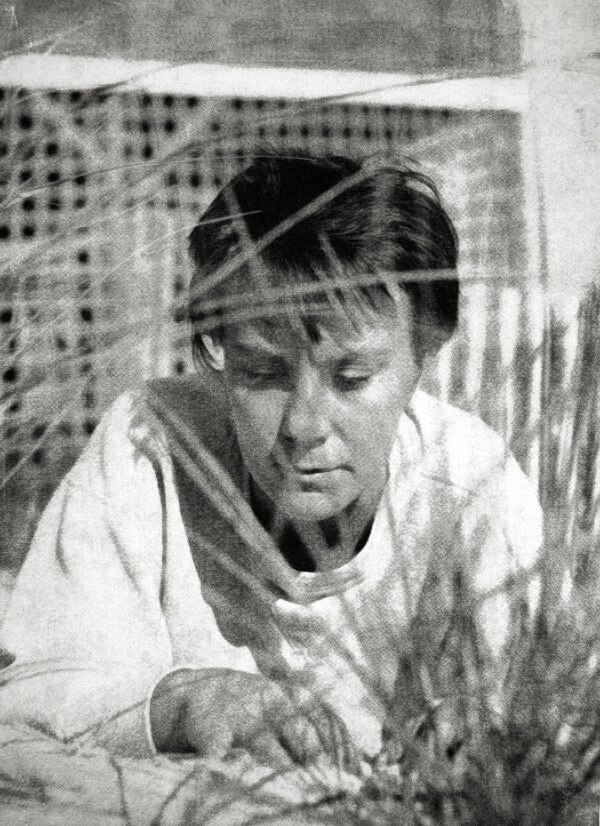
Truman Capote 's photo portrait of Harper Lee from the back cover of the first-edition dust jacket for Lee's novel To Kill a Mockingbird.
Photo credited to Truman Capote. · Scan of the image from "More than Five Decades After To Kill a Mockingbird, Harper Lee Will Publish a Second Novel" at Vogue (direct link to jpg). Retouched by uploader.

President George W. Bush awards the Presidential Medal of Freedom to author Harper Lee during a ceremony Monday, Nov. 5, 2007, in the East Room. "To Kill a Mockingbird has influenced the character of our country for the better. It's been a gift to the entire world. As a model of good writing and humane sensibility, this book will be read and studied forever," said the President about Harper Lee's
Eric Draper
Key facts
Key facts
• Birth Name — Nelle Harper Lee • Born — 28 April 1926 • Birthplace — Monroeville, Alabama, U.S. • Died — 19 February 2016 • Place of death — Monroeville, Alabama, U.S. • Occupation — Novelist • Period — 1960–2016 • Genre — * Literature • fiction • Movement — Southern Gothic • Notable Works — * To Kill a Mockingbird (1960) • Go Set a Watchman (2015) • Education — Huntingdon College University of Alabama
Early life
Early life
Nelle Harper Lee was born on April 28, 1926, in Monroeville, Alabama, the youngest of four children of Frances Cunningham (née Finch) and Amasa Coleman Lee. Her parents chose her middle name, Harper, to honor pediatrician Dr. William W. Harper, of Selma, who had saved the life of her sister Louise. Her first name, Nelle, was her grandmother's name spelled backwards and the name she used, whereas Harper Lee was primarily her pen name. Lee's mother was a homemaker; her father was a former newspaper editor, businessman, and lawyer, who also served in the Alabama State Legislature from 1926 to 1938. Through her father, she was related to Confederate general Robert E. Lee and a member of the prominent Lee family. Before A. C. Lee became a title lawyer, he once defended two black men accused of murdering a white storekeeper. Both clients, a father and son, were hanged. Lee's three siblings were Alice Finch Lee (1911–2014), Louise Lee Conner (1916–2009), and Edwin Lee (1920–1951). Although Lee remained in contact with her significantly older sisters throughout their lives, only her brother was close enough in age to play with, though she bonded with Truman Capote (1924–1984), who visited family in Monroeville during the summers from 1928 until 1934. While enrolled at Monroe County High School, Lee developed an interest in English literature, in part through her teacher Gladys Watson, who became her mentor. After graduating high school in 1944, like her eldest sister Alice Finch Lee, Lee attended the then all-female Huntingdon College in Montgomery for a year, then transferred to the University of Alabama in Tuscaloosa, where she studied law for several years. Lee also wrote for the university newspaper (The Crimson White) and a humor magazine (Rammer Jammer), but to her father's great disappointment, she left one semester short of completing the credit hours for a degree. In the summer of 1948, Lee attended a summer school program, "European Civilisation in the Twentieth Century", at Oxford University in England, financed by her father, who hoped—in vain, as it turned out—that the experience would make her more interested in her legal studies in Tuscaloosa.
To Kill a Mockingbird
To Kill a Mockingbird
Harper Lee, quoted in Newquist, 1964 In 1949, Lee moved to New York City and took jobs—first at a bookstore, then as an airline reservation agent—while writing in her spare time. After publishing several long stories, Lee found an agent in November 1956; Maurice Crain would become a friend until his death decades later. The following month, at Michael Brown's East 50th Street townhouse, friends gave Lee a gift of a year's wages with a note: "You have one year off from your job to write whatever you please. Merry Christmas."
Origin
Origin
• Illustration — The first edition cover for To Kill a Mockingbird In the spring of 1957, a 31-year-old Lee delivered the manuscript for Go Set a Watchman to Crain to send out to publishers, including the now-defunct J. B. Lippincott Company, which eventually bought it. At Lippincott, the novel fell into the hands of Tay Hohoff. Hohoff was impressed. "[T]he spark of the true writer flashed in every line", she would later recount in a corporate history of Lippincott. But as Hohoff saw it, the manuscript was by no means fit for publication. It was, as she described it, "more a series of anecdotes than a fully conceived novel". During the next couple of years, she led Lee from one draft to the next until the book finally achieved its finished form and was retitled To Kill a Mockingbird. Like many unpublished authors, Lee was unsure of her talents. "I was a first-time writer, so I did as I was told," Lee said in a statement in 2015 about the evolution from Watchman to Mockingbird. Hohoff later described the process in Lippincott's corporate history: "After a couple of false starts, the story-line, interplay of characters, and fall of emphasis grew clearer, and with each revision—there were many minor changes as the story grew in strength and in her own vision of it—the true stature of the novel became evident." (In 1978, Lippincott was acquired by Harper & Row, which published Watchman in 2015.) Hohoff described the give and take between author and editor: "When she disagreed with a suggestion, we talked it out, sometimes for hours"... "And sometimes she came around to my way of thinking, sometimes I to hers, sometimes the discussion would open up an entirely new line of country." One winter night, as Charles J. Shields recounts in Mockingbird: A Portrait of Harper Lee, Lee threw her manuscript out her window and into the snow, before calling Hohoff in tears. Shields recollected that "Tay told her to march outside immediately and pick up the pages". When the novel was finally ready, the author opted to use the name "Harper Lee" rather than risk having her first name Nelle be misidentified as "Nellie". Published July 11, 1960, To Kill a Mockingbird was an immediate bestseller and won great critical acclaim, including the Pulitzer Prize for Fiction in 1961. It remains a bestseller, with more than 40 million copies in print. In 1999, it was voted "Best Novel of the Century" in a poll by the Library Journal.
Autobiographical details in the novel
Autobiographical details in the novel
Like Lee, the tomboy Scout in the novel is the daughter of a respected small-town Alabama attorney. Scout's friend, Dill Harris, was inspired by Lee's childhood friend and neighbor, Truman Capote; Lee, in turn, is the model for a character in Capote's first novel, Other Voices, Other Rooms, published in 1948. Although the plot of Lee's novel involves an unsuccessful legal defense similar to one undertaken by her attorney father, the 1931 landmark Scottsboro Boys interracial rape case may also have helped to shape Lee's social conscience. While Lee herself downplayed autobiographical parallels in the book, Truman Capote, mentioning the character Boo Radley in To Kill a Mockingbird, described details he considered autobiographical: "In my original version of Other Voices, Other Rooms I had that same man living in the house that used to leave things in the trees, and then I took that out. He was a real man, and he lived just down the road from us. We used to go and get those things out of the trees. Everything she wrote about it is absolutely true. But you see, I take the same thing and transfer it into some Gothic dream, done in an entirely different way."
Middle years
Middle years
For 40 years, Lee lived part-time at 433 East 82nd Street in Manhattan, near her childhood friend Capote. His first novel, the semi-autobiographical Other Voices, Other Rooms, had been published in 1948; a decade later Capote published Breakfast at Tiffany's, which became a film, a musical, and two stage plays. As the To Kill a Mockingbird manuscript went into publication production in 1959, Lee accompanied Capote to Holcomb, Kansas, to help him research what they thought would be an article on a small town's response to the murder of a farmer and his family. Capote would expand the material into his best-selling book, In Cold Blood, serialized beginning in September 1965 and published in 1966. Her friendship with Capote, however, would suffer and peter out eventually in the wake of the worldwide success of Lee's novel, which Capote had troubles coming to terms with. After To Kill a Mockingbird was released, Lee began a whirlwind of publicity tours, which she found difficult given her penchant for privacy and many interviewers' characterization of the work as a "coming-of-age story". Racial tensions in the South had increased prior to the book's release. Students at North Carolina A&T University staged the first sit-in months before publication. As the book became a best seller, Freedom Riders arrived in Alabama and were beaten in Anniston and Birmingham. Meanwhile, To Kill a Mockingbird won the 1961 Pulitzer Prize for Fiction and the 1961 Brotherhood Award from the National Conference of Christians and Jews and became a Reader's Digest Book Club condensed selection and an alternate Book of the Month Club selection. Lee helped with the adaptation of the book to the 1962 Academy Award–winning screenplay by Horton Foote, and said: "I think it is one of the best translations of a book to film ever made." Gregory Peck won an Oscar for his portrayal of Atticus Finch, the father of the novel's narrator, Scout. The families became close; Peck's grandson, Harper Peck Voll, is named after her. From the time of the publication of To Kill a Mockingbird until her death in 2016, Lee granted almost no requests for interviews or public appearances and, with the exception of a few short essays, published nothing further until 2015. She worked on a follow-up novel—The Long Goodbye—but eventually filed it away unfinished. Lee assumed significant care responsibilities for her aging father, who was thrilled with her success, and who even began signing autographs as "Atticus Finch". His health worsened and he died in Alabama on April 15, 1962. Lee decided to spend more time in New York City as she mourned. Over the decades, her friend Capote had adopted a decadent lifestyle, which contrasted with Lee's preference for a quiet, more anonymous existence. Lee preferred to visit friends at their homes (though she came to distance herself from those who criticized her drinking), and also made unannounced appearances at libraries or other gatherings, particularly in Monroeville. In January 1966, President Lyndon B. Johnson appointed Lee to the National Council on the Arts. Lee also realized that her book had become controversial, particularly with segregationists and other opponents of the civil rights movement. In 1966, Lee wrote a letter to the editor in response to the attempts of a Richmond, Virginia, area school board to ban To Kill a Mockingbird as "immoral literature": Surely it is plain to the simplest intelligence that To Kill a Mockingbird spells out in words of seldom more than two syllables a code of honor and conduct, Christian in its ethic, that is the heritage of all Southerners. To hear that the novel is "immoral" has made me count the years between now and 1984, for I have yet to come across a better example of doublethink. James J. Kilpatrick, editor of The Richmond News Leader, started the Beadle Bumble fund to pay fines for victims of what he termed "despots on the bench". He built the fund using contributions from readers and later used it to defend books as well as people. After the board in Richmond ordered schools to dispose of all copies of To Kill a Mockingbird, Kilpatrick wrote, "A more moral novel scarcely could be imagined." In the name of the Beadle Bumble fund, he then offered free copies to children who wrote in, and by the end of the first week, he had given away 81 copies. Beginning in 1978, with her sisters' encouragement, Lee returned to Alabama and began a book about an Alabama serial murderer and the trial of his killer in Alexander City, under the working title The Reverend, but also put it aside when she was not satisfied. When Lee attended the 1983 Alabama History and Heritage Festival in Eufaula, Alabama, as her sister had arranged, she presented the essay "Romance and High Adventure".
2005–2014
2005–2014
In March 2005, Lee arrived in Philadelphia—her first trip to the city since signing with publisher Lippincott in 1960—to receive the inaugural ATTY Award for positive depictions of attorneys in the arts from the Spector Gadon & Rosen Foundation. At the urging of Peck's widow, Veronique Peck, Lee traveled by train from Monroeville to Los Angeles in 2005 to accept the Los Angeles Public Library Literary Award. She also attended luncheons for students who had written essays based on her work, held annually at the University of Alabama. On May 21, 2006, she accepted an honorary degree from the University of Notre Dame, where graduating seniors saluted her with copies of To Kill a Mockingbird during the ceremony. On May 7, 2006, Lee wrote a letter to Oprah Winfrey (published in O, The Oprah Magazine in July 2006) about her love of books as a child and her dedication to the written word: "Now, 75 years later in an abundant society where people have laptops, cell phones, iPods and minds like empty rooms, I still plod along with books." While attending an August 20, 2007, ceremony inducting four members into the Alabama Academy of Honor, Lee declined an invitation to address the audience, saying: "Well, it's better to be silent than to be a fool." • Illustration — Lee being awarded the Presidential Medal of Freedom, November 5, 2007 On November 5, 2007, George W. Bush presented Lee with the Presidential Medal of Freedom. This is the highest civilian award in the United States and recognizes individuals who have made "an especially meritorious contribution to the security or national interests of the United States, world peace, cultural or other significant public or private endeavors". In a 2009 correspondence with Ed Walsh of the Bay Area Reporter, Lee addressed rumors that she was a lesbian, stating that she was "not even remotely gay." In 2010, President Barack Obama awarded Lee the National Medal of Arts, the highest award given by the United States government for "outstanding contributions to the excellence, growth, support and availability of the arts". In a 2011 interview with an Australian newspaper, Rev. Dr. Thomas Lane Butts said Lee was living in an assisted-living facility, was using a wheelchair, partially blind and deaf, and suffering from memory loss. Butts also shared that Lee told him why she never wrote again: "Two reasons: one, I wouldn't go through the pressure and publicity I went through with To Kill a Mockingbird for any amount of money. Second, I have said what I wanted to say, and I will not say it again." On May 3, 2013, Lee filed a lawsuit in the United States District Court to regain the copyright to To Kill a Mockingbird, seeking unspecified damages from a son-in-law of her former literary agent and related entities. Lee claimed that the man "engaged in a scheme to dupe" her into assigning him the copyright on the book in 2007 when her hearing and eyesight were in decline, and she was residing in an assisted-living facility after suffering a stroke. In September 2013, attorneys for both sides announced a settlement of the lawsuit. In February 2014, Lee settled a lawsuit against the Monroe County Heritage Museum for an undisclosed amount. The suit alleged that the museum had used her name and the title To Kill a Mockingbird to promote itself and to sell souvenirs without her consent. Lee's attorneys had filed a trademark application on August 19, 2013, to which the museum filed an opposition. This prompted Lee's attorney to file a lawsuit on October 15 that same year, "which takes issue the museum's website and gift shop, which it accuses of 'palming off its goods', including T-shirts, coffee mugs other various trinkets with Mockingbird brands."
2015: Go Set a Watchman
2015: Go Set a Watchman
According to Lee's lawyer Tonja Carter, following an initial meeting to appraise Lee's assets in 2011, she re-examined Lee's safe-deposit box in 2014 and found the manuscript for Go Set a Watchman. After contacting Lee and reading the manuscript, she passed it on to Lee's agent Andrew Nurnberg. On February 3, 2015, it was announced that HarperCollins would publish Go Set a Watchman, which includes versions of many of the characters in To Kill a Mockingbird. According to a HarperCollins press release, it was originally thought that the Watchman manuscript was lost. According to Nurnberg, Mockingbird was originally intended to be the first book of a trilogy: "They discussed publishing Mockingbird first, Watchman last, and a shorter connecting novel between the two." Jonathan Mahler's account in The New York Times of how Watchman was only ever really considered to be the first draft of Mockingbird makes this assertion seem unlikely. Evidence where the same passages exist in both books, in many cases word for word, also further refutes this assertion. The book was met with controversy when it was published in July 2015 as a sequel to To Kill a Mockingbird. Although it had been confirmed as a first draft of the latter with many narrative incongruities, it was repackaged and released as a completely separate work. The book is set some 20 years after the time period depicted in Mockingbird, when Scout returns as an adult from New York to visit her father in Maycomb, Alabama. It alludes to Scout's view of her father, Atticus Finch, as the moral compass ("watchman") of Maycomb, and, according to the publisher, how she finds upon her return to Maycomb, that she "is forced to grapple with issues both personal and political as she tries to understand her father's attitude toward society and her own feelings about the place where she was born and spent her childhood." Not all reviewers had a harsh opinion about the publication of the sequel book. Michiko Kakutani in her Books of The Times review found that the book "makes for disturbing reading" when Scout finds her father is racist. While not fully praising the book, Kakutani found the publication of Watchman an important stepping stone in understanding Lee's work. The publication of the novel, announced by Lee's lawyer, raised concerns over why Lee, who for 55 years had maintained that she would never write another book, would suddenly choose to publish again. In February 2015, the State of Alabama, through its Human Resources Department, launched an investigation into whether Lee was competent enough to consent to the publishing of Go Set a Watchman. The investigation found that the claims of coercion and elder abuse were unfounded, and, according to Lee's lawyer, Lee was "happy as hell" with the publication. This characterization, however, was contested by many of Lee's friends. Marja Mills, author of The Mockingbird Next Door: Life with Harper Lee, a friend and former neighbor, painted a very different picture. In her piece for The Washington Post, "The Harper Lee I Knew", she quoted AliceLee's sister, whom she described as "gatekeeper, advisor, protector" for most of Lee's adult lifeas saying, "Poor Nelle Harper can't see and can't hear and will sign anything put before her by anyone in whom she has confidence." She made note that Watchman was announced just two and a half months after Alice's death and that all correspondence to and from Lee went through her new attorney. She described Lee as "in a wheelchair in an assisted living center, nearly deaf and blind, with a uniformed guard posted at the door" and her visitors "restricted to those on an approved list." The New York Times columnist Joe Nocera continued this argument. He also took issue with how the book had been promoted by the "Murdoch Empire" as a newly discovered novel and that the manuscript had been brought to light by Tonja B. Carter, who worked in Alice Lee's law office and became Lee's "new protector"—lawyer, trustee, and spokesperson —after her sister Alice's death. Nocera noted that other people in a 2011 Sotheby's meeting insisted that Lee's attorney was present in 2011, when Lee's former agent (who was subsequently fired) and the Sotheby's specialist found the manuscript. They said she knew full well that it was the same one submitted to Tay Hohoff in the 1950s that was reworked into Mockingbird, and that Carter had been sitting on the discovery, waiting for the moment when she, and not Alice, would be in charge of Harper Lee's affairs. The authorship of both To Kill a Mockingbird and Go Set a Watchman was investigated with the help of forensic linguistics and stylometry. In a study conducted by three Polish academics, Michał Choiński, Maciej Edera and Jan Rybicki, the authorial fingerprints of Lee, Hohoff and Capote were contrasted to prove that To Kill a Mockingbird and Go Set a Watchman were both written by the same person. However, their study also suggests that Capote could have helped Lee with the writing of the opening chapters of To Kill a Mockingbird.
2025: The Land of Sweet Forever
2025: The Land of Sweet Forever
The Land of Sweet Forever was published on October 21, 2025. This posthumous collection, with a million copy first printing, contains eight newly discovered early short stories and eight previously published essays and magazine pieces. It also contains an introduction by her biographer, Casey Cep.
Death
Death
Lee died in her sleep on the morning of February 19, 2016, aged 89. Prior to her death, she lived in Monroeville, Alabama. On February 20, her funeral was held at First United Methodist Church in Monroeville. The service was attended by close family and friends, and the eulogy was given by Wayne Flynt. After her death, The New York Times filed a lawsuit that argued that since Lee's will was filed in a probate court in Alabama that it is part of the public record and that Lee's will should be made public. The will was unsealed in 2018, revealing that most of Lee's assets had been bequeathed to a trust she formed in 2011.
Fictional portrayals
Fictional portrayals
Harper Lee was portrayed by Catherine Keener, who received nomination for Academy Award for Best Supporting Actress for the film Capote (2005), by Sandra Bullock in the film Infamous (2006), and by Tracey Hoyt in the TV movie Scandalous Me: The Jacqueline Susann Story (1998). In the adaptation of Truman Capote's novel Other Voices, Other Rooms (1995), the character of Idabel Thompkins, who was inspired by Capote's memories of Lee as a child, was played by Aubrey Dollar.
Articles
Articles
* * • "Crackling Bread" in * • Essay on Truman Capote, published in the Book of the Month Club newsletter. January 1966. • "Romance and High Adventure", a lecture delivered at the 1983 Alabama History and Heritage Festival in Eufaula, Alabama, and collected in • Essay on Gregory Peck, published in a special program from the American Film Institute. 1989. *
Identity
Identity
Harper Lee is recorded as having received National Medal of Arts, Presidential Medal of Freedom and Pulitzer Prize for Fiction.
Life and career
Dated record
Life and career
The full dated record · 2 entries
1926
Harper Lee born at Monroeville.
2016
Harper Lee died at Monroeville.
Books
* * *
Primary material
Documents and archives
reference work
- Wikidata, structured authority record Q182658: Harper Lee
Reputable secondary · Wikimedia Foundation
- “Harper Lee”, English Wikipedia, consulted as further reading
Reputable secondary · Wikipedia
authority file
- Gemeinsame Normdatei 13439819X, Harper, Lee.
Unverified · Deutsche Nationalbibliothek
Notes from the source article
Cited by Wikipedia
Notes from the source article
These works are cited by the source article, in its own numbering. They are recorded as its citations, not as sources VALÉORINE has verified.
- 1.Harris, Paul. Harper Lee sues agent over copyright to To Kill A Mockingbird. The Guardian. May 4, 2013.
- 2.Nocera, Joe. The Harper Lee 'Go Set A Watchman' Fraud. The New York Times. July 24, 2015.
- 3.Oldenburg, Ann. New Harper Lee novel on the way!. USA Today. February 3, 2015.
- 4.Alter, Alexandra. Harper Lee, Author of 'To Kill a Mockingbird,' Is to Publish a Second Novel. The New York Times. February 3, 2015.
- 5.New Harper Lee Collection On the Way from 'To Kill a Mockingbird' Author — See the Cover! (Exclusive). People.com.
- 6.The White House. President Bush Honors Medal of Freedom Recipients. November 5, 2007.
- 7.Chappell, Bill. Harper Lee, Author Of 'To Kill A Mockingbird,' Dies At Age 89. NPR.org. February 19, 2016.
- 8.Notre Dame issues statement about passing of Harper Lee, shares video. ABC57.
- 9.Grimes, William. Harper Lee, Author of 'To Kill a Mockingbird,' Dies at 89. The New York Times. February 19, 2016.
- 10.Anderson, Nancy G. Nelle Harper Lee. The Encyclopedia of Alabama. Auburn University at Montgomery. March 19, 2007.
- 11.Mills, Marja. The Mockingbird Next Door: Life with Harper Lee. Penguin. 181. 2014. 978-0698163836.
- 12.Kovaleski, Serge. Harper Lee's Condition Debated by Friends, Fans and Now State of Alabama. The New York Times. March 11, 2015.
- 13.Harper Lee Before 'To Kill a Mockingbird'. February 23, 2016.
- 14.Who is Harper Lee?. USA Today.
- 15.Woo, Elaine. Lawyer Alice Lee dies at 103; sister of 'To Kill a Mockingbird' author. Los Angeles Times. November 22, 2014.
- 16.Louise L. Conner Obituary. The Gainesville Sun.
- 17.Nancy Grisham Anderson, "Harper Lee: 'To Kill a Mockingbird' and 'A Good Woman's Words,'" pp. 334 et seq. in Susan Ashmore, Dorr Youngblood and Lisa Lindquist, Alabama Women: Their Lives and University of Alabama Press 2017
- 18.The University of Alabama. The Corolla. 55. 54. 1947.
- 19.Anderson pp. 335–336
- 20.Cep, Casey. Furious hours: murder, fraud, and the last trial of Harper Lee. Alfred A. Knopf. 189. 2019. 978-1101947869.
- 21."Harper Lee's Oxford Summer," Department of Continuing Education, Oxford University : unsigned article is also undated, but written after the publication of Go Set a Watchman; accessed December 12, 2016.
- 22.Rand McNally. Counterpoint. 1964. 1-111-80499-0.
- 23.Anderson p. 336
- 24.Lee, Harper. Harper Lee: my Christmas in New York. The Guardian. December 12, 2015.
- 25.Mahler, Jonathan. The Invisible Hand Behind Harper Lee's 'To Kill A Mockingbird'. The New York Times. July 12, 2015.
- 26.Maslin, Janet. A Biography of Harper Lee, Author of 'To Kill a Mockingbird'. The New York Times. June 8, 2006.
- 27.PBS. 1960, To Kill a Mockingbird.
- 28.Shields, Charles J. Mockingbird: A Portrait of Harper Lee. Henry Holt and Co. 2006. 978-0805083194.
- 29.Johnson, Claudia Durst. 'To Kill a Mockingbird': Threatening Boundaries. Twayne. 1994.
- 30.Nance, William. The Worlds of Truman Capote. Stein & Day. 223. 1970.
- 31.Find out if New York's greatest writers lived next door. April 14, 2017.
- 32.McAvoy, Gary. The Origins of In Cold Blood, a Classic Tale of an Iconic American Crime. Medium. September 24, 2019.
- 33.Zum 100. Geburtstag von Truman Capote [in German]. ORF-Radiothek. Public Austrian Radio. www.youtube.com.
- 34.Cep p.
- 35.Anderson pp. 337–338
- 36.Anderson p. 341
- 37.Bellafante, Ginia. Harper Lee, Gregarious for a Day. The New York Times. January 30, 2006.
- 38.Lacher, Irene. Harper Lee raises her low profile for a friend. Los Angeles Times. May 21, 2005.
- 39.A writer's story: The mockingbird mystery. The Independent. June 4, 2006.
- 40.Anderson p. 242
- 41.26 to Be Advisory Board for National Endowment. The New York Times. January 28, 1966.
- 42.Newspapers: Spoofing the Despots. Time. January 21, 1966.
- 43.Kemp, Kathy. In search of Harper Lee. AL.com. November 10, 2010.
- 44.Monroe County Heritage Museums. Monroeville: The Search for Harper Lee's Maycomb. Arcadia Publishing. 21. 1999. 978-0-7385-0204-5.
- 45.Reynolds, Jennifer. Meeting 'Mockingbird' author Harper Lee. Delaware County Daily Times. February 11, 2015.
- 46.Nelson, Valerie J. Veronique Peck dies at 80; Gregory Peck's widow was L.A. philanthropist. Los Angeles Times. August 19, 2012.
- 47.Lacher, Irene. Harper Lee raises her low profile for a friend. Los Angeles Times. May 21, 2005.
- 48.Commencement 2006. Notre Dame Magazine. December 8, 2008.
- 49.Harper Lee Writes Rare Item for O Magazine. The Washington Post. Associated Press. June 26, 2006.
- 50.Paraphrase of a well-known American saying: "Better to remain silent and be thought a fool, than to speak and remove all doubt." The origin of the saying is uncertain; see Quote Investigator, 17 May 2010.
- 51.Author has her say. The Boston Globe. August 21, 2007.
- 52.Martin, Virginia. Harper Lee given Presidential Medal of Freedom. The Birmingham News. November 5, 2007.
- 53.Author Lee receives top US honour. BBC News. November 6, 2007.
- 54.Walsh, Ed. Harper Lee answered 'gay' question. Bay Area Reporter. February 24, 2016.
- 55.National Endowment for the Arts. Harper Lee.
- 56.Toohey, Paul. Miss Nelle in Monroeville. The Daily Telegraph. July 31, 2011.
- 57.Jeffrey, Don. Harper Lee Sues Agent Over 'Mockingbird' Royalties. Bloomberg. May 3, 2013.
- 58.'Mockingbird' author Lee sues over copyright in NY. AP.
- 59.'To Kill a Mockingbird' author Lee sues her agent over copyright. Reuters. May 4, 2013.
- 60.Matthews, Cara. Harper Lee settles 'To Kill a Mockingbird' suit. USA Today. September 6, 2013.
- 61.Harper Lee settles legal action against Alabama museum. BBC News. February 20, 2014.
- 62.Gates, Verna Gates. Town dependent on fame of Harper Lee book stung by museum lawsuit. Reuters. November 2, 2013.
- 63.Lewis, Paul. Lawsuit divides town which inspired classic novel To Kill a Mockingbird. The Guardian. November 1, 2013.
- 64.Carter, Tonja B. How I Found the Harper Lee Manuscript. The Wall Street Journal. July 12, 2015.
- 65.Flood, Alison. Harper Lee may have written a third novel, lawyer suggests. The Guardian. July 13, 2015.
- 66.Recently Discovered Novel From Harper Lee, Author of To Kill a Mockingbird.
- 67.Alter, Alexandra. Harper Lee, Author of 'To Kill a Mockingbird,' Is to Publish a Second Novel. The New York Times. February 3, 2015.
- 68.Alison Flood. Harper Lee's 'lost' novel was intended to complete a trilogy, says agent. The Guardian. February 5, 2015.
- 69.Collins, Keith. See where 'Go Set A Watchman' overlaps with 'To Kill A Mockingbird' word for word. Quartz. July 14, 2015.
- 70.HarperCollins Publishers. Recently Discovered Novel from Harper Lee, Author of To Kill a Mockingbird. February 3, 2015.
- 71.Garrison, Greg. 'Go Set a Watchman': What does Harper Lee's book title mean?. AL.com. February 5, 2015.
- 72.ABC News. Second Harper Lee Novel to Be Published in July.
- 73.Kakutani, Michiko. Review: Harper Lee's 'Go Set a Watchman' Gives Atticus Finch a Dark Side. The New York Times. July 10, 2015.
- 74.Radio Australia. Review rejects claims author Harper Lee was coerced into publishing second book 'Go Set A Watchman'. April 4, 2015.
- 75.Tucker, Neely. To shill a mockingbird: How a manuscript's discovery became Harper Lee's 'new' novel. The Washington Post. February 16, 2015.
- 76.Mills, Marja. The Harper Lee I Knew. The Washington Post. July 20, 2015.
- 77.Maloney, Jennifer. What Would Gregory Peck Think Of 'Go Set A Watchman'? His Son Weights In. The Wall Street Journal. July 17, 2015.
- 78.Mills, Marja. The Mockingbird Next Door.
- 79.Monroeville, Associated Press in. Alice Lee, lawyer, church leader, and sister of Harper, dies aged 103. the Guardian. November 18, 2014.
- 80.Kovaleski, Serge F. Another Drama in Harper Lee's Hometown. The New York Times. August 23, 2015. 0362-4331.
- 81.Alter, Alexandra. After Harper Lee Novel Surfaces, Plots Arise. The New York Times. February 8, 2015. 0362-4331.
- 82.Kovaleski, Serge F. Harper Lee's 'Go Set a Watchman' May Have Been Found Earlier Than Thought. The New York Times. July 2, 2015. 0362-4331.
- 83.Choiński, Michał. Harper Lee and Other People: A Stylometric Diagnosis. Mississippi Quarterly. 70. 3. 355–374. April 28, 2017. 10.1353/mss.2017.0022.
- 84.Michał Choiński Talks about Stylometry. June 10, 2020.
- 85.Unseen Harper Lee stories set in New York and Alabama to be published
- 86.Alter, Alexandra. Stories by Harper Lee to Appear for the First Time in a New Collection. The New York Times. March 4, 2025. 0362-4331.
- 87.Harper Lee, 'To Kill a Mockingbird' author, dead at 89. CNN. February 19, 2016.
- 88.Harper Lee dead at age of 89: 'To Kill a Mockingbird' Author passes away. AL.com. February 19, 2016.
- 89.US author Harper Lee dies aged 89. BBC News. February 19, 2016.
- 90.Harper Lee: loved ones hold private funeral without pomp or fanfare. The Guardian. February 21, 2016.
- 91.Harper Lee: Private funeral service held in author's Alabama hometown. ABC News. February 21, 2016.
- 92.Kovaleski, Serge F. Harper Lee's Will, Unsealed, Only Adds More Mystery to Her Life. The New York Times. February 27, 2018.
- 93.Hal Erickson. Scandalous Me: The Jacqueline Susann Story. The New York Times. 2016.
- 94.Wilmington, Michael. Tribune Movie – Capote's True Voice is Absent in 'Other'. Chicago Tribune. February 14, 1998.
References
Citations
References
Each reference names the institution holding it, so a reader may go to the document itself.
authority file
Gemeinsame Normdatei 13439819X, Harper, Lee.Deutsche Nationalbibliothek
Partially resolvedreference work
Wikidata, structured authority record Q182658: Harper LeeWikimedia Foundation
Partially resolvedreference work
Partially resolved
People, houses and institutions
Knowledge graph
People, houses and institutions
Teachers, collaborators, publishers and institutions recorded against this person, each on a stated basis.
Distinctions
1- Presidential Medal of FreedomTerminology
Established from a fact already recorded on a verified source.
Further particulars
Held on the record
Further particulars
Open the remaining particulars
She also worked under the name Harper Lee. Her recorded language was English. She was the child of Amasa Coleman Lee and Frances Cunningham Finch. Formation and teaching. Lee studied at University of Alabama, Huntingdon College, University of Utah Health Care and Monroe County High School. Her recorded influences include William Faulkner. Lee worked in creative and professional writing and American literature. She belonged to American Academy of Arts and Letters and Chi Omega. Lee received National Medal of Arts, Presidential Medal of Freedom, Pulitzer Prize for Fiction and Alabama Women's Hall of Fame.
Identity and origins
Career and activity
Recognition and collections
The Encyclopedia exists whether or not anything is for sale. Corrections are recorded rather than overwritten, and every version of this record is kept. Published 14 August 2026.
Elsewhere in Music memorabilia
42,307 published records in this field, each with its sources named.
- Harold WeissPerson
- Harold WheelerPerson
- HaroonPerson
- Harout PamboukjianPerson
- Harper SimonPerson
- HarpoPerson
- Harri WessmanPerson
- Harriet CohenPerson
Best supported in this field
For owners
Own a work by Harper Lee?
A specialist will read what you send and tell you what the house can establish, what it cannot, and whether the object is suited to sale. There is no charge and no obligation. The object stays with you throughout; nothing is shipped to us unless it is arranged in writing beforehand.