
Hans Hendrik van Paesschen
Illustration — The Oostershuis in Antwerp depicted in c. 1700 • Illustration — The first Royal Exchange in London, 17th-century depiction • Illustration — Kronborg Castle in Denmark Hans Hendrik van Paesschen (c. 1510–1582) was a Flemish architect, based in Antwerp, who designed high-style classical buildings in many countries of Northern Europe.
Hans Hendrik van Paesschen
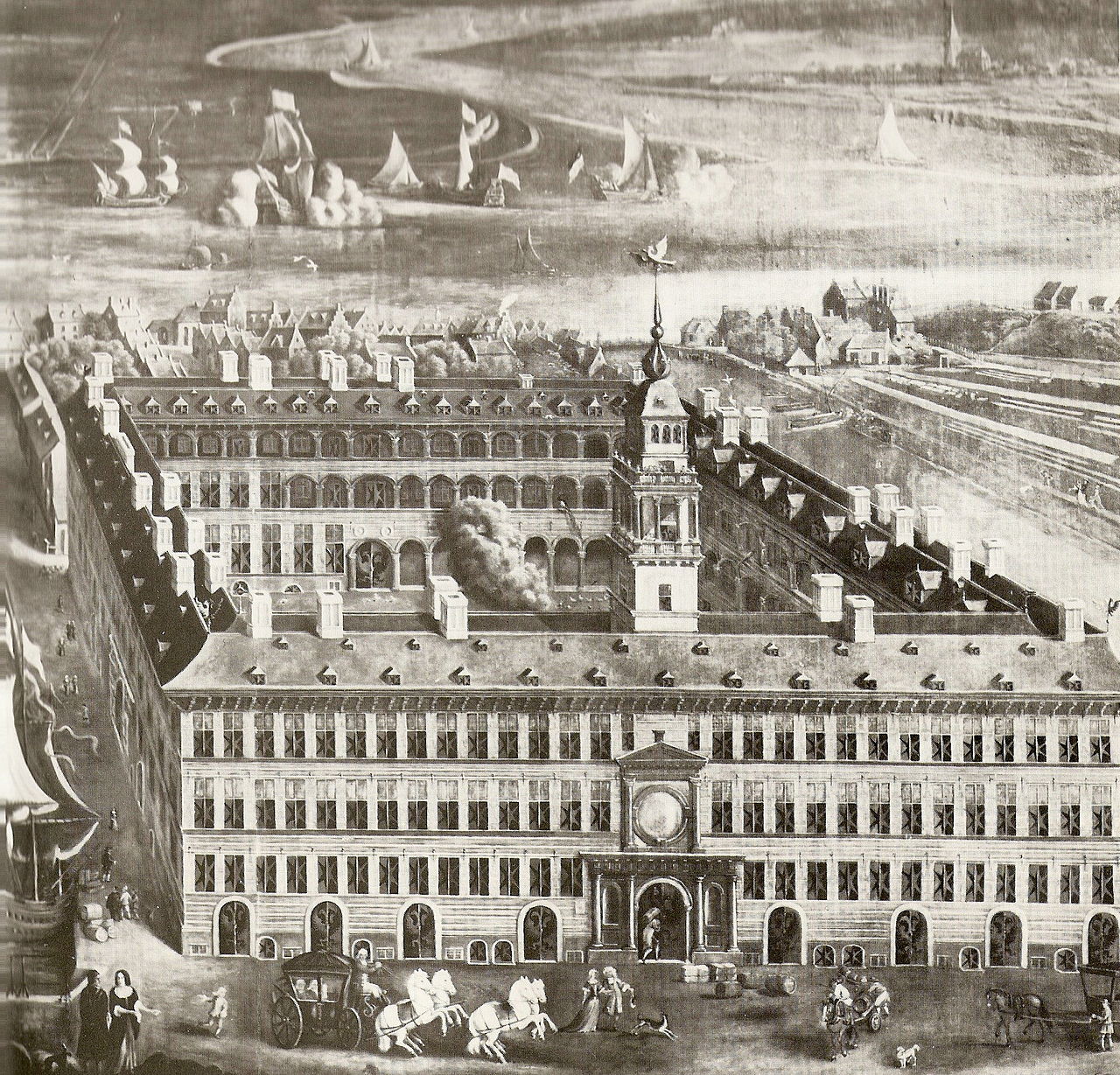
unknown, probably working in Bremen · Painting in Town hall of Bremen, scan of reproduction in Deutsche Marinemalerei, 1977, S.79, ISBN 3-7979-1117-3 · Public domain
- Born
- 1510
- Died
- 1582
- Nationality
- Kingdom of Denmark
- Occupation
- architect
VALÉORINE Encyclopedia
VALÉORINE documentary reading
Documentary summary
Illustration — The Oostershuis in Antwerp depicted in c. 1700 • Illustration — The first Royal Exchange in London, 17th-century depiction • Illustration — Kronborg Castle in Denmark Hans Hendrik van Paesschen (c. 1510–1582) was a Flemish architect, based in Antwerp, who designed high-style classical buildings in many countries of Northern Europe.
Admitted source layer · organised and presented by VALÉORINE
Note VALÉORINE
Hans Hendrik van Paesschen worked as an architect and was Kingdom of Denmark. Hans Hendrik van Paesschen was born in 1510. Hans Hendrik van Paesschen died in 1582.
Composed from admitted, traceable facts · 26 September 2026
VALÉORINE
Reference Check
Propose documentary evidence for Hans Hendrik van Paesschen. A contribution is never written directly as fact: identity, source, rights and evidence gates still decide.
Sign in to contribute
Documentary evidence
Documentary basis
Authority files
wikidata · Q1977577 · wikipedia · Hans Hendrik van Paesschen
In this article
Life and times
Life and times
While Italy had the architecture of Andrea Palladio and France that of Philibert Delorme, a contemporary of theirs, Hans Hendrik van Paesschen, was designing equally beautiful buildings in northern Europe. One of the reasons he is so little known is that in each country where he worked his name was spelled differently. After presumably receiving his training in Italy, Paesschen established himself in Antwerp as an architect and builder, often using the sculptor Cornelis Floris de Vriendt to secure architectural commissions for him. Paesschen worked in Flanders, the Netherlands, England, Wales, north Germany, Denmark, Norway, Sweden, and Königsberg. It is also likely that he designed buildings in northeastern France, Estonia, Latvia and Lithuania, but these have so far not been identified. In sharp contrast to the gothic and mannerist styles being used at the time in northern Europe, Paesschen often designed buildings in a pure Florentine style, but with a northern flavor. He employed arcaded and colonnaded loggias, domes, and Venetian arches on his best buildings. The majority of his buildings have been destroyed or substantially altered, so his work is known mostly through old pictures. Several generations of his descendants in the Van de Passe family were notable engravers, usually with the surname de Pas or van de Passe.
Identity
Identity
Hans Hendrik van Paesschen is recorded as architect.
Life and career
Dated record
Life and career
The full dated record · 2 entries
1510
Hans Hendrik van Paesschen was born in 1510.
1582
Hans Hendrik van Paesschen died in 1582.
Major works attributed to Paesschen
• 1549ff: Triumphal gates, Antwerp and elsewhere • 1559ff: Fortifications, Antwerp • 1559: Fortifications, Alvsborg, Norway • c.1559: Villa with dome, London • c.1560: Queen's Loggia, Windsor • c.1560: Duke of Brabant's Palace, Brussels • c.1560: Steelyard, London • 1561: Raadhuis, Antwerp • 1561: Gresham House, London • 1564: Hanseatenhuis, Antwerp • 1564: Parts of Burghley House, England • 1564: Loggia, Copthall, England • 1564: Fortifications, Willemstad, the Netherlands • 1565: Reformed Church, Willemstad • 1565: Fortifications, Klundert, the Netherlands • c.1565: Temple Bar I, London • 1566: Fortifications, Bohus, Sweden • 1566: Cathedral altarpiece, Lund, Sweden • 1566: Royal Exchange, London • 1567: Fortifications, Akershus, Norway • 1567: Osterley House, England • 1567: Bachegraig House, Wales • 1567: Faringdon Town Hall, England • 1567: Part of Theobalds, England • 1568: Town Plan, Frederikstad, Norway • 1568: Part of Gorhambury, England • 1570: Part of Rathaus, Lubeck, Germany • 1571: Selsø Castle, Denmark • 1574: Part of Kronborg Castle, Denmark • 1574: Part of University, Copenhagen • 1576: Uraniborg, Denmark • 1577: Bathhouse, Hillerod, Denmark • 1577: Fadeburslangen, Hillerod • 1578: Vallo Castle, Denmark • 1579: 76 Stengade, Helsingor, Denmark
Literature
Scholarly footprint
A count of publications is evidence of attention, not of standing, and is given here only as a measure.
Notes from the source article
Cited by Wikipedia
Notes from the source article
These works are cited by the source article, in its own numbering. They are recorded as its citations, not as sources VALÉORINE has verified.
- 1.Curl, James Stevens. A Dictionary of Architecture and Landscape Architecture, 2nd Ed. Oxford: Oxford UP, 2006.
- 2."Paesschen, Hans Hendrik van." Encyclopedia.com Accessed 16 February 2015.
References
Citations
References
Each reference names the institution holding it, so a reader may go to the document itself.
reference work
Secondary witnessreference work
Secondary witness
The Encyclopedia exists whether or not anything is for sale. Corrections are recorded rather than overwritten, and every version of this record is kept. Published 16 August 2026.
Elsewhere in Design
11,558 published records in this field, each with its sources named.
- Hans Erik StabyDesigner
- Hans GerickeDesigner
- Hans GrässelDesigner
- Hans GrisebachDesigner
- Hans HofmannDesigner
- Hans HohlochDesigner
- Hans Jacob HansteenDesigner
- Hans Jacob SparreDesigner
Best supported in this field
For owners
Own a work by Hans Hendrik van Paesschen?
A specialist will read what you send and tell you what the house can establish, what it cannot, and whether the object is suited to sale. There is no charge and no obligation. The object stays with you throughout; nothing is shipped to us unless it is arranged in writing beforehand.