
Giulio Traballesi
Giulio or Giuliano Traballesi or Trabellesi (2 November 1727 – 14 November 1812) was an Italian Neoclassical painter and engraver. Through his prolific graphic work and academic leadership, Traballesi helped solidify Milan as the center for innovation and Neoclassical training during the late 18th century.
Also recorded as Giuliano Traballesi · Il Giulianno Traballesi · Il Giulianno · Giuliano Trabellesi
Giulio Traballesi
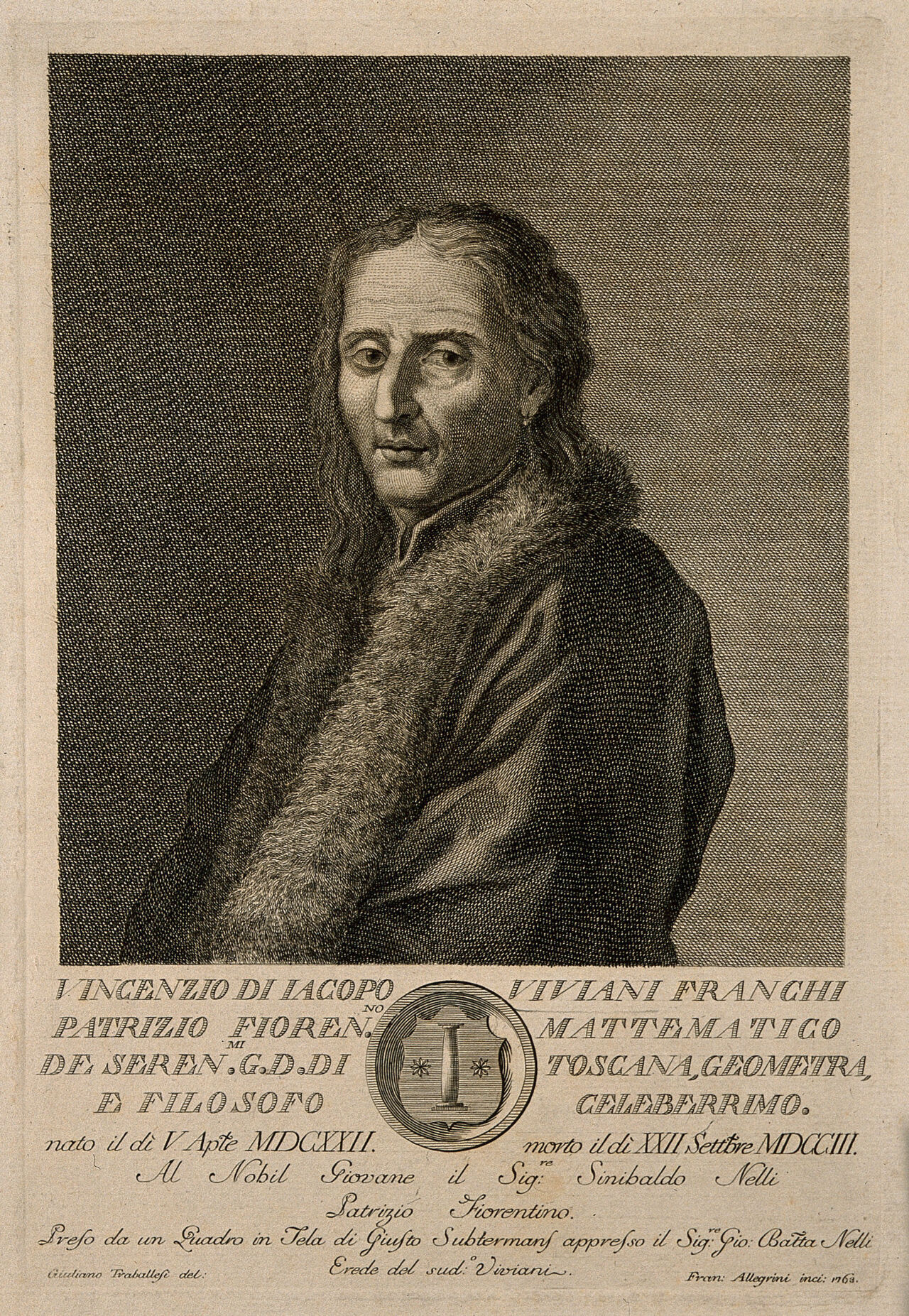
Giulio Traballesi · Wellcome Collection, London · Wellcome Collection · Public Domain Mark
- Name
- Giulio Traballesi
- Born
- 2 November 1727
- Birthplace
- Florence, Grand Duchy of Tuscany
- Died
- 14 November 1812
- Place of death
- Milan, Kingdom of Italy
- Field
- Painting
- Movement
- Neoclassicism
- Occupation
- printmaker · painter
VALÉORINE Encyclopedia
VALÉORINE documentary reading
Documentary summary
Giulio or Giuliano Traballesi or Trabellesi (2 November 1727 – 14 November 1812) was an Italian Neoclassical painter and engraver. Through his prolific graphic work and academic leadership, Traballesi helped solidify Milan as the center for innovation and Neoclassical training during the late 18th century.
Admitted source layer · organised and presented by VALÉORINE
Reference Check
Propose documentary evidence for Giulio Traballesi. A contribution is never written directly as fact: identity, source, rights and evidence gates still decide.
Sign in to contribute
Documentary evidence
Documentary basis
Authority files
wikidata · Q3107909 · wikipedia · Giulio Traballesi
In this article
Key facts
Key facts
• Name — Giulio Traballesi • Born — 2 November 1727 • Birthplace — Florence, Grand Duchy of Tuscany • Died — 14 November 1812 • Place of death — Milan, Kingdom of Italy • Field — Painting • Movement — Neoclassicism
Early years
Early years
Giulio Traballesi was born in Florence. After training with Agostino Veracini and Francesco Conti in Florence, he studied architecture under Antonio Galli-Bibiena. He widened his experience by studying painting based on the works of Antonio da Correggio of Parma and those of painters from Bologna. In 1764, he won a competition at the Academy of Fine Arts of Parma with the painting Furius Camillus Liberating Rome from the Gallic Senones, a work that is deeply influenced by the Bolognese tradition and by the Roman classicism of Nicolas Poussin. The success of this painting won Traballesi major commissions in his native Tuscany, where the transition from Rococo to Neoclassicism had been encouraged by the reforms initiated by Leopoldo II Habsburg-Lorraine when he became Grand Duke of Tuscany in 1765.
Habsburg Tuscany
Habsburg Tuscany
The fresco of Augustus Sacrificing to Celebrate the Peace of the Empire (1769–70) in the salon of the Villa del Poggio Imperiale outside Florence retains a Rococo illusionistic framework, yet the bold perspectives, the narrow range of colours and the concretely realized figures anticipate the later development of his art in Tuscany. From this date he turned increasingly to the Roman art of Corrado Giaquinto and Gregorio Guglielmi, and to that of the Florentine Giovanni Domenico Ferretti. On the cupola of the Sanctuary of Montenero he painted the boldly illusionistic Virgin in Glory (1771–4). In 1772 he completed the vault fresco in Santa Maria della Misericordia, Siena, with scenes from the Life of the Virgin in four medallions framed in feigned stucco, and in the same year he decorated a bay of a corridor in the Uffizi with an Allegory of Philosophy. Another significant piece of Florentine work is the fresco of Venus Interceding with Jove for Aeneas in Palazzo Montauti Niccolini. The last dated work of his Florentine period was the airy and expansive decoration (1775) of the vault of the oratory of San Firenze with the Assumption of the Virgin.
Lombardy
Lombardy
• Illustration — The Nativity (1794), National Gallery of Art, Washington, DC In 1775 Traballesi was summoned to Milan to collaborate with the Neoclassical architect Giuseppe Piermarini, and from 1775 to 1807 he was Professore del Disegno at the newly established Brera Academy, where Andrea Appiani was one of his pupils. Through his position at the Brera Academy, Traballesi played an important role in shaping the intellectual and artistic foundations of Neoclassicism in northern Italy. The teachings emphasized the significance of linear precision, moral narrative, and classical form in visual art, aligning with the ideals of the period. In this period Traballesi frescoed (1778–80) the new salons of the Palazzo Arciducale (now known as the Palazzo Reale), where Piermarini was the architect, with Aurora Fleeing the Night, Jove’s Repose, Cupid and Psyche and the Triumph of Hygeia (all destr. 1943). Sketches and a preparatory drawing (Milan, Biblioteca di Brera; Milan, Biblioteca Ambrosiana; Milan, Sforza Castle) survive for these frescoes. Traballesi's frescoes at the palazzi Fontana–Silvestri (where he collaborated with Appiani), Negroni-Prata and Moriggia have also been destroyed. The large fresco of Juno Commanding Aeolus to Destroy Aeneas’s Fleet (1784; Milan, Palazzo Serbelloni) is known through an engraving made by Traballesi in 1794. The surviving pictorial evidence suggests that Traballesi's Milan frescoes lost the airy and luminous qualities of his Tuscan works and were characterized by a compositional rigidity influenced by Neoclassical doctrine. Such rigidity is certainly evident in his only known large Milanese work on a religious subject, the canvas of the Assumption (Milan, San Gottardo al Palazzo). As to the feigned low reliefs of mythological subjects in Neo-classical style that formed part of his decoration of palazzi, all that remains is a set of four overdoors from the Casa Silvestri (later Palazzo Fontana-Silvestri; Milan, priv. col.). Traballesi's smaller paintings include the Transfiguration (1801; Rome, priv. col.) on copper and the Self-portrait (Milan, Brera). Traballesi's many drawings are mainly in Florence (Uffizi) and Milan. Noteworthy among them are two versions of the Adoration of the Shepherds, one dated 1794 (Milan, Sforza Castle) and the other (Washington, DC, National Gallery of Art) probably created on a later date, in which the religious theme is rendered in a classical language with rich chiaroscuro effects. Traballesi died in Milan on 14 November 1812.
Works and production
Works and production
Catalogued output is recorded as follows.
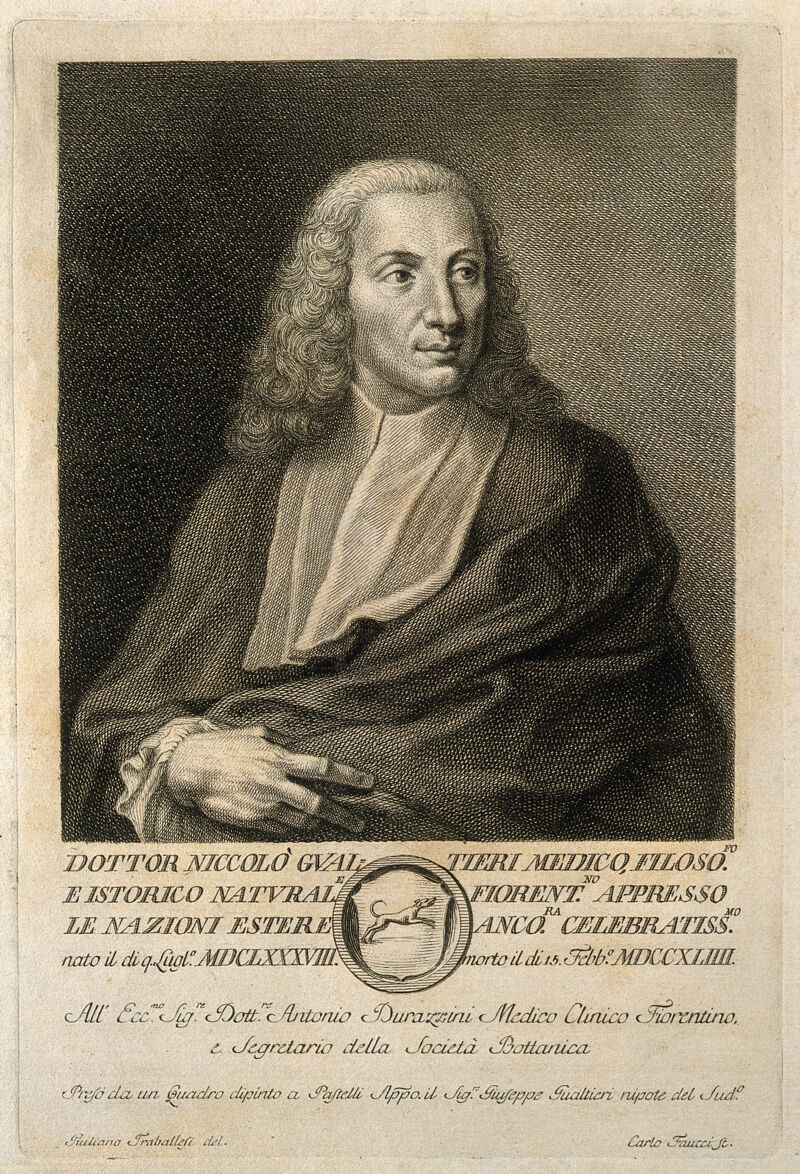
Niccolò Gualteri. Line engraving by C. Faucci after G. Traballesi., by Giulio Traballesi
Giulio Traballesi · Wellcome Collection, London · Wellcome Collection
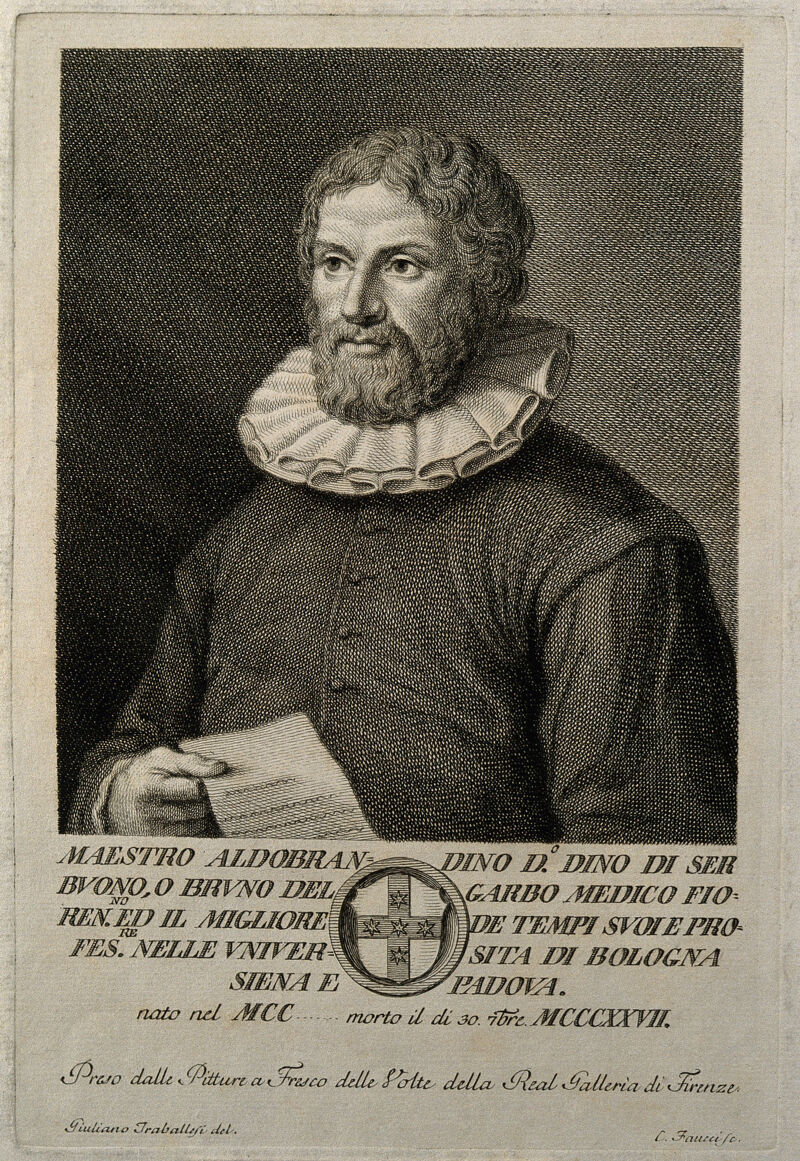
Aldobrandino da Siena. Line engraving by C. Faucci after G. Traballesi., by Giulio Traballesi
Giulio Traballesi · Wellcome Collection, London · Wellcome Collection
Primary material
Documents and archives
authority record
- Wikidata, structured authority record Q3107909: Giulio Traballesi
General reference · Wikidata
reference work
- “Giulio Traballesi”, English Wikipedia, consulted as further reading
Reputable secondary · Wikipedia
Notes from the source article
Cited by Wikipedia
Notes from the source article
These works are cited by the source article, in its own numbering. They are recorded as its citations, not as sources VALÉORINE has verified.
- 1.Caimi, Antonio. Delle arti del designo e degli artisti nelle provincie di Lombardia dal 1777-1862. Presso Luigi di Giacomo Pirola. 43–44. 1862.
- 2.Bryan, Michael. Dictionary of Painters and Engravers, Biographical and Critical. George Bell and Sons. II L-Z. 582. 1889.
Bibliography printed in the source article · 1
- cite encyclopedia
References
Citations
References
Each reference names the institution holding it, so a reader may go to the document itself.
authority record
Secondary witnessreference work
Secondary witness
Further particulars
Held on the record
Further particulars
Open the remaining particulars
This entry is compiled from 8 catalogued sources across 4 independent registers. The registers consulted are Crossref registry, Wikipedia, Wikimedia Foundation and Wellcome Collection. Every statement above is held against the register that stated it; where the registers are silent, the entry is silent.
The Encyclopedia exists whether or not anything is for sale. Corrections are recorded rather than overwritten, and every version of this record is kept. Published 16 August 2026.
Elsewhere in Prints
4,138 published records in this field, each with its sources named.
- Giulio Cesare ProcacciniEngraver
- Giulio Cesare VenentiEngraver
- Giulio CisariEngraver
- Giulio ParigiEngraver
- Giuseppe AllegriniEngraver
- Giuseppe AsioliEngraver
- Giuseppe BaroniEngraver
- Giuseppe BiasiEngraver
Best supported in this field
For owners
Own a work by Giulio Traballesi?
A specialist will read what you send and tell you what the house can establish, what it cannot, and whether the object is suited to sale. There is no charge and no obligation. The object stays with you throughout; nothing is shipped to us unless it is arranged in writing beforehand.