
Giovanni di ser Giovanni Guidi
Giovanni di Ser Giovanni (1406 – 1486), also known as Lo Scheggia, or "the Splinter" was an Italian Renaissance painter in Florence who was born in San Giovanni Valdarno and was the younger brother of the famous Masaccio. He and his workshop mostly produced works such as cassone panels and desci da parto (birth trays) for Florence alongside larger works for churches in the country.
Also recorded as Lo Scheggia · Master of the Adimari Cassone · Giovanni di Ser Giovanni Guidi · Giovanni Guidi the Elder
Giovanni di ser Giovanni Guidi
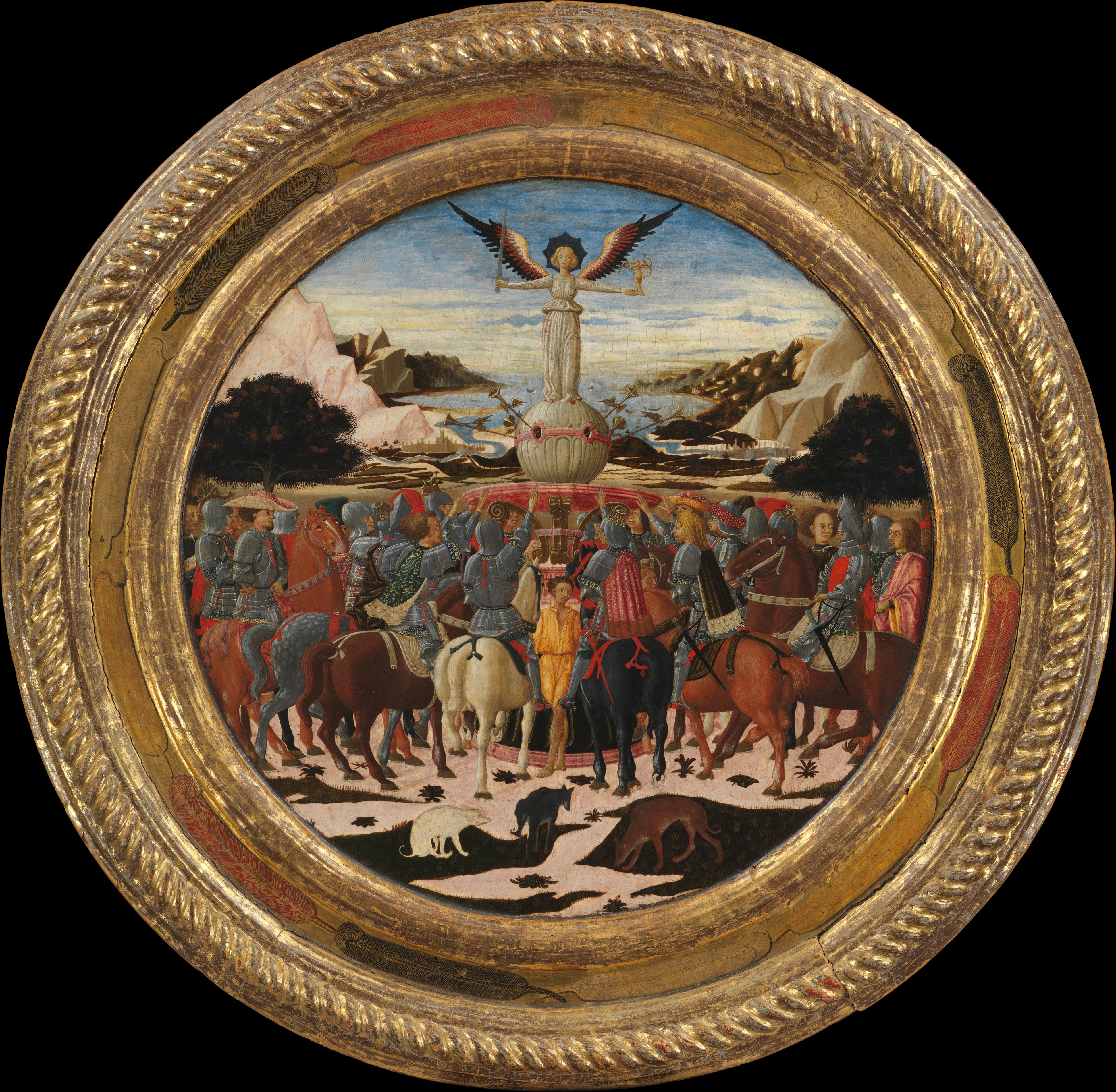
Giovanni di ser Giovanni Guidi (called Scheggia) · The Metropolitan Museum of Art, New York · Purchase in memory of Sir John Pope-Hennessy: Rogers Fund, The Annenberg Foundation, Drue Heinz Foundation, Annette de la Renta, Mr. and Mrs. Frank E. Richardson, and The Vincent Astor Foundation Gift · Public domain (CC0, Met Open Access)
- Born
- 1406. · San Giovanni Valdarno.
- Died
- 1486. · Florence.
- Nationality
- Republic of Florence.
- Occupation
- painter.
- Known for
- Saint Bernardino of Siena Preaching, Saint Anthony Abbot Tempted by Gold and Cassone Adimari.
- Languages
- Italian.
VALÉORINE Encyclopedia
VALÉORINE documentary reading
Documentary summary
Giovanni di Ser Giovanni (1406 – 1486), also known as Lo Scheggia, or "the Splinter" was an Italian Renaissance painter in Florence who was born in San Giovanni Valdarno and was the younger brother of the famous Masaccio. He and his workshop mostly produced works such as cassone panels and desci da parto (birth trays) for Florence alongside larger works for churches in the country.
Admitted source layer · organised and presented by VALÉORINE
Reference Check
Propose documentary evidence for Giovanni di ser Giovanni Guidi. A contribution is never written directly as fact: identity, source, rights and evidence gates still decide.
Sign in to contribute
World of VALÉORINE
Documentary connections
Only confirmed graph relationships appear here. Images are shown only when their identity and reuse rights both pass the documentary gate.
Documentary evidence
Documentary basis
Authority files
wikidata · Q2738832 · wikipedia · Giovanni di ser Giovanni Guidi
In this article
Biography
Biography
The recorded working language is Italian. Works named in the authority record are Saint Bernardino of Siena Preaching, Saint Anthony Abbot Tempted by Gold and Cassone Adimari. Work by Giovanni di ser Giovanni Guidi is recorded in the collections of J. Paul Getty Museum, Metropolitan Museum of Art, Galleria dell'Accademia, Seattle Art Museum and John and Mable Ringling Museum of Art.
Born in San Giovanni in Altura, now San Giovanni Valdarno, he moved with his family to Florence in 1417. Between 1420 and 1421 he came into a relationship with Lorenzo Bicci, probably as an assistant in his workshop. In 1426 he was registered in Pisa as a guarantor for his brother Masaccio, and he refused his brother's inheritance in 1428, for the inconsistency. In 1429 the artist had his own workshop in Florence in the parish of Sant'Apollinare. In 1430 he joined the Guild of Saint Luke. He joined the "Guild of the Legnaioli" as a "forzerinario", or chest maker; then in 1433 he matriculated in the Art of Doctors and Apothecaries. Between 1436 and 1440 he provided the cartoons for the Sacristy of the Florentine Cathedral. In these years, he manufactured and painted luxury furniture especially for the clients in town and in the country he produced altarpieces and frescoes, a signed fragment of the latter being the Martyrdom of San Lorenzo in church of San Lorenzo in San Giovanni Valdarno. In 1449 on the occasion of the birth of Lorenzo de' Medici Lo Scheggia painted the Desco da parto with the Triumph of Fame now in the Metropolitan Museum of Art in New York. Lo Scheggia died in 1486 and was buried in the basilica of Santa Croce. Also included in his catalog of works are: a Madonna and Child (1450), originally in the church of San Lorenzo in San Giovanni Valdarno and a tempera on a panel depicting the Choir of Angel Musicians, part of the door from the vestry of the organ Oratory of San Lorenzo. In the former Abbey of Vallumbrosan Order in Soffena is also preserved a fine Annunciation, while in the Accademia Gallery in Florence is the so-called Adimari Cassone, a panel with a party scene set in a city landscape in perspective, in which the Florence Baptistery is recognisable.
Places
Named by the record
Places
Only places the record itself states, plotted where the house gazetteer settles their coordinates. Nothing is inferred from a name or a nationality.
San Giovanni Valdarno.
Birth place
Florence.
Death place
Literature
Alessandro Delpriori, La giovinezza dello Scheggia e una Madonna col Bambino all'alba del Rinascimento, Firenze, Frascione Arte, 2011. ISBN 978-88-904451-1-8 [1] Archived 2012-06-11 at the Wayback Machine
Notes from the source article
Cited by Wikipedia
Notes from the source article
These works are cited by the source article, in its own numbering. They are recorded as its citations, not as sources VALÉORINE has verified.
Bibliography printed in the source article · 1
- Pernis, Maria Grazia. Lucrezia Tornabuoni De' Medici and the Medici Family in the Fifteenth Century. Peter Lang Publishing, Inc. 2006. 978-0820476452.
References
Citations
References
Each reference names the institution holding it, so a reader may go to the document itself.
reference work
Secondary witnessreference work
Secondary witness
The Encyclopedia exists whether or not anything is for sale. Corrections are recorded rather than overwritten, and every version of this record is kept. Published 14 August 2026.
Elsewhere in Paintings
18,717 published records in this field, each with its sources named.
- Giovanni di CorraduccioArtist
- Giovanni di FrancescoArtist
- Giovanni di Lorenzo LarcianiArtist
- Giovanni di Niccolò MansuetiArtist
- Giovanni DoArtist
- Giovanni Domenico BrugieriArtist
- Giovanni Domenico CerriniArtist
- Giovanni Domenico FerrettiArtist
Best supported in this field
For owners
Own a work by Giovanni di ser Giovanni Guidi?
A specialist will read what you send and tell you what the house can establish, what it cannot, and whether the object is suited to sale. There is no charge and no obligation. The object stays with you throughout; nothing is shipped to us unless it is arranged in writing beforehand.