
Giovanni Battista Guarini
Giovanni Battista Guarini (10 December 1538 – 7 October 1612) was an Italian poet, dramatist, and diplomat. Courtier at Ferrara, diplomat and secretary to several ruling families, he served also at Florence and Urbino. He is best known as the author of the pastoral tragicomedy Il pastor fido.[1] Written in emulation of Tasso's Aminta, it was extremely successful and remained one of the most popular work of secular literature in Western Europe for almost two hundred years.
Giovanni Battista Guarini
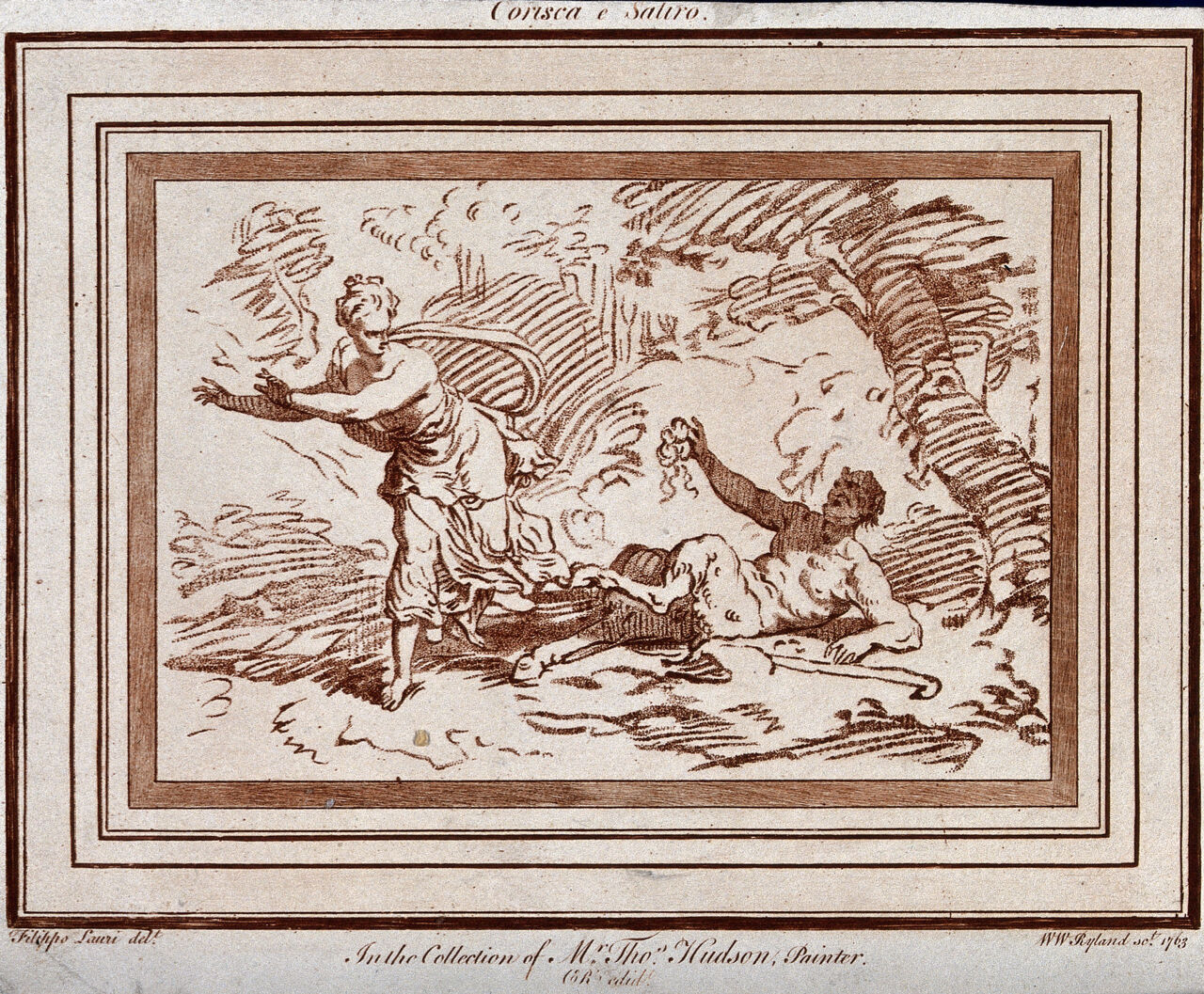
Giovanni Battista Guarini · Wellcome Collection, London · Wellcome Collection · Public Domain Mark
- Name
- Giovanni Battista Guarini
- Born
- 10 December 1538
- Birthplace
- Ferrara, Duchy of Ferrara
- Died
- 7 October 1612
- Place of death
- Venice, Republic of Venice
- Occupation
- Playwright, writer, poet, diplomat
- Movement
- Renaissance literature
- Nationality
- Republic of Venice.
- Fields
- drama, poetry and diplomacy.
- Movements
- Renaissance and Petrarchism.
- Education
- University of Pisa and University of Padua.
- Known for
- Il pastor fido.
VALÉORINE Encyclopedia
VALÉORINE documentary reading
Documentary summary
Giovanni Battista Guarini (10 December 1538 – 7 October 1612) was an Italian poet, dramatist, and diplomat. Courtier at Ferrara, diplomat and secretary to several ruling families, he served also at Florence and Urbino. He is best known as the author of the pastoral tragicomedy Il pastor fido.[1] Written in emulation of Tasso's Aminta, it was extremely successful and remained one of the most popular work of secular literature in Western Europe for almost two hundred years.
Admitted source layer · organised and presented by VALÉORINE
Note VALÉORINE
Giovanni Battista Guarini (1538–1612) was a diplomat, playwright and poet, among other activities, a national of the Republic of Venice. The diplomat was born in Ferrara and died in Venice.
Giovanni Battista Guarini was educated at University of Padua and University of Pisa. The diplomat worked for University of Bologna and was a member of Accademia degli Umoristi, Accademia dei Gelati and Accademia della Crusca. Giovanni Battista Guarini worked in Ferrara. Activity centred on diplomacy, drama and poetry. Giovanni Battista Guarini was associated with Petrarchism and Renaissance.
Among the works is Il pastor fido. Languages used include Italian and Latin.
Composed from admitted, traceable facts · 26 September 2026
VALÉORINE
Reference Check
Propose documentary evidence for Giovanni Battista Guarini. A contribution is never written directly as fact: identity, source, rights and evidence gates still decide.
Sign in to contribute
World of VALÉORINE
Documentary connections
Only confirmed graph relationships appear here. Images are shown only when their identity and reuse rights both pass the documentary gate.
Documentary evidence
Evidence Panel
not yet certified
- Identity
- resolved
- Independent source families
- 0
- Admitted assertions
- 0
- Open conflicts
- 0
Authority files
wikidata · Q542039 · wikipedia · Giovanni Battista Guarini
In this article
Biography
Biography
Giovanni Battista Guarini studied at University of Pisa and University of Padua. The recorded working language is Italian and Latin. The field of work recorded is drama, poetry and diplomacy. Places of work recorded in the authority are Ferrara. Employment is recorded with University of Bologna. Works named in the authority record are Il pastor fido.
Key facts
Key facts
• Name — Giovanni Battista Guarini • Born — 10 December 1538 • Birthplace — Ferrara, Duchy of Ferrara • Died — 7 October 1612 • Place of death — Venice, Republic of Venice • Occupation — Playwright, writer, poet, diplomat • Language — Italian • Period — Renaissance • Genre — Tragicomedy • Subject — Pastoral • Movement — Renaissance literature • Notable Works — Il pastor fido • Parents — Francesco Guarini and Orsina Guarini (née Macchiavelli)
Life
Life
Guarini was born at Ferrara in 1538 of a family of Veronese origin. His father Francesco was the grandson of the famous Renaissance humanist Guarino da Verona. On the termination of his studies at the university of Padua, he was appointed professor of rhetoric and poetics at Ferrara. Soon after his appointment, he published a collection of sonnets which obtained for him great popularity as a poet. His marriage in about 1560 to Taddea, a sister of the famous Ferrarese singer Lucrezia Bendidio, resulted in eight children, with whom in later life he was much at odds. In 1564 he joined the Paduan Accademia degli Eterei and in 1567 he entered the service of Alfonso II d'Este, Duke of Ferrara, who sent him on important diplomatic missions to Turin, Rome, Venice, and Poland. Unlike his younger rival Torquato Tasso, he seems to have had few difficulties in withstanding the pressures of courtly life. Although his masterpiece, Il pastor fido (published in 1590), was completed during a prolonged absence from the Este court, it is generally supportive of existing social structures. After about 20 years of service, differences with the Duke led him to resign. Until his reconciliation with Alfonso in 1595 he moved from one court to another, prevented by the duke from obtaining a firm position. After Alfonso’s death in 1597 he went from Venice to Florence, where he served Ferdinando I de' Medici (1599–1601). He was also briefly attached to the Gonzagas at Mantua and to the Duke of Urbino (1602–4). Later in his life, he returned to his native Ferrara. There he discharged one final public mission, that of congratulating Pope Paul V on his election (1605). In the late 1580s he was involved in a bitter polemic with Giason Denores, who objected in particular to Guarini's mixing of tragic and comic genres in his Pastor fido.[2] He died in Venice, where he had been summoned to attend a lawsuit, on 7 October 1612, aged 73.[3] Guarini was a prominent member of several academies, including the Eterei of Padua, the Crusca of Florence, the Innominati of Parma, the Gelati of Bologna, and the Umoristi of Rome. He was the father of the scholar Alessandro Guarini and of Anna Guarini, one of the famous virtuose singers of the Ferrara court, the three women of the concerto di donne. She was murdered by her husband in 1598, with the assistance of her brother Girolamo.
Il pastor fido
Il pastor fido
• Illustration — Jacob van Loo, Amarillis Crowning Mirtillo, a scene from Guarini's Pastor fido, circa 1640 His most notable work, Il pastor fido, had its first dramatic representation in honor of the nuptials of the Duke of Savoy and Catalina Michaela of Austria in 1585 (published in 1590 in Venice; 20th rev. ed., 1602, Venice; Eng. trans. The Faithful Shepherd, 1647). This play, a pastoral tragicomedy about the loves and fates of shepherds and hunters, polished in style, was translated into many languages and became popular during the 17th century. Il pastor fido marks the culmination of the pastoral poetry of the Italian Renaissance. It set the pattern for a code of refinement and gallantry that lasted until the late 18th century. Guarini's treatises, Il Verato (1588) and Il Verato secondo (1593), written in defence of his pastoral drama and subsequently reworked in the Compendio della poesia tragicomica (1601), are interesting efforts to justify the legitimacy of the hybrid genre, tragicomedy, which he argued was more in keeping with the aspirations and tastes of the contemporary world than either comedy or tragedy alone.
Liric poetry
Liric poetry
Guarini's lyric poems were first published in Venice by Giovanni Battista Ciotti in 1598. Guarini's lyric follows the manner of Anacreon, Stesichorus, Catullus and Petrarch as opposed to the more majestic one of Pindar, Horace and Della Casa. His madrigals are particularly remarkable for their musicality and daring metrical structure. No poet played a larger role in the flowering of the madrigal in the late Renaissance and early Baroque eras than Guarini. His poems were set more often by madrigal composers than the work of any other poet, even Tasso, who came in a close second; the prolific madrigal composer Philippe de Monte even named one of his collections Il pastor fido after Guarini's most famous work. Nearly fifty of Monteverdi's approximately two hundred madrigals are set to texts by Guarini.[4] Guarini's popularity was due to his providing texts to composers which were rich with possibilities for word-painting and other easy translations of emotion into music. One of his poems, the erotic Tirsi morir volea, recounting the amorous encounter of a shepherd and a nymph, was set to music as a madrigal by more composers than any other pastoral poem of the era, including, among others, Andrea Gabrieli, Gioseppe Caimo, Carlo Gesualdo, Luca Marenzio, Benedetto Pallavicino, and Giaches de Wert.[5] Another of Guarini's poems which was set by numerous madrigalists was Cor mio, deh non languire ("Dear heart, I prithee do not waste away"). Poetic translations of Guarini's poetic madrigals may be found in the 2018 volume by translator Nicholas R. Jones, A Poetry Precise and Free: Selected Madrigals of Guarini. In addition to his decisive influence on madrigal composers, he was the single largest influence on opera librettists up until the time of Metastasio in the 18th century. He therefore plays an important role in the history of music. While Guarini's work may be seen as lacking the deep feeling and sentiment of another poet at the Este court, Torquato Tasso, it was precisely this quality which commended it to musical setting at a time when excessive emotionalism had become unfashionable. An example of a setting of his work would be "O come è gran martire" from Libro Terzo dei Madrigali (1592) by Monteverdi.
Other works
Other works
Guarini's other works include a collection of Letters (1593), a dialogue on political liberty and the comedy L'Idropica (The Hydropic). Written about 1584 and published posthumously in 1613, L'Idropica had its first dramatic representation in Mantua for the 1608 wedding of Prince Francesco Gonzaga and Margherita of Savoy. The work, modeled after ancient Greek and Roman comedies, aimed to bring a sense of dignity both of a moral and artistic nature back to the genre. Guarini's play is a learned comedy in the tradition of Ariosto and Machiavelli. It is considered one of the most noteworthy examples of Late Renaissance Italian comic theatre.
Works
Works
* * * * *
Career and activity
Career and activity
Giovanni Battista Guarini worked in drama, poetry and diplomacy. His work is associated with Renaissance and Petrarchism. He was employed by University of Bologna. He belonged to Accademia degli Umoristi, Accademia della Crusca and Accademia dei Gelati. He worked at Ferrara. Recorded as playwright, writer, poet and diplomat.
Life and career
Dated record
Life and career
The full dated record · 2 entries
1538
Giovanni Battista Guarini born at Ferrara.
1612
Giovanni Battista Guarini died at Venice.
Places
Named by the record
Places
Only places the record itself states, plotted where the house gazetteer settles their coordinates. Nothing is inferred from a name or a nationality.
Ferrara.
Birth place
Venice.
Death place
Primary material
Documents and archives
reference work
- “Giovanni Battista Guarini”, English Wikipedia, consulted as further reading
Reputable secondary · Wikipedia
- Wikidata, structured authority record Q542039: Giovanni Battista Guarini
Reputable secondary · Wikimedia Foundation
authority file
Notes from the source article
Cited by Wikipedia
Notes from the source article
These works are cited by the source article, in its own numbering. They are recorded as its citations, not as sources VALÉORINE has verified.
- 1.1590; tr. Sir Richard Fanshawe, The Faithful Shepherd, 1647; repr. ed. W. F. Staton, W. E. Simeone, 1964.
- 2.Gibbons, D. De Nores, Giasone. The Oxford Companion to Italian Literature. Oxford University Press. 2002.
- 3.1905.
- 4.Nicholas R. Jones, A Poetry Precise and Free: Selected Madrigals of Guarini (University of Michigan Press, 2018), 19-21.
- 5.Einstein, Vol. II p. 539.
References
Citations
References
Each reference names the institution holding it, so a reader may go to the document itself.
reference work
Partially resolvedauthority file
VIAF cluster 54142932 for Giovanni Battista Guarini, aggregating national library name authorities.OCLC
Partially resolvedreference work
Wikidata, structured authority record Q542039: Giovanni Battista GuariniWikimedia Foundation
Partially resolved
The Encyclopedia exists whether or not anything is for sale. Corrections are recorded rather than overwritten, and every version of this record is kept. Published 14 August 2026.
Elsewhere in Books
38,960 published records in this field, each with its sources named.
- Giovanni Battista BrocchiAuthor
- Giovanni Battista CastiAuthor
- Giovanni Battista FerrariAuthor
- Giovanni Battista GiraldiAuthor
- Giovanni Battista LorenziAuthor
- Giovanni Battista MansoAuthor
- Giovanni Battista NiccoliniAuthor
- Giovanni BerchetAuthor
Best supported in this field
For owners
Own a work by Giovanni Battista Guarini?
A specialist will read what you send and tell you what the house can establish, what it cannot, and whether the object is suited to sale. There is no charge and no obligation. The object stays with you throughout; nothing is shipped to us unless it is arranged in writing beforehand.