
Giovanni Battista Caccini
Illustration — Summer Giovanni Battista Caccini or Giovan Battista Caccini (24 October 1556 – 13 March 1613) was an Italian sculptor from Florence, who worked in a classicising style in the later phase of Mannerism.
Also recorded as Giovanni-Battista Caccini · Giovanni-Battista de Caccinis · Giovanni Battista De Caccinis
Giovanni Battista Caccini
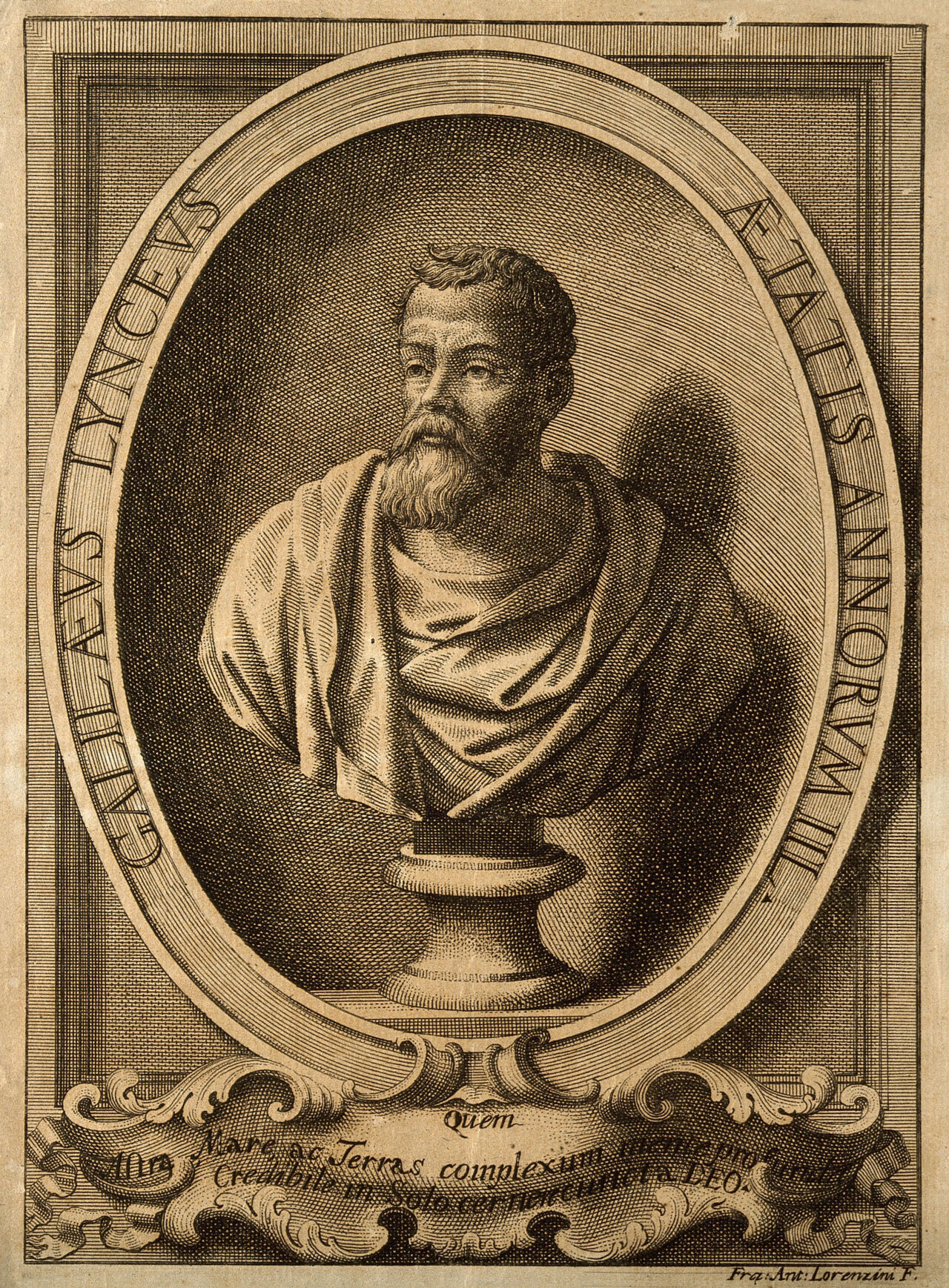
Giovanni Battista Caccini · Wellcome Collection, London · Wellcome Collection · Public Domain Mark
- Born
- 1556 · Montopoli in Val d'Arno.
- Died
- 1613 · Florence.
- Nationality
- Italy
- Occupation
- sculptor · architect
- Fields
- art of sculpture · architecture
- Movements
- Classicism · Mannerism
VALÉORINE Encyclopedia
VALÉORINE documentary reading
Documentary summary
Illustration — Summer Giovanni Battista Caccini or Giovan Battista Caccini (24 October 1556 – 13 March 1613) was an Italian sculptor from Florence, who worked in a classicising style in the later phase of Mannerism.
Admitted source layer · organised and presented by VALÉORINE
Reference Check
Propose documentary evidence for Giovanni Battista Caccini. A contribution is never written directly as fact: identity, source, rights and evidence gates still decide.
Sign in to contribute
Documentary evidence
Documentary basis
Authority files
wikidata · Q1086991 · wikipedia · Giovanni Battista Caccini
In this article
Life
Life
Giovanni Battista Caccini was born at Montopoli in Val d'Arno between Florence and Pisa; his training was with the sculptor-architect Giovanni Antonio Dosio, known for his accurate drawings of Roman antiquities, and Caccini's numerous interpretive restorations of Roman sculptural fragments gave him the reputation of being a knowledgeable antiquarian, while the inescapable influence of Giambologna and his circle can be seen in Caccini's bronze statuettes. Caccini was in close cooperation with Pietro Tacca and the rest of Giambologna's pupils in the prolonged cooperation over the bronze doors for Pisa Cathedral. Fragmentary antiquities were not to the sixteenth-century collectors' taste. Caccini produced a head for an antique torso, and a further, crouching figure to produce the Bacchus and Ampelos in the Uffizi, which was once attributed to Michelangelo. He restored a fragmentary Apollo Sauroctonos as an Apollo with the Lyre (Uffizi). He could also improvise on antique themes: the biographer of artists Rafaello Borghini reported in 1730 that "In truth he was highly skilled in diligently putting together pieces, and counterfeiting, the Antique." • Illustration — Bust of Baccio Valori His garden sculptures produced the bold silhouettes and copious attributes that the genre requires. As an architect, his one notable work is the portico of the Santissima Annunziata, Florence (1601). Caccini died in Rome in 1613. His brother, Giulio Caccini, was a famous composer, teacher, singer, instrumentalist and writer of the very late Renaissance and early Baroque eras.
Selected works
Selected works
• Figure of S. Giovanni Gualberto, Badia di Passignano, Val di Pesa, 1580 • Bust of Christ, c. 1595 (Rijksmuseum) • Temperance, 1583 (Metropolitan Museum of Art) • Charles V crowned by Clement VII, Salone del Cinquecento, Palazzo Vecchio, Florence. • Ciborium in Santo Spirito, Florence. • Among his numerous allegorical statues in the Boboli Gardens, Florence: • Seasons, four figures in the Boboli Gardens, Florence • Youthful Jupiter (attributed), Boboli Gardens. • Seasons, two of the figures for the Ponte Santa Trinita, Florence
Places
Named by the record
Places
Only places the record itself states, plotted where the house gazetteer settles their coordinates. Nothing is inferred from a name or a nationality.
Montopoli in Val d'Arno.
Birth place
Florence.
Death place
Primary material
Documents and archives
reference work
- “Giovanni Battista Caccini”, English Wikipedia, consulted as further reading
Reputable secondary · Wikipedia
authority record
- Wikidata, structured authority record Q1086991: Giovanni Battista Caccini
General reference · Wikidata
Notes from the source article
Cited by Wikipedia
Notes from the source article
These works are cited by the source article, in its own numbering. They are recorded as its citations, not as sources VALÉORINE has verified.
- 1.Martin Weinberger, "Bronze Statuettes by Giovanni Caccini" The Burlington Magazine for Connoisseurs 58 No. 338 (Mayo de 1931), pp. 230-233+235. (Un Bacchus y Ceres en el Museo Jacquemart-André, Paris; un ex-Medici Bacchus en el Bargello)
- 2.El grupo fue reconocido como una obra de Caccini por Alois Grünwald, "Uber einige unechte Werke Michelangelo's," Münchner Jahrbuch der bildenden Kunst (1910) p. 11ff.
- 3.Borghini, Il Riposo (Florence 1730), "E di vero molto vale nel commeter con diligenza pezzi insieme, e contrafar, l'antico". Martin Weiberger iluminó este aspecto de la carrera de Caccini en la obra "A sixteenth-century restorer", The Art Bulletin 27 (1945), pp 266-69.
- 4.C. Caneva, The Boboli Gardens 1982, p. 42, no. 38.; atribuido en Louis Alexander Waldman, "A Case of Mistaken Identity: The Martellini Jupiter by Giovanni di Scherano Fancelli" The Burlington Magazine 140 No. 1149 (Diciembre de 1998, pp. 788-798) p. 789.
References
Citations
References
Each reference names the institution holding it, so a reader may go to the document itself.
reference work
Secondary witnessauthority record
General reference
The Encyclopedia exists whether or not anything is for sale. Corrections are recorded rather than overwritten, and every version of this record is kept. Published 16 August 2026.
Elsewhere in Sculpture
6,174 published records in this field, each with its sources named.
- Giovanni BarattaArtist
- Giovanni BartoliArtist
- Giovanni BastianiniArtist
- Giovanni Battista BerneroArtist
- Giovanni Battista CarboniArtist
- Giovanni Battista CrescenziArtist
- Giovanni Battista CrespiArtist
- Giovanni Battista FiammeriArtist
Best supported in this field
For owners
Own a work by Giovanni Battista Caccini?
A specialist will read what you send and tell you what the house can establish, what it cannot, and whether the object is suited to sale. There is no charge and no obligation. The object stays with you throughout; nothing is shipped to us unless it is arranged in writing beforehand.