
George Baxter
George Baxter (1804–1867) was an English artist and printer based in London. He is credited with the invention of commercially viable colour printing. Though colour printing had been developed in China centuries before, it was not commercially viable.
Also recorded as G. Baxter.Sc. · Baxter.Sc.
George Baxter
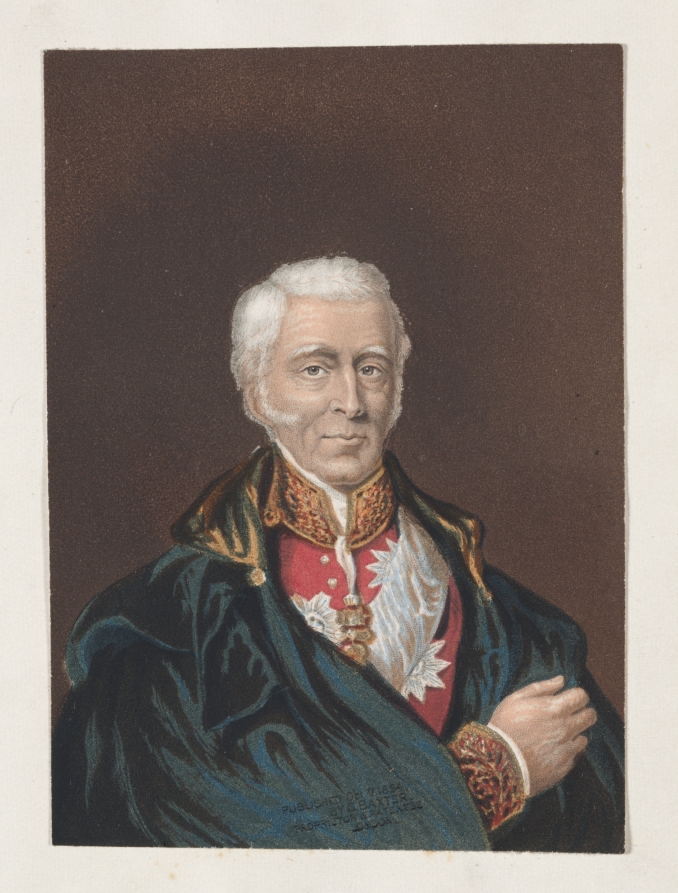
George Baxter · The Cleveland Museum of Art · Gift of Malcolm L. McBride · CC0
- Name
- George Baxter
- Died
- 1867
- Birthplace
- Lewes, Sussex, England
- Place of death
- London, England
- Known for
- Invention of commercially viable colour printing
- Born
- 1804 · Lewes.
- Nationality
- United Kingdom of Great Britain and Ireland
- Occupation
- etcher · printmaker · wood engraver · printer · artist
- Languages
- English
VALÉORINE Encyclopedia
VALÉORINE documentary reading
Documentary summary
George Baxter (1804–1867) was an English artist and printer based in London. He is credited with the invention of commercially viable colour printing. Though colour printing had been developed in China centuries before, it was not commercially viable.
Admitted source layer · organised and presented by VALÉORINE
Note VALÉORINE
George Baxter (1804–1867) was a British artist, etcher and printer, among other activities. Born in Lewes, the artist died in London. George Baxter worked in Greater London.
Languages used include English. Works by the artist are held at Art Institute of Chicago, Auckland Art Gallery and Australian National Maritime Museum, among others.
Composed from admitted, traceable facts · 26 September 2026
VALÉORINE
Reference Check
Propose documentary evidence for George Baxter. A contribution is never written directly as fact: identity, source, rights and evidence gates still decide.
Sign in to contribute
World of VALÉORINE
Documentary connections
Only confirmed graph relationships appear here. Images are shown only when their identity and reuse rights both pass the documentary gate.

Documentary evidence
Documentary basis
Authority files
wikidata · Q5536805
In this article
Biography
Biography
However, in early years of the 19th century the process of colour printing had been revived by George Savage, a Yorkshireman in London. It was to be Savage's methods upon which Baxter, already an accomplished artist and engraver, was to improve. In 1828, Baxter began experimenting with colour printing by means of woodblocks.
The recorded working language is English. Places of work recorded in the authority are Greater London. Work by George Baxter is recorded in the collections of Minneapolis Institute of Art, Art Institute of Chicago, Auckland Art Gallery, National Gallery of Canada and Australian National Maritime Museum.
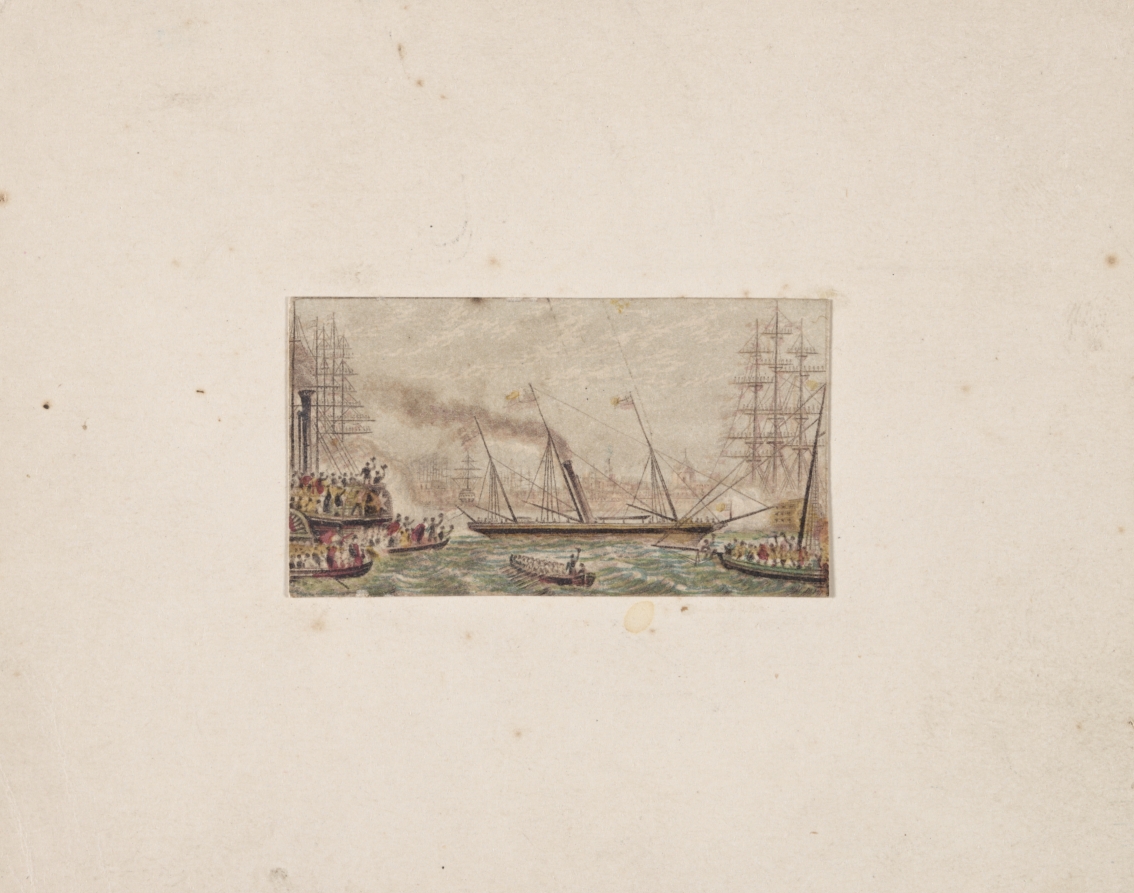
Needle-box Print: The Royal Fleet in Kilkenny Bay (?), 1850, by George Baxter
George Baxter · The Cleveland Museum of Art · Gift of Clara S. Kraus in memory of her mother, Mrs. Rosa Kraus
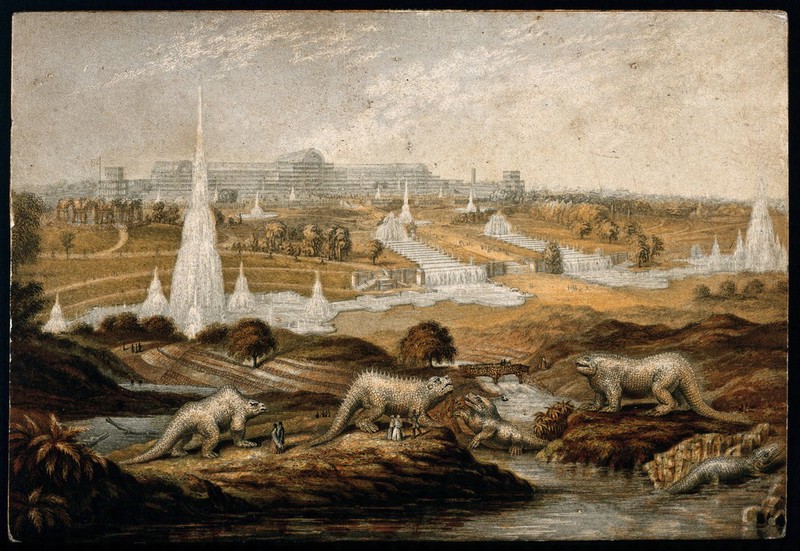
The Crystal Palace from the Great Exhibition, installed at
George Baxter · Wellcome Collection, London · Wellcome Collection
Key facts
Key facts
• Name — George Baxter • Died — 1867 • Birthplace — Lewes, Sussex, England • Place of death — London, England • Known for — Invention of commercially viable colour printing • Illustration — George Baxter's view of the New York Crystal Palace published in 1853
Baxter's life
Baxter's life
Baxter was born in 1804 in Lewes, Sussex, and was the second son of John Baxter, a printer. At 20, Baxter was illustrating books printed by his father; at 23, Baxter moved to London to be apprenticed to Samuel Williams, a wood engraver. In 1827, Baxter set up his own business and married Mary Harrild, daughter of Robert Harrild, a printing engineer and a friend of Baxter's father. Baxter now began to experiment with his own methods of colour printing – his first known colour print, Butterflies, was published in 1829. Baxter's experiments first bore commercial fruit in 1834, with two small vignettes published in Mudie's British Birds. In 1835, Baxter was granted Patent No. 6916 – Improvements in Producing Coloured Steel Plate, Copper Plate and other Impressions, which outlined the combined intaglio and relief process he would continue to use for the next thirty years. Baxter's original patent ran for 14 years; after the renewal of his patent in 1849 for another five years, he began to sell licenses for the use of his printing process to other printing firms. In 1837, he published 'Pictorial Album; or, Cabinet of Paintings' containing designs, executed in oil colours from original pictures, with illustrations in verse and prose. • Illustration — The Boa Ghaut from a painting by William Westall, Pictorial Album; or, Cabinet of Paintings, 1837 Baxter prints bear an imprint such as "Printed in Oil Colours and Published by G. Baxter, Patentee, 11, Northampton Square" or "Baxter Patent Oil Printing 11 Northampton Square". The house at 11 Northampton Square in Clerkenwell, London, was Baxter's home and workshop from 1844–1860. The site is marked by a plaque on the modern building at that address. Despite his technical excellence and the general popularity of his prints, Baxter's business was never profitable – his process was laborious and it seems likely that his perfectionism prevented him from completing many of his commissioned works on time. In 1860, he held a sale of all his stock and equipment, most of which was not sold. Eventually, he sold his plates and blocks to the printer Vincent Brooks, who later republished some of Baxter's images. Baxter was declared bankrupt in 1865 and died in 1867, after an accident involving a horse omnibus. It is estimated that Baxter himself printed over twenty million prints during his career.
Baxter’s licensees
Baxter’s licensees
• Illustration — Joseph Martin Kronheim's illustration of Revelation 22:17. Shiny silver ink surrounds the flowers, a very light blue ink is used for the sky, and several types of printing are combined, with the various inks using different methods. A number of printers purchased a licence from Baxter, following the renewal of his patent in 1849. The most well known of these was Abraham Le Blond. Other firms who worked under Baxter's license include Bradshaw & Blacklock; William Dickes; Kronheim & Co.; Joseph Mansell and Myers & Co. Other printers known to have used Baxter's methods after his patent expired included George Baxter Jr.; Vincent Brooks; Edmund Evans; Gregory, Collins & Reynolds; Leighton Bros; Moor & Crosby and William Russell. George Cargill Leighton, a former apprentice of Baxter's, never worked under Baxter's licence but became a prominent printer in his own right, becoming the printer and later owner of the Illustrated London News, the first journal in the world to include regular colour plates. Leighton could not use a metal intaglio plate as a base without infringing upon Baxter's patent, although "… the fact that he had to do without it probably helped to ensure his commercial success". Nevertheless, Leighton did often use an aquatint base. Kronheim and Dickes both used Baxter's process from 1849 onwards, and both were large suppliers of colour plates to book publishers, "competing on price rather than quality". Baxter's patent process was not necessarily strictly followed by his licensees – for example, both Kronheim and Dickes were lithographic printers as well as wood engravers, and most likely mixed all of their printing methods together. In fact, it is often impossible to say exactly how a given colour print of this era has been produced. Generally, Baxter's licensees used fewer colour blocks than Baxter himself and, in the opinion of many, "none surpassed him in quality, being more concerned with cheapness".
Hand finishing
Hand finishing
Baxter is thought to have used hand-colouring for finishing touches on occasion – for example, "… extra touches of red on the mouths, high white lights upon jewels …". It is also believed Baxter occasionally applied glaze via an additional printing step all over the image, composed of his usual varnish with a 'hard drier' added to make it insoluble in water. More often, it is thought that Baxter glazed areas of the print selectively by hand using a glaze composed of gum arabic, egg white and Castile soap.
Life and career
Dated record
Life and career
The full dated record · 2 entries
1804
George Baxter born at Lewes.
1867
George Baxter died at London.
Places
Named by the record
Places
Only places the record itself states, plotted where the house gazetteer settles their coordinates. Nothing is inferred from a name or a nationality.
Lewes.
Birth place
London.
Death place
Baxter's method
Baxter's process for producing colour prints combined relief and intaglio printing methods. A 'key' plate was prepared, usually made of steel and using any combination of engraving, stipple, etching and aquatint. Baxter also appears to have used mezzotint and lithography to create his key plate on occasion. The key plate provided the main lines of the image and much of the tone, light and shade. It was usually printed in a neutral tone, such as light grey or terracotta. Often, Baxter used more than one colour to ink the key plate – for example, to gradate the image from blue in the sky, to buff in the middle distance and to a darker colour in the foreground; i.e. inking the plate à la poupée. Usually, Baxter used aquatint for landscapes and stipple to work faces and figures. Following printing of the key plate, relief blocks were prepared, usually from wood but also from zinc or copper, using impressions of the key plate to create the blocks. Usually one block was prepared for each colour, although sometimes two or more colours or tints were included on the same block, requiring hand inking of each individual area. Each colour was applied and allowed to dry before adding the next colour. It is thought that Baxter started printing with a blue tint and then progressed through the other colours in a predetermined order – all blocks were numbered sequentially and labelled with the colour to be used. Sometimes up to 24 separate colours were used, although ten could be considered an average number. Baxter achieved his precise registration by fixing the print over a number of spikes, over which the blocks would also fit.
Primary material
Documents and archives
scholarly publication
- Baxter, George, Benezit Dictionary of Artists, 2011
Scholarly · Crossref registry · 2011
reference work
- Wikidata, structured authority record Q5536805: George Baxter
Reputable secondary · Wikimedia Foundation
Literature
Literature
Literature
Baxter, George, Benezit Dictionary of Artists, 2011
Baxter, George, Oxford Art Online, 2003
Baxter, George (1804–1867), Oxford Dictionary of National Biography, 2018
Baxter, George, Lexikon des gesamten Buchwesens Online
Scholarly footprint
Literature
Scholarly footprint
A count of publications is evidence of attention, not of standing, and is given here only as a measure.
Notes from the source article
Cited by Wikipedia
Notes from the source article
These works are cited by the source article, in its own numbering. They are recorded as its citations, not as sources VALÉORINE has verified.
- 1.Lycett, p 8
- 2.Etheridge 1929: 17–18
- 3.Lycett, p 6.
- 4.Avery-Quash, Susanna. Williams family.
- 5.Etheridge 1929: 18
- 6.George Baxter company website http://www.georgebaxter.com
- 7.London Remembers http://www.londonremembers.com/memorials/george-baxter
- 8.Mitzman 1978: 20, 49
- 9.Etheridge 1929: 22–23
- 10.Lewis 1908: 29–30
- 11.Mitzman 1978: 50
- 12.Etheridge 1929: 26–27
- 13.McLean 1963: p139–140
- 14.Peddie 1917: 45
- 15.McLean 1963: 142
- 16.McLean 1963: 142
- 17.Lewis 1928: 200
- 18.McLean 1963: 33
- 19.McLean 1963: 30
- 20.Seeley 1924: 25
- 21.Gascoigne 1986: Section 29
- 22.Lewis 1928: 199
- 23.Wakeman and Bridson 1975: 8
- 24.Seeley 1924–25: 3–4 & 12
- 25.Seeley 1924–25: 18
References
Citations
References
Each reference names the institution holding it, so a reader may go to the document itself.
scholarly publication
Baxter, George, Benezit Dictionary of Artists, 2011Crossref registry
Institutional witnessreference work
Wikidata, structured authority record Q5536805: George BaxterWikimedia Foundation
Secondary witness
The Encyclopedia exists whether or not anything is for sale. Corrections are recorded rather than overwritten, and every version of this record is kept. Published 16 August 2026.
Elsewhere in Prints
4,138 published records in this field, each with its sources named.
- Georg Siegmund FaciusEngraver
- Georg Wolfgang KnorrEngraver
- George AllenEngraver
- George BaldessinEngraver
- George BellowsEngraver
- George BobaEngraver
- George BrookshawEngraver
- George ClausenEngraver
Best supported in this field
For owners
Own a work by George Baxter?
A specialist will read what you send and tell you what the house can establish, what it cannot, and whether the object is suited to sale. There is no charge and no obligation. The object stays with you throughout; nothing is shipped to us unless it is arranged in writing beforehand.