
gabbang
The gabbang, also known as bamboo xylophone, is a musical instrument made of bamboo widely used in southern Philippines. Among the Tausugs and Samas, it is commonly played to accompany songs and dances as a solo instrument or accompanied by the biola.
gabbang
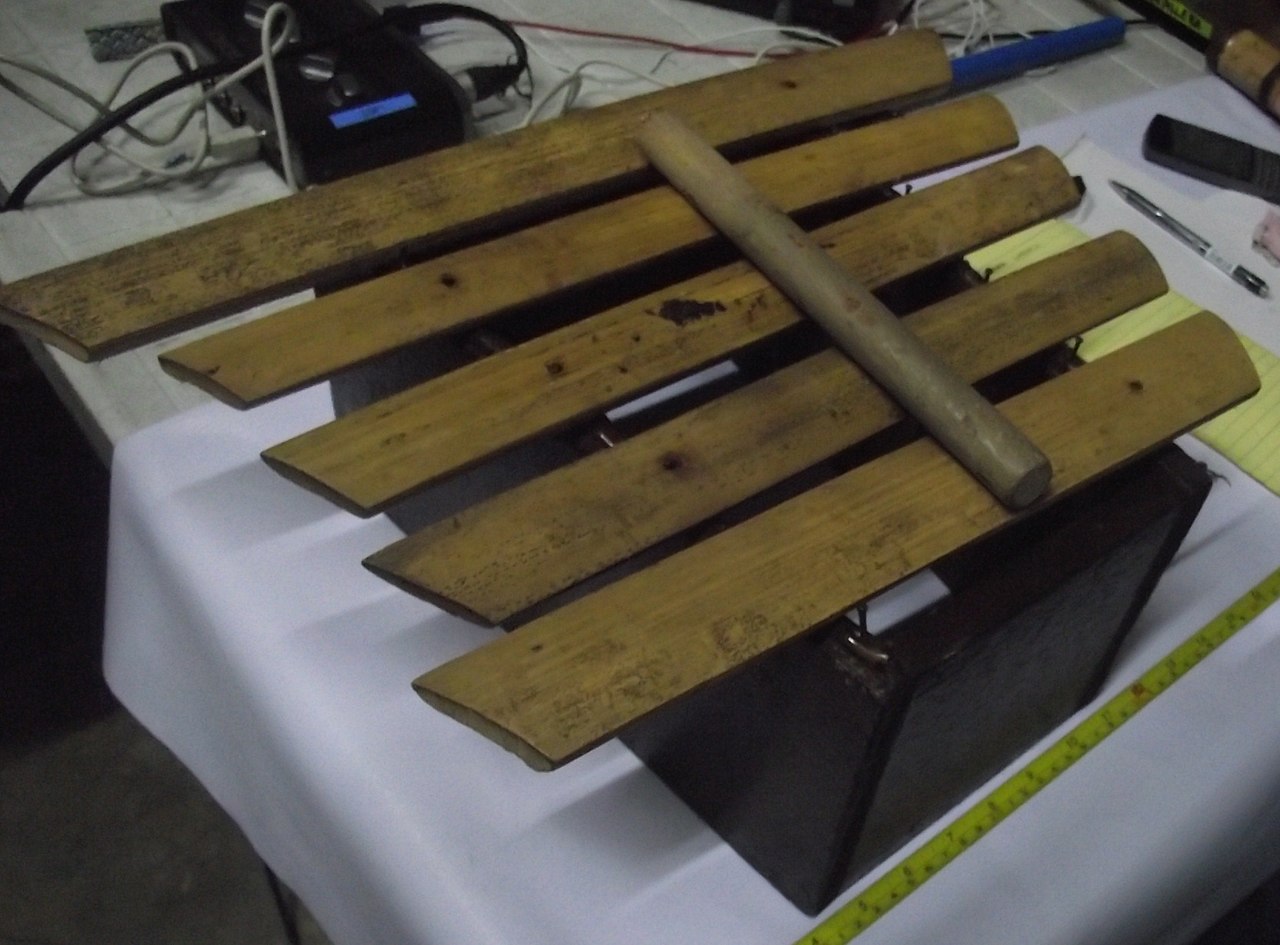
Jfmrili · This photo was taken while we were doing a recording of some native Philippine instruments as a part of our undergraduate project. · CC BY-SA 3.0
- Name
- Gabbang
- Field
- set of percussion sticks
VALÉORINE Encyclopedia
VALÉORINE documentary reading
Documentary summary
The gabbang, also known as bamboo xylophone, is a musical instrument made of bamboo widely used in southern Philippines. Among the Tausugs and Samas, it is commonly played to accompany songs and dances as a solo instrument or accompanied by the biola.
Admitted source layer · organised and presented by VALÉORINE
Reference Check
Propose documentary evidence for gabbang. A contribution is never written directly as fact: identity, source, rights and evidence gates still decide.
Sign in to contribute
Documentary evidence
Documentary basis
Authority files
wikidata · Q5515287 · wikipedia · Gabbang
In this article
Key facts
Key facts
• Name — Gabbang • Names — bamboo xylophone, agung gabbang (Yakan), gambang (Samal), gabbang (Tausug, Palawan) • Background — idiophone • Hornbostel Sachs — 111.212
Physical features
Physical features
A gabbang consists of a set of trapezoidal bamboo bars of increasing length resting on a resonator. The number of bars varies with the group that made them: Among Yakans, the number ranges from three to nine bamboo bars, but the common agung gabbang has five; among Tausugs, the number ranges from 14 to 22 bamboo bars, but the common gabbang has 12; and in Palawan, the common gabbang has five.
Playing techniques
A bamboo xylophone is played by direct striking using a wooden mallet. The gabbang is played by a pair of beaters while another taps a rhythmic pattern on the side of the box.
Literature
Literature
Literature
The Diffusion And Transformation Of A Philippine Xylophone Among Indigenous Paitanic Communities Of Sabah, Malaysia, Borneo Research Journal, 2017
Scholarly footprint
Literature
Scholarly footprint
A count of publications is evidence of attention, not of standing, and is given here only as a measure.
Notes from the source article
Cited by Wikipedia
Notes from the source article
These works are cited by the source article, in its own numbering. They are recorded as its citations, not as sources VALÉORINE has verified.
- 1.List of aerophones by Hornbostel–Sachs number
- 2.Miller, Terry E. The Garland Encyclopedia of World Music: Southeast Asia. Routledge. 2017. 978-1-351-54420-7.
- 3.Dioquinio, Corazon. Philippine Bamboo Instruments. Humanities Diliman. 5. 1&2. 107. 2008.
- 4.De Leon, Felipe M. Yakan Sonic Textures: A Heritage of Musical Instruments. ICH Courier Online.
References
Citations
References
Each reference names the institution holding it, so a reader may go to the document itself.
reference work
Secondary witnessreference work
Secondary witness
The Encyclopedia exists whether or not anything is for sale. Corrections are recorded rather than overwritten, and every version of this record is kept. Published 16 August 2026.
Elsewhere in Collectables
20,755 published records in this field, each with its sources named.
- G.A.S.P!! Fighters' NEXTreamWork
- G1 Jockey 3Work
- G1 Jockey 4Work
- G1 Jockey 4 2007Work
- GAC AionOrganisation
- GAC Fiat ChryslerOrganisation
- GAC HondaOrganisation
- GAC MitsubishiOrganisation
Best supported in this field
For owners
Own an object connected with gabbang?
A specialist will read what you send and tell you what the house can establish, what it cannot, and whether the object is suited to sale. There is no charge and no obligation. The object stays with you throughout; nothing is shipped to us unless it is arranged in writing beforehand.