
François Chéreau
Illustration — Portrait of the painter Nicolas de Largillière after his self-portrait François Chéreau, also known as François I Chéreau (20 March 1680 in Blois, Orléanais – 16 April 1729 in Paris) was an engraver of portraits and reproductions of famous works of art during the reign of Louis XIV.[1]
Also recorded as François Chéreau the Elder · Francois Chereau · François Chereau the Elder · François, the elder Chereau
François Chéreau
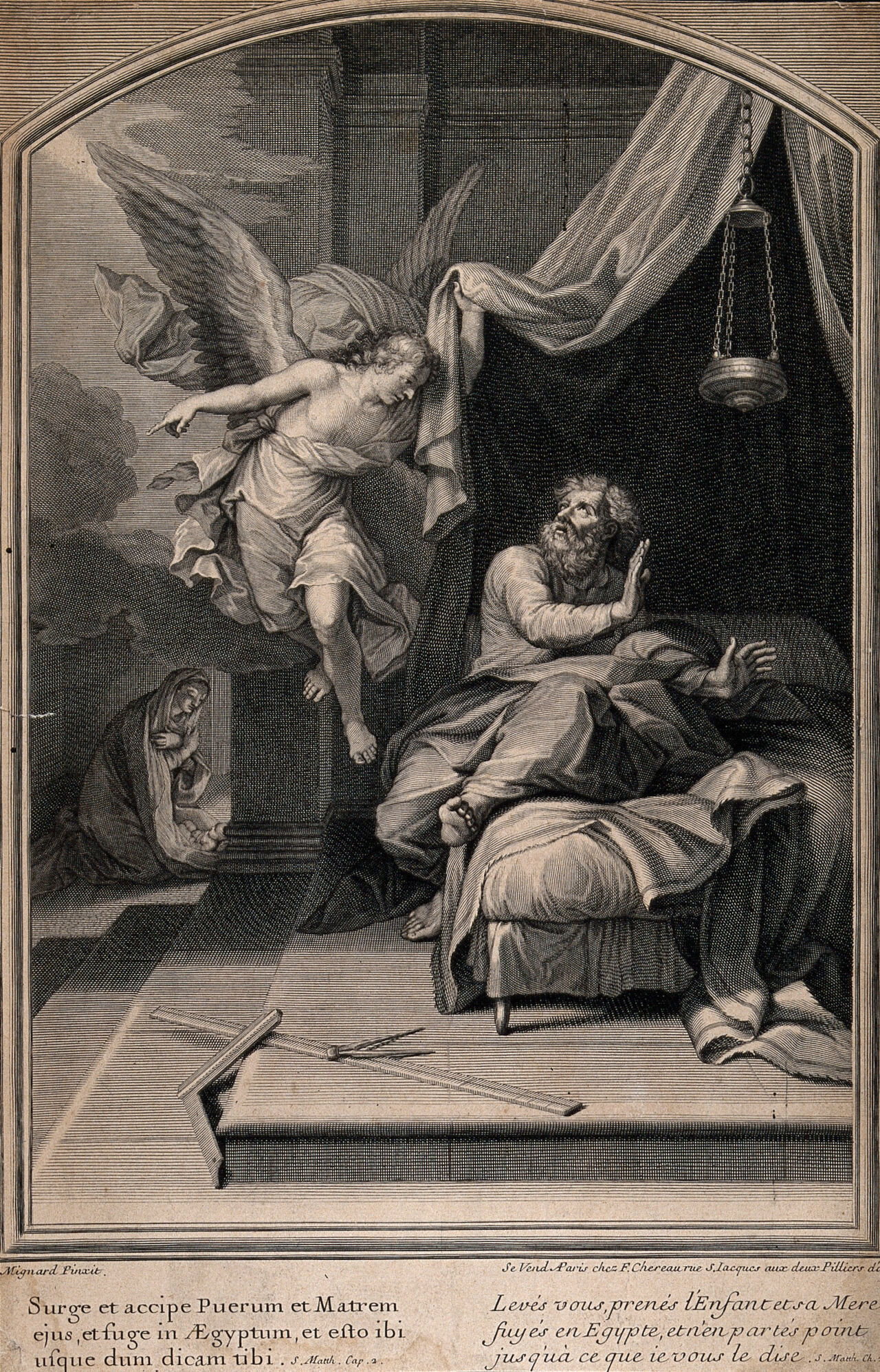
François Chéreau · Wellcome Collection, London · Wellcome Collection · Public Domain Mark
- Died
- François Chéreau died on 16 April 1729. · Paris.
- Nationality
- France.
- Occupation
- draftsperson, merchant, publisher, printseller and engraver.
- Languages
- French.
VALÉORINE Encyclopedia
VALÉORINE documentary reading
Documentary summary
Illustration — Portrait of the painter Nicolas de Largillière after his self-portrait François Chéreau, also known as François I Chéreau (20 March 1680 in Blois, Orléanais – 16 April 1729 in Paris) was an engraver of portraits and reproductions of famous works of art during the reign of Louis XIV.[1]
Admitted source layer · organised and presented by VALÉORINE
Note VALÉORINE
François Chéreau was a draftsperson, engraver and merchant, among other activities, of French nationality. The draftsperson was born in Blois and died in Paris. François Chéreau was a member of Académie royale de peinture et de sculpture and worked in Paris.
Languages used include French. Works are held at Ackland Art Museum, Art Institute of Chicago and Finnish National Gallery, among others.
Composed from admitted, traceable facts · 26 September 2026
VALÉORINE
Reference Check
Propose documentary evidence for François Chéreau. A contribution is never written directly as fact: identity, source, rights and evidence gates still decide.
Sign in to contribute
World of VALÉORINE
Documentary connections
Only confirmed graph relationships appear here. Images are shown only when their identity and reuse rights both pass the documentary gate.

Documentary evidence
Documentary basis
Authority files
wikidata · Q3084266 · wikipedia · François Chéreau
In this article
Early life
Early life
The recorded working language is French. The field of work recorded is copper engraving technique, book culture and book illustration. Places of work recorded in the authority are Paris. Work by François Chéreau is recorded in the collections of Art Institute of Chicago, Finnish National Gallery, Ackland Art Museum, National Museum Paleis het Loo and Musée des Beaux-Arts de Rennes.
He was the first son of carpenter Simon Chéreau and his wife Anne Hardouin whose second son, Jacques Chéreau also became an engraver. François I moved to Paris and studied with Gérard Audran[2] and Pierre Drevet.[3] From 1712 to 1713 he did business from the Rue du Foin, in the Parish of Saint Séverin. In 1714, François I Chéreau married 1714 Margueritte Caillou of a mercantile family from Houdan and Paris, with whom he had ten children.[4] Their eldest child, François II Chéreau, was born in 1717.
Engraver to the King
Engraver to the King
In 1718 François I received the title of "engraver to the cabinet du roi" and was accepted by the Royal Academy of Painting and Sculpture, after presenting a portrait of the young Louis de Boullongue. Subsequently, François I appended the designation "avec priv. du Roy" ("with the King's privilege") to his prints. Prints made for the cabinet of the king were exchanged and exhibited by the king as well as being sold at Chéreau's shop. Also in 1718, after the death of Audran's widow, Hélène Licherie, François I Chéreau bought "Les Deux Piliers d'Or," collectively the business, premises, presses, supplies and fonds, and put his name on Audran's "Two Pillars of Gold" sign in the Rue des Malthurins Saint Jacques, also known as "Rue Saint-Mathurin Jacques." He began selling part of the Audran catalog of prints as well as his own work. Audren's print catalog was published four times after Audran's own pre-1703 imprint: in 1718 by his widow Hélène Licherie, in 1742 and 1757 by the widow of François I Chéreau, in 1770 by François I's grandson, Jacques-François Chéreau (b 14 October 1742 - d 16 May 1794, son of Francois II Chéreau & Geneviève Marguerite Chéreau and grandson of both François I and his brother Jacques). Their last child, Marie-Edméc Chéreau, was born after François I Chéreau's death on 16 April 1729. At that time, Margueritte was known as Madame le Veuve Chéreau (literally, "Widow Chéreau") and continued to run François I's print business[5] with her son François II Chéreau (1717–1755) until her own death on 17 April 1755.[6] Also on the premises was confusingly an engraver and printseller at the same address, Louise Pierrette Charpentier, who after the death her own husband, Jacques Simon I Chéreau (b. 16 October 1732 - pre 1760) became another "Widow Chéreau."
Artistic works
Artistic works
According to Bryan, “he distinguished himself by the beauty of his touch and the correctness of his drawing, particularly in his portraits, some of which are admirable. His portrait of the Duke of Antin, after Rigaud, which he engraved twice, has rarely been surpassed. He died in Paris in 1729.”[10]
Portraits
Portraits
• Illustration — Portrait of Nicolas Delaunay, goldsmith, after a painting by Hyacinthe Rigaud • Louis de Boullongue; after himself; engraved by Chéreau for his reception into the Academy in 1718. • Nicolas de Largillière, painter; after himself. (pictured) • Cardinal André-Hercule de Fleury; after Rigaud; fine. • Cardinal Melchior de Polignac; after the same; very fine. • Louis Antoine de Pardaillan de Gondrin, Duke of Antin; after the same. • Nicolas Delaunay; after the same. (pictured) • Conrad Detlev von Dehn; after the same; very fine. • Louis Pécour, Maitre de Ballet; after Tournieres. • Élisabeth Sophie Chéron, painter; after herself. • Louisa Mary, Princess of England; after A. S. Belle. • The Princess Sobieska; after Trinisani.
Subjects after various masters
Subjects after various masters
• St. John in the Wilderness; after the picture by Raphael, in the Orléans Gallery. • The Crucifixion; after Guido. • St. Catharine of Siena; after J. André. • St. Cecilia; after Mignard. • St. Theresa in Contemplation. • St. Ignatius de Loyola, Founder of the Society of Jesus.
Identity and origins
Identity and origins
His recorded language was French.
Identity
Identity
François Chéreau is recorded with the occupation copper engraver. Recorded as draftsperson, merchant, publisher, printseller and engraver.
Life and career
Dated record
Life and career
The full dated record · 2 entries
1680
François Chéreau was born on 20 March 1680.
1729
François Chéreau died on 15 April 1729.
Places
Named by the record
Places
Only places the record itself states, plotted where the house gazetteer settles their coordinates. Nothing is inferred from a name or a nationality.
François Chéreau was born at Blois.
Birthplace
François Chéreau died at Paris.
Deathplace
Blois.
Birth place
Paris.
Death place
Legacy
The inventory of the business after Margueritte Chéreau's death was listed and her will recorded as C 621, 23 April 1755 in the Extracts of the Minutier Central des notaires Parisiens. On 31 March 1768 sale of the inventory of goods of Francois II Chéreau (deceased 22 Feb 1755) were finalized with Jacques-François Chéreau (1742–1794). In 1787[7] when Jacques-François Chéreau retired, the collection ("fonds") numbering in the tens of thousands of plates, prints and plate blanks was sold to François Etienne Joubert (1787–1836), as well as the business premises, the mark of "Two Pillars of Gold," and book publishing records. Joubert's address is given as rue des Mathurins St. Jacques, aux Deux Piliers d'Or, Paris after the sale and his name may appear with "chez Chéreau" or alone on plates published after that date.[8] In 1821, Joubert published "Manuel de l'amateur d'estampes" with material from the fonds Chéreau.[9]
Notes from the source article
Cited by Wikipedia
Notes from the source article
These works are cited by the source article, in its own numbering. They are recorded as its citations, not as sources VALÉORINE has verified.
- 1.Mergnac, Marie-Odile. Les Chéreau: Une famille de graveurs. Histoire des noms de famille. Loire Valley Online.
- 2.Piot, Eugène. Le cabinet de l'amateur. Librairie Firmin Didot. 127. 1863.
- 3.The British Museum. François Chéreau, Biographical Details. The British Museum Collections.
- 4.Jal, Augustin. Dictionnaire critique de biographie et d'histoire: errata et supplément pour tous les dictionnaires historiques d'après des documents authentiques inédits. H. Plon. 1326. 1867.
- 5.Milliot, Vincent. Les "Cris de Paris," ou, Le peuple travesti: les représentations des petits métiers parisiens (XVIe-XVIIIe siècles). Sorbonne University, Paris. 480. 1995.
- 6.The British Museum. La veuve Chéreau, Biographical Details. The British Museum Collections.
- 7.Royal Academy of Arts. L'Entrée De L'Empereur Sigismond A Mantouë; Gravé en Vingt cinq feuilles, d'après une longue Frise exécutée en Stuc dans le palais du T. de la même Ville, sur un dessin de Jules Romain, Par Antoinette Bouzonnet Stella. ImprintA Paris: chez Joubert, graveur et marchand d'Estampes, Rue des Mathurins, aux 2. Piliers d'Or., [1787 or later.]. Royal Academy of Arts Collections Record number 06/1723.
- 8.The British Museum. François Étienne Joubert, Biographical Details. The British Museum Collections.
- 9.Joubert, François Etienne. Manuel de l'amateur d'estampes: faisant suite au manuel du libraire . : précédé d'un essai sur le génie, considéré comme principe des beaux-arts. Chez l'auteur. 1821.
- 10.Bryan, Michael. Bryan's dictionary of painters and engravers. G. Bell. 1886–1889.
Bibliography printed in the source article · 1
References
Citations
References
Each reference names the institution holding it, so a reader may go to the document itself.
reference work
Wikidata, structured authority record Q3084266: François ChéreauWikimedia Foundation
Secondary witnessreference work
Secondary witness
People, houses and institutions
Knowledge graph
People, houses and institutions
Teachers, collaborators, publishers and institutions recorded against this person, each on a stated basis.
Died at
1- ParisPlace
Established from a fact already recorded on a verified source.
Further particulars
Held on the record
Further particulars
Open the remaining particulars
François Chéreau worked in copper engraving technique, book culture, book illustration and publishing house. He belonged to Académie royale de peinture et de sculpture. He worked at Paris.
Career and activity
Recognition and collections
Work by François Chéreau is
Art Institute of Chicago, Finnish National Gallery, Ackland Art Museum and National Museum Paleis het Loo
The Encyclopedia exists whether or not anything is for sale. Corrections are recorded rather than overwritten, and every version of this record is kept. Published 16 August 2026.
Elsewhere in Prints
4,138 published records in this field, each with its sources named.
- François BonnemerEngraver
- François BonvinEngraver
- François BoucherEngraver
- François ChauveauEngraver
- François ChifflartEngraver
- François CollignonEngraver
- François de Cuvilliés the YoungerEngraver
- François de HérainEngraver
Best supported in this field
For owners
Own a work by François Chéreau?
A specialist will read what you send and tell you what the house can establish, what it cannot, and whether the object is suited to sale. There is no charge and no obligation. The object stays with you throughout; nothing is shipped to us unless it is arranged in writing beforehand.