
Felipe de Castro
1711 in Noya – 25 August 1775, in Madrid) was a Spanish sculptor. He was among the first to introduce the Neoclassical style to Spain, and served as sculptor to King Ferdinand VI.
Also recorded as Felipe De Castro
Felipe de Castro
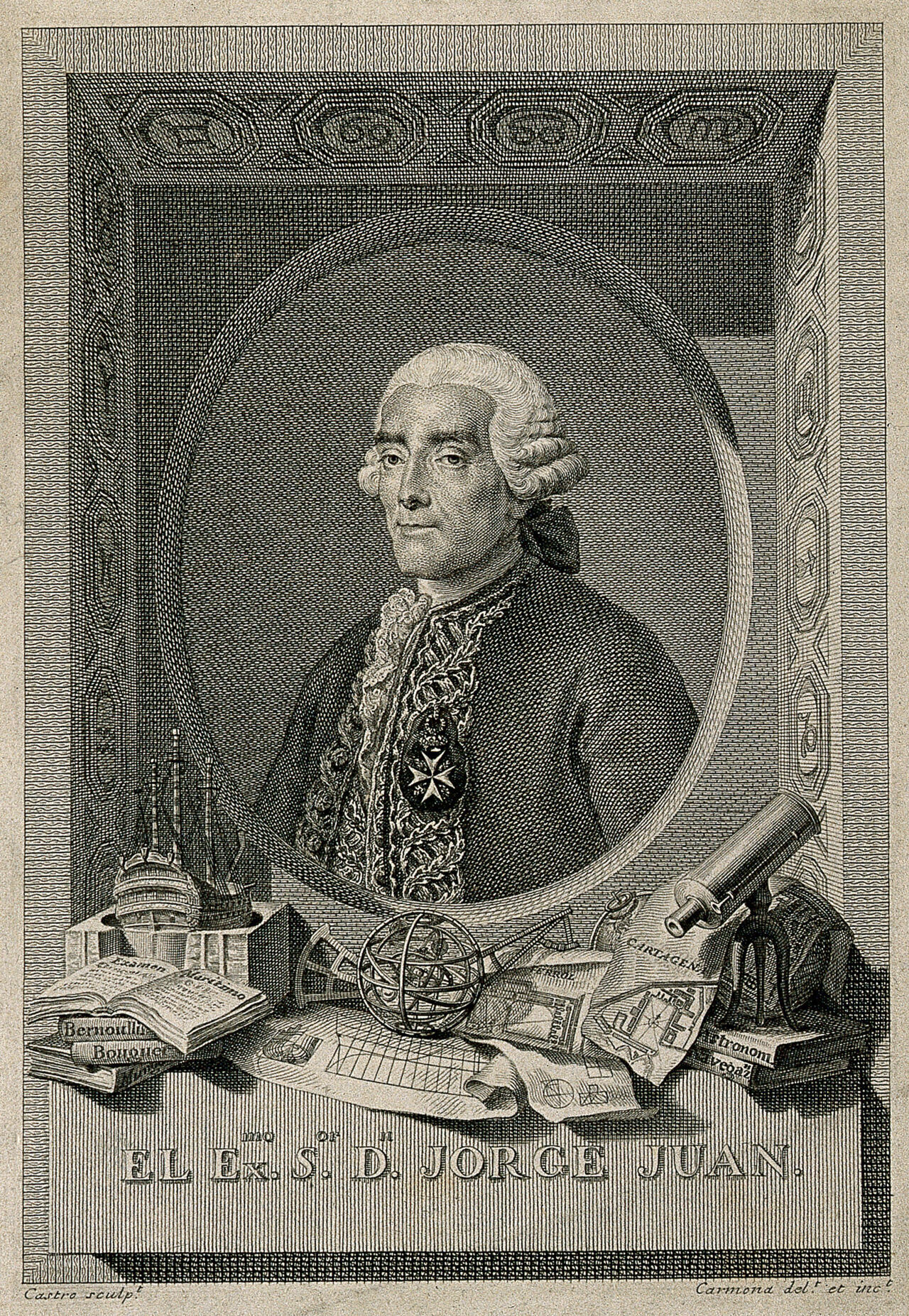
Felipe de Castro · Wellcome Collection, London · Wellcome Collection · Public Domain Mark
- Born
- 1711 · Noia.
- Died
- 1775 · Madrid.
- Nationality
- Spain
- Occupation
- sculptor
- Known for
- Statue of Ataúlfo
- Languages
- Spanish
VALÉORINE Encyclopedia
VALÉORINE documentary reading
Documentary summary
1711 in Noya – 25 August 1775, in Madrid) was a Spanish sculptor. He was among the first to introduce the Neoclassical style to Spain, and served as sculptor to King Ferdinand VI.
Admitted source layer · organised and presented by VALÉORINE
Reference Check
Propose documentary evidence for Felipe de Castro. A contribution is never written directly as fact: identity, source, rights and evidence gates still decide.
Sign in to contribute
World of VALÉORINE
Documentary connections
Only confirmed graph relationships appear here. Images are shown only when their identity and reuse rights both pass the documentary gate.
Documentary evidence
Documentary basis
Authority files
wikidata · Q3330784 · wikipedia · Felipe de Castro
In this article
Life and works
Life and works
Mariano Salvador Maella is recorded as having studied under Felipe de Castro. The recorded working language is Spanish. Employment is recorded with Royal Academy of Fine Arts of San Fernando. Works named in the authority record are Statue of Ataúlfo. Work by Felipe de Castro is recorded in the collections of Museo del Prado.
According to the art historian, Juan Agustín Ceán Bermúdez, he was born in 1711. He began his studies in Noya, then went to Santiago de Compostela, where he studied with some teachers of little note. The year 1724 found him in Portugal, from where he went to Seville where he was employed in the workshop of Pedro Duque y Cornejo. There, he created altarpieces for the Church of El Salvador (Seville). In 1734, he went to Rome, at his own expense, to work in collaboration with Giuseppe Rusconi and Filippo della Valle. He also met with Antonio Rafael Mengs. In 1739, he won the first prize for sculpture from the Accademia di San Luca; becoming a member there, as well as the Pontifical Academy of Arcadia. When Ferdinand VI became King of Spain in 1747, he returned home and was appointed personal sculptor to the King. Two years after that, he and Juan Domingo Olivieri were put in charge of sculptural decorations for the Royal Palace of Madrid. The work involved representations of Spain's ninety-four previous kings. Over a dozen sculptors worked under their direction, including Luis Salvador Carmona and Alejandro Carnicero. Most of the statues have since been redistributed to various parks and gardens. His main personal assignment during his tenure with the King involved making portraits, notably of the King and his wife, Bárbara de Braganza. He also made two marble busts of the monarchs which adorn their tombs at the Convento de las Salesas Reales. His portrait bust of fray Martín Sarmiento, (previously misidentified as Benito Jerónimo Feijoo), preserved at the Real Academia, along with a bust of Alfonso Clemente de Aróstegui, both are excellent examples of his efforts to revitalize the styling of busts from the baroque to the neoclassic forms. Although of secondary importance to sculpting, he was also known as a teacher. During his years with the King, he participated in creating the Real Academia de Bellas Artes de San Fernando, and was named the Director of Sculpture there when it opened in 1752. To assist him with his teaching, he translated several texts on sculpting from Italian. His classes there were said to be extremely popular. In 1763, he became the General Director. One of his best known students was the engraver, medallist and typographer, Jerónimo Antonio Gil.
Life and career
Dated record
Life and career
The full dated record · 2 entries
1711
Felipe de Castro born at Noia.
1775
Felipe de Castro died at Madrid.
Places
Named by the record
Places
Only places the record itself states, plotted where the house gazetteer settles their coordinates. Nothing is inferred from a name or a nationality.
Noia.
Birth place
Madrid.
Death place
Primary material
Documents and archives
reference work
- “Felipe de Castro”, English Wikipedia, consulted as further reading
Reputable secondary · Wikipedia
authority record
- Wikidata, structured authority record Q3330784: Felipe de Castro
General reference · Wikidata
Notes from the source article
Cited by Wikipedia
Notes from the source article
These works are cited by the source article, in its own numbering. They are recorded as its citations, not as sources VALÉORINE has verified.
- 1.Bédat (1970), p. 35, recoge el dato aportado por Ceán y confirmado indirectamente por Antonio Ponz, pero advierte que en la necrológica que le dedicó la Academia de San Fernando no se facilitaba una fecha de nacimiento en tanto Felipe García Samaniego, en el elogio que le dedicó en la Real Sociedad Económica Matritense en su junta del 16 de noviembre de 1776, le decía nacido en 1704. Las circunstancias de su nacimiento como hijo ilegítimo, en tanto que hijo de un clérigo, pueden explicar las dificultades para establecer la fecha de su nacimiento y el nombre con el que fuera bautizado. Ver Mariño Reino, Xoán Xosé, «Felipe de Castro», Diccionario biográfico español, Real Academia de la Historia.
- 2.Ceán, tomo I, pág. 295.
- 3.Brook, Carolina, «Francisco Preciado de la Vega y la Accademia di San Luca. La promoción de las Bellas Artes mediante la actividad institucional», en V. AA. (2009), Francisco Preciado de la Vega: un pintor español del siglo XVIII en Roma, Madrid, Real Academia de Bellas Artes de San Fernando/Cajamurcia, , p. 22.
- 4.Martín González, pág. 400.
- 5.Martín González, pág. 405.
- 6.Castro, Felipe de.
- 7.Madrid, patrimonio cultural y paisaje urbano: «Fuente de las Conchas». Consultado el 2 de agosto de 2020.
- 8.Mariño Reino, Xoán Xosé, «Felipe de Castro», Diccionario biográfico español, Real Academia de la Historia.
References
Citations
References
Each reference names the institution holding it, so a reader may go to the document itself.
reference work
Secondary witnessauthority record
General reference
Further particulars
Held on the record
Further particulars
Open the remaining particulars
Formation and teaching. Each of those relationships is stated by the authority record rather than inferred from style.
The Encyclopedia exists whether or not anything is for sale. Corrections are recorded rather than overwritten, and every version of this record is kept. Published 16 August 2026.
Elsewhere in Sculpture
6,174 published records in this field, each with its sources named.
- Feliciano PeñaArtist
- Félicie de FauveauArtist
- Felicjan KowarskiArtist
- Felipe Arrese BeitiaArtist
- Félix AgnusArtist
- Félix CharpentierArtist
- Felix ChopinArtist
- Felix PfeiferArtist
Best supported in this field
For owners
Own a work by Felipe de Castro?
A specialist will read what you send and tell you what the house can establish, what it cannot, and whether the object is suited to sale. There is no charge and no obligation. The object stays with you throughout; nothing is shipped to us unless it is arranged in writing beforehand.