
Ernesto Tamariz
Ernesto Tamariz Galicia (11 January 1904 – 30 September 1988) was a 20th-century Mexican sculptor specialized in public monuments, religious statues and funerary art. His most famous work is "Altar to the Fatherland" (Altar a la patria), a memorial to the Mexican cadets killed during the Battle of Chapultepec (Niños Héroes). He also sculpted the statue of St Pio of Pietrelcina and John Paul II at the old Basilica of Our Lady of Guadalupe, the new central altar of the Metropolitan Cathedral of Mexico City, the tomb of Alfonso Reyes at the Rotunda of Illustrious People and the tomb of Ignacio Zaragoza, among others.
Also recorded as Ernesto Tamariz Galicia · Tamariz
Ernesto Tamariz
Ricardo Stuckert/PR · CC BY 3.0 br
- Name
- Ernesto Tamariz
- Birth Name
- Ernesto Tamariz Galicia
- Born
- 11 January 1904
- Birthplace
- Acatzingo, Puebla, Mexico
- Died
- 30 September 1988
- Known for
- Sculpture
- Movement
- Art Deco, Art Nouveau, Eclecticism
- Nationality
- Mexico.
- Occupation
- sculptor and painter.
- Movements
- Art Deco, eclecticism in art and nationalism.
- Languages
- Spanish.
VALÉORINE Encyclopedia
VALÉORINE documentary reading
Documentary summary
Ernesto Tamariz Galicia (11 January 1904 – 30 September 1988) was a 20th-century Mexican sculptor specialized in public monuments, religious statues and funerary art. His most famous work is "Altar to the Fatherland" (Altar a la patria), a memorial to the Mexican cadets killed during the Battle of Chapultepec (Niños Héroes). He also sculpted the statue of St Pio of Pietrelcina and John Paul II at the old Basilica of Our Lady of Guadalupe, the new central altar of the Metropolitan Cathedral of Mexico City, the tomb of Alfonso Reyes at the Rotunda of Illustrious People and the tomb of Ignacio Zaragoza, among others.
Admitted source layer · organised and presented by VALÉORINE
Note VALÉORINE
Ernesto Tamariz (1904–1988) was a painter and sculptor, of Mexican nationality. The painter was born in Acatzingo Municipality and died in Mexico City. Ernesto Tamariz was associated with Art Deco and eclecticism in art. Languages used include Spanish.
Composed from admitted, traceable facts · 01 October 2026
VALÉORINE
Reference Check
Propose documentary evidence for Ernesto Tamariz. A contribution is never written directly as fact: identity, source, rights and evidence gates still decide.
Sign in to contribute
World of VALÉORINE
Documentary connections
Only confirmed graph relationships appear here. Images are shown only when their identity and reuse rights both pass the documentary gate.
Documentary evidence
Documentary basis
Authority files
wikidata · Q13631932 · wikipedia · Ernesto Tamariz
In this article
Key facts
Key facts
• Name — Ernesto Tamariz • Birth Name — Ernesto Tamariz Galicia • Born — 11 January 1904 • Birthplace — Acatzingo, Puebla, Mexico • Died — 30 September 1988 • Known for — Sculpture • Movement — Art Deco, Art Nouveau, Eclecticism • Notable Works — Memorial to the Mexican cadets killed in the Battle of Chapultepec (Niños Héroes)
Works
Works
According to María Estela Duarte, curator of Épica y gloria monumental ("Epic and monumental glory"), a posthumous exposition of Tamariz at the Diego Rivera and Frida Kahlo Museum of Mexico City, the sculptor completed some 128 monuments throughout Mexico.
List of works
List of works
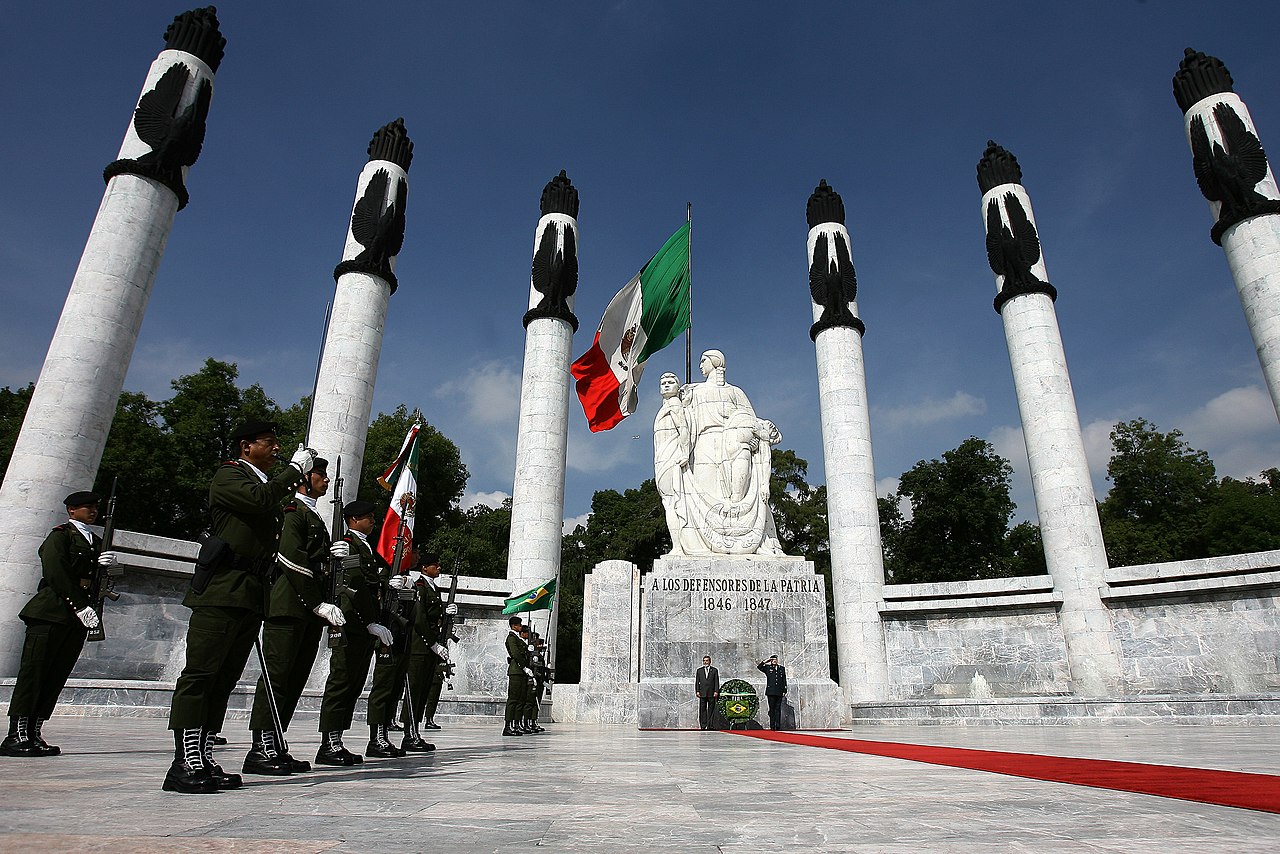
• "Altar to the Fatherland" (Altar a la patria), a memorial to the Mexican cadets killed in the Battle of Chapultepec (Niños Héroes). • Statue of St Pio of Pietrelcina inside the old Basilica of Our Lady of Guadalupe. • Statue of John Paul II between the old and the new the basilicas of Our Lady of Guadalupe. • A central altar sculpted in onyx for the Metropolitan Cathedral of Mexico City. • The tomb of Alfonso Reyes at the Rotunda of Illustrious People. • The tomb of General Ignacio Zaragoza at San Fernando Cemetery in Mexico City. • Statue of Benito Juárez (San Diego) • Illustration — alt=Memorial service at the monument to the Boy Soldiers in Mexico City Memorial to the Mexican cadets killed in the Battle of Chapultepec. • Illustration — alt=Tomb in stone Tomb of Alfonso Reyes at the Rotunda of Illustrious People. • Illustration — alt=A bronze statue in a street Statue of José Vasconcelos in Mexico City.
Artwork
Artwork
• Monumento a los Fundadores de Puebla, 1931-1935 • Altar a la Patria, Ciudad de México, 1948-1952 • Escultura de José María Morelos, límites de la Ciudad de México y el estado de Morelos • Escultura de Antonio Caso, Plaza del Estudiante, Ciudad de México • Esculturas de Juan Pablo II, Escultura de San Pío y arcángeles de la Basílica de Guadalupe • Viacrucis de la Catedral de Chihuahua • Relieves de la Suprema Corte de Justicia de la Nación • Monumento a Vasco de Quiroga en Quiroga, Michoacán • Escultura a Ignacio Allende en Irapuato, Guanajuato • Monumento a José de San Martín en la colonia Polanco, Ciudad de México • Escultura de Rafael Cabrera, Puebla, 1951 • Esculturas en Almoloya de Juárez, 1953 • Escultura de José María Yáñez, Guaymas, • Tumba de Manuel M. Ponce en la Rotonda de las Personas Ilustres, Ciudad de México (1954) • Altar central y esculturas en la Catedral Metropolitana de la Ciudad de México (1957) • Virgen de Guadalupe, Lourdes • Bustos de Carranza, Obregón y Calles, La Paz, Baja California Sur (1958) • Escultura de Felipe Pescador en la Estación de Buenavista, Ciudad de México • Escultura La Fama en el Toreo de Cuatro Caminos • Escultura de Alfonso Reyes en el campus de la Universidad Autónoma de Nuevo León • Tumba de Ignacio Zaragoza en el Panteón de San Fernando, Ciudad de México • Tumba de Alfonso Reyes, Rotonda de las Personas Ilustres, Ciudad de México • Bustos de aviadores en el Aeropuerto Internacional de la Ciudad de México • Monumento a la Victoria del 5 de mayo, Puebla (1961) • Esculturas de María Auxiliadora y ángeles de la parroquia de Santa Julia, Ciudad de México (1961). • Esculturas de Hipócrates y Platón en el Centro Médico Nacional Siglo XXI, Ciudad de México (1962) • Escultura de Juan Diego, Cuautitlán (1962) • Relieves de la sede del Instituto Mexicano del Seguro Social, Xalapa (1963) • Cristo de madera para la catedral de Torreón (1963) • La Marsellesa, Conjunto Habitacional Unidad Independencia, Ciudad de México (1964) • Escultura de Belisario Domínguez, Nuevo Laredo (1965)
Identity
Identity
Ernesto Tamariz is recorded with the occupation sculptor. Recorded as sculptor and painter.

Tomb of Alfonso Reyes in the Panteon Civil de Dolores cemetery in Mexico City, sculpted by Ernesto Tamariz.
Thelmadatter

Bust of Lázaro Cárdenas (Ernesto E. Tamariz, 1970; unveiled in 1989). Parque de México, Los Angeles.
City of Los Angeles - Historic Places: El Parque de Mexico
Life and career
Dated record
Life and career
The full dated record · 2 entries
1904
Ernesto Tamariz born at Acatzingo Municipality.
1988
Ernesto Tamariz died on 30 September 1988.
Places
Named by the record
Places
Only places the record itself states, plotted where the house gazetteer settles their coordinates. Nothing is inferred from a name or a nationality.
Acatzingo Municipality.
Birth place
Mexico City.
Death place
Context
Primary material
Context
The circumstances in which Ernesto Tamariz stands. Associated with eclecticism in art. Associated with nationalism. Associated with Art Deco.
Documents and archives
Primary material
Documents and archives
authority record
- Wikidata, structured authority record Q13631932: Ernesto Tamariz
General reference · Wikidata
reference work
- “Ernesto Tamariz”, English Wikipedia, consulted as further reading
Reputable secondary · Wikipedia
Notes from the source article
Cited by Wikipedia
Notes from the source article
These works are cited by the source article, in its own numbering. They are recorded as its citations, not as sources VALÉORINE has verified.
- 1.Exhibirán el legado artístico de Ernesto Tamariz. Conaculta. 5 July 2013.
- 2.Palapa Quijas, Fabiola. Ernesto Tamariz convirtió a los panteones en espacios artísticos. La Jornada. 1 November 2006.
- 3.Zárate Guzmán. Mexico Today: An Encyclopedia of Life in the Republic. ABC-CLIO. 95. 2012. 9780313349485.
- 4.Ventura, Abida. Dedican una retrospectiva al escultor Ernesto Tamariz. El Universal. 6 July 2013.
- 5.Palapa Quijas, Fabiola. Ernesto Tamariz convirtió a los panteones en espacios artísticos. La Jornada. November 1, 2006.
- 6.Editado por la Delegación Miguel Hidalgo. Breve Historia y Relación del Patrimonio Tangible de la Delegación Miguel Hidalgo. 14. 2012. 978-607-95754-2-7.
- 7.Enciclopedia de México. Enciclopedia de México: Sindicalismo - Ulúa. 1988. 978-968-6234-13-8.
References
Citations
References
Each reference names the institution holding it, so a reader may go to the document itself.
authority record
Secondary witnessreference work
Secondary witness
The Encyclopedia exists whether or not anything is for sale. Corrections are recorded rather than overwritten, and every version of this record is kept. Published 17 August 2026.
Elsewhere in Sculpture
6,174 published records in this field, each with its sources named.
- Ernest-Eugène HiolleArtist
- Ernesto BiondiArtist
- Ernesto CardenalArtist
- Ernesto de FioriArtist
- Ernesto TreccaniArtist
- Ernő RubikArtist
- Ernst BillgrenArtist
- Ernst Friedrich August RietschelArtist
Best supported in this field
For owners
Own a work by Ernesto Tamariz?
A specialist will read what you send and tell you what the house can establish, what it cannot, and whether the object is suited to sale. There is no charge and no obligation. The object stays with you throughout; nothing is shipped to us unless it is arranged in writing beforehand.