
Erhard Schön
Illustration — Erhard Schön, Portrait of Albrecht Dürer Erhard Schön (c. 1491–1542) was a German woodcut designer and painter. Schön was born in Nuremberg as the son of painter Max Schön III. He probably started to learn his trade as an artist in the workshop of his father.
Also recorded as Pseudo-Beham Schon · Erhard Schon · Pseudo-Beham · Erhard Schoen
Erhard Schön
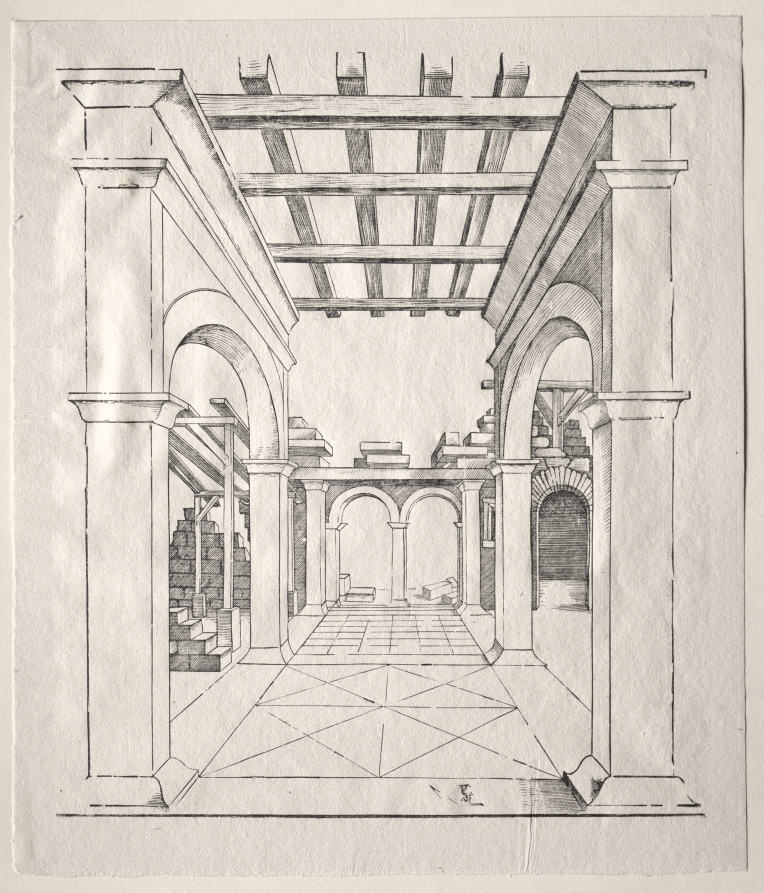
Erhard Schön · The Cleveland Museum of Art · Charles W. Harkness Endowment Fund · CC0
- Born
- 1491. · Nuremberg.
- Died
- 1542. · Nuremberg.
- Nationality
- Germany.
- Occupation
- engraver, painter, draftsperson, xylographer and artist.
- Languages
- German.
VALÉORINE Encyclopedia
VALÉORINE documentary reading
Documentary summary
Illustration — Erhard Schön, Portrait of Albrecht Dürer Erhard Schön (c. 1491–1542) was a German woodcut designer and painter. Schön was born in Nuremberg as the son of painter Max Schön III. He probably started to learn his trade as an artist in the workshop of his father.
Admitted source layer · organised and presented by VALÉORINE
Note VALÉORINE
Erhard Schön (1491–1542) was an artist, draftsperson and engraver, among other activities, of German nationality. The artist was born and died in Nuremberg. Activity centred on visual arts and wood engraving technique.
Languages used include German. Works are held at Museum Boijmans Van Beuningen, Print Collection and Städel Museum.
Composed from admitted, traceable facts · 29 September 2026
VALÉORINE
Reference Check
Propose documentary evidence for Erhard Schön. A contribution is never written directly as fact: identity, source, rights and evidence gates still decide.
Sign in to contribute
World of VALÉORINE
Documentary connections
Only confirmed graph relationships appear here. Images are shown only when their identity and reuse rights both pass the documentary gate.
Documentary evidence
Documentary basis
Authority files
wikidata · Q18508148 · wikipedia · Erhard Schön
In this article
Identity and origins
Identity and origins
He was clearly influenced by the printmaking of Albrecht Dürer and may have contributed a few woodcuts to Dürer's Triumphal Arch (1515) and Theuerdank (1517). Especially Schön's way of modelling and placing figures is clearly derived from Dürer. After the death of Dürer, Schön also produced a woodcut portrait of the artist. Such woodcut portraits was only one of the genres Schön worked in. He produced prints of various kind for the popular market and established himself as a popularly demanded artist. Around 1200 illustrations for 116 books in addition to 200 separate woodcuts have been attributed to Schön. His first known work is a series of woodcuts for a book, from 1513. Until 1524 he mainly illustrated religious books. Together with Hans Springinklee he provided illustrations of rather high quality for the popular prayer book Hortulus Animae in 1515. A Great Rosary form approximately the same time has been described as his finest religious work. From the 1520s he produced several polemical works criticising Catholicism and in favour of Lutheranism. From the mid-1520s and early 1530s these satirical works display an influence from Barthel Beham, Sebald Beham and Georg Pencz. At this time, he also expanded his repertoire from religious to secular subjects, still with a satirical tone. From the 1530s, he switched to Classical themes such as the Judgement of Paris and Laocoön. In 1538 Christoph Zell of Nuremberg published a treatise on proportion in art.
The recorded working language is German. The field of work recorded is visual arts and wood engraving technique. Work by Erhard Schön is recorded in the collections of Museum Boijmans Van Beuningen, Städel Museum, J. Paul Getty Museum and Print Collection.
The authorities additionally record the headings Pseudo-Beham Schon, Erhard Schon, Pseudo-Beham and Erhard Schoen. His recorded language was German.
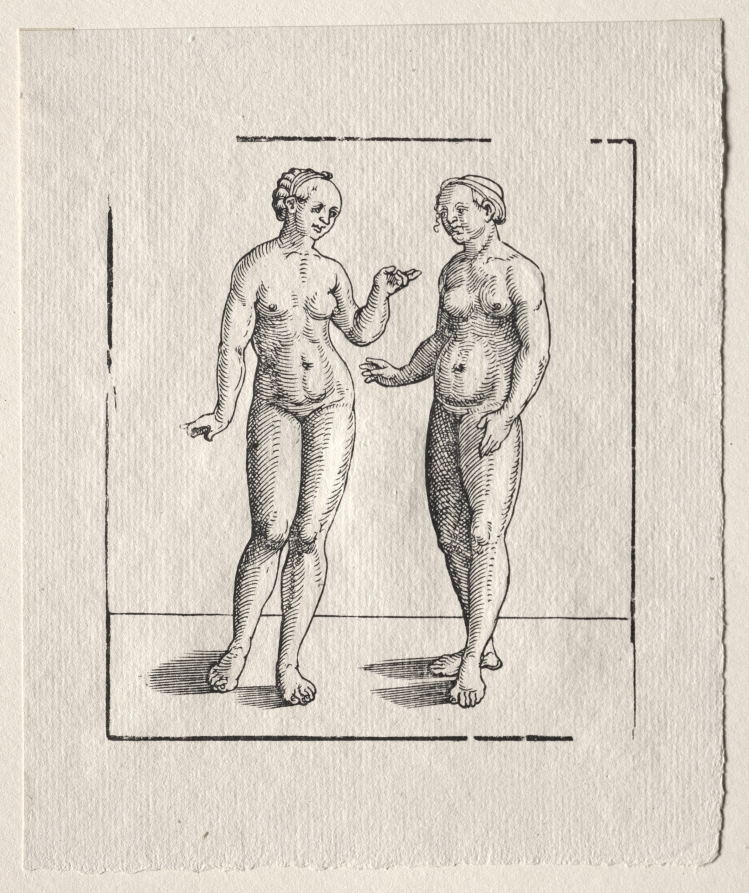
Two Nudes, by Erhard Schön
Erhard Schön · The Cleveland Museum of Art · Charles W. Harkness Endowment Fund
Life and career
Dated record
Life and career
The full dated record · 2 entries
1491
Erhard Schön born at Nuremberg.
1542
Erhard Schön died at Nuremberg.
Primary material
Digitised editions and texts
Erhard Schön als Maler (2016) — DataCite (Mitteilungen aus dem Germanischen Nationalmuseum)
Hans Baldung Grien a Erhard Schön v zbierke drevených štočkov Slovenského národného múzea v Bratislave (1995) — DataCite (NN)
Literature
Scholarly footprint
A count of publications is evidence of attention, not of standing, and is given here only as a measure.
Notes from the source article
Cited by Wikipedia
Notes from the source article
These works are cited by the source article, in its own numbering. They are recorded as its citations, not as sources VALÉORINE has verified.
- 1.Oxford University Press. The Grove Encyclopedia of Northern Renaissance Art. 3. 226–227. 2009. 9780195334661.
References
Citations
References
Each reference names the institution holding it, so a reader may go to the document itself.
reference work
Wikidata, structured authority record Q18508148: Erhard SchönWikimedia Foundation
Secondary witnessreference work
Secondary witness
The Encyclopedia exists whether or not anything is for sale. Corrections are recorded rather than overwritten, and every version of this record is kept. Published 16 August 2026.
Elsewhere in Prints
4,138 published records in this field, each with its sources named.
- Enzo CucchiEngraver
- Ephraim Moses LilienEngraver
- Erasmus Quellinus IIEngraver
- Ercole SettiEngraver
- Eric Fitch DaglishEngraver
- Eric Forbes-RobertsonEngraver
- Eric SlaterEngraver
- Ericka WalkerEngraver
Best supported in this field
For owners
Own a work by Erhard Schön?
A specialist will read what you send and tell you what the house can establish, what it cannot, and whether the object is suited to sale. There is no charge and no obligation. The object stays with you throughout; nothing is shipped to us unless it is arranged in writing beforehand.