
Ephraim Kishon
Ephraim Kishon (23 August 1924 – 29 January 2005) was a Hungarian-born Israeli author, dramatist, screenwriter, and Oscar-nominated film director. He was one of the most widely read contemporary satirists in Israel and was also particularly popular in German-speaking countries.
Also recorded as Ferenc Hoffmann
Ephraim Kishon

Zvi Tiberiu Keller · via the PikiWiki - Israel free image collection project · CC BY-SA 3.0
- Name
- Ephraim Kishon
- Birth Name
- Ferenc Hoffmann
- Born
- 23 August 1924
- Birthplace
- Budapest, Hungary
- Died
- 29 January 2005
- Place of death
- Appenzell, Switzerland
- Occupation
- * Film director
- Awards
- Israel Prize (2002)
- Nationality
- Israel
- Fields
- fiction
VALÉORINE Encyclopedia
VALÉORINE documentary reading
Documentary summary
Ephraim Kishon (23 August 1924 – 29 January 2005) was a Hungarian-born Israeli author, dramatist, screenwriter, and Oscar-nominated film director. He was one of the most widely read contemporary satirists in Israel and was also particularly popular in German-speaking countries.
Admitted source layer · organised and presented by VALÉORINE
Note VALÉORINE
No house-authored Note is published until its assertions and sources pass the VALÉORINE evidence contract. The documentary article remains available in full while that enrichment is being consolidated.
Documentary enrichment in progress · no unsupported statement published
Reference Check
Propose documentary evidence for Ephraim Kishon. A contribution is never written directly as fact: identity, source, rights and evidence gates still decide.
Sign in to contribute
Documentary evidence
Evidence Panel
not yet certified
- Identity
- resolved
- Independent source families
- 0
- Admitted assertions
- 0
- Open conflicts
- 0
Authority files
wikidata · Q167429 · wikipedia · Ephraim Kishon
In this article
Key facts
Key facts
• Name — Ephraim Kishon • Native Name — אפרים קישון • Birth Name — Ferenc Hoffmann • Born — 23 August 1924 • Birthplace — Budapest, Hungary • Died — 29 January 2005 • Place of death — Appenzell, Switzerland • Occupation — * Film director • novelist • playwright • screenwriter • columnist • satirist • Years Active — 1945–2005 • Children — 3 • Awards — Israel Prize (2002)
Biography
Biography
Ephraim Kishon was born on August 23, 1924, by the name of Ferenc Hoffmann into a middle-class Jewish family in Budapest, Hungary. (Later his name was Hungarized to Ferenc Kishont, hence his surname.) In his youth he knew neither Hebrew nor Yiddish. His father worked as a bank manager and his mother was a former secretary. Kishon also had a sister who was a writer. His writing talent became evident in his youth. In 1940 he won his first prize for writing a novel for high school students. Due to the racial laws applied in Hungary during World War II, he was not allowed to continue his studies at the university and therefore he began to study jewelry making in 1942. During World War II the Nazis imprisoned him in several concentration camps. At one camp his chess talent helped him survive, as he played chess with the guards. In another camp, the Germans lined up the inmates and shot every tenth person, but passed him by. He later wrote in his book The Scapegoat, "They made a mistake—they left one satirist alive". He eventually managed to escape the concentration camps while being transported to the Sobibor extermination camp in Nazi German Occupied Poland, and hid the remainder of the war disguised as "Stanko Andras", a Slovak laborer. • Illustration — Drawing of Kishon by Chaim Topol After the war when he returned to Budapest he discovered that his parents and sister had survived, but many other family members had been murdered in the gas chambers at Auschwitz. In 1945, he changed his surname from Hoffmann to Kishont and returned to Hungary, where he continued to study art and writing. In 1948 he completed his studies in metal sculpturing and art history and began publishing humorous articles under the name Franz Kishunt. In 1949 he immigrated to the newly founded state of Israel, together with his first wife Eva (Chawa) Klamer, to escape the Communist regime. When arriving in Israel an immigration officer officially Hebraicized his name to "Ephraim Kishon". According to Kishon, the Jewish Agency clerk asked him for his name and when he answered "Ferenc" the clerk said: There is no such thing, and wrote "Ephraim", and afterwards he went ahead and Hebraicized his family name as well, Kishon being a river near Haifa, the Israeli city on Mount Carmel. His first marriage to Eva (Chawa) Klamer in 1946 ended in divorce. In 1959, he married Sara (née Lipovitz), who died in 2002. In 2003, he married the Austrian writer Lisa Witasek. Kishon had three children: Raphael (b. 1957), Amir (b. 1963), and Renana (b. 1968). In 1981, Kishon established a second home in the rural Swiss canton of Appenzell as he felt unwelcome in Israel due to his status as an immigrant. Being a popular Israeli writer, he still felt he was getting negative treatment from the Israeli media due to the fact he was rather right wing in his political views. • Illustration — Kishon talking with Prime Minister Yitzhak Rabin, 1992 Kishon died on January 29, 2005, at his home in Switzerland at the age of 80 following a cardiac arrest. His body was flown to Israel and he was buried at the Trumpeldor Cemetery in Tel Aviv.
Literary career
Literary career
Kishon initially lived in the "Sha'ar Ha'Aliyah" transit camp near Haifa, and soon afterwards moved to Kibbutz Kfar Hahoresh, in which he worked as a nurse while learning the Hebrew language during his free time with the help of his neighbor Joseph Bilitzer. During this period he wrote several humorous lists for the Hungarian newspaper "Új Kelet". Afterwards Kishon moved to a housing project. He studied Hebrew at the Ulpan "Etzion" in Jerusalem, and soon became proficient in the language. Nevertheless, his heavy Hungarian accent accompanied him throughout his life. Mastering the Hebrew language with remarkable speed, in 1951 Kishon began writing a satirical column in the easy-Hebrew daily, Omer, after only two years in the country. Later on Kishon began writing for the newspaper "Davar" (which was very influential at the time) in which he published a satire called "The Blaumilch Canal". That same year he published his first book in Israel "Ha-ole Ha-Yored le-Chayenu"- "The Pestering Immigrant", (a pun on the Hebrew word for "Immigrant") which was written in Hungarian and translated into Hebrew by Avigdor Hameiri. The book was mostly about the life experiences of new immigrants in Israel during the 1950s. In 1952 Kishon began writing a regular satirical column called "Had Gadya" ("One Young Goat" in Aramaic, taken from the Passover Seder liturgy) in the daily Hebrew tabloid "Ma'ariv". Kishon kept writing the column for about 30 years, while in the first two decades he published a new column almost every day. Within a few years after launching his writing career in Israel Kishon became one of the most prominent humorists and satirists in the country. • Illustration — Kishon at the Aachen carnival in West Germany, 1978 Kishon's extraordinary linguistic inventiveness and flair for creating characters was carried over into his work for the theater. Collections of his humorous writings have appeared in Hebrew and in translation. Among the English translations are Look Back Mrs. Lot (1960), Noah's Ark, Tourist Class (1962), The Seasick Whale (1965), and two books on the Six-Day War and its aftermath, So Sorry We Won (1967), and Woe to the Victors (1969). Two collections of his plays have also appeared in Hebrew: Shemo Holekh Lefanav (1953) and Ma´arkhonim (1959). • Illustration — Ephraim Kishon at a simultaneous game of chess by Vladimir Kramnik, Dortmund 2001, left at the back of Kishon the President of the German Chess Federation (Alfred Schlya). Kishon's books have been translated into 37 languages and sold particularly well in Germany. Kishon rejected the idea of universal guilt for the Holocaust. He said: “It gives me great satisfaction to see the grandchildren of my executioners queuing up to buy my books.” Until his death in 1979, Friedrich Torberg translated his work into German. Thereafter Kishon did the German translations himself.
Chess
Chess
Kishon was a lifelong chess enthusiast, and took an early interest in chess-playing computers. In 1990, German chess computer manufacturer Hegener & Glaser together with Fidelity produced the Kishon Chesster, a chess computer distinguished by the spoken comments it would make during a game. Kishon wrote the comments to be humorous, but were also carefully chosen to be relevant to chess and the position in the game.
Plays
Plays
• His Reputation Precedes Him (1953) • Black on White (1957) • Ha-Ketubbah (1959) • No Word to Morgenstein (1960) • Take the Plug Out (1968) • Oh, oh, Juliet (1972) • Salah Shabati the musical (1988) • Open for Renovation (2004) not yet seen • The Policeman (2009) Kishon's sketches and plays have been translated and performed on stages and television networks worldwide.
Identity and overview
Identity and overview
The following is established of the heading itself. It is also recorded that ephraim Kishon is recorded as Israel.

THE 1964 "KINOR DAVID" AWARD, HELD AT THE "CAMERI" THEATRE. IN THE PHOTO, BEST WRITER EPHRAIM KISHON ON STAGE
Fritz Cohen · Israel National Photo Collection
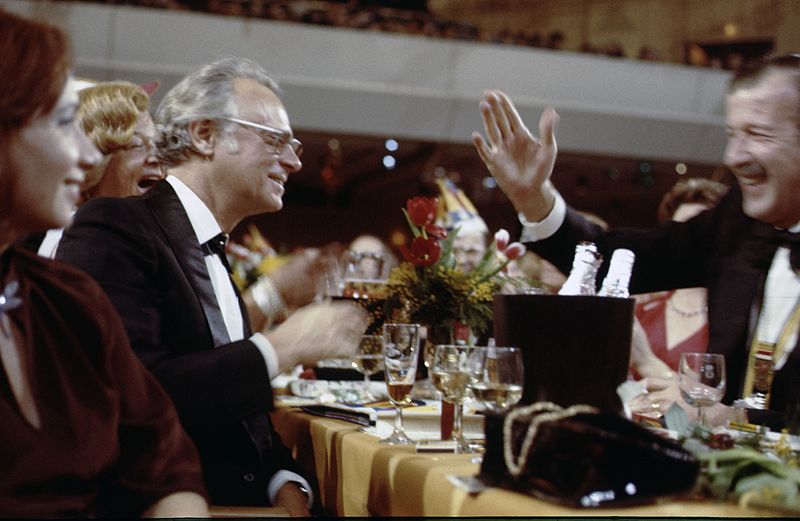
Preisverleihung des Ordens wider den tierischen Ernst 1978 an Ephraim Kishon in Aachen
Ladislaus Hoffner
Books
• Ha-ole Ha-Yored le-Chayenu (1951) • Thousand of Gadia and Gadia (1954) • Ein Kamonim (1955); republished in 1972 as The Fox in the Chicken Coop (book), on which the film with the same name is based • Do Not Worry (1957) • Sketches (1959) • It All Depends (1958) • Be-Echad Ha-Emeshim (1961) • He and She (1963) • Somersaults (1964) • Bone in the Throat (1966) • So Sorry We Won! (1967), with illustrations by Dosh • Gomzim Gomzim (1969) • בעד, Ba'ad (1970) • Oh, Winners (1970) • Department of Ephraim Kishon (1972) • חור במסך, Chor beSemach, Hole in the Screen (1973) • Partachia my Love (1974) • The Mark of Cain: A Bitter Smile from Besieged Israel (1976) • My Family Right or Wrong (1977) • Smile drought (1978) • Family Book (1980–current) • Jonathan Voyage (1981), children book • The Cup is Ours (1981), children book • Uncles on the Wires (1981), children book • Unfinished Adventure (1981), children book • Gum with Stripes (1981), children book • Seven Comedies (1981) • Satire Book I (1981) • Arbinkea (1991) • Satire Book II (1991) • Satire Book III (1992) • 58 Sketches (1995) • Ants War (1995) children books • Hercules and the Seven Midgets (1995) children books • The Taming of the Shrew Dog (1995) children books • Hairy, Hell (1998) • State Protocol (1999) • The Redhead with the Key (2002) children books • Book of Travels (2003) • Partachia (2004) • Picasso's Sweet Revenge (2004)
Films
Kishon expanded into cinema in the early 1960s. He wrote, directed and produced five feature films, all of them comedic /satirical movies. Three movies were nominated for major international awards including the Golden Globe award (two wins) and the Oscar (two nominations): • Sallah Shabati (1964), nominated for Oscar for best foreign language film), Israeli comedy film about the chaos of Israeli immigration and resettlement which was critical of the treatment immigrants to Israel received depicting immigrants being vilified by Ashkenazi Israelis. This social satire placed the director Ephraim Kishon among the first Israeli filmmakers to achieve international success. It also introduced actor Chaim Topol (Fiddler on the Roof) to audiences worldwide. • Ervinka (1967), written and directed by Kishon. The film, starring Topol, is a comical tale of a con man who falls in love with a police officer. • Blaumilch Canal, also known as The Big Dig (1969, nominated for Golden Globe 1971), an Israeli comedy which depicts the madness of bureaucracy through a municipality's reaction to the actions of a lunatic. • The Policeman, original Hebrew title Ha-Shoter Azoulay (literally, Constable Azoulay) (1971, nominated for Oscar for best foreign language film, awarded 1972 Golden Globe for best foreign language film). It won several other awards, such as best foreign film in the Barcelona film festival and best director in the Monte Carlo festival. In Israel it is considered a cinematic classic. • The Fox in the Chicken Coop (1978), based on Kishon's satirical book by the same name (Hebrew: Ha Shu'al B'Lool HaTarnegolot), features many prominent Israeli actors of the time, most notably Shaike Ophir and Seffy Rivlin. The film takes a satirical, comic look at the old generation of Israeli politicians.
Reception and legacy
Kishon is widely considered one of the central figures of modern Israeli satire; his linguistic style and stage/screen characters became embedded in everyday spoken Hebrew and Israeli popular culture. His five feature films are credited with shaping Israeli popular cinema and helping pave the way for the Bourekas film genre of Israeli comedies. In Israel, Kishon has been described as the young state's "chief satirist", known for his critical eye on the policies of the Labor Zionist establishment as well as on the condescension shown by Israelis of Ashkenazi descent toward Mizrahi immigrants. Despite this, Kishon increasingly felt that his best-selling work was looked down on as "middlebrow" by the Israeli literary establishment, and his domestic popularity waned somewhat during the 1970s even as his acclaim in Germany grew. Kishon's satire found an unusually large readership in West Germany and Austria from the 1960s onward, and his books topped West German bestseller lists through the 1960s and 1970s. Scholarship on his German-language reception situates that success within the structures and politics of the postwar West German book market and the wider politics of German–Israeli reconciliation, rather than treating it merely as a historical irony, as Kishon himself often described it; his public interventions on Middle Eastern politics in the German press after the 1967 Six-Day War are also credited with contributing to an ongoing politicisation of how Israeli literature is received in Germany.
Primary material
Documents and archives
scholarly publication
- „We Have to Watch ou[t] for [the] Propaganda Effect“ – Ephraim Kishon und Friedrich Torberg publizieren „israelischen Humor“ zum Sechstagekrieg 1967, Naharaim, 2019
Scholarly · Crossref registry · 2019
- Israelische Satiren für ein westdeutsches Publikum. Ephraim Kishon, Friedrich Torberg und die Konstruktionen „jüdischen Humors“ nach der Schoah, 2024
Scholarly · Crossref registry · 2024
Institutional database
- Wikidata, structured authority record Q167429: Ephraim Kishon
Scholarly · Wikimedia Foundation
reference work
- “Ephraim Kishon”, English Wikipedia, consulted as further reading
Reputable secondary · Wikipedia
Awards
• 1953, Nordau Prize for Literature • 1958, Sokolov Prize for Journalism • 1964, Kinor David (David's Harp) Prize • 1970, Herzl Award for Hungarian Jewry: for literature • 1998, co-recipient (jointly with Nurit Guvrin and Aryeh Sivan) of the Bialik Prize for Hebrew literature • 2002, Israel Prize for lifetime achievement & special contribution to society and the State of Israel Upon receiving the prize, he remarked: "I've won the Israel Prize, even though I'm pro-Israel. It's almost like a state pardon. They usually give it to one of those liberals who love the Palestinians and hate the settlers." Kishon was nominated twice for an Academy Award for Best Foreign Language Film and three times for a Golden Globe Award. He won two Golden Globe Best Foreign Language Film Awards, for Sallah Shabati (1964), and The Policeman (1971).
Notes from the source article
Cited by Wikipedia
Notes from the source article
These works are cited by the source article, in its own numbering. They are recorded as its citations, not as sources VALÉORINE has verified.
- 1.Ephraim Kishon, 80, Holocaust Survivor Who Became Satirist. The New York Times. 2005-01-30. 0362-4331.
- 2.Obituaries: Ephraim Kishon *The Guardian*, 1 February 2005
- 3.The life of Ephraim Kishon (1924-2005) , ephraimkishon.de
- 4.https://www.amazon.com/Who-Grymek-Library-Holocaust-Testimonies/dp/0853034117?asin=0853034117&revisionId=&format=4&depth=1, "Bibliographical Note"
- 5.Remembering the Greatest Jewish Writer You May Not Have Even Heard Of. Tablet Magazine. 2018-01-29.
- 6.Jpress.org.il. חלון כתבה.
- 7.Ephraim Kishon 1924 - 2005. Ephraim Kishon: Official website. 2018.
- 8.Xs4all.nl. Kishon Chesster.
- 9.Ephraim Kishon (Chessbase.com news) — biography and involvement with chess computers
- 10.Films by Ephraim Kishon. ארכיון הסרטים הישראלי - סינמטק ירושלים. August 30, 2026.
- 11.Biography of Ephraim Kishon. Posen Library.
- 12.Handelzalts, Michael. Author and Satirist Ephraim Kishon Dies, Aged 80. Haaretz. January 30, 2005.
- 13.Behre, Silja. Ephraim Kishon für Deutsche. Der israelische Autor und Satiriker im Literaturbetrieb der Bundesrepublik. ZZF – Centre for Contemporary History: Zeithistorische Forschungen. 10.14765/ZZF.DOK-1726.
- 14.The 37th Academy Awards (1965) Nominees and Winners. oscars.org.
- 15.The Policeman. IMDb.
- 16.The 44th Academy Awards (1972) Nominees and Winners. oscars.org.
- 17.List of Bialik Prize recipients 1933–2004 (in Hebrew), Tel Aviv Municipality website.
- 18.Israel Prize Official Site (in Hebrew) – Recipient's C.V.
- 19.Israel Prize Official Site (in Hebrew) – Judges' Rationale for Grant to Recipient.
References
Citations
References
Each reference names the institution holding it, so a reader may go to the document itself.
scholarly publication
Verifiedscholarly publication
Israelische Satiren für ein westdeutsches Publikum. Ephraim Kishon, Friedrich Torberg und die Konstruktionen „jüdischen Humors“ nach der Schoah, 2024Crossref registry
VerifiedInstitutional database
Wikidata, structured authority record Q167429: Ephraim KishonWikimedia Foundation
Verifiedreference work
Partially resolved
The Encyclopedia exists whether or not anything is for sale. Corrections are recorded rather than overwritten, and every version of this record is kept. Published 14 August 2026.
Elsewhere in Sculpture
6,174 published records in this field, each with its sources named.
- Enrique HidalgoArtist
- Ensio SeppänenArtist
- Enzo MariArtist
- Ephraim KeyserArtist
- Epigonus of PergamumArtist
- Erasmus GrasserArtist
- Erasmus Quellinus the ElderArtist
- Erastus Dow PalmerArtist
Best supported in this field
For owners
Own a work by Ephraim Kishon?
A specialist will read what you send and tell you what the house can establish, what it cannot, and whether the object is suited to sale. There is no charge and no obligation. The object stays with you throughout; nothing is shipped to us unless it is arranged in writing beforehand.