
Emery Walker
Sir Emery Walker FSA (2 April 1851 – 22 July 1933) was an English engraver, photographer and printer. Walker took an active role in many organisations that were at the heart of the Arts and Crafts movement, including the Art Workers Guild, the Society for the Protection of Ancient Buildings, and the Arts and Crafts Exhibition Society.
Also recorded as Sir Emery Walker
Emery Walker
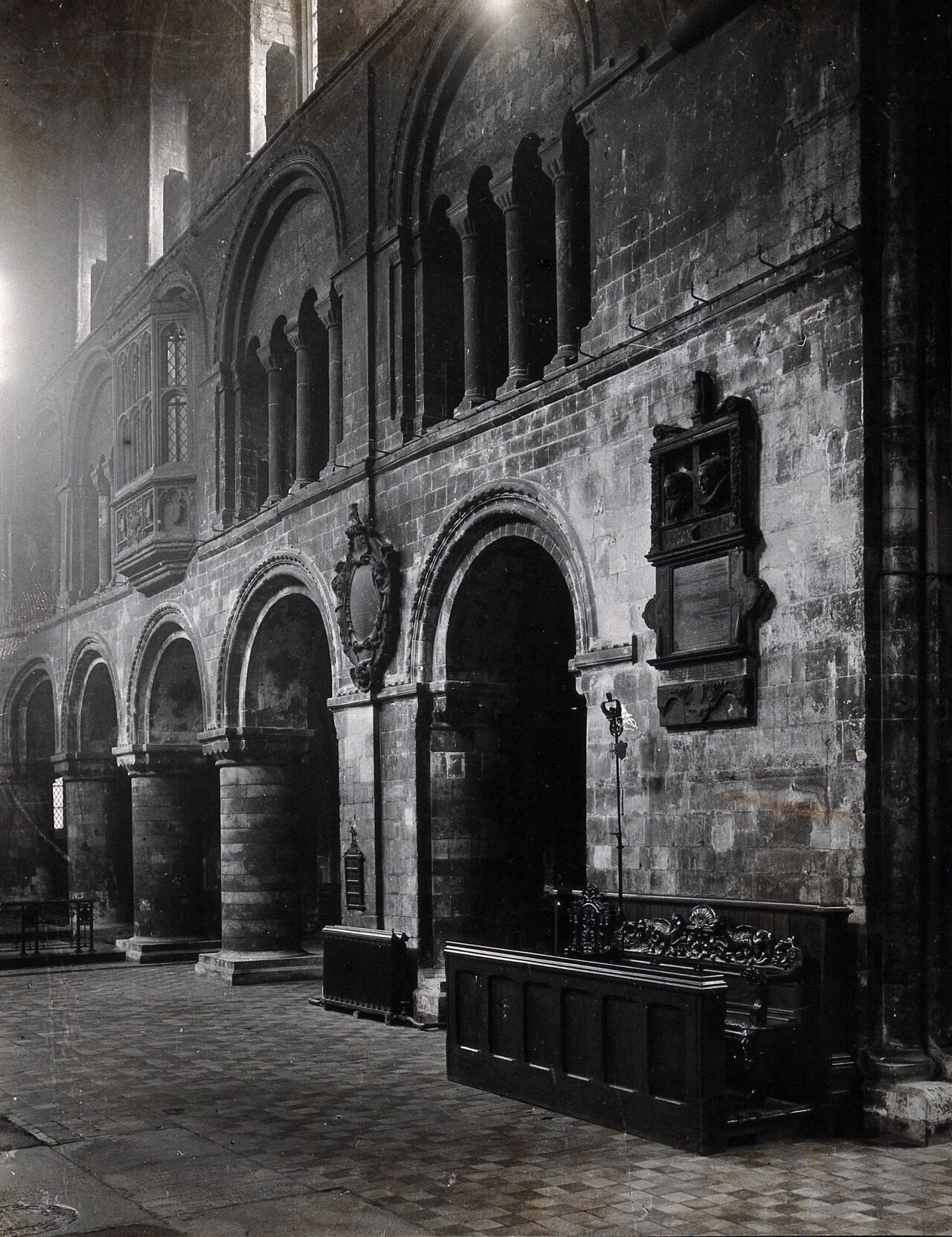
Emery Walker · Wellcome Collection, London · Wellcome Collection · Public Domain Mark
- Born
- 1851 · Paddington.
- Died
- 1933 · Hammersmith.
- Nationality
- United Kingdom
- Occupation
- type designer · printmaker · businessperson · photographer · exlibrist · book printer · artist
- Honours
- Fellow of the Society of Antiquaries · Knight Bachelor
- Languages
- English
Reference Check
Propose documentary evidence for Emery Walker. A contribution is never written directly as fact: identity, source, rights and evidence gates still decide.
Sign in to contribute
World of VALÉORINE
Documentary connections
Only confirmed graph relationships appear here. Images are shown only when their identity and reuse rights both pass the documentary gate.
Documentary evidence
Documentary basis
Authority files
wikidata · Q346323 · wikipedia · Emery Walker
VALÉORINE Encyclopedia
The documentary record
Statements marked “Documentary record” are set in the article beside the passage they confirm. Each is read from the authority records of the institutions named here; select “Prove” to see the record it was read from, where in that record, and when.
Institutions cited
Bibliothèque nationale de France · Deutsche Nationalbibliothek · Getty Union List of Artist Names
Complete reading chain (JSON)In this article
Life
Life
The recorded working language is English. Places of work recorded in the authority are London. Work by Emery Walker is recorded in the collections of Musée national des beaux-arts du Québec, Stedelijk Museum Amsterdam, National Library of Wales and Huis van het boek. Distinctions recorded are Fellow of the Society of Antiquaries and Knight Bachelor.
• Illustration — 7 Hammersmith Terrace, with the blue plaque to Walker Walker was born in London. His father was a coach builder. He obtained a very old book when he was twelve that gave him a love of books. A year later his father's failing sight meant that he had to leave school. In the late 1870s, Walker befriended William Morris, with whom he shared both socialist beliefs and a keen interest in printing. They lived near each other. Walker's expertise and his collection of 16th-century typefaces inspired Morris to create the Kelmscott Press. After Morris's death, Walker set up his own printing enterprise, the Doves Press, with bookbinder T. J. Cobden Sanderson which in turn inspired the private presses of the 20th century. The capital for the enterprise which was £1,600 was supplied by Anne Cobden-Sanderson. The font that they created was intended to be shared. By 1906 the partners had fallen out over Walker's low interest and T. J. Cobden-Sanderson's obsessive interest. Despite the agreement, Cobden-Sanderson did not deliver a copy of the font and instead arranged for every copy of the design to be dropped into the Thames. In 1910, Walker photographed the Rice portrait of Jane Austen, subsequently published in the 1913 edition of Jane Austen: her life and letters, a family record by William Austen-Leigh and Richard Arthur Austen-Leigh. In 1922 Anne Cobden-Sanderson's husband died. After his death, she paid a large sum to settle the dispute with Walker. This money was to compensate him for the loss of the Doves typeface that her husband had thrown into the Thames when his partnership with Walker ended. "Emery Walker, Esq. Process engraver and Printer. Past Master of the Art Workers' Guild. Late President of the Arts and Crafts Exhibition Society. A Trustee of the Wallace Collection and a Fellow of the Society of Antiquaries" received a knighthood in 1930. Walker's daughter, Dorothy Walker, and later Dorothy's live-in companion, Elizabeth de Haas, preserved many of Walker's private papers and the family collection of Arts and Crafts decorative items and ephemera at the family home at 7 Hammersmith Terrace, London. The house is now a museum run by the Emery Walker Trust, a registered charity. Emery Walker's library of private press books was sold to Cheltenham Art Gallery and Museum to endow the trust. Walker’s three lectures for the Sandars Readership in Bibliography in 1924 were published by the Oak Knoll Press in 2019.
Documentary record
Emery Walker, a book printer, antiquary, typographer and photographer, was born on 2 April 1851 and died on 22 July 1933. The birthplace of Emery Walker is recorded as Paddington by the Deutsche Nationalbibliothek and as Londres by the Bibliothèque nationale de France. The place of death of Emery Walker is recorded as Hammersmith by the Deutsche Nationalbibliothek and as Londres by the Bibliothèque nationale de France.
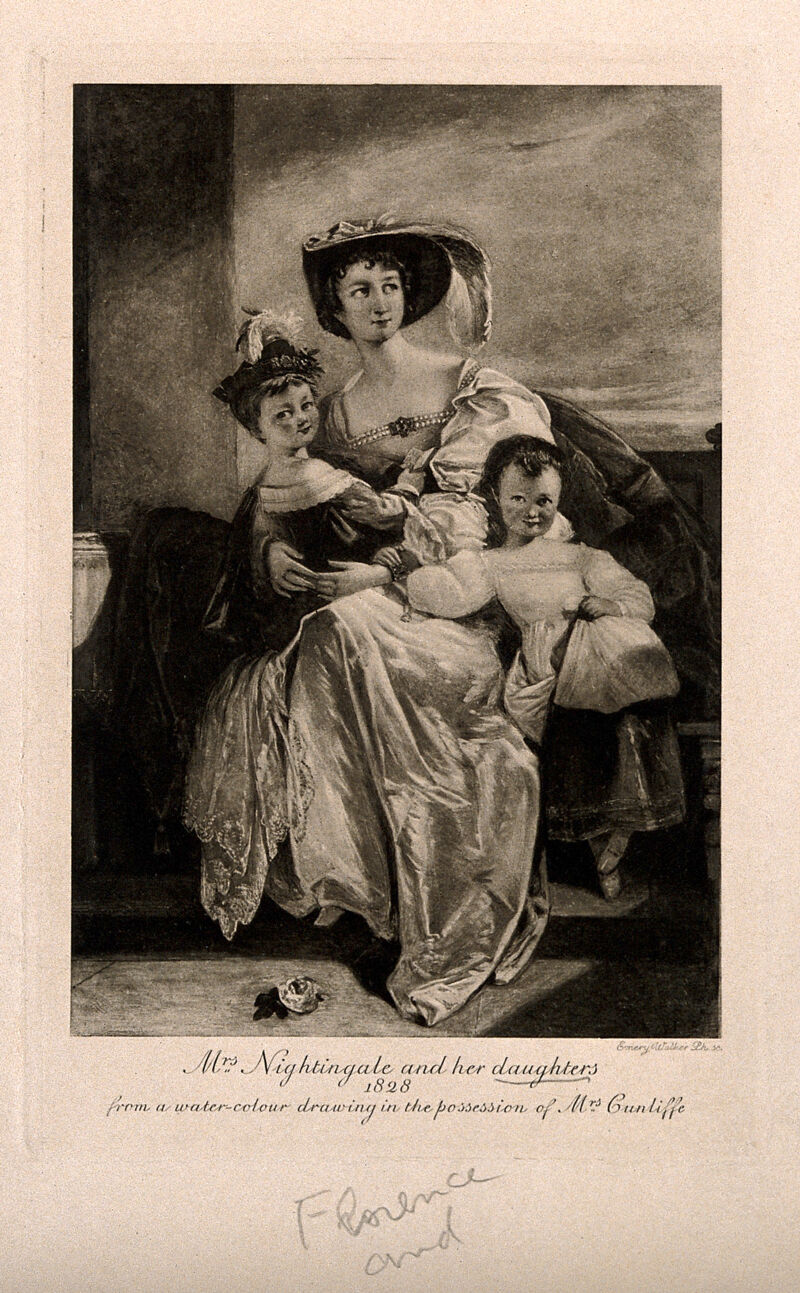
Mrs Nightingale with her daughters, Florence and Parthenope. Photogravure by E. Walker after a watercolour, 1828., by Emery Walker
Emery Walker · Wellcome Collection, London · Wellcome Collection
Places
Named by the record
Places
Only places the record itself states, plotted where the house gazetteer settles their coordinates. Nothing is inferred from a name or a nationality.
Paddington.
Birth place
Hammersmith.
Death place
Primary material
Documents and archives
reference work
- “Emery Walker”, English Wikipedia, consulted as further reading
Reputable secondary · Wikipedia
authority record
- Wikidata, structured authority record Q346323: Emery Walker
General reference · Wikidata
Text attribution
Licensing
Text attribution
Part of the biographical narrative on this page reuses licensed material. Its origin, revision and licence are recorded here.
The biographical narrative on this page is based on the Wikipedia article Emery Walker, revision 1349721742 (EN edition), by its contributors. VALÉORINE has edited that text and built its own documentary record around it. The reused material is available under CC BY-SA 4.0, and this page's reuse of it is offered under the same licence. Everything else on this page — the chronology, the holdings, the evidence, the plates and the connections — is VALÉORINE's own record. Sources and licences.
Notes from the source article
Cited by Wikipedia
Notes from the source article
These works are cited by the source article, in its own numbering. They are recorded as its citations, not as sources VALÉORINE has verified.
- 1.Emery Walker, his museum, Retrieved 29 July 2015
- 2.The Fight Over the Doves. The Economist. 21 December 2013.
- 3.Simpkin, John. Anne Cobden Sanderson. Spartacus Educational. December 2021.
- 4.33566. 31 December 1929.
- 5.EW charity 1158505 The Emery Walker Trust
- 6.Emery Walker Trust
- 7.Printing for Book Production: Emery Walker's Three Lectures for the Sandars Readership in Bibliography. Oak Knoll Press.
References
Citations
References
Each reference names the institution holding it, so a reader may go to the document itself.
reference work
Secondary witnessauthority record
General reference
The Encyclopedia exists whether or not anything is for sale. Corrections are recorded rather than overwritten, and every version of this record is kept. Published 16 August 2026.
Elsewhere in Prints
4,138 published records in this field, each with its sources named.
- Elton BennettEngraver
- Elvira GascónEngraver
- Emanuel BowenEngraver
- Emeric Essex VidalEngraver
- Emil OrlíkEngraver
- Emile Adélard BretonEngraver
- Emile BaesEngraver
- Émile BayardEngraver
Best supported in this field
For owners
Own a work by Emery Walker?
A specialist will read what you send and tell you what the house can establish, what it cannot, and whether the object is suited to sale. There is no charge and no obligation. The object stays with you throughout; nothing is shipped to us unless it is arranged in writing beforehand.