
Elsa Morante
Elsa Morante (18 August 1912 – 25 November 1985) was an Italian novelist, poet, translator and children's books author. Her novel La storia (History) is included in the Bokklubben World Library List of 100 Best Books of All Time.
Elsa Morante
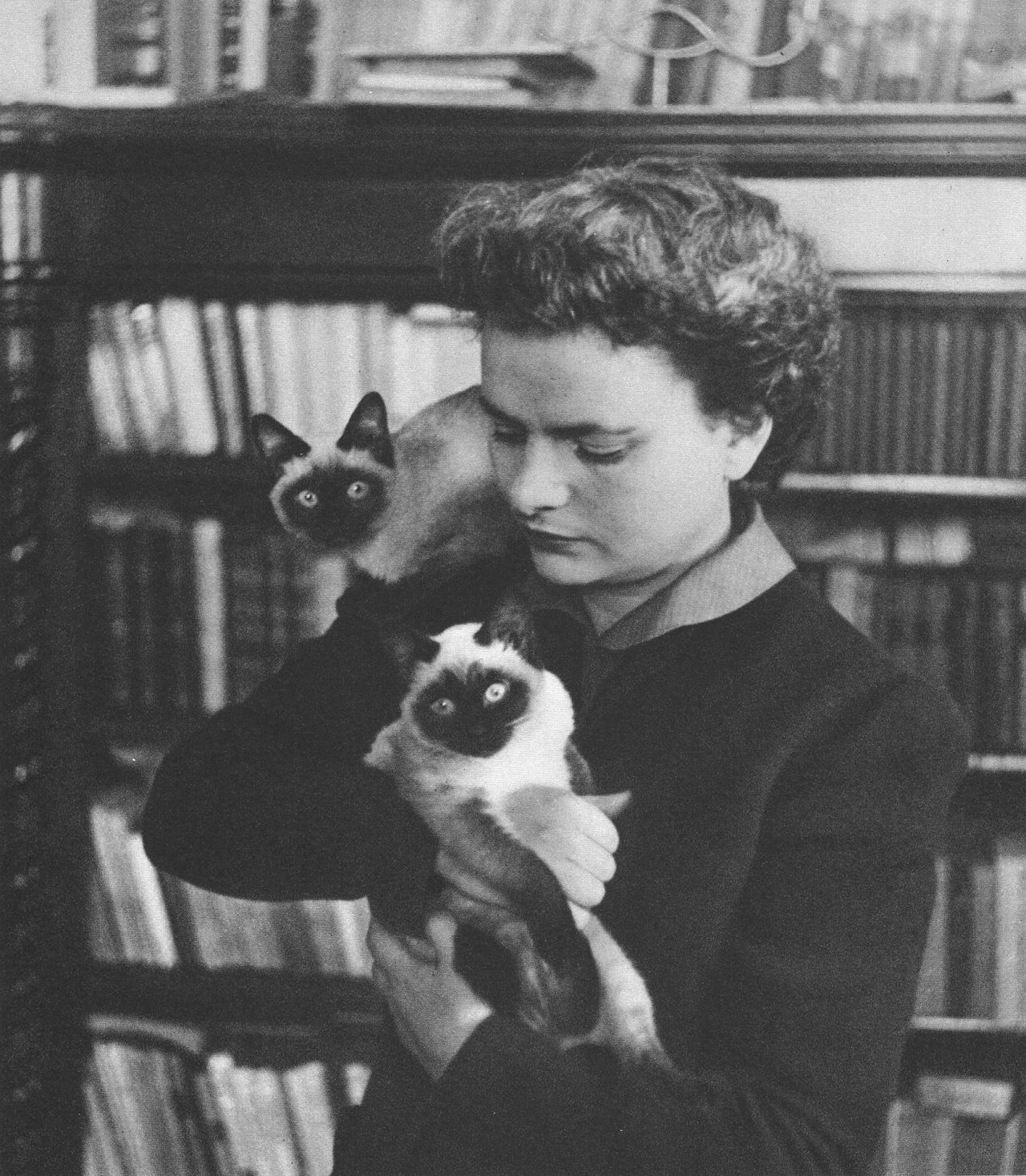
Public domain
- Name
- Elsa Morante
- Born
- 18 August 1912
- Birthplace
- Rome, Italy
- Died
- 25 November 1985
- Occupation
- Novelist
- Awards
- Viareggio Prize (1948) Strega Prize (1957)
- Nationality
- Italy · Kingdom of Italy
- Fields
- poetry
- Known for
- History
- Honours
- Prix Médicis étranger · Strega Prize · Viareggio Prize
- Languages
- Italian
VALÉORINE Encyclopedia
VALÉORINE documentary reading
Documentary summary
Elsa Morante (18 August 1912 – 25 November 1985) was an Italian novelist, poet, translator and children's books author. Her novel La storia (History) is included in the Bokklubben World Library List of 100 Best Books of All Time.
Admitted source layer · organised and presented by VALÉORINE
Note VALÉORINE
No house-authored Note is published until its assertions and sources pass the VALÉORINE evidence contract. The documentary article remains available in full while that enrichment is being consolidated.
Documentary enrichment in progress · no unsupported statement published
Reference Check
Propose documentary evidence for Elsa Morante. A contribution is never written directly as fact: identity, source, rights and evidence gates still decide.
Sign in to contribute
World of VALÉORINE
Documentary connections
Only confirmed graph relationships appear here. Images are shown only when their identity and reuse rights both pass the documentary gate.
Documentary evidence
Evidence Panel
not yet certified
- Identity
- resolved
- Independent source families
- 0
- Admitted assertions
- 0
- Open conflicts
- 0
Authority files
wikidata · Q275979 · wikipedia · Elsa Morante
In this article
Key facts
Key facts
• Name — Elsa Morante • Born — 18 August 1912 • Birthplace — Rome, Italy • Died — 25 November 1985 • Place of death — Rome, Italy • Occupation — Novelist • Notable Works — La storia (History) • Awards — Viareggio Prize (1948) Strega Prize (1957)
Life and career
Life and career
Elsa Morante was born in Rome in 1912, the daughter of Irma (née Poggibonsi), a schoolteacher, and Augusto Morante. Her mother came from a Jewish family in Modena. When she was a teenager Morante discovered that Francesco Lo Monaco, a family neighbour, was her biological father. Except for a brief period during World War II, she resided in Rome until her death in 1985. Morante started writing at an early age. Without having much support from her parents, she relied mostly on self-education. She began writing short stories in the mid-1930s. Some were published in various publications and journals, including periodicals for children. Her first book, a collection of short stories called Il Gioco Segreto (The Secret Game), was published in 1941. In the same year, she married fellow novelist and film critic Alberto Moravia. In 1942 she wrote her first children's book, Le Bellissime avventure di Caterì dalla Trecciolina (republished in 1959 as Le straordinarie avventure di Caterina). During the German occupation of Italy late in World War II, Morante and Moravia, fearful because of their Jewish heritage, fled Rome to repair in Southern Lazio, in a village near Fondi and where there were several poor families of shepherds, called in the past, with an offensive term, "ciociari" in the modern Roman dialect. The experience would inspire Morante's La storia (1974) and Moravia's La Ciociara (translated in English in 1957 as "Two Women" and later made into a film by Vittorio De Sica). During her time in the territory of Fondi, she began translating the work of Katherine Mansfield. Morante decided to briefly return to war-torn Rome at great personal risk to retrieve the manuscript of what would be her first published novel, Menzogna e sortilegio, and get winter clothes. At the end of the war, Morante and Moravia met the American translator William Weaver, who helped them to break into the English-speaking market. Her first novel, 1948's Menzogna e sortilegio, won the Viareggio Prize, and was published in the United States in 1951 as House of Liars. Despite her international success, Morante found the English translation quite disappointing. Morante's next novel, L'isola di Arturo, was published in 1957 and won the Strega Prize. In 1961 Morante and Moravia separated, without divorcing, and Morante's writing became more sporadic. She destroyed much of the work written during that period, although she did publish a novel, The Andalusian Shawl (1963), and a poem, The Adventure. Her next work, Il mondo salvato dai ragazzini (The World Saved by Children), a mix of poetry and songs mostly addressed to her new lover, artist Bill Morrow, was published in 1968. In 1963 Pier Paolo Pasolini invited Morante to select the music for his film The Gospel According to St. Matthew. She also collaborated in casting the actors. In 1974 Morante published La storia, a book chronicling the events surrounding Rome during World War II. It became a national bestseller in Italy, partially due to Morante's insistence that publisher Einaudi would put it out in an economical paperback edition. Despite its commercial success, the book provoked furious and at times negative reactions from left-wing literary critics, who disliked its anti-ideological tone. After Pier Paolo Pasolini wrote a negative review of the book, Morante broke off their friendship. La storia was adapted into a Rai television series in 1986. Morante's final novel, Aracoeli (1982), has been perceived as a summary of all the motifs and trends present in her writing, such as the innocence of childhood and the importance of creating fantastic worlds to escape from dreary realities. The first English-language biography of Morante, A Woman of Rome, by Lily Tuck, was published in 2008.
Major themes
Major themes
Morante cultivated a love for music, books and cats. Her favorite books included The Iliad, Don Quixote, and Hamlet. She was also interested in Freudian psychology, Plato and Simone Weil. Southern Italy is also used as the backdrop for much of her work. Most of Morante's greatest works are shaped by her choices and experiences in life and are reflected in her protagonists. One of the central themes in Morante's work is Narcissism. The majority of Morante's leading characters use autobiography as a way to seek self-therapy and hope. Narration becomes a leading tool. Her writing is essential for the formation of a positive consciousness about her personal memories. Another important aspect of Morante's work is the metaphor of love. According to her, love can be passion and obsession, and can lead to despair or destruction. This trajectory is connected to her love for a nine-year-old boy when she was only two and a half years old. According to her, her first love was a heaven, but then it transformed into a hell. The metaphor of love can easily be traced back to one of her most famous poems, "Alibi." Love and Narcissism are themes well connected to each other. Most of Morante's characters seek love, not because they have true feelings for the person they fell in love with, but because they need to cover the feelings of emptiness from their childhood. It is through love and narcissism that Morante introduces other themes such as the role of motherhood and the meaning of childhood experiences.
Novels and novellas
Novels and novellas
• Diario 1938 (1938) (Diary, publ. Einaudi, 1989 ISBN 8806116614 • Menzogna e sortilegio (1948) (House of Liars, trans. Adrienne Foulke, 1951; also as Lies and Sorcery, trans. Jenny McPhee, 2023) ISBN 9783458145752 • L'isola di Arturo (1957) (Arturo's Island, trans. Isabel Quigly, 1959; trans. Ann Goldstein, 2019) ISBN 9788806138387 • La storia (1974) (History: A Novel, trans. William Weaver, 1977) ISBN 9780394498027 • Aracoeli (1982) (Aracoeli, trans. William Weaver, 1984) ISBN 9780394535180
Poetry
Poetry
• Alibi (1958) • Il Mondo Salvato dai Ragazzini (1968), which includes "La canzone degli F.P. e degli I.M.in tre parti" The song of the H.F. and the U.M. in three parts, transl. M. Palladino & P. Hart (Joker 2007). A full translation by Cristina Viti, The World Saved By Kids, was published by Seagull Books in 2016. https: press.uchicago.edu/ucp/books/book/distributed/W/bo25015883.html
Non-fiction
Non-fiction
• Pro e contro la bomba atomica (1987, essays)
Identity
Identity
Elsa Morante is recorded as having received Prix Médicis étranger, Strega Prize and Viareggio Prize.

Alberto Moravia and Elsa Morante in Capri in the 1940s.
Life and career
Dated record
Life and career
The full dated record · 2 entries
1912
Elsa Morante born at Rome.
1985
Elsa Morante died at Rome.
Children's books
• Le straordinarie avventure di Caterina (1959)
Short story collections
• Il gioco segreto (1941) – twenty short stories • Le straordinarie avventure di Caterì dalla Trecciolina (1942) – later revised, expanded and republished as Le straordinarie avventure di Caterina, containing thirteen short stories • Lo scialle andaluso (1963) – twelve short stories • Racconti dimenticati (1937–1947) twenty early short stories, published by Einaudi in 2002. • Aneddoti infantili (1939–1940) – fifteen short stories that originally appeared in the magazine "Oggi", published by Einaudi in 2013.
Citations
References
Each reference names the institution holding it, so a reader may go to the document itself.
reference work
Wikidata, structured authority record Q275979: Elsa MoranteWikimedia Foundation
Partially resolvedreference work
Partially resolved
The Encyclopedia exists whether or not anything is for sale. Corrections are recorded rather than overwritten, and every version of this record is kept. Published 14 August 2026.
Elsewhere in Books
38,960 published records in this field, each with its sources named.
- Elsa GidlowAuthor
- Elsa GraveAuthor
- Elsa HolmstenAuthor
- Elsa MaxwellAuthor
- Elsa TrioletAuthor
- Else FeldmannAuthor
- Else FisherAuthor
- Else Lasker-SchülerAuthor
Best supported in this field
For owners
Own a work by Elsa Morante?
A specialist will read what you send and tell you what the house can establish, what it cannot, and whether the object is suited to sale. There is no charge and no obligation. The object stays with you throughout; nothing is shipped to us unless it is arranged in writing beforehand.