
Edward Scriven
Illustration — 1845 engraving by Benjamin Phelps Gibbon after a portrait by Andrew Morton Edward Scriven (1775 – 23 August 1841) was an English engraver of portraits, in the stipple and chalk manner. Scriven was the pre-eminent engraver of his generation, with 210 portraits ascribed to him by the National Portrait Gallery.
Edward Scriven
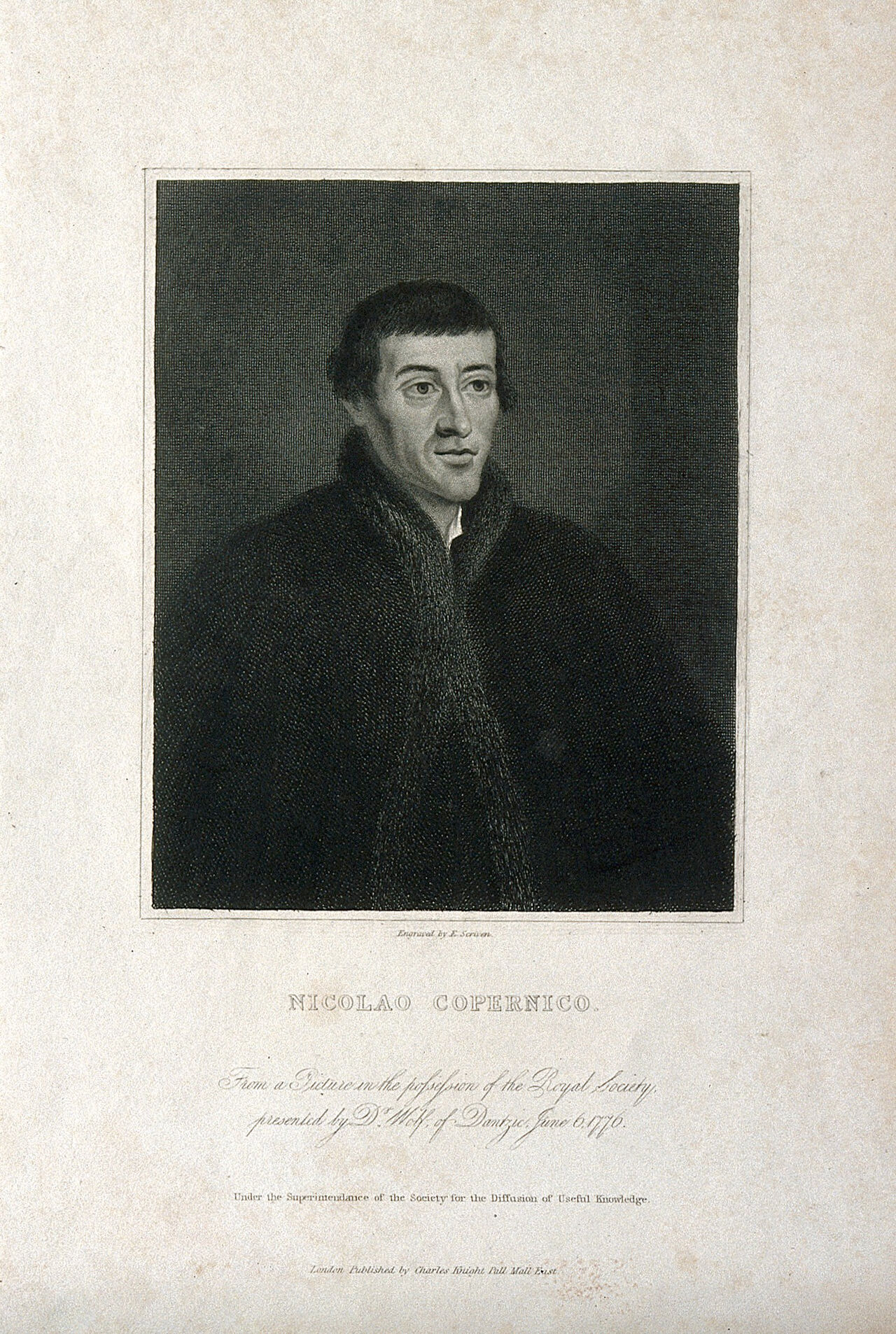
Edward Scriven · Wellcome Collection, London · Wellcome Collection · Public Domain Mark
- Born
- 1775 · Alcester.
- Nationality
- United Kingdom
- Occupation
- printmaker · graphic artist · art collector · copper engraver
- Fields
- printmaking · graphics
- Teachers
- Robert Thew
- Languages
- English
VALÉORINE Encyclopedia
VALÉORINE documentary reading
Documentary summary
Illustration — 1845 engraving by Benjamin Phelps Gibbon after a portrait by Andrew Morton Edward Scriven (1775 – 23 August 1841) was an English engraver of portraits, in the stipple and chalk manner. Scriven was the pre-eminent engraver of his generation, with 210 portraits ascribed to him by the National Portrait Gallery.
Admitted source layer · organised and presented by VALÉORINE
Reference Check
Propose documentary evidence for Edward Scriven. A contribution is never written directly as fact: identity, source, rights and evidence gates still decide.
Sign in to contribute
World of VALÉORINE
Documentary connections
Only confirmed graph relationships appear here. Images are shown only when their identity and reuse rights both pass the documentary gate.

Documentary evidence
Documentary basis
Authority files
wikidata · Q5345263 · wikipedia · Edward Scriven
In this article
Life
Life
Training under Robert Thew is recorded. The recorded working language is English. The field of work recorded is printmaking and graphics. Subjects and genres recorded for the work are portrait. Places of work recorded in the authority are London and Paris. Work by Edward Scriven is recorded in the collections of Auckland Art Gallery, National Portrait Gallery, National Library of Wales, Museum of Fine Arts Boston and Yale Center for British Art.
Scriven was born in 1775 at Alcester, Warwickshire, though his name does not appear in the parish register. He was for eight years a pupil of Northall (Northaw), Hertfordshire engraver Robert Thew. When Thew died in 1802, Scriven replaced him as Historical Engraver to the Prince of Wales. On the Prince of Wales' succession to the throne in 1820 as George IV Scriven was appointed Historical Engraver to the King. Early in his career he came to London to work on plates for the London publisher, John Boydell. Scriven became the eminent engraver of his generation, producing over 200 portrait engravings. He was considered to be a man of great active benevolence among the members of his profession and a leading proponent and founder of the Artists' Annuity Fund in 1810. He died on 23 August 1841 at his home at 46 Clarendon Square, Somers Town, London, leaving a widow and five children. He was buried in Kensal Green Cemetery, where a stone was erected to his memory by the members of the Artists' Fund. The monument was designed and created by Charles Harriott Smith. Benjamin Phelps Gibbon and Robert William Sievier studied engraving under Scriven. • Illustration — Edward Scriven's engraving of John Masey Wright's illustration to Robert Burns' Halloween
Works
Works
Scriven worked mainly for the publishers of expensively illustrated books and serials, such as the British Gallery of Portraits, (1809–17); Ancient Marbles in the British Museum (1814); Henry Tresham and William Young Ottley's British Gallery, 1828; Edmund Lodge's Portraits of Illustrious Persons, 1821–34; Thomas Frognall Dibdin's Ædes Althorpianæ, 1822; William Jerdan's National Portrait Gallery, 1830–4; and Anna Jameson's Beauties of the Court of Charles II, 1833. His few individual plates included: • Telemachus and Mentor discovered by Calypso, after Richard Westall, 1810; • A portrait of Rev. Rowland Broomhead, after Joseph Allen, 1813; • A portrait of Thomas Clifford, 1st Baron Clifford of Chudleigh, after Samuel Cooper, 1819; • Miranda, after William Hilton, 1828; and • A portrait of Edward Daniel Clarke, after John Opie, 1828. He also engraved a set of Benjamin West's studies of heads for his picture of Christ Rejected. A portrait of Scriven, painted by Andrew Morton, was engraved by Benjamin Phelps Gibbon as an illustration to John Pye's Patronage of British Art.
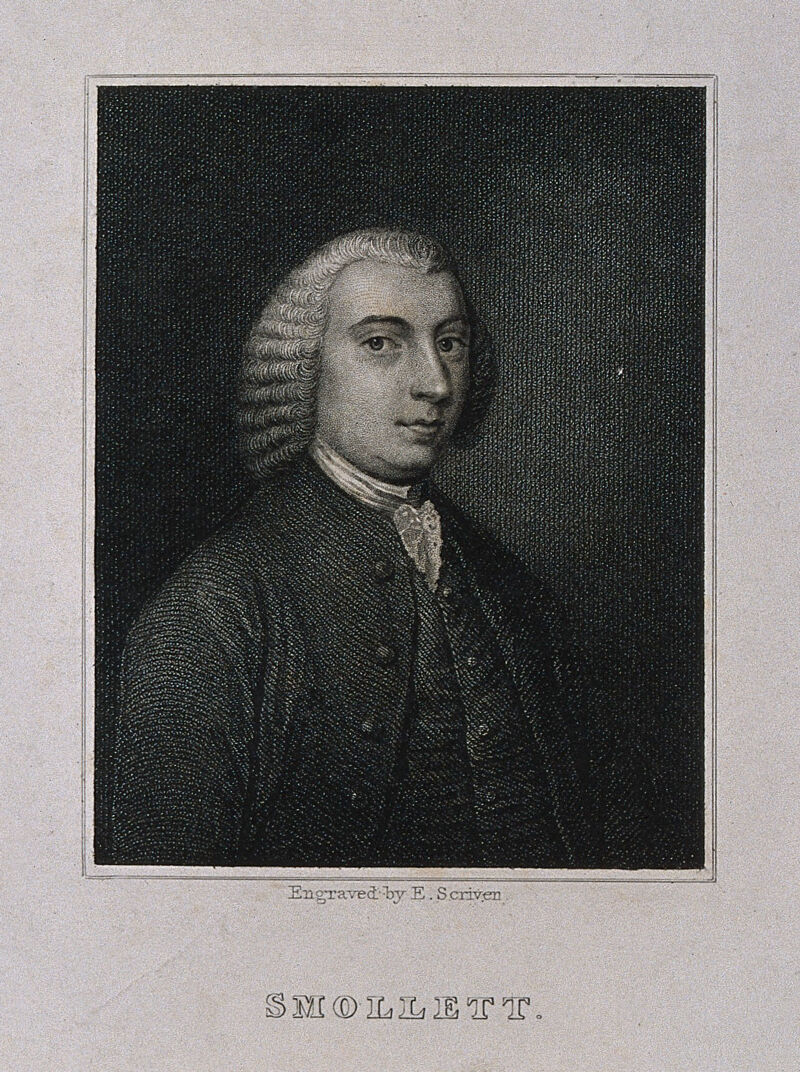
Tobias George Smollett. Stipple engraving by E Scriven., by Edward Scriven
Edward Scriven · Wellcome Collection, London · Wellcome Collection
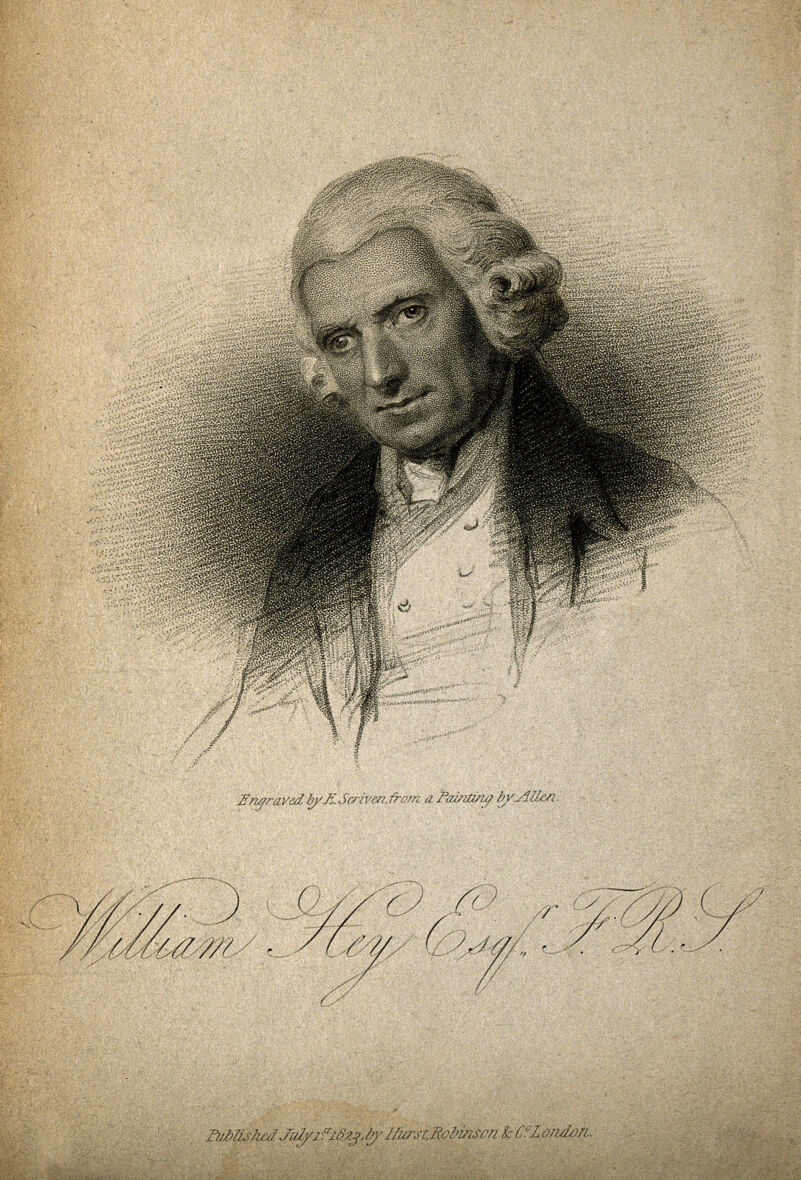
William Hey. Stipple engraving by E. Scriven, 1823, after Allen., by Edward Scriven
Edward Scriven · Wellcome Collection, London · Wellcome Collection
Life and career
Dated record
Life and career
The full dated record · 2 entries
1775
Edward Scriven was born on 1 January 1775.
1841
Edward Scriven died on 23 August 1841.
Places
Named by the record
Places
Only places the record itself states, plotted where the house gazetteer settles their coordinates. Nothing is inferred from a name or a nationality.
Alcester.
Birth place
London.
Death place
Primary material
Documents and archives
authority record
- Wikidata, structured authority record Q5345263: Edward Scriven
General reference · Wikidata
reference work
- “Edward Scriven”, English Wikipedia, consulted as further reading
Reputable secondary · Wikipedia
Notes from the source article
Cited by Wikipedia
Notes from the source article
These works are cited by the source article, in its own numbering. They are recorded as its citations, not as sources VALÉORINE has verified.
- 1.Harvsp texte=A Dictionary of Artists of the English School, 1878 id=redgrave .
- 2.Harvsp Pye 1845 p=314 .
- 3.Fiche biographique et œuvres d'Edward Scriven. National Portrait Gallery.
- 4.. . Edward Scriven meurt le à son domicile du 46, Clarendon Square, à Londres, laissant une veuve et cinq enfants. Il est enterré au cimetière de Kensal Green, où une pierre a été érigée à sa mémoire par les membres du Fonds des artistes .
- 5.Deaths - London and its vicinity. The Gentleman's Magazine. 170. 1841.
- 6.A Dictionary of Artists of the English School. Gordon Bell. 1878.
- 7.A Dictionary of Artists of the English School. Gordon Bell. 1878.
- 8.Bénézit B00166611 .
- 9.Estampe The enraged multitude with Joseph of Arimathea and James the LessTitle, qui fait partie de la série Select groups from the grand picture of Christ rejected. British Museum.
- 10.Œuvres d'Edward Scriven. National Gallery of Art.
- 11.Œuvres d'Edward Scriven. bibliothèque nationale du pays de Galles.
- 12.Œuvres d'Edward Scriven. musée d'Art d'Auckland.
- 13.Œuvres d'Edward Scriven. Te Papa Tongarewa.
Bibliography printed in the source article · 3
- Freeman Marius. O'Donoghue. Scriven, Edward (1775–1841). Dictionary of National Biography. 51. 1897. 125-126. en:Scriven, Edward (DNB00). oui.
- Samuel Redgrave. Scriven, Edward, engraver. A Dictionary of Artists of the English School. Londres. Gordon Bell. 1878. 384-385. oui.
- Patronage of British art, an historical sketch. Longman, Brown, Green, and Longmans. 478. 1845.
References
Citations
References
Each reference names the institution holding it, so a reader may go to the document itself.
authority record
Secondary witnessreference work
Secondary witness
Further particulars
Held on the record
Further particulars
Open the remaining particulars
Edward Scriven is recorded as printmaker, graphic artist, art collector and copper engraver.
Recognition and collections
Work by Edward Scriven is
Auckland Art Gallery, National Portrait Gallery, National Library of Wales and Museum of Fine Arts Boston
The Encyclopedia exists whether or not anything is for sale. Corrections are recorded rather than overwritten, and every version of this record is kept. Published 16 August 2026.
Elsewhere in Prints
4,138 published records in this field, each with its sources named.
- Edward MillmanEngraver
- Edward RadclyffeEngraver
- Edward RookerEngraver
- Edward SavageEngraver
- Edward SlocombeEngraver
- Edward Tracy TurnerelliEngraver
- Edward WadsworthEngraver
- Edward WellerEngraver
Best supported in this field
For owners
Own a work by Edward Scriven?
A specialist will read what you send and tell you what the house can establish, what it cannot, and whether the object is suited to sale. There is no charge and no obligation. The object stays with you throughout; nothing is shipped to us unless it is arranged in writing beforehand.