
Édouard Baldus
Édouard Baldus (5 June 1813, Grünebach, Prussia – 1889, Arcueil) was a French landscape, architectural and railway photographer.
Édouard Baldus
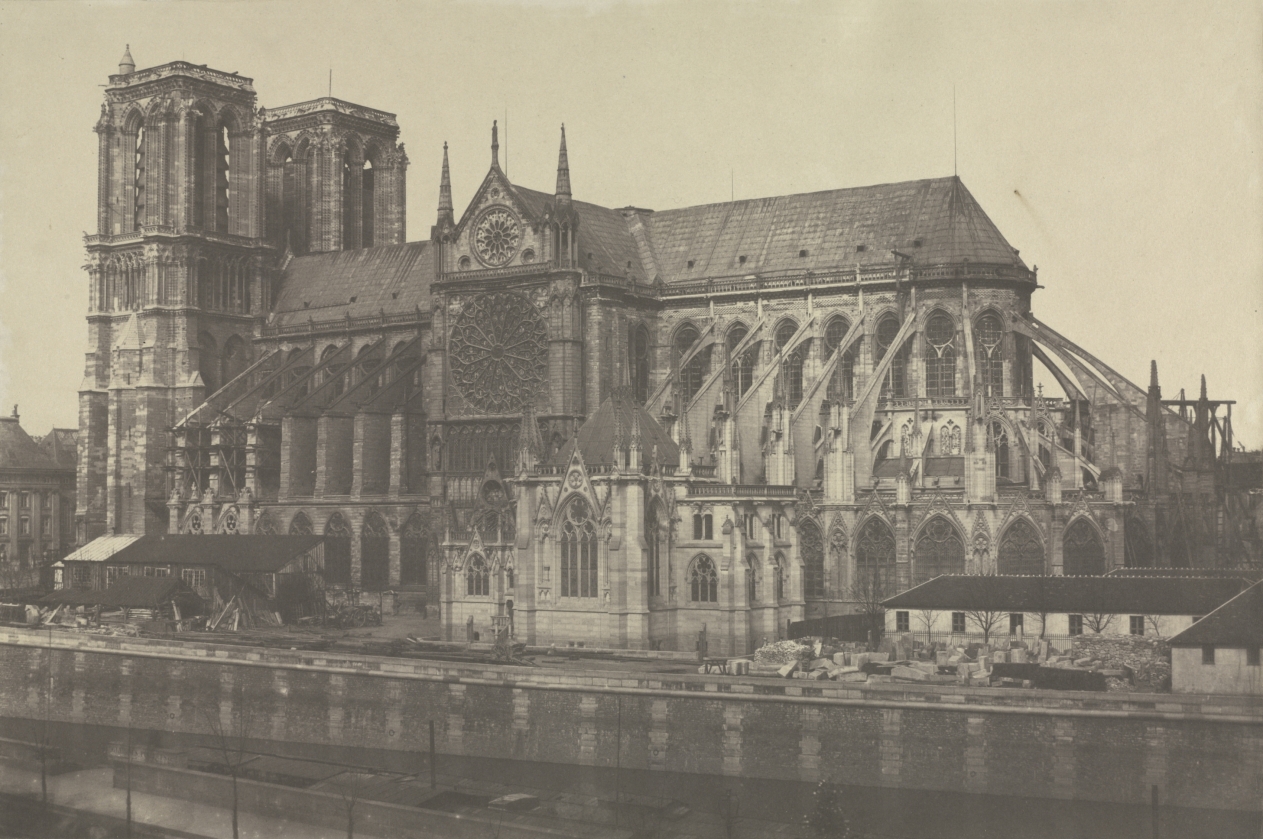
Édouard Baldus · The Cleveland Museum of Art · Edwin R. and Harriet Pelton Perkins Memorial Fund · CC0
VALÉORINE Encyclopedia
VALÉORINE documentary reading
Documentary summary
Édouard Baldus (5 June 1813, Grünebach, Prussia – 1889, Arcueil) was a French landscape, architectural and railway photographer.
Admitted source layer · organised and presented by VALÉORINE
Note VALÉORINE
No house-authored Note is published until its assertions and sources pass the VALÉORINE evidence contract. The documentary article remains available in full while that enrichment is being consolidated.
Documentary enrichment in progress · no unsupported statement published
Reference Check
Propose documentary evidence for Édouard Baldus. A contribution is never written directly as fact: identity, source, rights and evidence gates still decide.
Sign in to contribute
Documentary evidence
Evidence Panel
identity unresolved · checked 25 September 2026
- Identity
- conflicted
- Independent source families
- 0
- Admitted assertions
- 0
- Open conflicts
- 0
Authority files
wikidata · Q71244 · wikipedia · Édouard Baldus
In this article
Key facts
Key facts
• Fetchwikidata — ALL Édouard Baldus (5 June 1813, Grünebach, Prussia – 1889, Arcueil) was a French landscape, architectural and railway photographer.
Early life
Early life
Édouard-Denis Baldus was born on 5 June 1813 in Grünebach, Prussia. He was originally trained as a painter and had also worked as a draughtsman and lithographer before switching to photography in 1849.
Career
Career
In 1851, he was commissioned for the Missions Héliographiques by the Historic Monuments Commission of France to photograph historic buildings, bridges and monuments, many of which were being razed to make way for the grand boulevards of Paris, being carried out under the direction of Napoleon III's prefect Baron Georges-Eugène Haussmann. The high quality of his work won him government support for a project entitled Les Villes de France Photographiées, an extended series of architectural views in Paris and the provinces designed to feed a resurgent interest in the nation's Roman and medieval past. In 1855, Baron James de Rothschild, President of Chemin de Fer du Nord, commissioned Baldus to do a series of photographs to be used as part of an album that was to be a gift to Queen Victoria and Prince Albert as a souvenir of their visit to France that year. The lavishly bound album is still among the treasures of the Royal Library at Windsor Castle. In 1856, he set out on a brief assignment to photograph the destruction caused by torrential rains and overflowing rivers in Lyon, Avignon, and Tarascon. He created a moving record of the flood without explicitly depicting the human suffering left in its wake.
Death
Death
He died in 1889 in Arcueil, France.
Innovations in photography
Innovations in photography
Baldus was well known throughout France for his efforts in photography. One of his greatest assignments was to document the construction of the Louvre museum. He used wet and dry paper negatives as large as 10x14 inches in size. From these negatives, he made contact prints. To create a larger image, he put contact prints side by side to create a panoramic effect. He was renowned for the sheer size of his pictures, which ranged up to eight feet long for one panorama from around 1855, made from several negatives. Despite the documentary nature of many of his assignments, Baldus was inventive in overcoming the limitations of the calotype process (described here). He often retouched his negatives to blank out buildings and trees, or to put clouds in white skies; in his composite print of the medieval cloister of St. Trophime, in Arles (1851), he pieced together fragments of 10 different negatives to capture focus in depth in a panoramic view of the interior space and also render detail in the brightly lit courtyard outside.
Notable photographs
Notable photographs
• Illustration — Palais de l'Industrie, c. 1860. • Illustration — Notre-Dame, Paris • Illustration — Imperial Library of the Louvre • Illustration — Roquefavour Aqueduct • Illustration — Pont du Gard • Illustration — Panorama of Paris, about 1860 • Illustration — Basilica of Saint-Julian, Brioude
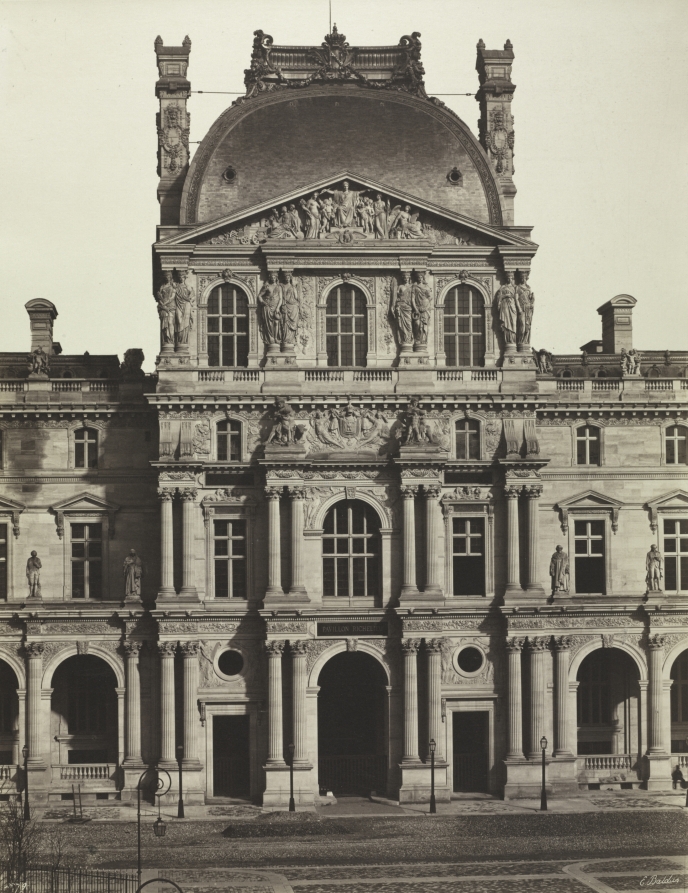
Pavilion Richelieu, Louvre, Paris, 1856–57, by Édouard Baldus
Édouard Baldus · The Cleveland Museum of Art · Andrew R. and Martha Holden Jennings Fund
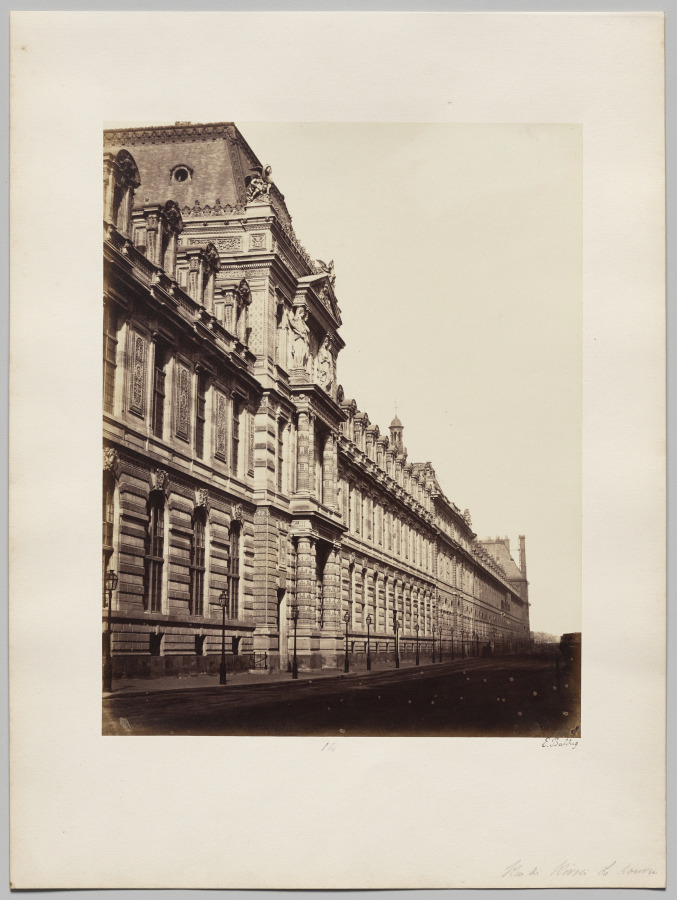
Louvre, Façade rue de Rivoli, Paris, 1855, by Édouard Baldus
Édouard Baldus · The Cleveland Museum of Art · Gift of William and Margaret Lipscomb
Citations
References
Each reference names the institution holding it, so a reader may go to the document itself.
reference work
Wikidata, structured authority record Q71244: Édouard BaldusWikimedia Foundation
Partially resolvedreference work
Partially resolved
The Encyclopedia exists whether or not anything is for sale. Corrections are recorded rather than overwritten, and every version of this record is kept. Published 14 August 2026.
Elsewhere in Photography
11,393 published records in this field, each with its sources named.
- Edmund KestingPhotographer
- Edmund NägelePhotographer
- Edmund TeskePhotographer
- Edo BertoglioPhotographer
- Édouard BelinPhotographer
- Édouard BoubatPhotographer
- Édouard DelessertPhotographer
- Édouard Isidore BuguetPhotographer
Best supported in this field
For owners
Own a work by Édouard Baldus?
A specialist will read what you send and tell you what the house can establish, what it cannot, and whether the object is suited to sale. There is no charge and no obligation. The object stays with you throughout; nothing is shipped to us unless it is arranged in writing beforehand.