
Detmar Blow
Detmar Jellings Blow (24 November 1867 – 7 February 1939) was a British architect of the early 20th century, who designed principally in the arts and crafts style. His clients belonged chiefly to the British aristocracy, and later he became estates manager to the Duke of Westminster.
Also recorded as Detmar Jellings Blow
Detmar Blow
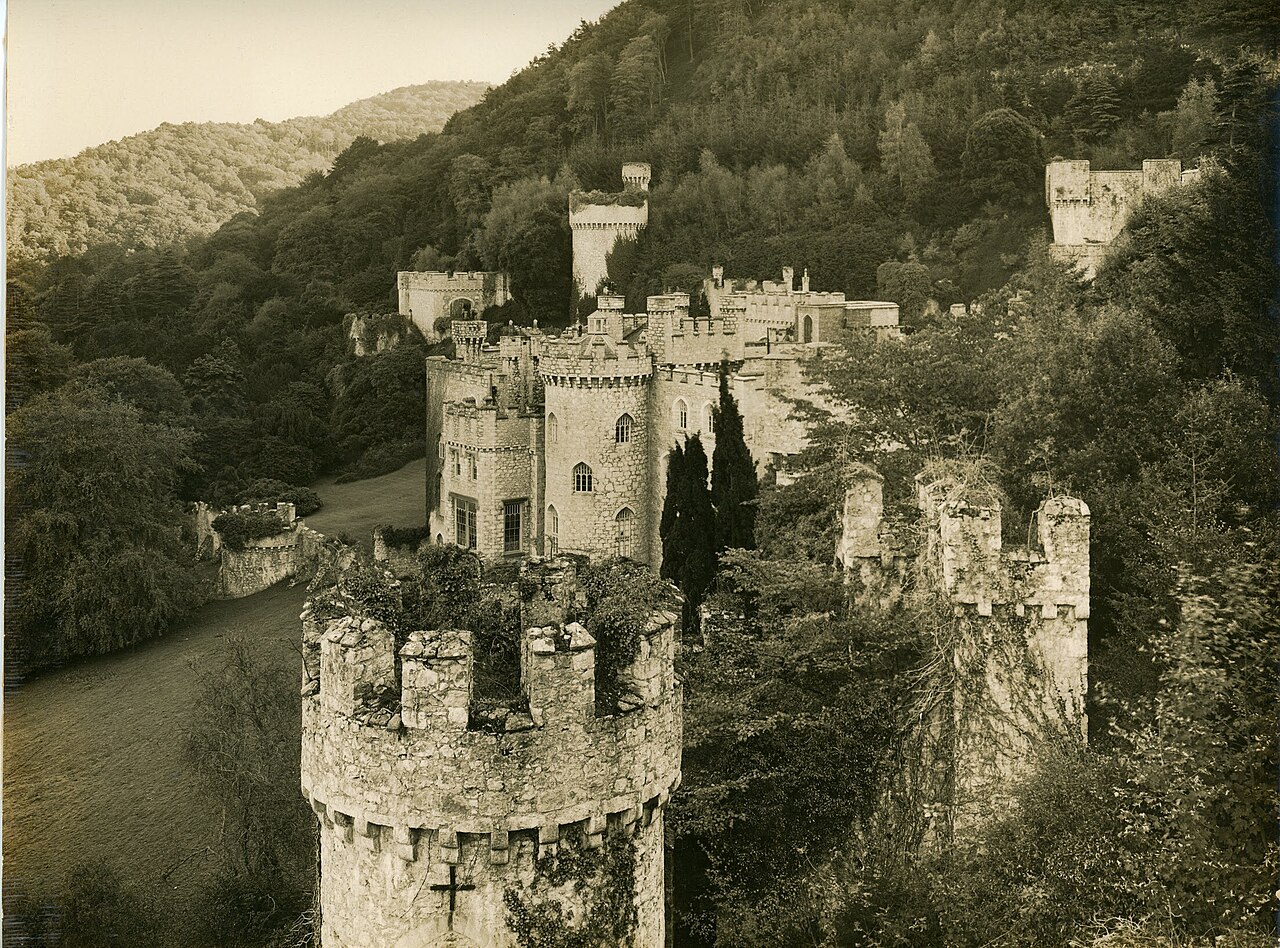
Gwrychcastle · CC BY-SA 4.0
- Name
- Detmar Blow
- Birthplace
- England
- Place of death
- Gloucester, England
- Spouse
- Winifred Tollemache
- Born
- 1867 · England.
- Nationality
- United Kingdom · United Kingdom of Great Britain and Ireland
- Occupation
- architect
- Education
- Hawtreys
- Languages
- English
VALÉORINE Encyclopedia
VALÉORINE documentary reading
Documentary summary
Detmar Jellings Blow (24 November 1867 – 7 February 1939) was a British architect of the early 20th century, who designed principally in the arts and crafts style. His clients belonged chiefly to the British aristocracy, and later he became estates manager to the Duke of Westminster.
Admitted source layer · organised and presented by VALÉORINE
Note VALÉORINE
Detmar Blow (1867–1939) was an architect, of British and British nationality. The architect was born in England and died in Gloucester. Detmar Blow was educated at Hawtreys. Languages used include English.
Composed from admitted, traceable facts · 01 October 2026
VALÉORINE
Reference Check
Propose documentary evidence for Detmar Blow. A contribution is never written directly as fact: identity, source, rights and evidence gates still decide.
Sign in to contribute
World of VALÉORINE
Documentary connections
Only confirmed graph relationships appear here. Images are shown only when their identity and reuse rights both pass the documentary gate.
Documentary evidence
Documentary basis
Authority files
wikidata · Q5265757 · wikipedia · Detmar Blow
In this article
Key facts
Key facts
• Name — Detmar Blow • Birthplace — England • Place of death — Gloucester, England • Spouse — Winifred Tollemache • Significant Buildings — Hilles; Eaton Hall (Cheshire)
Life and career
Life and career
Son of Jellings Blow, of Hilles, Stroud, Gloucestershire, Blow was one of the last disciples of John Ruskin, whom as a young man he had accompanied on his last journey abroad. Detmar was friends with the Wyndham family, who at their country house Clouds in Wiltshire created a salon frequented by many of the leading intellectual and artistic figures of the day, known as The Souls, who welcomed Blow into their midst whilst admiring his romantic socialist views. In 1910 at St Paul's Cathedral, he married Winifred Tollemache, daughter of Hamilton Tollemache. The fiction that he was a descendant of the English restoration composer John Blow was started by Winifred, a member of the aristocratic Tollemache family, as a means of obtaining a licence from St Paul's for the marriage. Blow's architectural work was influenced by his mentors Ruskin, William Holman Hunt and Philip Webb, the architect of Clouds (1886). In his early career he adopted the role of the wandering architect, travelling artisan-like with his own band of masons from project to project. He married the aristocratic and intellectual Winifred Tollemache, and began to be patronised by the higher échelons of the British aristocracy. While much of his early work was, like that of his contemporary Lutyens, in the Arts and Crafts style, his later work was dictated by the whims of his aristocratic patrons. He became a brother of the Art Workers' Guild in 1892. At one point during his career he and Lutyens contemplated entering together into an architectural partnership. In 1906 he formed a partnership with the French architect Fernand Billerey (1878–1951) which continued until 1924, when the partnership was dissolved. Amongst the buildings designed by Blow were Hilles, at Harescombe, near Stroud, Gloucestershire, the mansion he built for himself after 1914, very much influenced by the ideals of Ruskin, Webb and William Morris (Blow was present at Morris's death and organised his funeral procession, driving the flower-strewn hay-wagon carrying the coffin, dressed in a farm worker's smock). In 1908 he rebuilt Bramham Park for the Lane Fox family; however, this commission was a restoration of the former Baroque house which had been severely damaged by fire in 1828. • Illustration — Horwood House, designed by Detmar Blow in William and Mary style in 1912 Blow designed various properties for Hugh "Bendor" Grosvenor, 2nd Duke of Westminster, including the Château Woolsack, a hunting lodge at Mimizan in France. From 1916 to 1933 Blow worked almost exclusively for the duke, as manager of the Grosvenor estates, and as private secretary. His contemporary Edwin Lutyens described Blow in 1917 working as "a sort of baillif and Maitre d'Hotel as far as I can make out!" A later disagreement, over "largely unfounded" allegations of embezzlement, led to Blow's resignation and retirement.
Notable works
Notable works
• Lake House, Wiltshire (1898). Restoration of an Elizabethan house near Salisbury, with oversight by the Society for the Protection of Ancient Buildings (SPAB). Lake House was gutted by fire in 1912, and Blow returned to reinstate and secure the ancient walls for a second time. • Stoneywell and Lea Cottages, Ulverscroft, Leicestershire (1898–9), to Ernest Gimson's designs. A 2012 appeal aimed to bring Stoneywell into the care of the National Trust. • St Peter and St Paul's Church, Clare, Suffolk (1899). Restoration of the Church tower, again under SPAB oversight and guidance from Philip Webb. • Happisburgh Manor, Happisburgh, Norfolk (1900). Blow's first major work, although the butterfly plan design was inspired by Ernest Gimson. Built as a seaside villa, it is now a holiday rental property. • Stonehenge, Wiltshire (1900). When a trilithon fell over on 30 Dec 1900, Blow was engaged by SPAB both to re-erect and repair the lintel, and consider measures to prevent further erosion from the number of visitors. • Amesbury Abbey, Wiltshire. Dates uncertain, but appears to be contemporary with his Stonehenge involvement. • Lavington Park, West Sussex (1903). Elizabethan house built by the Garton Family, enlarged by Blow for Lord Woolavington. Now Seaford College. • Little Ridge, Fonthill, Wiltshire (1904–6). Built for Hugh Morrison, it was constructed from the stones of Berwick St Leonard manor house, three miles away. Massively enlarged in 1912 and renamed Fonthill House, it was demolished in 1979. • Church of St Mary and St Melor, Amesbury (1905). Structural restoration, working with architect C. E. Ponting. • Wilsford Manor, Wilsford cum Lake, Wiltshire (1906) for Edward and Pamela Tennant, 1st Baron Glenconner, with internal woodwork by Ernest Gimson. • All Saints' Chapel, Avon Tyrell House, Sopley, Hampshire (1906) for Lord Manners, with murals by Phoebe Traquair. • Bramham Park, Yorkshire (1908). Restoration for the Lane-Fox family. • Breccles Hall, Norfolk (1907–9). Rebuilt from a substantially ruined Elizabethan manor, with considerable care over the conservation and archaeological evidence. • Billesley Manor, Warwickshire (1906–13). Now a hotel. • Hatch House, Newtown, Wiltshire (1908). • Islay House (1910) Nursery wing. • Heale House, Woodford, Wiltshire (1910). Blow added a new wing for the Hon. Louis Greville. • 46 Grosvenor Street, London (1910–11). Reconstruction of two townhouses into a single residence for Sir Edgar Speyer. • Horwood House, Little Horwood, Buckinghamshire (1912) with Fernand Billery. • Château Woolsack, Mimizan, France (1912). A hunting lodge for the 2nd Duke of Westminster. • Hilles, Harescombe, Gloucestershire (started in 1913). Built for himself and still occupied by the Blow family. • Stanway House, Gloucestershire (1913). Blow built a new wing for Lady Mary Elcho, later Lady Wemyss, sister of Pamela Tennant, and one of the founders of The Souls. • Schloss Kranzbach, Krün, near Garmisch-Partenkirchen, Germany (1915). Blow's plans, in Arts and Crafts style, were drawn up in 1913 for the Hon. Miss Mary Portman, who intended it to be an artist's retreat. Building work was completed in 1915, but the war meant neither Blow nor Portman saw it. Used as accommodation for the 1936 Winter Olympics, it is now a hotel. • Gwrych Castle, Abergele, Wales (1914). He was instructed by Winifred, Countess of Dundonald to extend the castle by building a grand staircase, the walls were finished with white and green Italian marble. • Wootton Manor, Polegate, Sussex (1915?). 17th-century manor house, with 14th-century elements, greatly enlarged by Blow for the Gwynne family. • Holcombe House, Stroud, Gloucestershire (1925), leased by Blow to Lady Plymouth, formerly Gay Windsor, another of The Souls. • Broome Park, Kent (1915–16). Lord Kitchener had bought it in 1911, and involved Blow in its renovation. One of the few building commissions he had during the Great War, it was unfinished when Kitchener died in 1916.
Identity and overview
Identity and overview
The following is established of the heading itself.
Works and production
Works and production
Catalogued output is recorded as follows.
Places
Named by the record
Places
Only places the record itself states, plotted where the house gazetteer settles their coordinates. Nothing is inferred from a name or a nationality.
England.
Birth place
Gloucester.
Death place
Primary material
Documents and archives
reference work
- “Detmar Blow”, English Wikipedia, consulted as further reading
Reputable secondary · Wikipedia
authority record
- Wikidata, structured authority record Q5265757: Detmar Blow
General reference · Wikidata
Notes from the source article
Cited by Wikipedia
Notes from the source article
These works are cited by the source article, in its own numbering. They are recorded as its citations, not as sources VALÉORINE has verified.
- 1.Dictionary of Scottish architects.
- 2.Burke's Peerage, Baronetage and Knightage, 107th edition, vol. 3, ed. Charles Mosley, Burke's Peerage Ltd, 2003, p. 3912
- 3.Musson, Jeremy. Secret Houses of the Cotswolds. Frances Lincoln. 70–75. 2018. 978-0711239241.
- 4.Hilles House and terraced gardens. 1090823.
- 5.Dakers, Caroline. Fonthill Recovered. UCL Digital Press.
- 6.Dictionary of Scottish Architects. Detmar Blow.
- 7.National Trust Stoneywell appeal accessed 16 October 2012
- 8.clarenco.com Happisburgh Manor , accessed 15 October 2012
- 9.1232490. Lavington Park Seaford College. II*.
- 10.University of London. A History of the County of Wiltshire, Volume 15. 13–55. 1995.
- 11.1382696. Billesley Manor Hotel. II*.
- 12.1066700. 46, Grosvenor Street W1. II*.
- 13.1288825. Horwood House. II.
- 14.:de:Schloss Kranzbach
- 15.Schloss Kranzbach Wellness Hotel Accessed 16 October 2012
- 16.Clifton Society. ?. 26 June 1913.
- 17.1288825. Central Building of Wootton Manor. II*.
Bibliography printed in the source article · 2
- Drury, Michael. Wandering Architects: In Pursuit of an Arts and Crafts Ideal. Shaun Tyas. 2000. 190028913X.
- Sheppard, F. H. W. Grosvenor Street: South Side, Survey of London: volume 40: The Grosvenor Estate in Mayfair, Part 2 (The Buildings). English Heritage. 1980.
References
Citations
References
Each reference names the institution holding it, so a reader may go to the document itself.
reference work
Secondary witnessauthority record
General reference
The Encyclopedia exists whether or not anything is for sale. Corrections are recorded rather than overwritten, and every version of this record is kept. Published 17 August 2026.
Elsewhere in Design
11,558 published records in this field, each with its sources named.
- Desmond GuinnessDesigner
- Desmond WilliamsDesigner
- Despina StratigakosDesigner
- Detlef LienauDesigner
- Devendra ContractorDesigner
- Dewi-Prys ThomasDesigner
- DeWitt H. FessendenDesigner
- Dezső JakabDesigner
Best supported in this field
For owners
Own a work by Detmar Blow?
A specialist will read what you send and tell you what the house can establish, what it cannot, and whether the object is suited to sale. There is no charge and no obligation. The object stays with you throughout; nothing is shipped to us unless it is arranged in writing beforehand.